

发电技术 ›› 2026, Vol. 47 ›› Issue (2): 422-430.DOI: 10.12096/j.2096-4528.pgt.260218
• 新能源 • 上一篇
刘琨1, 辛辉云1, 冯研1, 任倩茹2, 孙香宇2, 钟晓晖2
收稿日期:2025-07-20
修回日期:2025-10-11
出版日期:2026-04-30
发布日期:2026-04-21
作者简介:基金资助:Kun LIU1, Huiyun XIN1, Yan FENG1, Qianru REN2, Xiangyu SUN2, Xiaohui ZHONG2
Received:2025-07-20
Revised:2025-10-11
Published:2026-04-30
Online:2026-04-21
Supported by:摘要:
目的 随着“双碳”目标的提出,我国正不断推动能源结构的调整与优化,以实现能源产业的绿色转型和可持续发展。为进一步丰富可再生能源利用形式,有必要对风热机组与太阳能光伏光热(photovoltaic thermal,PV/T)技术耦合系统进行研究。 方法 在MATLAB/Simulink中对各部件进行了数学建模;模拟了风热机组在切入风速至额定风速范围内的运行特性曲线;分析了不同太阳能辐射强度下,太阳能PV/T组件出水温度随环境温度变化趋势以及风热机组耦合太阳能PV/T系统的性能曲线。 结果 通过对冬季一天内风热机组耦合太阳能PV/T系统的制热量进行模拟,发现该系统能较好地满足用户的热负荷,同时太阳能PV/T产生的电能也可供用户使用。 结论 该系统有效提升了清洁能源的整体利用效率,为清洁能源的高效利用提供了新的解决方案,也为能源结构的进一步优化和绿色转型提供了参考。
中图分类号:
刘琨, 辛辉云, 冯研, 任倩茹, 孙香宇, 钟晓晖. 风热机组耦合太阳能光伏光热系统的性能分析[J]. 发电技术, 2026, 47(2): 422-430.
Kun LIU, Huiyun XIN, Yan FENG, Qianru REN, Xiangyu SUN, Xiaohui ZHONG. Performance Analysis of Wind-to-Heat Unit Coupled With Solar Photovoltaic Thermal System[J]. Power Generation Technology, 2026, 47(2): 422-430.
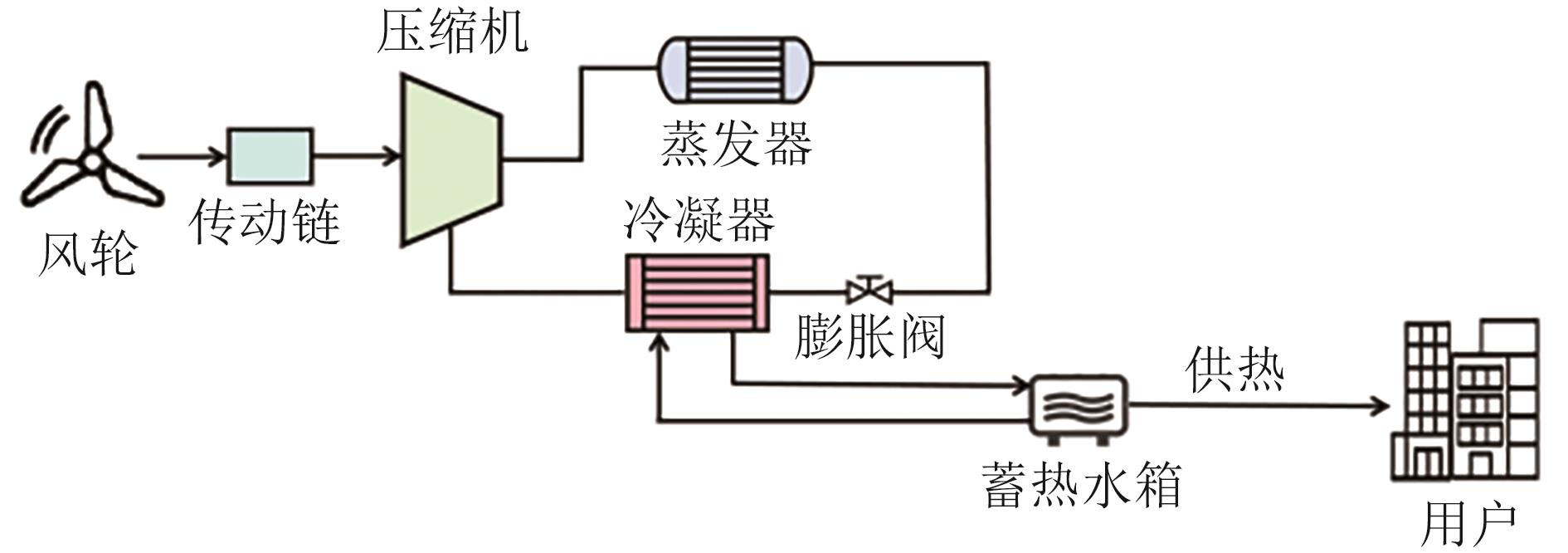
图1 风热机组系统流程图
Fig. 1 Flow chart of wind-to-heat system
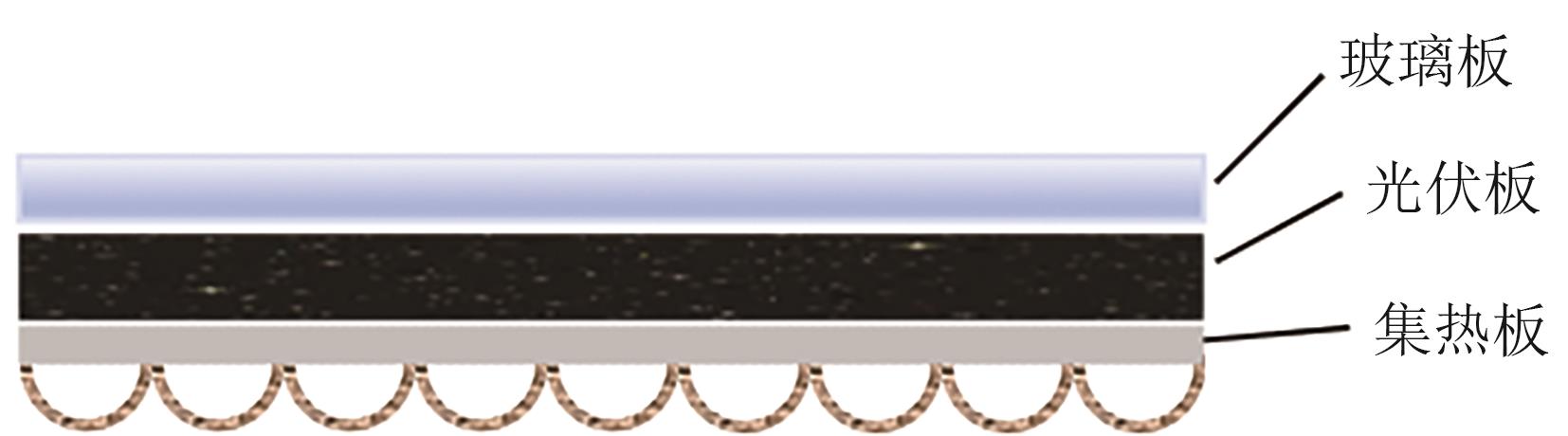
图2 太阳能PV/T结构
Fig. 2 Solar PV/T structure
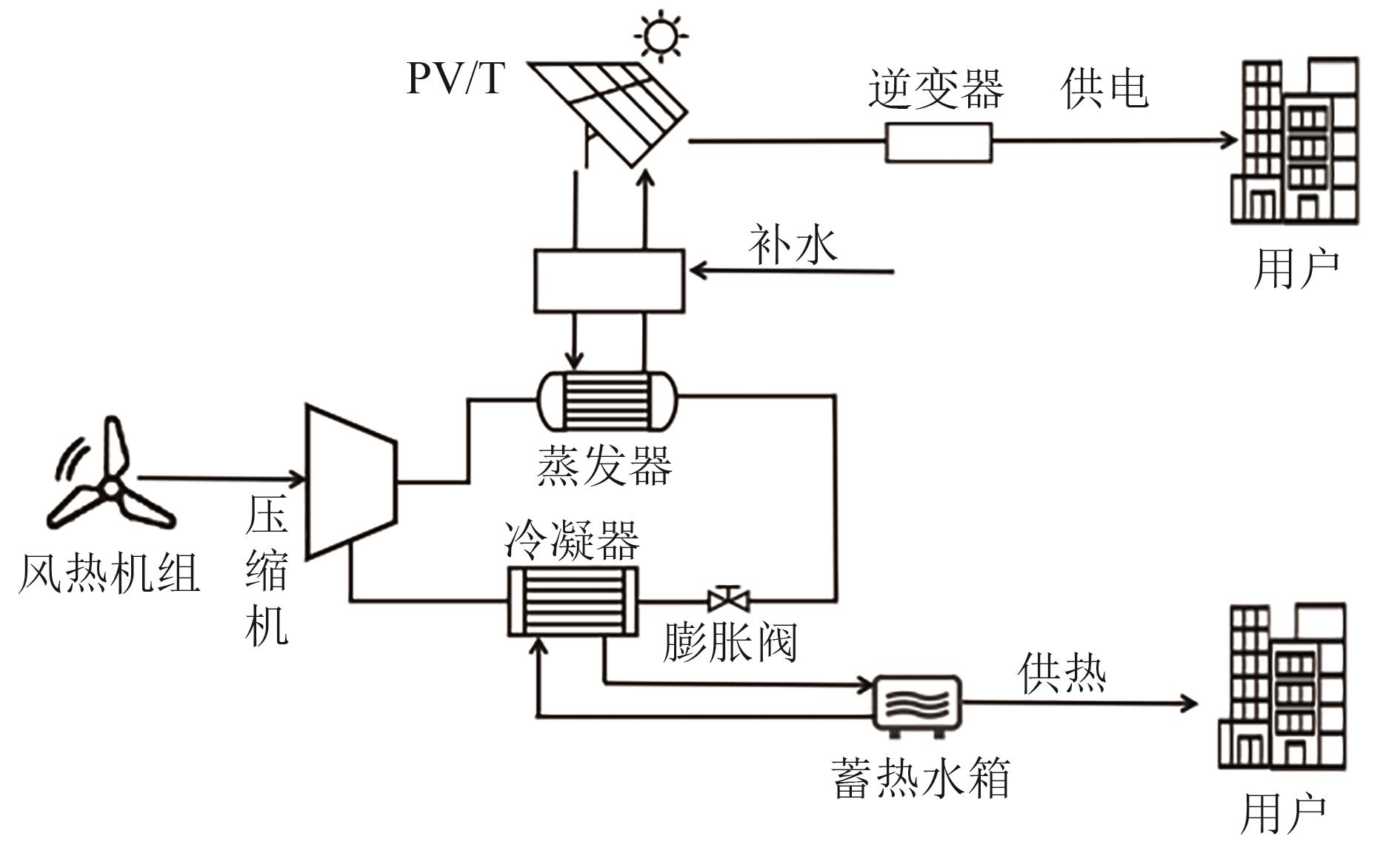
图3 风热机组耦合太阳能PV/T系统
Fig. 3 Wind-to-heat unit coupled with solar PV/T system
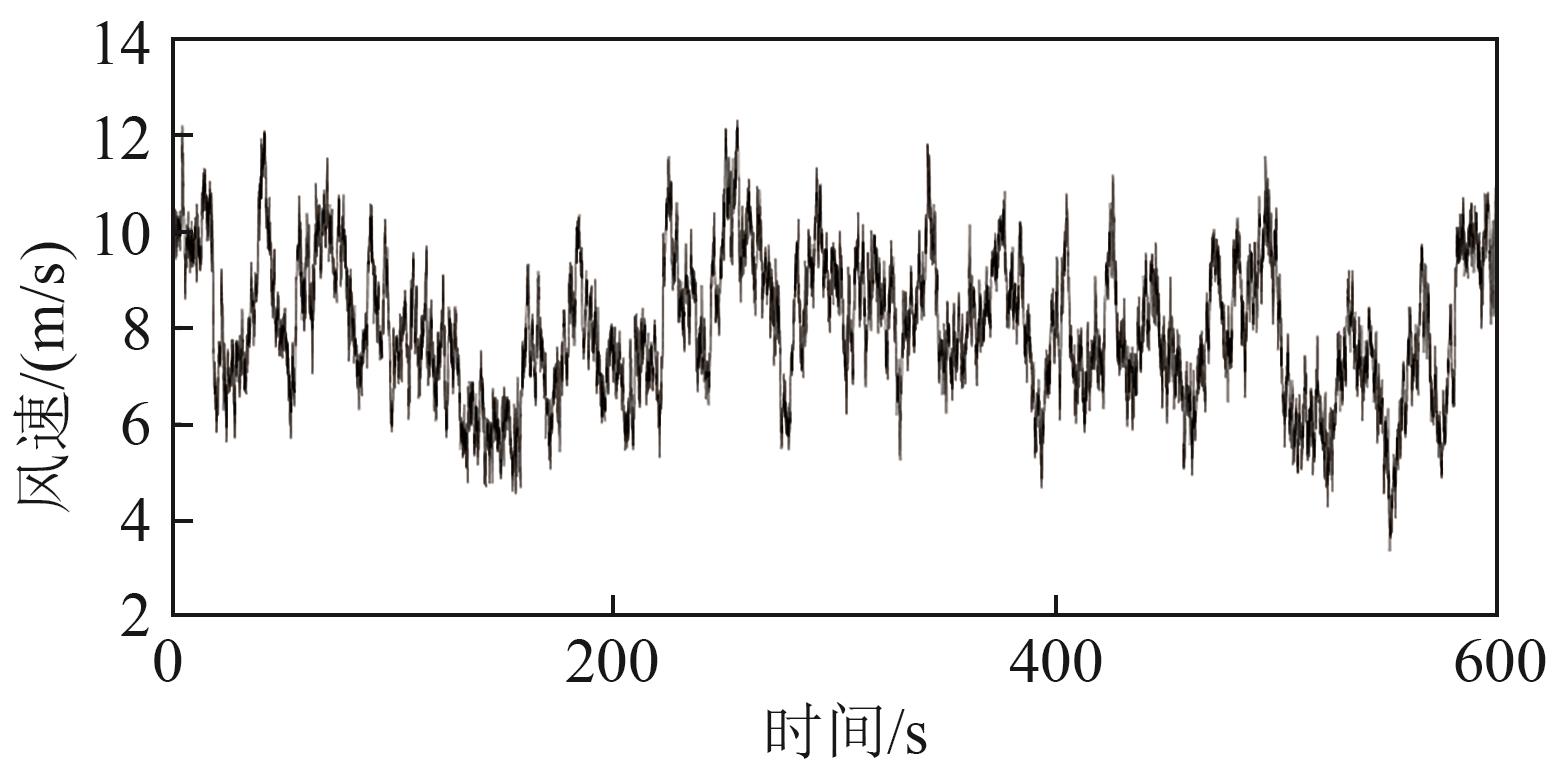
图4 仿真风速
Fig. 4 Simulated wind speed
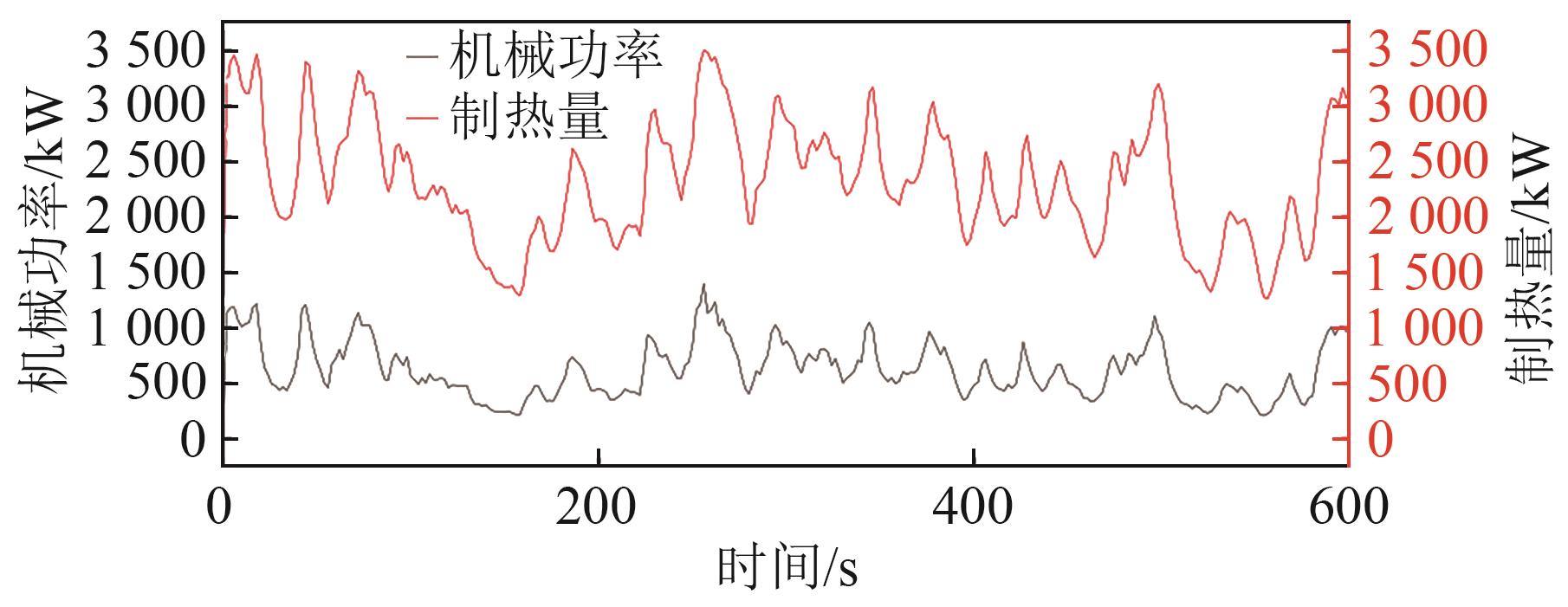
图5 风热机组的机械功率与制热量
Fig. 5 Mechanical power and heat production of wind-to-heat unit
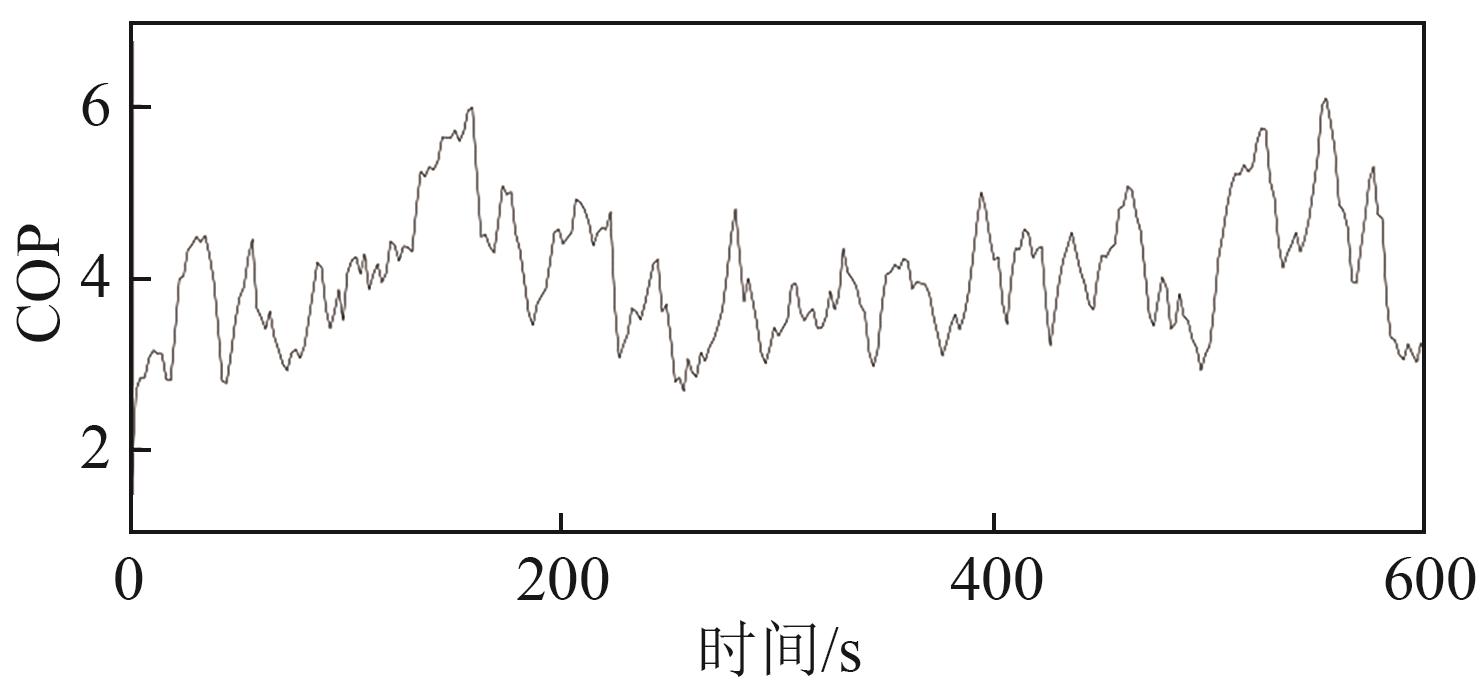
图6 风热机组的COP
Fig. 6 COP of wind-to-heat unit
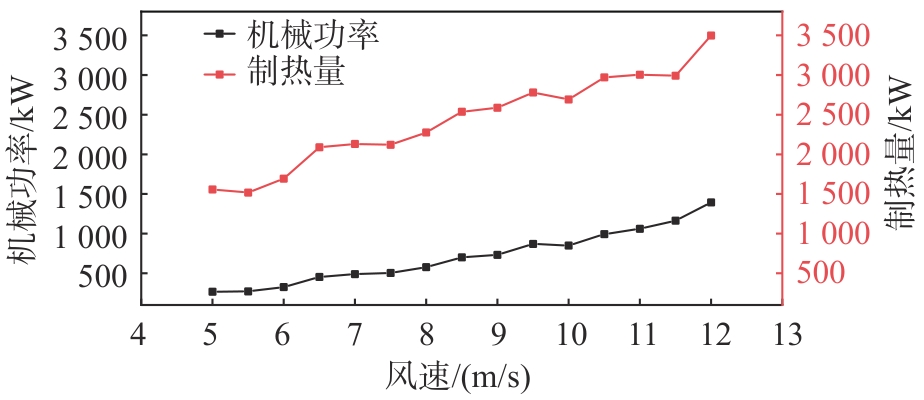
图7 机械功率与制热量随风速变化曲线
Fig. 7 Variation curves of mechanical power and heat production with wind speed
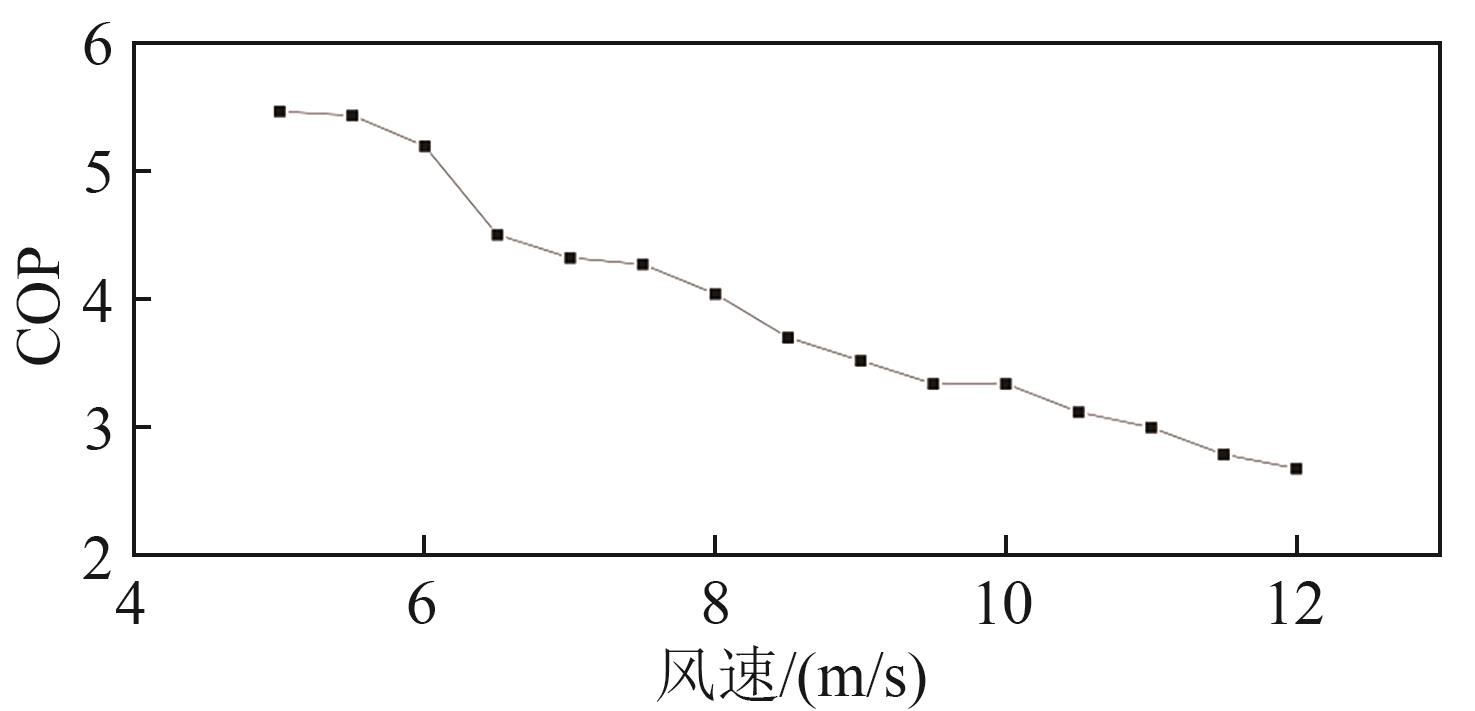
图8 COP随风速变化曲线
Fig. 8 Variation curve of COP with wind speed
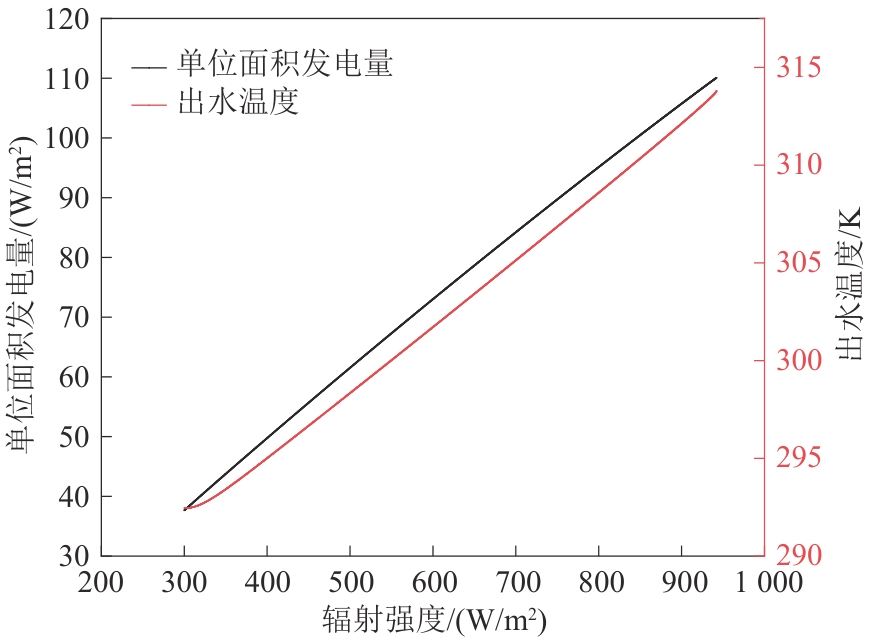
图9 单位面积发电量与出水温度随太阳辐射强度变化趋势
Fig. 9 Variation trend of power generation per unit area and outlet water temperature with solar radiation intensity
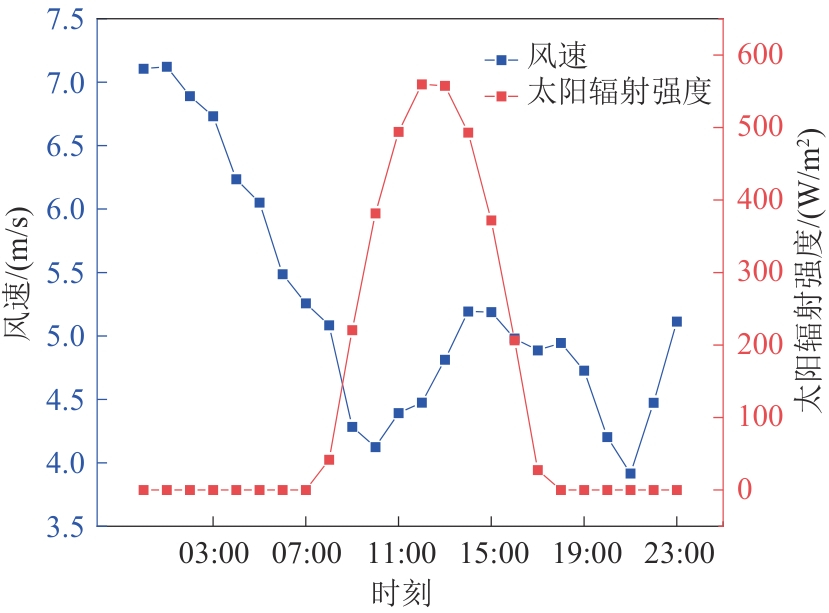
图10 风速和太阳辐射强度全天变化曲线
Fig. 10 Daily variation curves of wind speed and solar radiation intensity
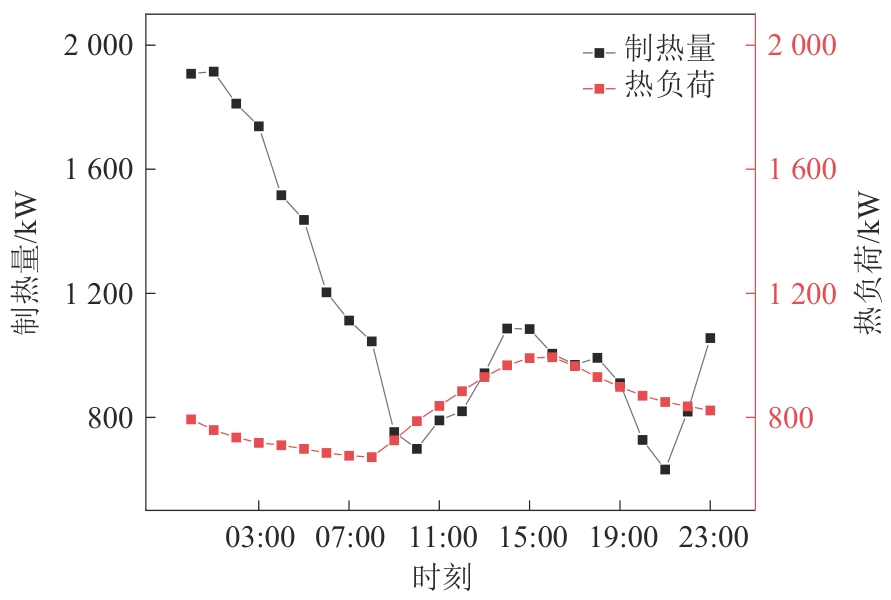
图11 制热量与热负荷全天变化曲线
Fig. 11 Daily variation curves of heat production and heat load
| [1] | 刘志强,李建锋,潘荔,等 .中国煤电机组改造升级效果分析与展望[J].中国电力,2024,57(7):1-11. doi:10.11930/j.issn.1004-9649.202402031 |
| LIU Z Q, LI J F, PAN L,et al .Analysis and prospect of transformation and upgrading effects of coal-fired power units in China[J].Electric Power,2024,57(7):1-11. doi:10.11930/j.issn.1004-9649.202402031 | |
| [2] | 胡山鹰,金涌,张臻烨 .发展新质生产力,实现碳中和[J].发电技术,2025,46(1):1-8. doi:10.12096/j.2096-4528.pgt.24222 |
| HU S Y, JIN Y, ZHANG Z Y .Developing new quality productive forces to achieve carbon neutrality[J].Power Generation Technology,2025,46(1):1-8. doi:10.12096/j.2096-4528.pgt.24222 | |
| [3] | 罗莎莎,郭经韬,蔡颖倩,等 .面向碳中和的广东省电源结构转型分析[J].南方能源建设,2024,11(4):102-110. |
| LUO S S, GUO J T, CAI Y Q,et al .Analysis on power supply structure transformation towards carbon neutrality in Guangdong[J].Southern Energy Construction,2024,11(4):102-110. | |
| [4] | 郭婷婷,曹蕃 .低碳能源系统发展趋势与应用实践[J].分布式能源,2025,10(1):1-13. doi:10.16513/j.2096-2185.DE.(2025)010-01-0001-13 |
| GUO T T, CAO F .Development trend and application of low-carbon energy system[J].Distributed Energy,2025,10(1):1-13. doi:10.16513/j.2096-2185.DE.(2025)010-01-0001-13 | |
| [5] | 任卓亚,郭宁,解佗,等 .我国清洁能源发展规律分析及其与经济系统的协调发展评价[J].电网与清洁能源,2024,40(12):128-134. |
| REN Z Y, GUO N, XIE T,et al .A study on the development patterns of clean energy in China and evaluation of its coordinated development with the economic system[J].Power System and Clean Energy,2024,40(12):128-134. | |
| [6] | 朱继忠,谢楚楚,张迪,等 .电碳耦合市场研究综述:现状、挑战与可持续发展[J].电力建设,2025,46(1):158-173. doi:10.12204/j.issn.1000-7229.2025.01.014 |
| ZHU J Z, XIE C C, ZHANG D,et al .Review of electric-carbon coupling market studies:status,challenges,and sustainability perspectives[J].Electric Power Construction,2025,46(1):158-173. doi:10.12204/j.issn.1000-7229.2025.01.014 | |
| [7] | 姚华,黄云,徐敬英,等 .我国北方地区清洁供暖技术现状与问题探讨[J].中国科学院院刊,2020,35(9):1177-1188. |
| YAO H, HUANG Y, XU J Y,et al .Technology status and discussion on challenges of clean heating in northern China[J].Bulletin of Chinese Academy of Sciences,2020,35(9):1177-1188. | |
| [8] | ZHANG Q L, HAO Y Y, SUN D H,et al .Research on the clean energy heating systems in rural Beijing[J].Energy Procedia,2017,143:137-143. |
| [9] | 赵亮,董洁,刘艳宁 .新基建背景下供热行业转型升级研究[J].中国物价,2020(12):79-81. |
| ZHAO L, DONG J, LIU Y N .Research on transformation and upgrading of heating industry under the background of new infrastructure[J].China Price,2020(12):79-81. | |
| [10] | 周梅 .能源转型背景下的新型供热系统构建[J].智能建筑与智慧城市,2021(6):106-108. doi:10.13655/j.cnki.ibci.2021.06.040 |
| ZHOU M .Preliminary study on the construction of a new type of heating system under the background of energy transition[J].Intelligent Building & Smart City,2021(6):106-108. doi:10.13655/j.cnki.ibci.2021.06.040 | |
| [11] | NIE Y Z, DENG M S, SHAN M,et al .Clean and low-carbon heating in the building sector of China:10-year development review and policy implications[J].Energy Policy,2023,179:113659. doi:10.1016/j.enpol.2023.113659 |
| [12] | 常智辉 .“双碳”目标下城市供热专项规划探究[J].节能,2022,41(10):66-68. |
| CHANG Z H .Exploration of special planning for urban heating under the “double carbon” goal[J].Energy Conservation,2022,41(10):66-68. | |
| [13] | 徐伟,何涛,张昕宇,等 .太阳能热利用技术研究进展与展望[J].太阳能,2024(7):20-30. |
| XU W, HE T, ZHANG X Y,et al .Research progress and outlook of solar thermal utilization technology[J].Solar Energy,2024(7):20-30. | |
| [14] | 王启坤,朱泊旭,陈凌冲,等 .风能致热技术研究[J].中国科技信息,2020(21):74-75. doi:10.3969/j.issn.1001-8972.2020.21.027 |
| WANG Q K, ZHU B X, CHEN L C,et al .Research on wind energy heating technology[J].China Science and Technology Information,2020(21):74-75. doi:10.3969/j.issn.1001-8972.2020.21.027 | |
| [15] | SONG C F, LI Y, RAJEH T,et al .Application and development of ground source heat pump technology in China[J].Protection and Control of Modern Power Systems,2021,6(1):17. doi:10.1186/s41601-021-00195-x |
| [16] | SOLTERO V M, QUIROSA G, RODRÍGUEZ D,et al .A profitability index for rural biomass district heating systems evaluation[J].Energy,2023,282:128395. doi:10.1016/j.energy.2023.128395 |
| [17] | 字琼珍,王昌梅,吴凯,等 .“双碳”目标下中国农村能源发展现状、问题与对策[J].南方能源建设,2024,11(6):69-78. |
| ZI Q Z, WANG C M, WU K,et al .Current situation,problem and countermeasure of China’s rural energy development under the “dual carbon” goal[J].Southern Energy Construction,2024,11(6):69-78. | |
| [18] | DING T, SUN Y G, HUANG C,et al .Pathways of clean energy heating electrification programs for reducing carbon emissions in Northwest China[J].Renewable and Sustainable Energy Reviews,2022,166:112679. doi:10.1016/j.rser.2022.112679 |
| [19] | 汤明润,李若旸,刘慕然,等 .电力系统稳态下可再生能源大规模接入量预测[J].中国电力,2025,58(2):126-132. doi:10.11930/j.issn.1004-9649.202405113 |
| TANG M R, LI R Y, LIU M R,et al .Prediction of large-scale renewable energy access under steady state of electric power system[J].Electric Power,2025,58(2):126-132. doi:10.11930/j.issn.1004-9649.202405113 | |
| [20] | 郭斯琦,楼劲,郑凌蔚 .考虑热网特性的综合能源系统混合时间尺度调度方法[J].电力建设,2024,45(12):16-26. doi:10.12204/j.issn.1000-7229.2024.12.002 |
| GUO S Q, LOU J, ZHENG L W .Hybrid time scale scheduling method for integrated energy systems considering the characteristics of heating networks[J].Electric Power Construction,2024,45(12):16-26. doi:10.12204/j.issn.1000-7229.2024.12.002 | |
| [21] | 韩宪超,谢丽蓉,马兰,等 .计及用户舒适度的电热综合能源系统优化调度[J].电网与清洁能源,2025,41(1):71-81. doi:10.3969/j.issn.1674-3814.2025.01.009 |
| HAN X C, XIE L R, MA L,et al .Optimal scheduling of electric heating integrated energy systems considering user comfort[J].Power System and Clean Energy,2025,41(1):71-81. doi:10.3969/j.issn.1674-3814.2025.01.009 | |
| [22] | 束娜,江山,刘春伶,等 .计及灵活性资源多时间尺度协调互济的电-气-热综合能源系统优化调度[J].电力建设,2024,45(12):3-15. doi:10.12204/j.issn.1000-7229.2024.12.001 |
| SHU N, JIANG S, LIU C L,et al .Optimal scheduling of electricity-gas-heat integrated energy system with flexible resources in multiple time scales[J].Electric Power Construction,2024,45(12):3-15. doi:10.12204/j.issn.1000-7229.2024.12.001 | |
| [23] | 王彦红,刘浩,李洪伟 .碳交易机制下旁路补偿供热消纳风电的电热经济调度[J].南方电网技术,2024,18(4):50-58. doi:10.13648/j.cnki.issn1674-0629.2024.04.006 |
| WANG Y H, LIU H, LI H W .Electrothermal economic dispatch for wind power consumption by bypass compensation heating under carbon trading mechanism[J].Southern Power System Technology,2024,18(4):50-58. doi:10.13648/j.cnki.issn1674-0629.2024.04.006 | |
| [24] | 包育德 .双碳背景下清洁能源调度优化及排放分析[J].电测与仪表,2025,62(3):54-63. |
| BAO Y D .Scheduling optimization and emission analysis of clean energy under the background of dual carbon[J].Electrical Measurement & Instrumentation,2025,62(3):54-63. | |
| [25] | 张明洋 .100 kW级风热机组运行特性仿真与实验研究[D].北京:中国科学院大学(中国科学院工程热物理研究所),2021. |
| ZHANG M Y .Simulation and experimental study on operation characteristics of 100 kW wind-heated unit[D].Beijing:Institute of Engineering Thermophysics,Chinese Academy of Sciences,2021. | |
| [26] | SUN X Y, ZHONG X H, ZHANG M Y,et al .Experimental investigation on a novel wind-to-heat system with high efficiency[J].Renewable and Sustainable Energy Reviews,2022,158:112143. doi:10.1016/j.rser.2022.112143 |
| [27] | 钱婧,孙香宇,廖猜猜,等 .风热机组系统建模及仿真分析[J].工程热物理学报,2023,44(1):71-77. |
| QIAN J, SUN X Y, LIAO C C,et al .Modeling and simulation research of wind-to-heat unit[J].Journal of Engineering Thermophysics,2023,44(1):71-77. | |
| [28] | ZHONG X H, CHEN T, SUN X Y,et al .Conventional and advanced exergy analysis of a novel wind-to-heat system[J].Energy,2022,261:125267. doi:10.1016/j.energy.2022.125267 |
| [29] | ZENG J J, QIAN J, SUN X Y,et al .Simulation analysis on the operational characteristics of a novel wind-to-heat system[J].Energy Conversion and Management,2022,272:116378. doi:10.1016/j.enconman.2022.116378 |
| [30] | 俞增盛,钟晓晖,刘东 .“双碳”背景下风热机组在上海的应用浅析[J].上海节能,2022(5):570-576. doi:10.13770/j.cnki.issn2095-705x.2022.05.005 |
| YU Z S, ZHONG X H, LIU D .Study on wind turbine heating system application in Shanghai under background of “double carbon”[J].Shanghai Energy Saving,2022(5):570-576. doi:10.13770/j.cnki.issn2095-705x.2022.05.005 | |
| [31] | 陈艺鑫,陈健斌,李旭东,等 .一种轻薄型光伏/光热集热器性能分析及实验研究[J].发电技术,2024,45(4):666-674. doi:10.12096/j.2096-4528.pgt.23026 |
| CHEN Y X, CHEN J B, LI X D,et al .Performance analysis and experimental study of a kind of thin and light photovoltaic/thermal collector[J].Power Generation Technology,2024,45(4):666-674. doi:10.12096/j.2096-4528.pgt.23026 | |
| [32] | 肖瑶,钮文泽,魏高升,等 .太阳能光伏/光热技术研究现状与发展趋势综述[J].发电技术,2022,43(3):392-404. doi:10.12096/j.2096-4528.pgt.21145 |
| XIAO Y, NIU W Z, WEI G S,et al .Review on research status and developing tendency of solar photovoltaic/thermal technology[J].Power Generation Technology,2022,43(3):392-404. doi:10.12096/j.2096-4528.pgt.21145 | |
| [33] | ZHOU C, RIAZ A, WANG J J,et al .Seasonal performance comparison analysis of the roll-bond photovoltaic thermal heat pump system in a multi-energy generation:an experimental study[J].Energy Conversion and Management,2022,273:116430. doi:10.1016/j.enconman.2022.116430 |
| [34] | 叶爽,张昕宇,俞英鹤,等 .太阳能光热光伏耦合空气源热泵系统清洁取暖应用减碳性能研究[J].建筑科学,2024,40(6):10-16. |
| YE S, ZHANG X Y, YU Y H,et al .Study on carbon reduction performance of solar thermal photovoltaic coupled air source heat pump system in clean heating[J].Building Science,2024,40(6):10-16. | |
| [35] | MI P Y, ZHANG J L, GAO J,et al .Study on optimal allocation of solar photovoltaic thermal heat pump integrated energy system for domestic hot water[J].Renewable Energy,2023,219:119433. |
| [36] | 张凡,景天,毛生海,等 .大型新能源基地汇集工程合理送出需求研究[J].分布式能源,2024,9(4):69-77. doi:10.16513/j.2096-2185.DE.2409408 |
| ZHANG F, JING T, MAO S H,et al .Research on reasonable send out demand of collection engineering for large-scale new energy bases[J].Distributed Energy,2024,9(4):69-77. doi:10.16513/j.2096-2185.DE.2409408 | |
| [37] | 张丽娟,孙梦觉 .基于预测控制并考虑碳交易价格的微电网优化运行[J].电测与仪表,2025,62(10):167-174. doi:10.19753/j.issn1001-1390.2025.10.019 |
| ZHANG L J, SUN M J .Operation optimization of micro-grid based on predictive control with consideration of carbon trade price[J].Electrical Measurement & Instrumentation,2025,62(10):167-174. doi:10.19753/j.issn1001-1390.2025.10.019 |
| [1] | 甄箫斐, 张沥, 张永恒. 超临界CO2再压缩循环吸热温差的热力学分析[J]. 发电技术, 2026, 47(2): 266-273. |
| [2] | 刘松洋, 白云鹏, 陈志董, 丁亮, 孙超杰, 孔艳强. 基于熔盐储热的核电机组调峰特性研究[J]. 发电技术, 2025, 46(6): 1200-1211. |
| [3] | 邹博, 任建地, 许道明, 邓立生, 廖力达, 肖俊兵. 氯化物熔盐储热技术应用于新能源发电的研究进展[J]. 发电技术, 2025, 46(5): 872-884. |
| [4] | 路诗梦, 孙建林, 曾凡杰, 林小杰, 吴均湛, 马添翼, 钟崴, 谢立坤, 谢伟. 零碳地热能综合利用技术研究进展[J]. 发电技术, 2025, 46(5): 909-922. |
| [5] | 李建勇, 郎泽萌, 王重阳, 赵海亮, 蒋成伟, 徐瑞玲, 胡曦, 孟庆茂, 李怀森, 徐世杰, 吴双应. 双面光伏系统的光-热-电性能分析模型与实验验证[J]. 发电技术, 2025, 46(5): 939-949. |
| [6] | 闫朝阳, 李蓝青, 徐浩嘉, 庄锁, 张振华, 戎子睿. 基于白鲨算法与改进长短期记忆网络的光伏出力预测[J]. 发电技术, 2025, 46(4): 778-787. |
| [7] | 刘佳佳, 巨星. 弃电热储能光伏-光热复合发电系统技术经济性分析[J]. 发电技术, 2025, 46(4): 807-817. |
| [8] | 郑如意, 杨博, 周率, 蒋林, 李鸿彪, 郜登科. 基于人工智能的质子交换膜燃料电池状态估计及故障诊断[J]. 发电技术, 2025, 46(3): 541-555. |
| [9] | 黄斌, 赵伟, 廖力达, 肖孟, 黄佳亮, 星可. 基于环境参数模型的缓坡光伏阵列反阴影策略研究[J]. 发电技术, 2025, 46(3): 579-589. |
| [10] | 张志勇, 孔令刚, 范多进, 路小娟. 线性菲涅尔集热系统焦距优化建模仿真及实验验证[J]. 发电技术, 2025, 46(3): 590-599. |
| [11] | 张佳鑫, 彭勇刚, 孙静. 考虑需求响应和碳交易的园区氢电耦合系统两阶段鲁棒优化调度[J]. 发电技术, 2025, 46(2): 252-262. |
| [12] | 曾宪民, 李柏云, 沈向阳, 陈嘉澍, 丁力行. 半周受热下太阳能吸热器横纹管的热应力分析[J]. 发电技术, 2025, 46(1): 190-199. |
| [13] | 杨琛, 牛锋杰, 韩茂林, 周宁, 周定璇. 基于改进灰狼算法优化极限学习机的光伏阵列故障诊断方法研究[J]. 发电技术, 2025, 46(1): 72-82. |
| [14] | 邱立翔, 黄超, 魏高升, 崔柳, 杜小泽. 颗粒团聚对太阳盐纳米流体导热性能的影响特性研究[J]. 发电技术, 2024, 45(5): 878-887. |
| [15] | 郑淇薇, 赵欣悦, 卢荻, 陈衡, 潘佩媛, 刘彤. 多类型小容量火电机组热电解耦潜力与经济性对比评估[J]. 发电技术, 2024, 45(5): 929-940. |
| 阅读次数 | ||||||
|
全文 |
|
|||||
|
摘要 |
|
|||||
