

发电技术 ›› 2026, Vol. 47 ›› Issue (1): 145-156.DOI: 10.12096/j.2096-4528.pgt.260113
• 发电及环境保护 • 上一篇
李世涵1, 白波1, 程国强1,2,3, 许承天1, 孔祥林2,3, 李志刚1, 李军1
收稿日期:2025-01-03
修回日期:2025-03-08
出版日期:2026-02-28
发布日期:2026-02-12
通讯作者:
李军
作者简介:基金资助:Shihan LI1, Bo BAI1, Guoqiang CHENG1,2,3, Chengtian XU1, Xianglin KONG2,3, Zhigang LI1, Jun LI1
Received:2025-01-03
Revised:2025-03-08
Published:2026-02-28
Online:2026-02-12
Contact:
Jun LI
Supported by:摘要:
目的 为了提高叶顶传热冷却性能,探究叶顶凹槽中弧线微肋对冷气的诱导作用及对叶顶传热性能的影响,采用数值求解三维雷诺平均奈维-斯托克(Reynolds averaged Navier-Stokes,RANS)方程和标准k-ω湍流模型的方法,研究了流向微肋气膜冷却布局对涡轮动叶凹槽状叶顶传热冷却性能的影响。 方法 基于GE-E3高压涡轮第一级动叶凹槽状叶顶,依据前人经验,设计了前缘及尾缘大孔径气膜孔和中弦近压力侧2个小孔径气膜孔的叶顶气膜冷却布局(case 1),随后在冷气稀薄的中弦近吸力侧添加了2个小孔径气膜孔,并将中弦4个气膜孔放置在3个位置探究气膜孔位置的影响,3个位置冷却布局分别添加一个30%弧长的中弧线微肋,探究微肋结构的影响。 结果 与case 1相比,将微肋放在凹槽前缘位置可以降低0.9%的叶顶泄漏量和0.5%的流道出口截面总压损失,将微肋放在靠近尾缘的位置可以降低8%的叶顶传热系数,若不考虑微肋表面,则能降低16%的叶顶传热系数,同时该位置的流向微肋气膜冷却布局具有0.43的气膜冷却有效度和最优的冷却均匀度。 结论 研究结果可为燃气轮机高性能叶顶结构的耦合设计提供参考。
中图分类号:
李世涵, 白波, 程国强, 许承天, 孔祥林, 李志刚, 李军. 流向微肋气膜冷却布局对涡轮动叶凹槽状叶顶传热冷却性能的影响[J]. 发电技术, 2026, 47(1): 145-156.
Shihan LI, Bo BAI, Guoqiang CHENG, Chengtian XU, Xianglin KONG, Zhigang LI, Jun LI. Effect of Streamwise Micro-Rib Film Cooling Arrangements on Heat Transfer and Cooling Performance of Cavity Turbine Blade Tips[J]. Power Generation Technology, 2026, 47(1): 145-156.
| 参数 | 数值 |
|---|---|
| 静叶数/个 | 46 |
| 动叶数/个 | 76 |
| 动叶高度H/mm | 42.28 |
| 轴向弦长Ca/mm | 28 |
| 叶顶间隙S/mm | 0.42 |
| 凹槽深度hs/mm | 0.8 |
| 凹槽宽度T/mm | 0.6 |
表 1 GE-E3涡轮第一级几何参数
Tab. 1 Geometric parameters of first stage in GE-E3 turbine
| 参数 | 数值 |
|---|---|
| 静叶数/个 | 46 |
| 动叶数/个 | 76 |
| 动叶高度H/mm | 42.28 |
| 轴向弦长Ca/mm | 28 |
| 叶顶间隙S/mm | 0.42 |
| 凹槽深度hs/mm | 0.8 |
| 凹槽宽度T/mm | 0.6 |
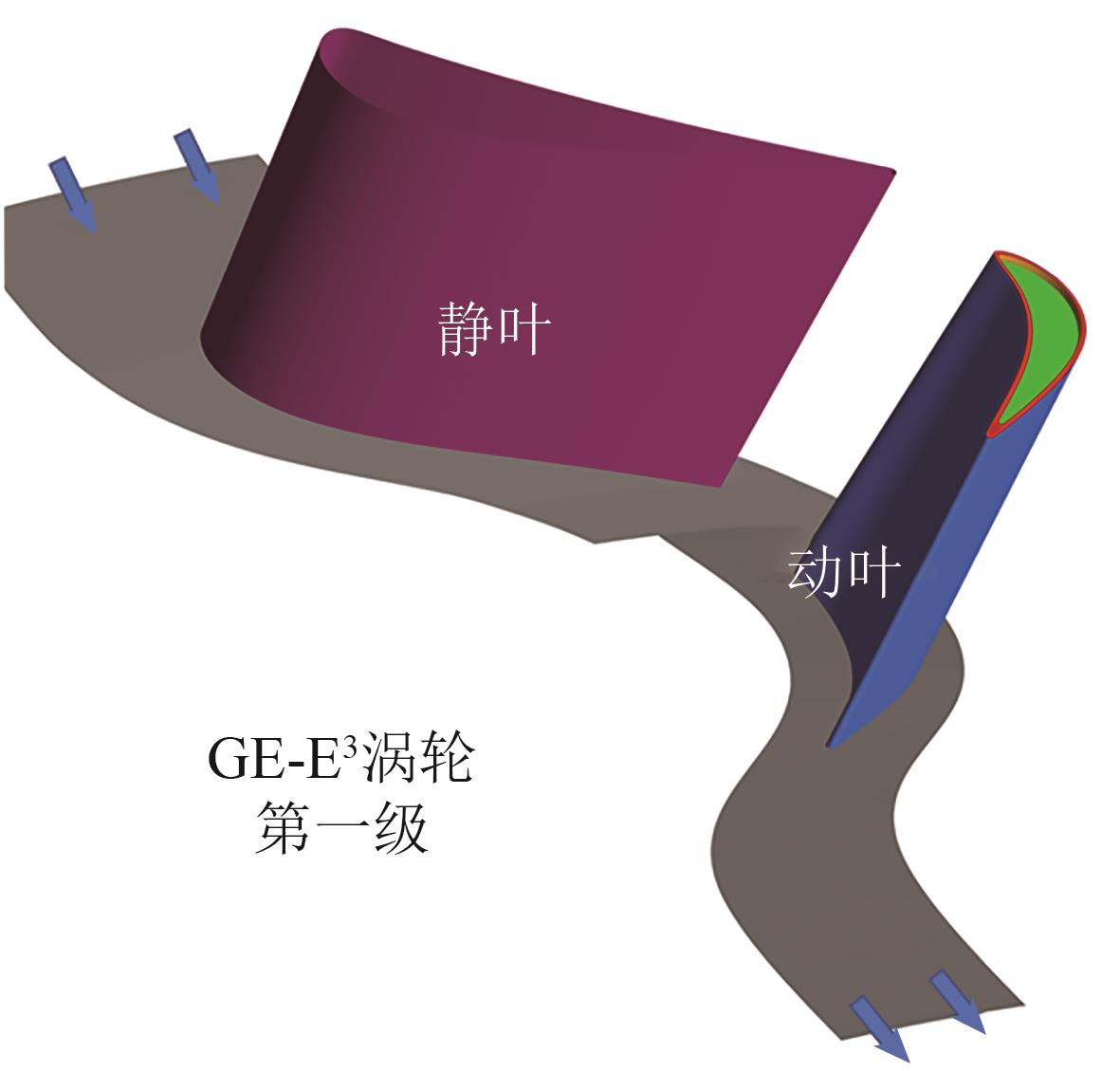
图1 计算域模型
Fig. 1 Model of computational domain
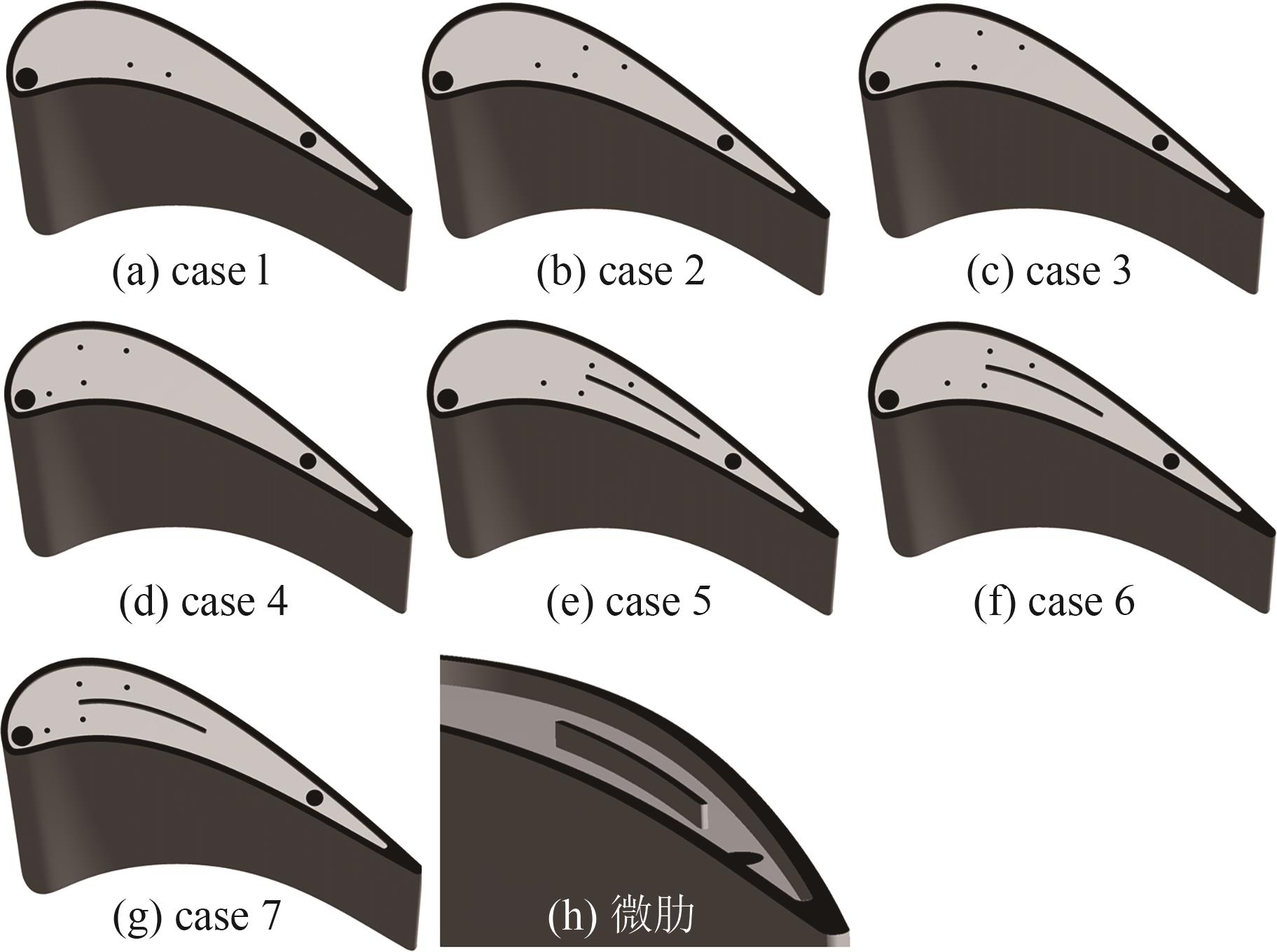
图2 叶顶结构几何模型
Fig. 2 Geometric model of blade tip structure
| 项目 | 边界条件 | 数值 |
|---|---|---|
| 进口 | 总压ptotal,0/kPa | 344.74 |
| 总温Ttotal,0/K | 712 | |
| 入流角 | 0 | |
| 湍流强度Tu/% | 10 | |
| 出口 | 静压p2/kPa | 141.44 |
| 冷气 | 总温 Ttotal,c/K | 344 |
| 质量流量mc/(mg/s) | 101.25 | |
| 动叶 | 动叶转速 | 8 450 |
| 壁面温度 | 绝热 |
表 2 计算边界条件
Tab. 2 Computational boundary conditions
| 项目 | 边界条件 | 数值 |
|---|---|---|
| 进口 | 总压ptotal,0/kPa | 344.74 |
| 总温Ttotal,0/K | 712 | |
| 入流角 | 0 | |
| 湍流强度Tu/% | 10 | |
| 出口 | 静压p2/kPa | 141.44 |
| 冷气 | 总温 Ttotal,c/K | 344 |
| 质量流量mc/(mg/s) | 101.25 | |
| 动叶 | 动叶转速 | 8 450 |
| 壁面温度 | 绝热 |
| 网格数量 | |
|---|---|
| 5.0 | 0.417 |
| 7.0 | 0.428 |
| 9.0 | 0.433 |
表 3 3种网格数量下叶顶平均气膜冷却有效度
Tab. 3 Average film cooling effectiveness of blade tip under three grid numbers
| 网格数量 | |
|---|---|
| 5.0 | 0.417 |
| 7.0 | 0.428 |
| 9.0 | 0.433 |
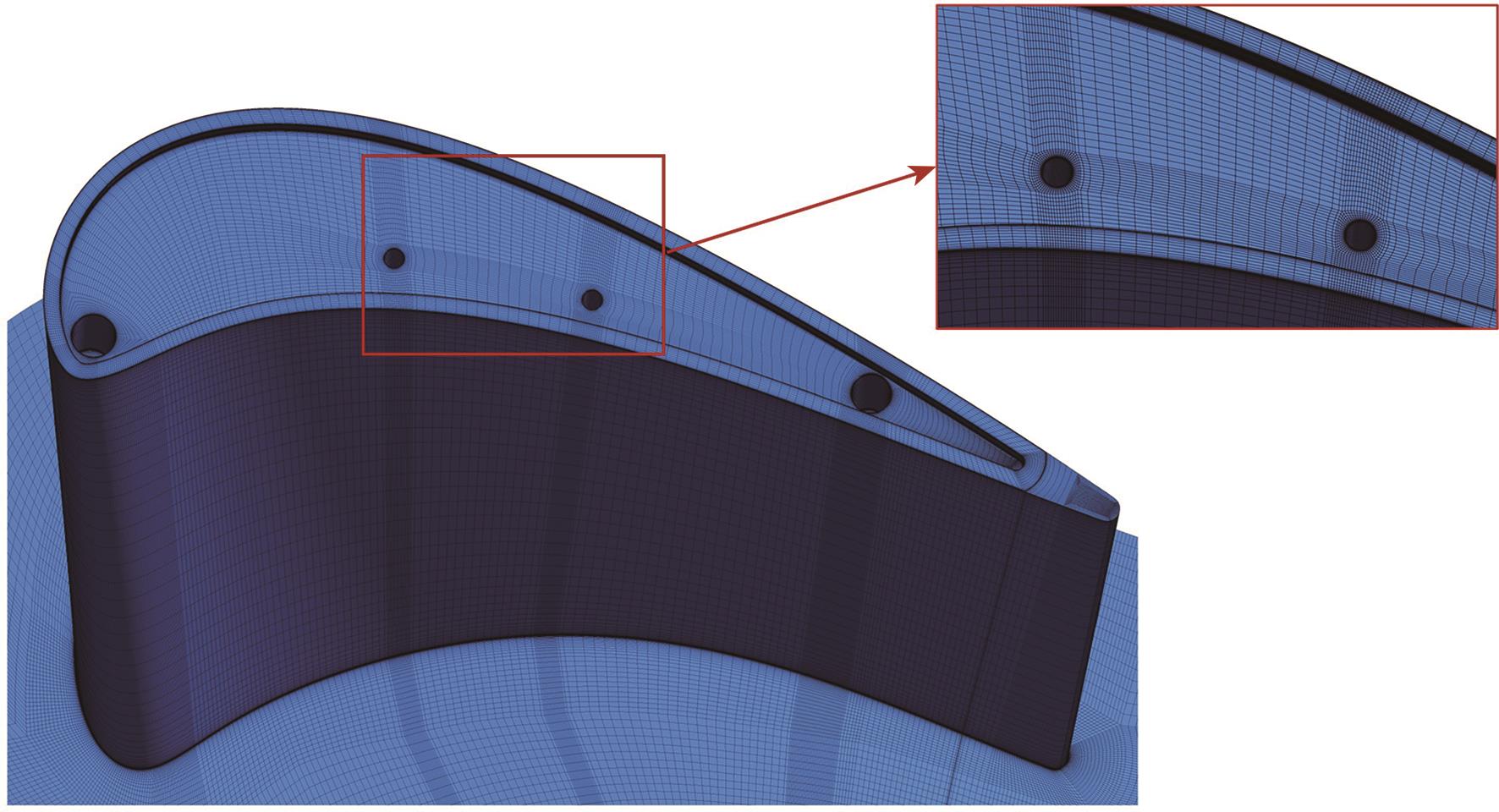
图3 动叶域结构化网格
Fig. 3 Structured mesh of blade domain
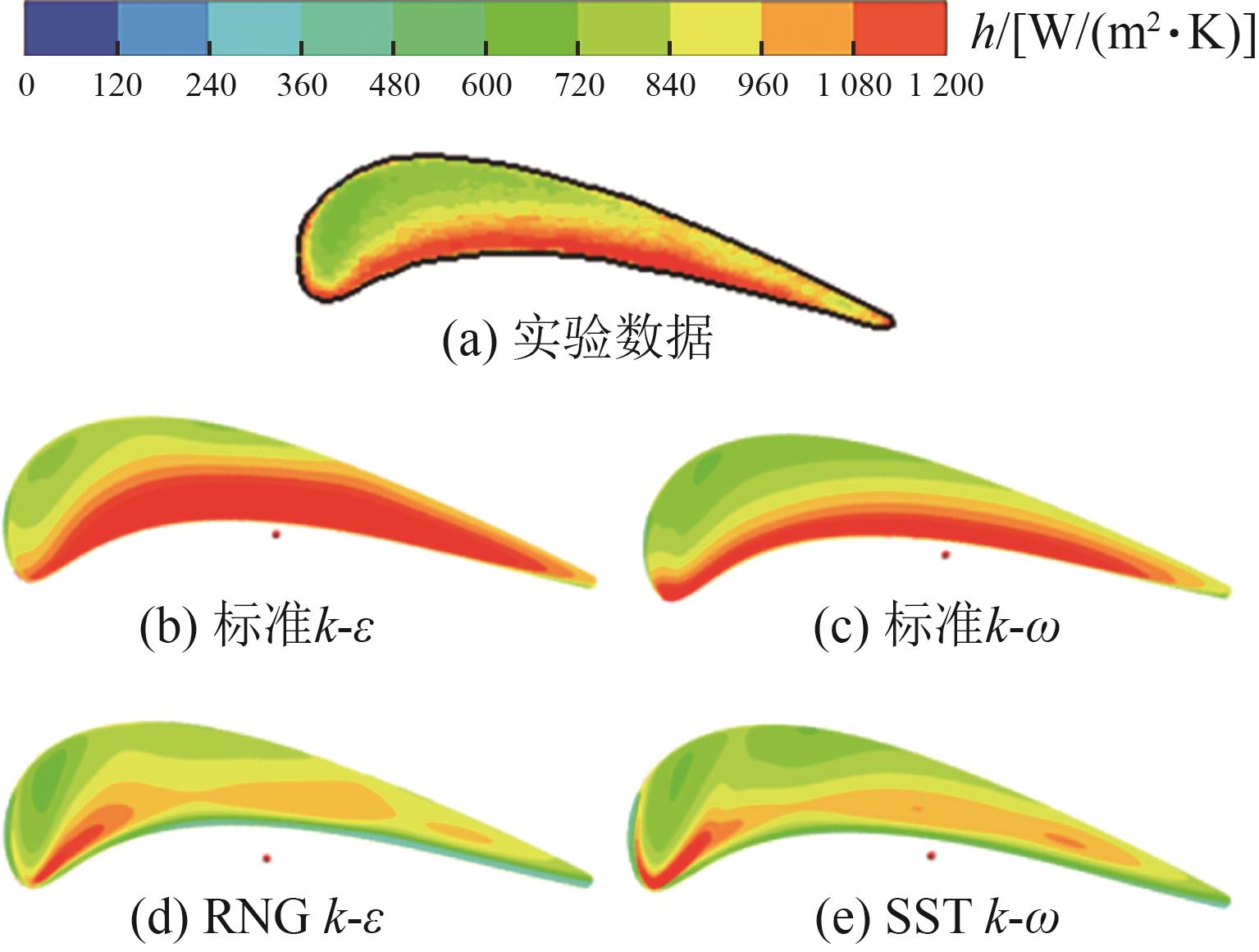
图4 湍流模型的叶顶传热系数云图与实验数据对比
Fig. 4 Comparison of heat transfer coefficient contours at blade tip between turbulence model results and experimental data
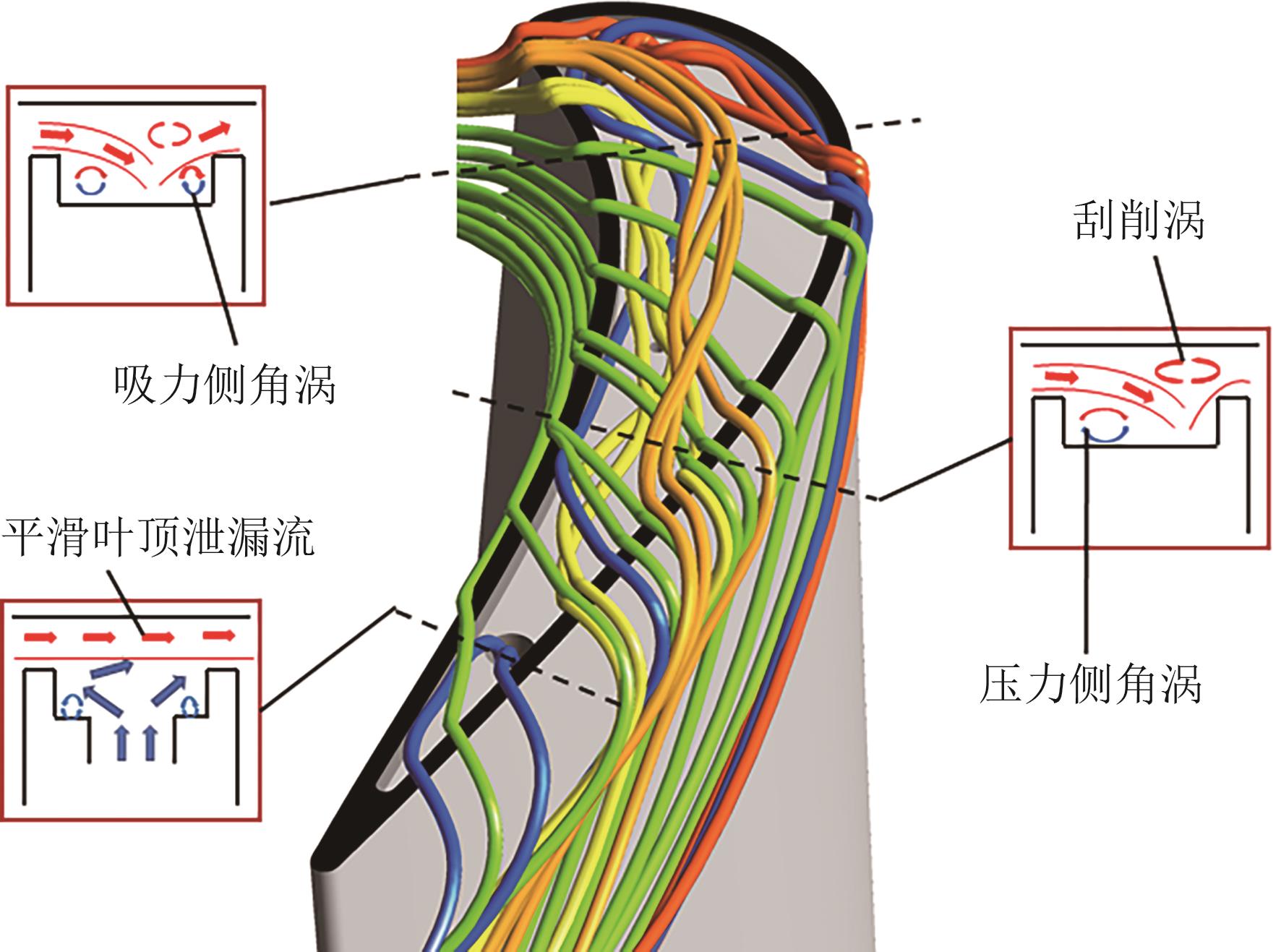
图5 case 1叶顶流线图
Fig. 5 Streamlines at blade tip in case 1
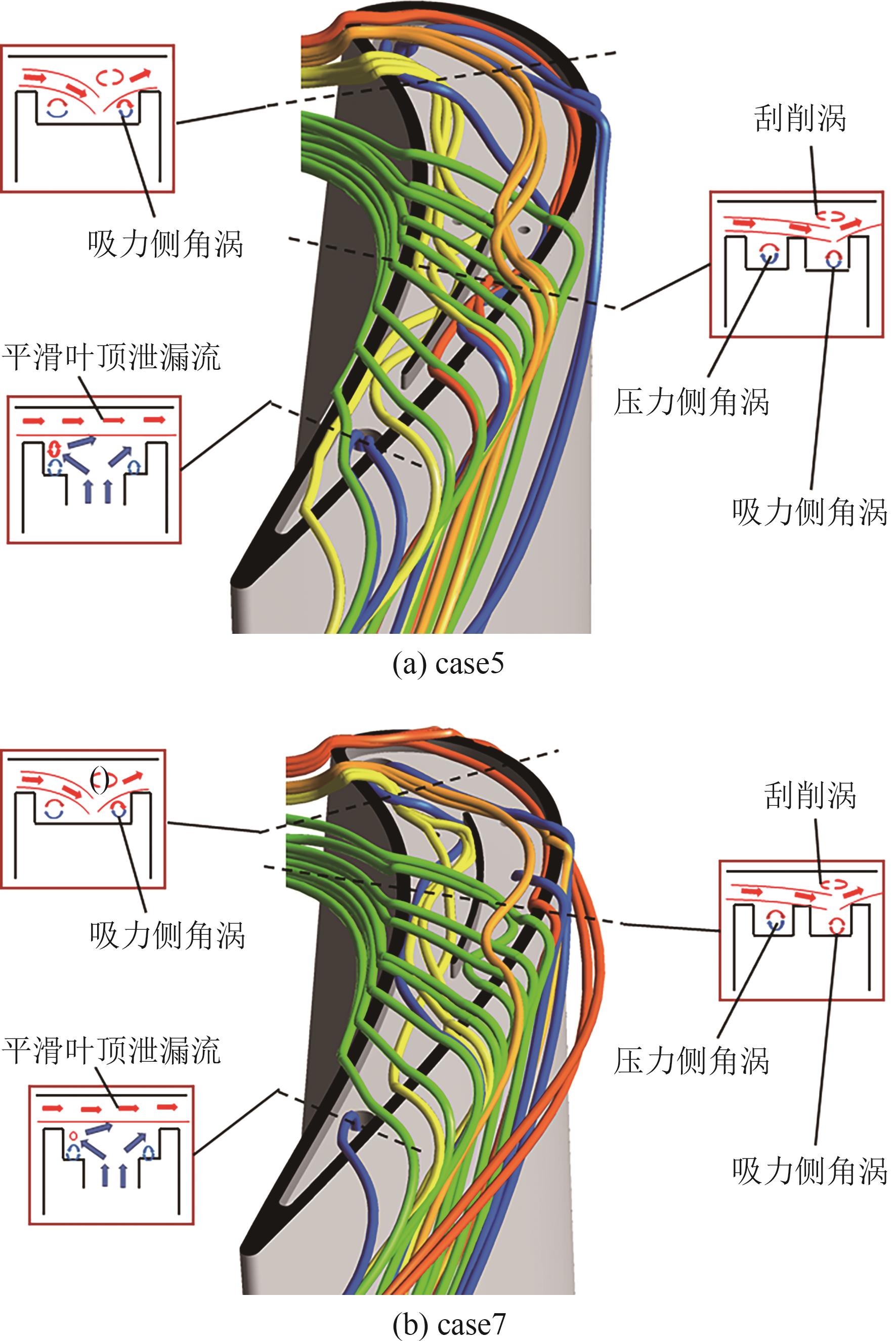
图6 微肋叶顶结构流线图
Fig. 6 Streamlines at micro-rib blade tip structure
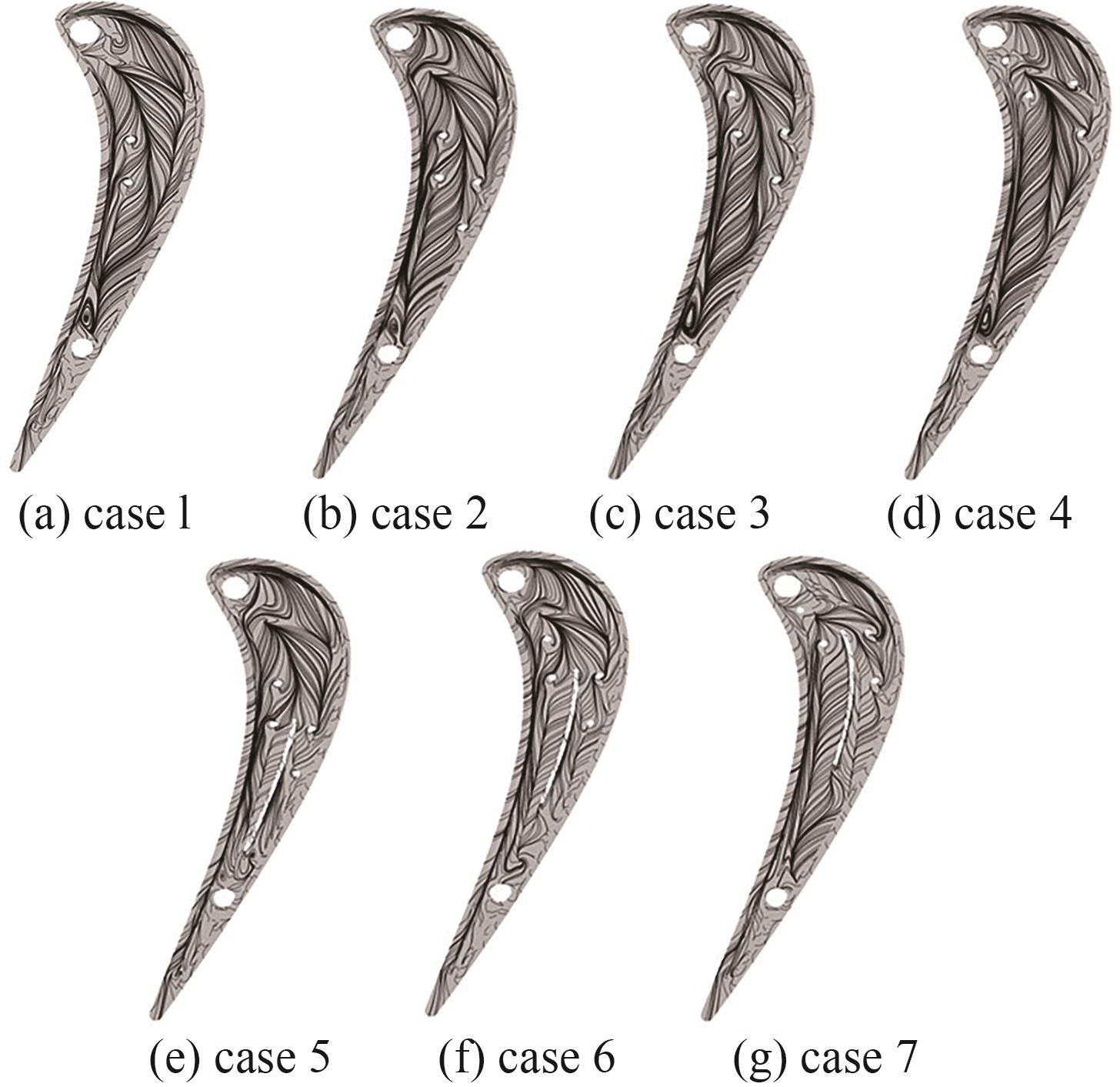
图7 叶顶极限流线
Fig. 7 Limiting streamlines at blade tip
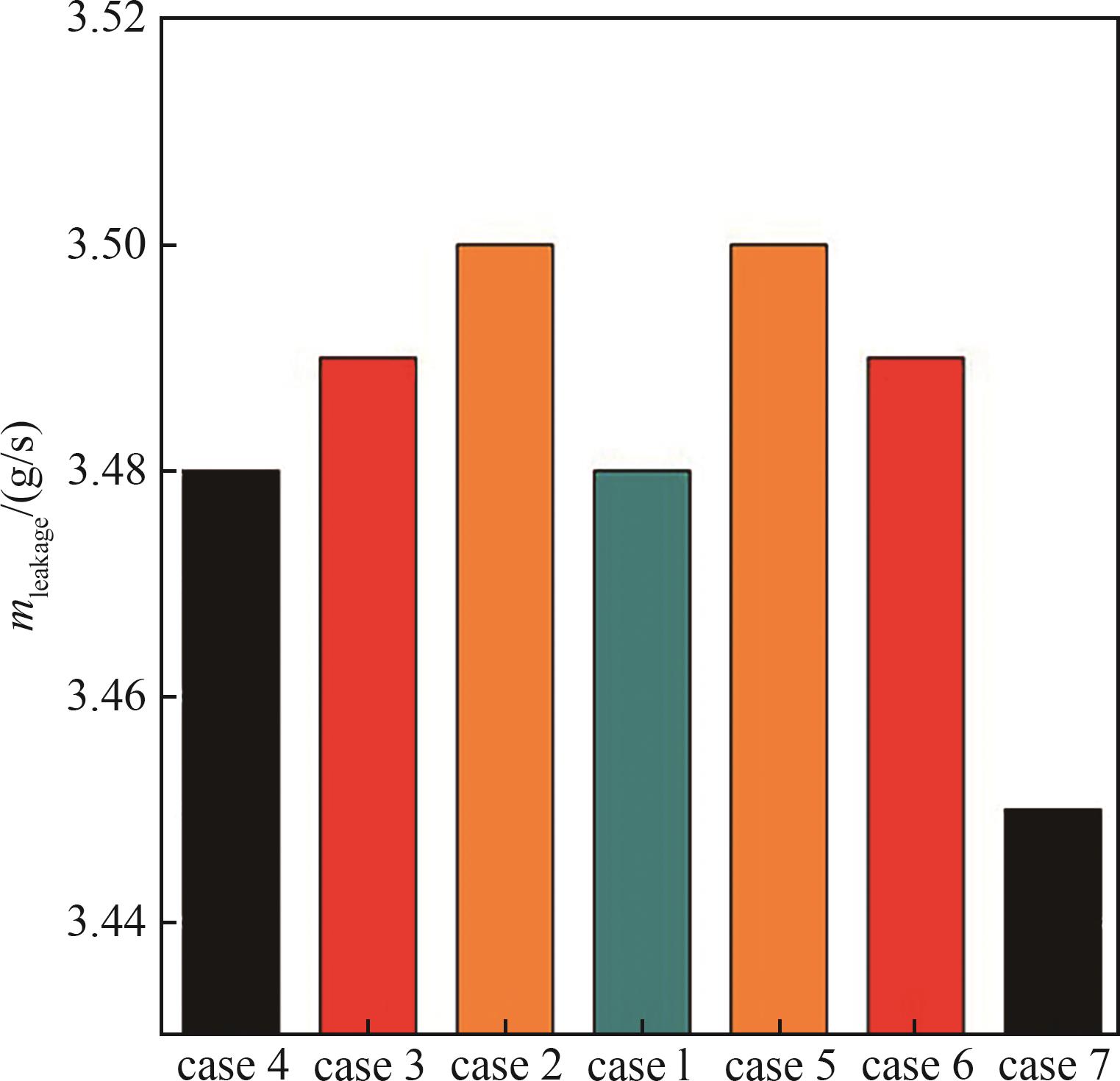
图8 叶顶结构泄漏流率
Fig. 8 Leakage flow rates at blade tip structure
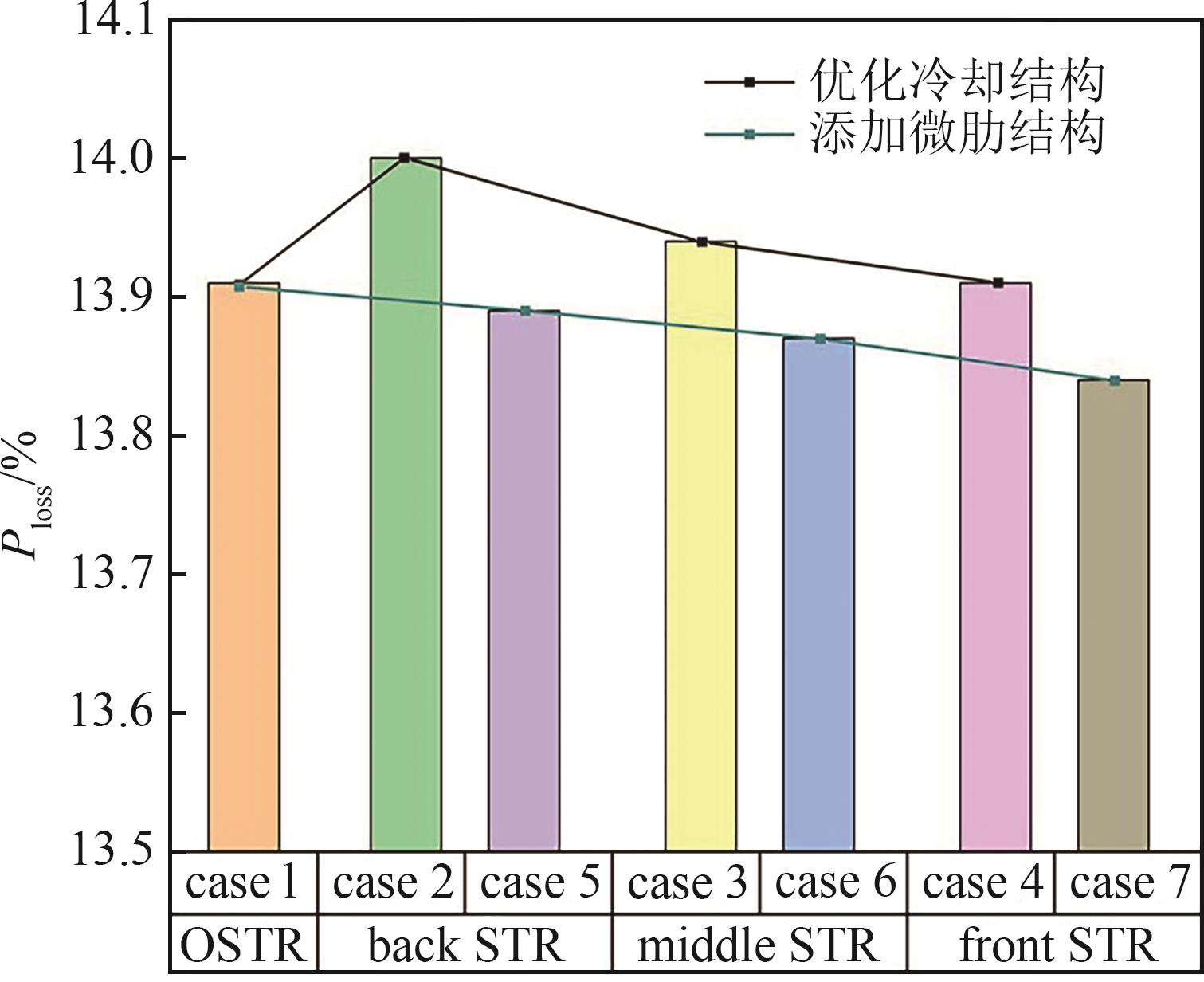
图9 动叶尾缘下游10 mm处流道截面平均总压损失系数
Fig. 9 Average total pressure loss coefficient at cross-section of flow passage 10 mm downstream of blade trailing edge
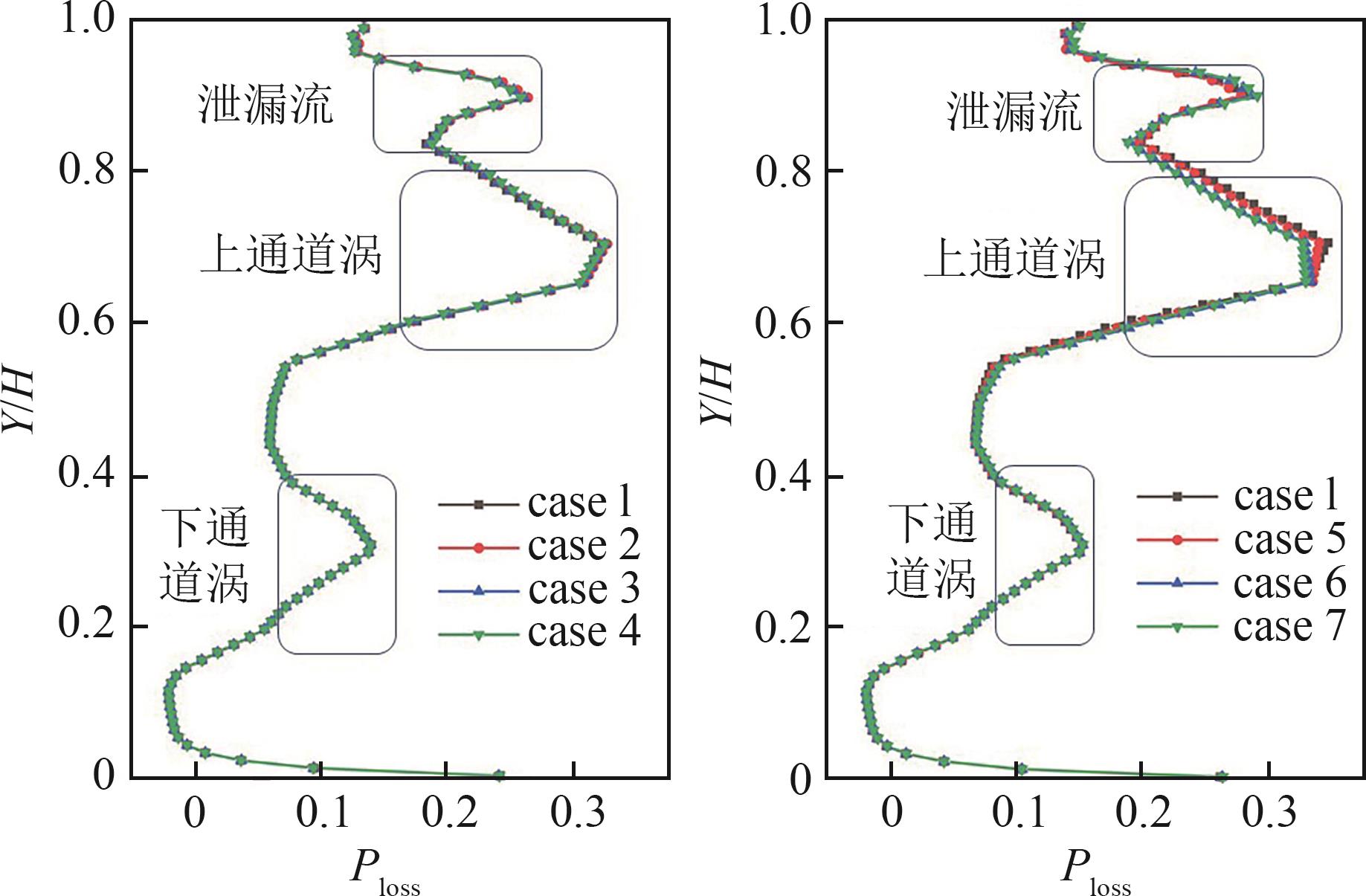
图10 总压损失系数沿叶高分布
Fig. 10 Distribution of total pressure loss coefficient along blade height
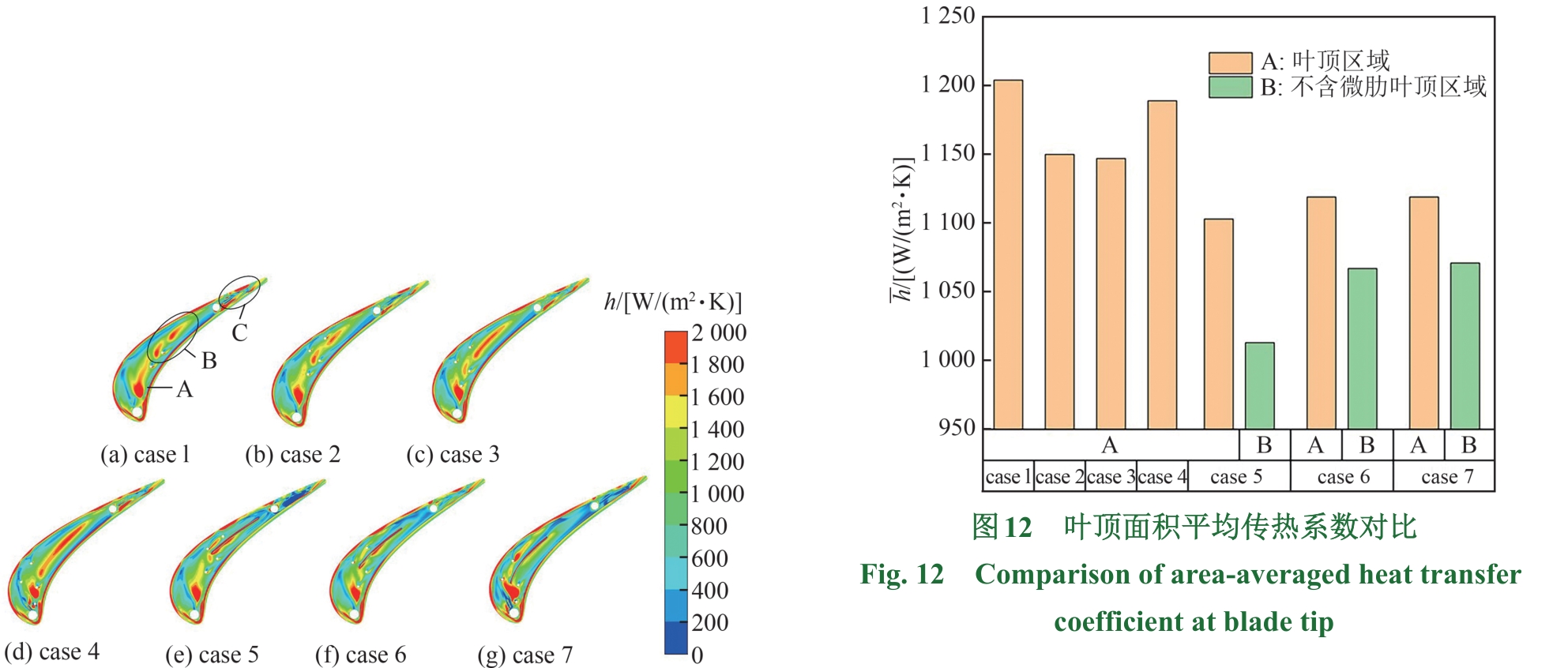
图11 叶顶传热系数云图
Fig. 11 Heat transfer coefficient contours at blade tip
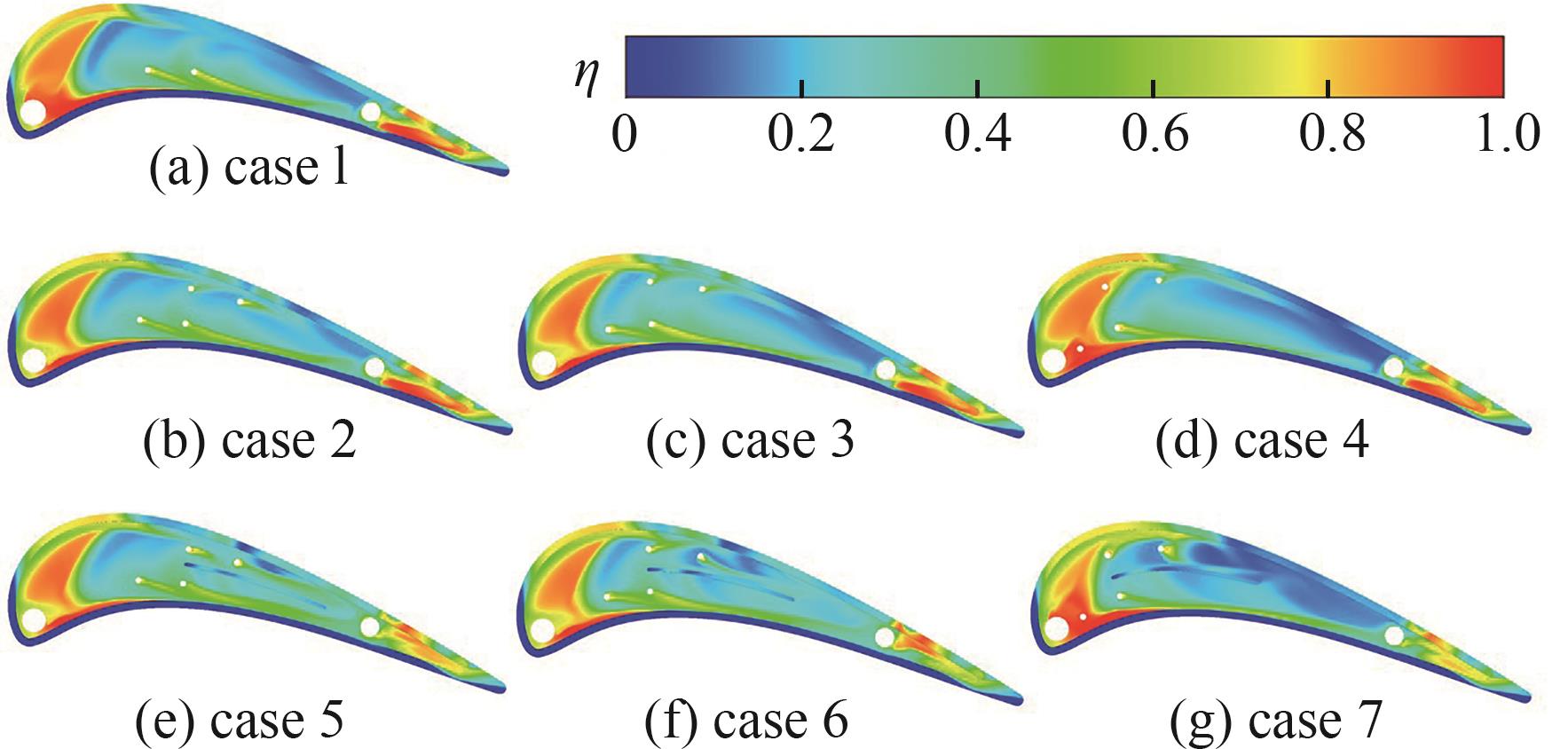
图13 叶顶气膜冷却有效度云图
Fig. 13 Film cooling effectiveness contours at blade tip
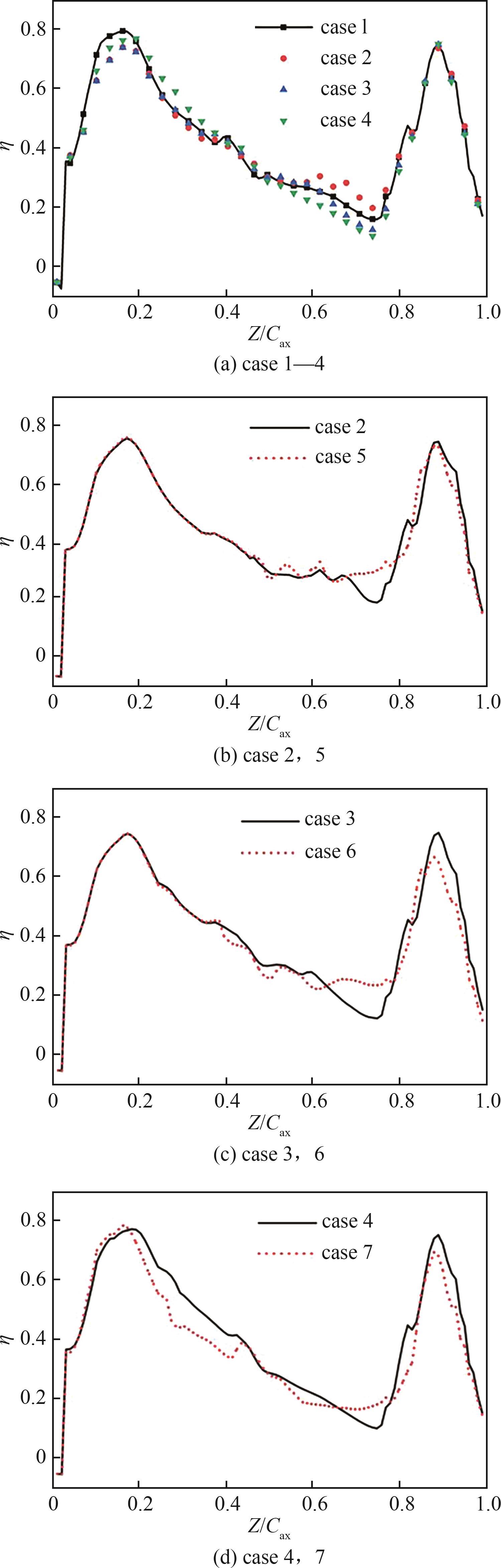
图14 叶顶沿轴向节距平均气膜冷却有效度分布
Fig. 14 Distribution of average film cooling effectiveness along axial direction at blade tip
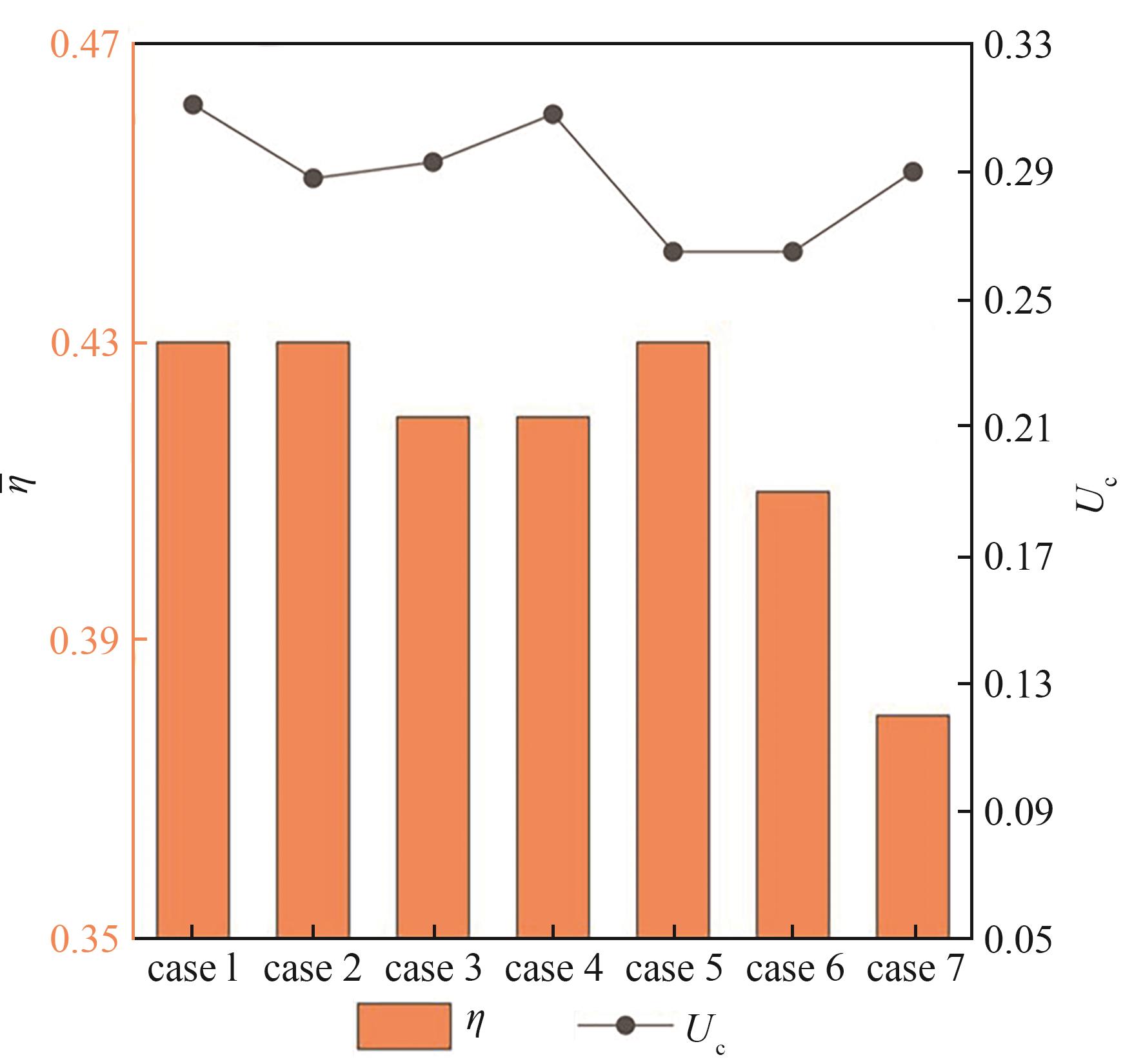
图15 叶顶面积平均气膜冷却有效度和有效度均匀度
Fig. 15 Area-averaged film cooling effectiveness and effectiveness uniformity at blade tip
| [1] | 左秋儒,栾勇,熊逸辉,等.燃气轮机透平叶片旋流冷却技术研究综述[J].发电技术,2024,45(5):802-813. |
| ZUO Q R, LUAN Y, XIONG Y H,et al .Review of research on swirl cooling technology of gas turbine blades[J].Power Generation Technology,2024,45(5):802-813. | |
| [2] | 黄呈帅,梁健,李波,等.基于掺氢燃气轮机的综合能源系统热经济学性能研究[J].中国电力,2024,57(1):195-208. |
| HUANG C S, LIANG J, LI B,et al .Study on the thermo-economic performance of a integrated energy system based on hydrogen-fueled gas turbine[J].Electric Power,2024,57(1):195-208. | |
| [3] | 张燕京,许超,王更阳,等.氢燃料燃气轮机研究现状及技术进展[J].分布式能源,2025,10(5):10-20. |
| ZHANG Y J, XU C, WANG G Y,et al .Development status and technical progress of hydrogen-fueled gas turbines[J].Distributed Energy,2025,10(5):10-20. | |
| [4] | 郑开云,池捷成,张学锋.基于燃气轮机的双工质气体压缩储能系统[J].南方能源建设,2025,12(6):9-16. |
| ZHENG K Y, CHI J C, ZHANG X F .Gas turbine-based binary working fluid gas compression energy storage system[J].Southern Energy Construction,2025,12(6):9-16. | |
| [5] | BUNKER R S .Axial turbine blade tips:function,design,and durability[J].Journal of Propulsion and Power,2006,22(2):271-285. doi:10.2514/1.11818 |
| [6] | PARK J S, LEE D H, CHO H H,et al .Heat transfer and effectiveness on the film cooled tip and inner rim surfaces of a turbine blade[C]//ASME Turbo Expo 2010:Power for Land,Sea,and Air,2010:1751-1761. doi:10.1115/gt2010-23203 |
| [7] | SENEL C B, MARAL H, KAVURMACIOGLU L A,et al .An aerothermal study of the influence of squealer width and height near a HP turbine blade[J].International Journal of Heat and Mass Transfer,2018,120:18-32. doi:10.1016/j.ijheatmasstransfer.2017.12.017 |
| [8] | LEE S W, CHAE B J .Effects of squealer rim height on aerodynamic losses downstream of a high-turning turbine rotor blade[J].Experimental Thermal and Fluid Science,2008,32(8):1440-1447. doi:10.1016/j.expthermflusci.2008.03.004 |
| [9] | CAMCI C, DEY D, KAVURMACIOGLU L .Tip leakage flows near partial squealer rims in an axial flow turbine stage[C]//ASME Turbo Expo 2003.Atlanta,Georgia,USA:ASME,2003:79-90. doi:10.1115/gt2003-38979 |
| [10] | DU K, LI Z, LI J,et al .Influences of a multi-cavity tip on the blade tip and the over tip casing aerothermal performance in a high pressure turbine cascade[J].Applied Thermal Engineering,2019,147:347-360. doi:10.1016/j.applthermaleng.2018.10.093 |
| [11] | 姜世杰,李志刚,李军 .肋条布局对涡轮动叶凹槽状叶顶传热和气动性能的影响研究[J].推进技术,2020,41(5):1103-1111. |
| JIANG S J, LI Z G, LI J .Study on the influence of rib layout on heat transfer and aerodynamic performance of groove tip of turbine rotor blade[J].Journal of Propulsion Technology,2020,41(5):1103-1111. | |
| [12] | TONG F, GOU W, LI L,et al .Numerical investigation of high pressure turbine blade tip-shaping effects on the aerothermal and dynamic performance[J].Multidiscipline Modeling in Materials and Structures,2019,15(6):1121-1135. doi:10.1108/mmms-03-2019-0053 |
| [13] | EL-GHANDOUR M, MORI K, NAKAMURA Y .Desensitization of tip clearance effects in axial flow turbines[J].Journal of Fluid Science and Technology,2010,5(2):317-330. doi:10.1299/jfst.5.317 |
| [14] | 高杰,郑群 .叶顶凹槽形态对动叶气动性能的影响[J].航空学报,2013,34(2):218-226. |
| GAO J, ZHENG Q .Effect of squealer tip geometry on rotor blade aerodynamic performance[J].Acta Aeronautica et Astronautica Sinica,2013,34(2):218-226. | |
| [15] | PARK J S, LEE S H, LEE W S,et al .Heat transfer and secondary flow with a multicavity gas turbine blade tip[J].Journal of Thermophysics and Heat Transfer,2016,30(1):120-129. doi:10.2514/1.t4541 |
| [16] | DU K, LI H, SUNDEN B,et al .Effects of ribbed-cavity tip on the blade tip aerothermal performance in a high pressure turbine stage[J].Journal of Thermal Science,2023,32(2): 800-811. doi:10.1007/s11630-023-1771-5 |
| [17] | WILHELM M, SCHIFFER H P .Experimental investigation of rotor tip film cooling at an axial turbine with swirling inflow using pressure sensitive paint[J].International Journal of Turbomachinery,Propulsion and Power,2019,4(3):23. doi:10.3390/ijtpp4030023 |
| [18] | 杜昆,晏鑫,李军 .燃气透平凹槽状叶顶气膜冷却特性研究[J].燃气轮机技术,2014,27(1):27-31. |
| DU K, YAN X, LI J .Investigations on the film cooling characteristics of the gas turbine blade with squealer tip[J].Gas Turbine Technology,2014,27(1):27-31. | |
| [19] | JEONG J, KIM W, KWAK J,et al .Heat transfer coefficient and film cooling effectiveness on the partial cavity tip of a gas turbine blade[J].ASME Journal of Turbomachinery,2019,141(7):071007. doi:10.1115/1.4042647 |
| [20] | ZHOU Z, WANG S, CHEN S .Numerical study of blade tip cooling at high speed with tip and pressure-side coolant injections[C]//ASME Turbo Expo 2018:Turbomachinery Technical Conference and Exposition.Oslo,Norway:ASME,2018:75915. doi:10.1115/gt2018-75915 |
| [21] | 郭嘉杰,王新军,鲍宇航 .椭圆孔及偏转角对凹槽叶顶气膜冷却流动换热特性的影响[J].西安交通大学学报,2021,55(1):153-161. |
| GUO J J, WANG X J, BAO Y H .Effect of elliptical hole and deflection angle on flow and heat transfer characteristics of film cooling at grooved blade tip[J].Journal of Xi’an Jiaotong University,2021,55(1):153-161. | |
| [22] | ZHANG B L, XIA J, YANG L P,et al . Investigation of aerothermal performance of blade tip with conical holes in transonic flow[J].Aerospace Science and Technology,2023,142:108590. doi:10.1016/j.ast.2023.108590 |
| [23] | HUANG T, LI H, SU X,et al .Influence of film hole arrangement on cooling and aerodynamic performance of blade tip with squealer structure[J].International Journal of Thermal Sciences,2024,195:108636. doi:10.1016/j.ijthermalsci.2023.108636 |
| [24] | 许承天,李志刚,李军 .涡轮动叶部分吸力侧肩壁凹槽状叶顶气热和冷却性能研究[J].推进技术, 2022,43(10):98-108. |
| XU C T, LI Z G, LI J .Study on gas heating and cooling performance of grooved blade tip of partial suction side shoulder wall of turbine rotor blade[J].Journal of Propulsion Technology,2022,43(10):98-108. | |
| [25] | LIN J, LI H, YOU R,et al .Experimental study on the film cooling characteristics of three complex tip structures[J].Journal of Thermal Science,2023,32(4):1378-1392. doi:10.1007/s11630-023-1831-x |
| [26] | BI S, MAO J, CHEN P,et al .Effect of multiple cavities and tip injection on the aerothermal characteristics of the squealer tip in turbine stage[J].Applied Thermal Engineering,2023,220:119631. doi:10.1016/j.applthermaleng.2022.119631 |
| [27] | KWAK J S, HAN J C .Heat-transfer coefficients of a turbine blade-tip and near-tip regions[J].Journal of Thermophysics and Heat Transfer,2003,17(3):297-303. doi:10.2514/2.6776 |
| [28] | MA H, ZHANG Q, HE L,et al .Cooling injection effect on a transonic squealer tip:part I:experimental heat transfer results and CFD validation[J].Journal of Engineering for Gas Turbines and Power,2017,139(5):052506. doi:10.1115/1.4035175 |
| [1] | 罗晟, 王磊, 李杨, 孟庆明, 张贵彬, 赵元宾. 变流量配水对湿冷塔冷却特性的影响及其优化[J]. 发电技术, 2025, 46(5): 1041-1049. |
| [2] | 卢文强, 陈岩, 付经伦, 刘海松, 孔祥玲. 基于蒙特卡罗法的燃气轮机总体性能不确定性分析[J]. 发电技术, 2025, 46(1): 126-134. |
| [3] | 张超, 张海川, 付经伦, 童志庭, 朱俊强. 燃气轮机透平动叶横流带肋通道中气膜冷却研究进展[J]. 发电技术, 2024, 45(5): 781-792. |
| [4] | 任静, 李雪英. 燃气轮机透平叶片旋转内部冷却通道研究现状与发展趋势[J]. 发电技术, 2024, 45(5): 793-801. |
| [5] | 左秋儒, 栾勇, 熊逸辉, 饶宇. 燃气轮机透平叶片旋流冷却技术研究综述[J]. 发电技术, 2024, 45(5): 802-813. |
| [6] | 成明, 项阳阳, 杨光伟, 周强, 李军. H级燃气轮机掺氢发电技术应用现状及关键问题分析[J]. 发电技术, 2024, 45(5): 814-825. |
| [7] | 余文昶, 丁阳, 王旭阳, 陈永刚, 毕克, 刘志刚, 上官新刚, 黄道火, 肖峰, 李光, 王广, 柯汉章, 孙亚松, 王鑫. 重型燃气轮机透平一级动叶冷却结构优化与评估[J]. 发电技术, 2024, 45(5): 838-846. |
| [8] | 史玉恒, 刘润泽, 李士龙, 蒋东翔. SGT5-4000F燃气轮机改进升级措施分析[J]. 发电技术, 2024, 45(5): 847-855. |
| [9] | 赵明阳, 殷林林, 韦文涛, 陈云, 刘日晨, 李军. 高压涡轮动叶叶尖掉块对气动性能及振动的影响[J]. 发电技术, 2024, 45(5): 856-867. |
| [10] | 王铀, 张晓东, 郝佩, 韩旭, 邓路炜, 李国强, 魏福双, 吉祥. 适用于掺氢燃气轮机的新型环境/热障涂层[J]. 发电技术, 2024, 45(5): 868-877. |
| [11] | 冯福媛, 李童宇, 李博, 陈衡, 潘佩媛, 徐钢, 刘彤. 基于气化和热解的医疗垃圾-废旧轮胎联合资源化利用系统性能分析[J]. 发电技术, 2024, 45(4): 611-621. |
| [12] | 崔则阳, 孔祥玲, 付经伦, 施佳君. 一种基于图像的燃气轮机叶型参数测量方法[J]. 发电技术, 2024, 45(1): 106-112. |
| [13] | 杨旸, 李耀强, 张金琦. 基于数值方法的燃气轮机贫预混旋流燃烧室单头部结构设计[J]. 发电技术, 2023, 44(5): 712-721. |
| [14] | 杨旸, 郭德三, 李耀强, 张金琦. 燃气轮机贫预混多旋流组合燃烧室头部结构设计[J]. 发电技术, 2023, 44(2): 183-192. |
| [15] | 张弘毅, 曲立涛. 9F级燃机选择性催化还原脱硝数值模拟研究与应用[J]. 发电技术, 2023, 44(1): 78-84. |
| 阅读次数 | ||||||
|
全文 |
|
|||||
|
摘要 |
|
|||||
