

Power Generation Technology ›› 2026, Vol. 47 ›› Issue (1): 157-167.DOI: 10.12096/j.2096-4528.pgt.260114
• Power Generation and Environmental Protection • Previous Articles
Lu CHEN1,2, Bo WANG1,3, Dengliang WANG1, Weixiong CHEN1, Jiping LIU4
Received:2025-05-06
Revised:2025-08-31
Published:2026-02-28
Online:2026-02-12
Contact:
Weixiong CHEN
Supported by:CLC Number:
Lu CHEN, Bo WANG, Dengliang WANG, Weixiong CHEN, Jiping LIU. Research on Performance Optimization of Transient Load Change Process in Coal-Fired Power Units[J]. Power Generation Technology, 2026, 47(1): 157-167.
| 参数 | 数值/% |
|---|---|
| 收到基碳质量分数Car | 53.08 |
| 收到基氢质量分数Har | 3.22 |
| 收到基氮质量分数Nar | 9.18 |
| 收到基氧质量分数Oar | 9.18 |
| 收到基硫质量分数Sar | 0.64 |
| 收到基灰分质量分数Aar | 18.10 |
| 收到基水分质量分数Mar | 15.00 |
Tab. 1 Elemental analysis of coal in boiler design
| 参数 | 数值/% |
|---|---|
| 收到基碳质量分数Car | 53.08 |
| 收到基氢质量分数Har | 3.22 |
| 收到基氮质量分数Nar | 9.18 |
| 收到基氧质量分数Oar | 9.18 |
| 收到基硫质量分数Sar | 0.64 |
| 收到基灰分质量分数Aar | 18.10 |
| 收到基水分质量分数Mar | 15.00 |
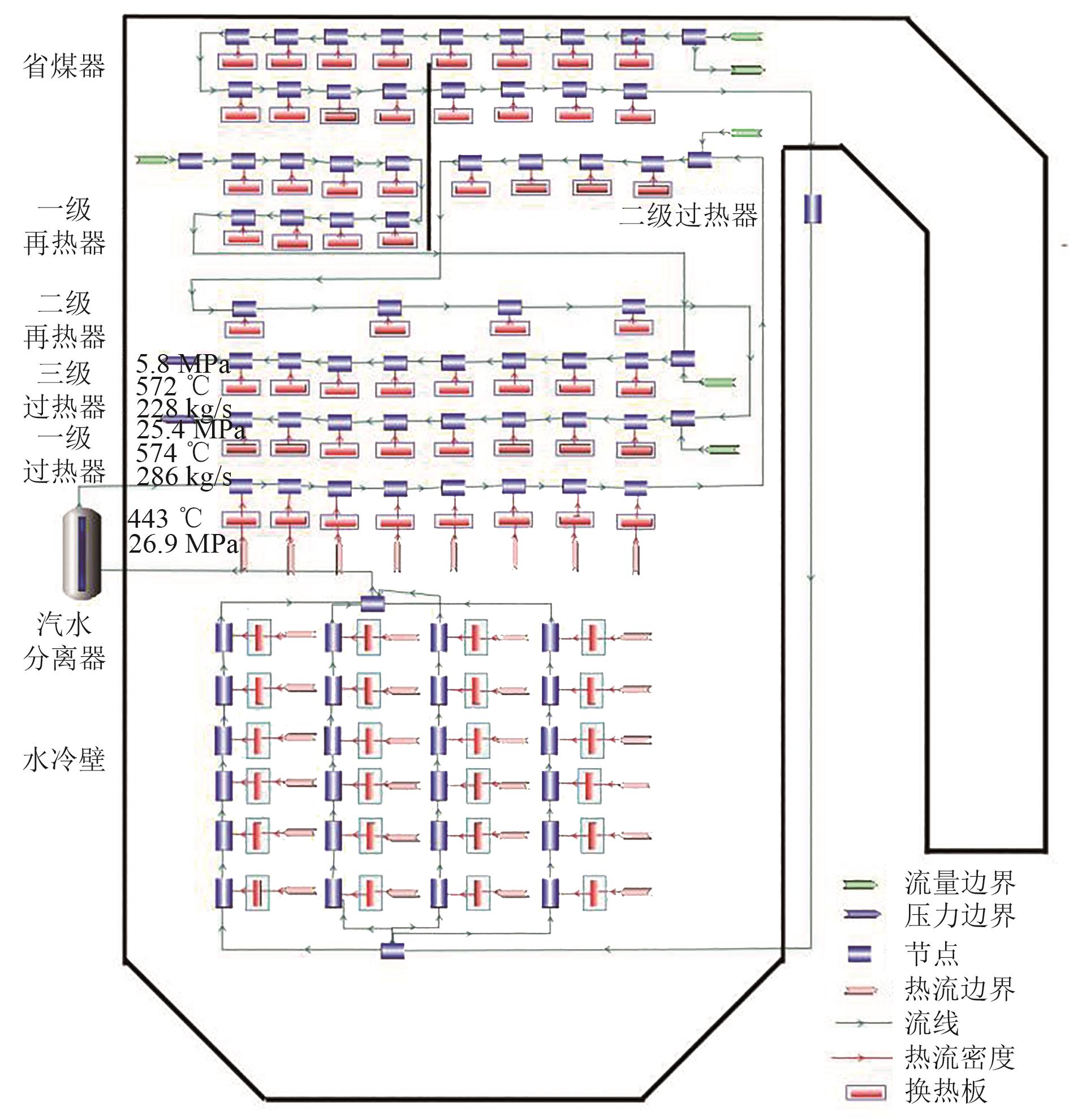
Fig. 1 Boiler system simulation model
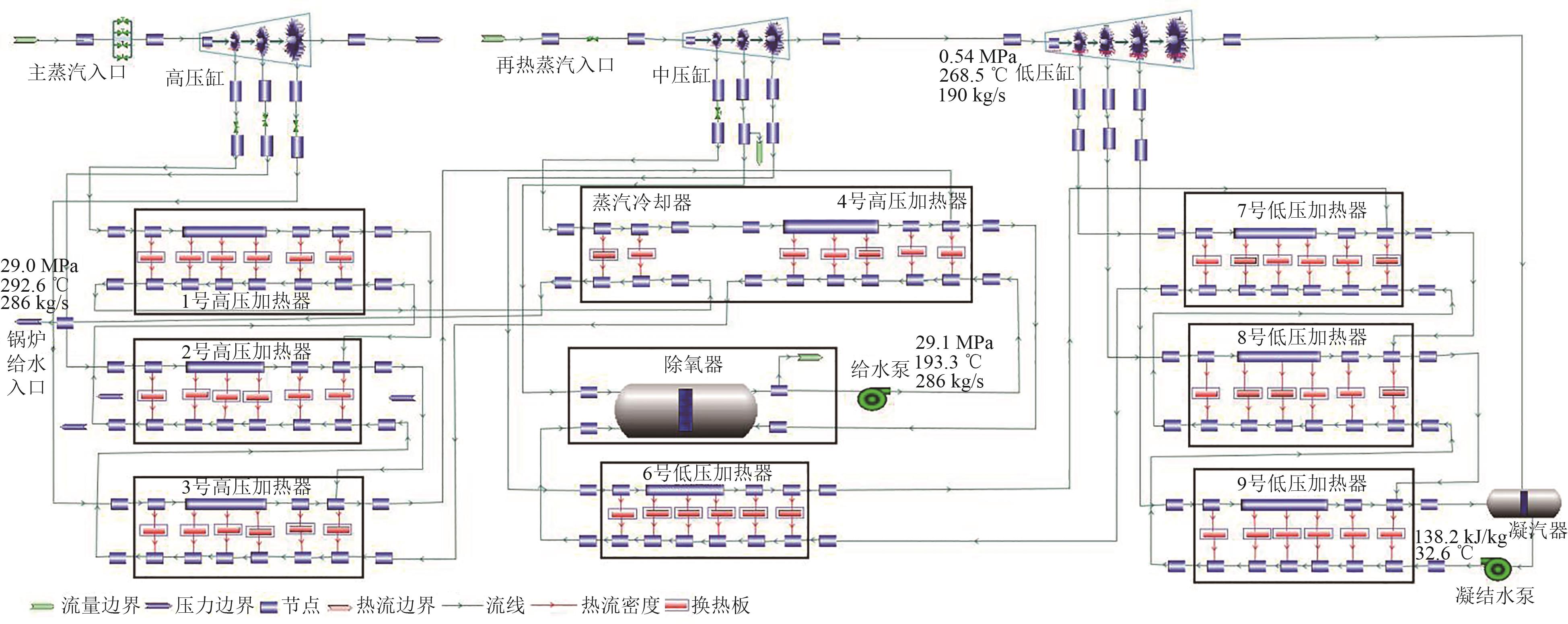
Fig. 2 Turbine system simulation model
| 类型 | 热力参数 | 100%THA | 75%THA | 50%THA | 30%THA |
|---|---|---|---|---|---|
| 主蒸汽温度 | 设计值/℃ | 574.0 | 574.0 | 574.0 | 574.0 |
| 模拟值/℃ | 574.2 | 573.2 | 574.3 | 574.6 | |
| 相对误差/% | 0.01 | -0.01 | 0.05 | 0.11 | |
| 主蒸汽压力 | 设计值/MPa | 25.40 | 18.25 | 12.02 | 10.10 |
| 模拟值/MPa | 25.14 | 18.34 | 11.86 | 9.99 | |
| 相对误差/% | -1.02 | 0.49 | -1.35 | -1.09 | |
| 再热蒸汽温度 | 设计值/℃ | 572.0 | 572.0 | 572.0 | 572.0 |
| 模拟值/℃ | 572.1 | 572.4 | 572.2 | 572.2 | |
| 相对误差/% | 0.02 | 0.06 | 0.03 | 0.03 | |
| 再热蒸汽压力 | 设计值/MPa | 4.61 | 3.42 | 2.26 | 1.85 |
| 模拟值/MPa | 4.62 | 3.41 | 2.24 | 1.87 | |
| 相对误差/% | 0.22 | -0.29 | -0.88 | 1.08 | |
| 给水温度 | 设计值/℃ | 306.4 | 292.6 | 266.9 | 239.1 |
| 模拟值/℃ | 310.7 | 290.9 | 265.1 | 236.5 | |
| 相对误差/% | 1.41 | -0.57 | -0.66 | -1.07 | |
| 给水压力 | 设计值/MPa | 28.96 | 20.78 | 14.35 | 9.76 |
| 模拟值/MPa | 29.21 | 21.05 | 14.55 | 9.92 | |
| 相对误差/% | 0.86 | 1.29 | 1.39 | 1.64 |
Tab. 2 Comparison between simulation results and unit design parameters
| 类型 | 热力参数 | 100%THA | 75%THA | 50%THA | 30%THA |
|---|---|---|---|---|---|
| 主蒸汽温度 | 设计值/℃ | 574.0 | 574.0 | 574.0 | 574.0 |
| 模拟值/℃ | 574.2 | 573.2 | 574.3 | 574.6 | |
| 相对误差/% | 0.01 | -0.01 | 0.05 | 0.11 | |
| 主蒸汽压力 | 设计值/MPa | 25.40 | 18.25 | 12.02 | 10.10 |
| 模拟值/MPa | 25.14 | 18.34 | 11.86 | 9.99 | |
| 相对误差/% | -1.02 | 0.49 | -1.35 | -1.09 | |
| 再热蒸汽温度 | 设计值/℃ | 572.0 | 572.0 | 572.0 | 572.0 |
| 模拟值/℃ | 572.1 | 572.4 | 572.2 | 572.2 | |
| 相对误差/% | 0.02 | 0.06 | 0.03 | 0.03 | |
| 再热蒸汽压力 | 设计值/MPa | 4.61 | 3.42 | 2.26 | 1.85 |
| 模拟值/MPa | 4.62 | 3.41 | 2.24 | 1.87 | |
| 相对误差/% | 0.22 | -0.29 | -0.88 | 1.08 | |
| 给水温度 | 设计值/℃ | 306.4 | 292.6 | 266.9 | 239.1 |
| 模拟值/℃ | 310.7 | 290.9 | 265.1 | 236.5 | |
| 相对误差/% | 1.41 | -0.57 | -0.66 | -1.07 | |
| 给水压力 | 设计值/MPa | 28.96 | 20.78 | 14.35 | 9.76 |
| 模拟值/MPa | 29.21 | 21.05 | 14.55 | 9.92 | |
| 相对误差/% | 0.86 | 1.29 | 1.39 | 1.64 |
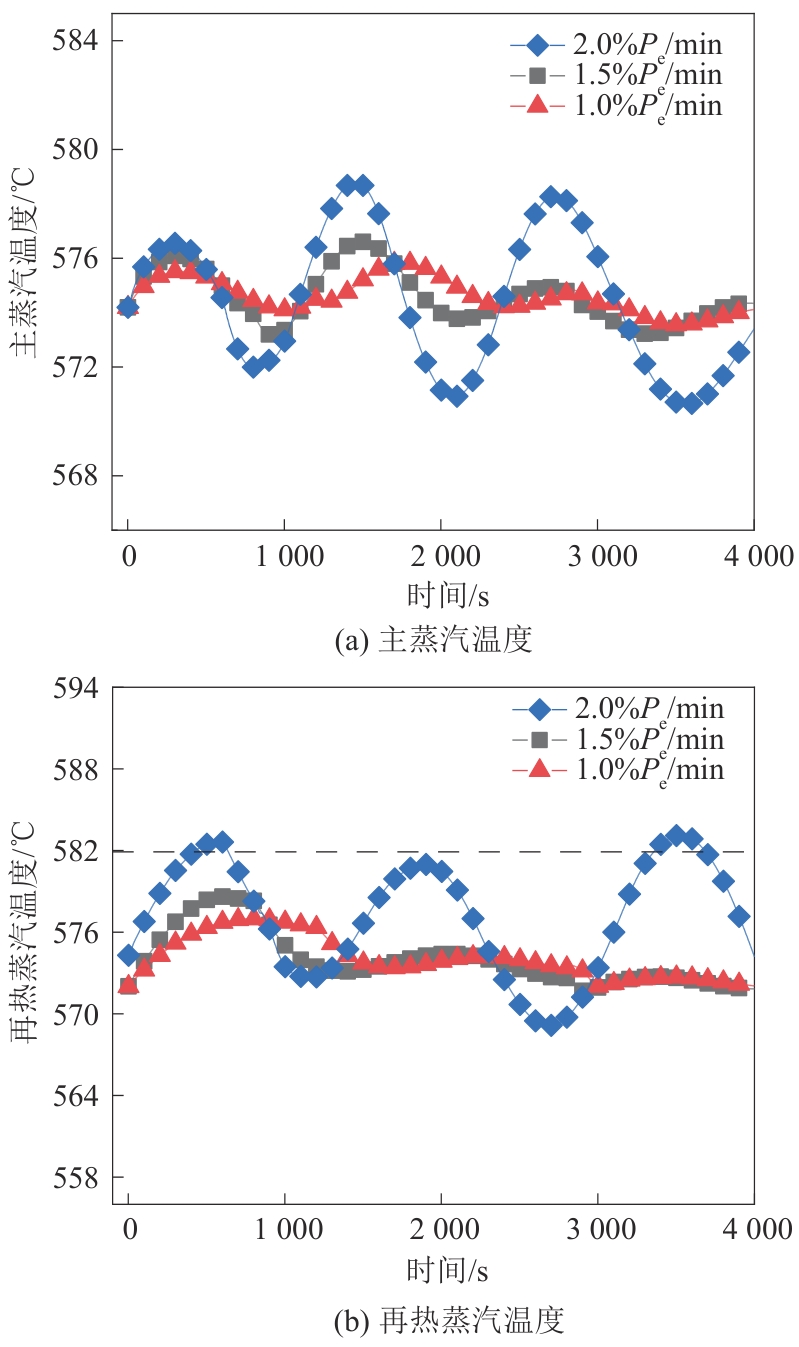
Fig. 3 Changes in main and reheat steam temperatures during load increase from 30% to 50% THA
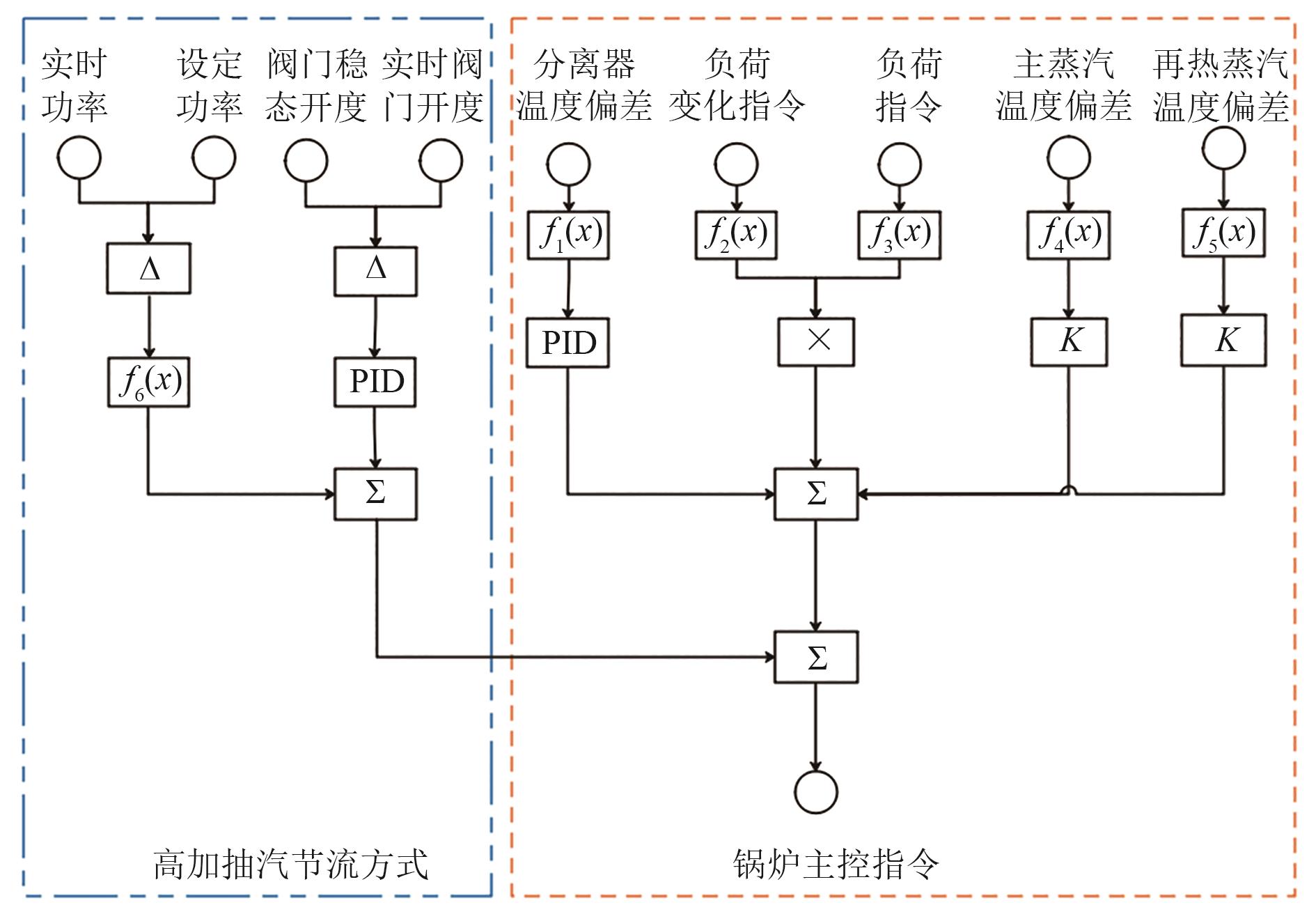
Fig. 4 Boiler main control commands after implementing high-pressure extraction steam throttling
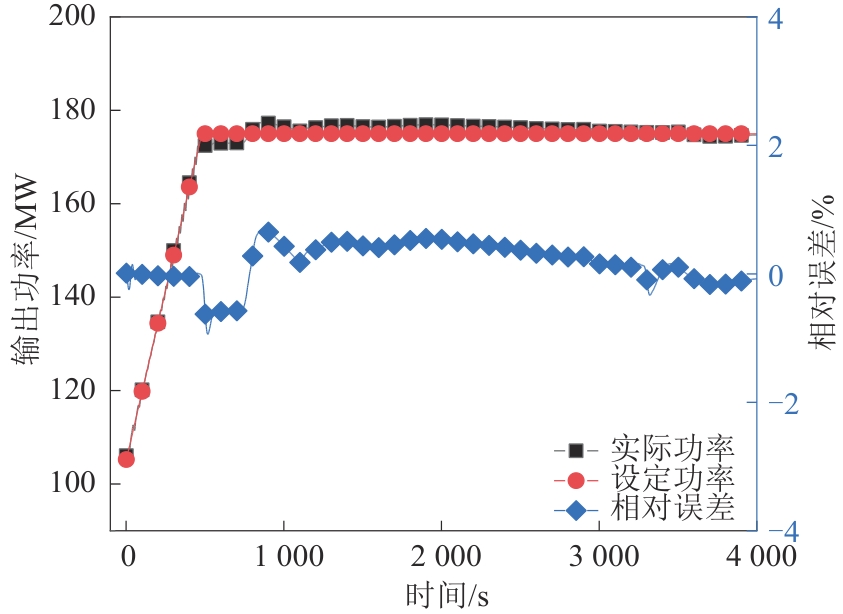
Fig. 5 Changes in unit output power after implementing high-pressure extraction steam throttling
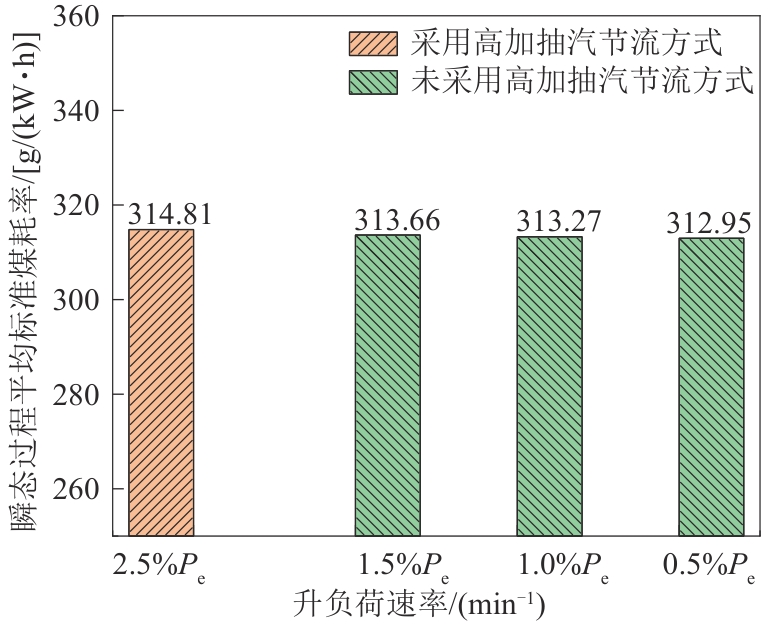
Fig. 6 Comparison of average standard coal consumption rate of unit during transient process under different load increase rates

Fig. 7 Optimized control strategy considering heat storage change within boiler system

Fig. 8 Comparison of coal feeding rate and boiler heat storage under original and optimized control strategies
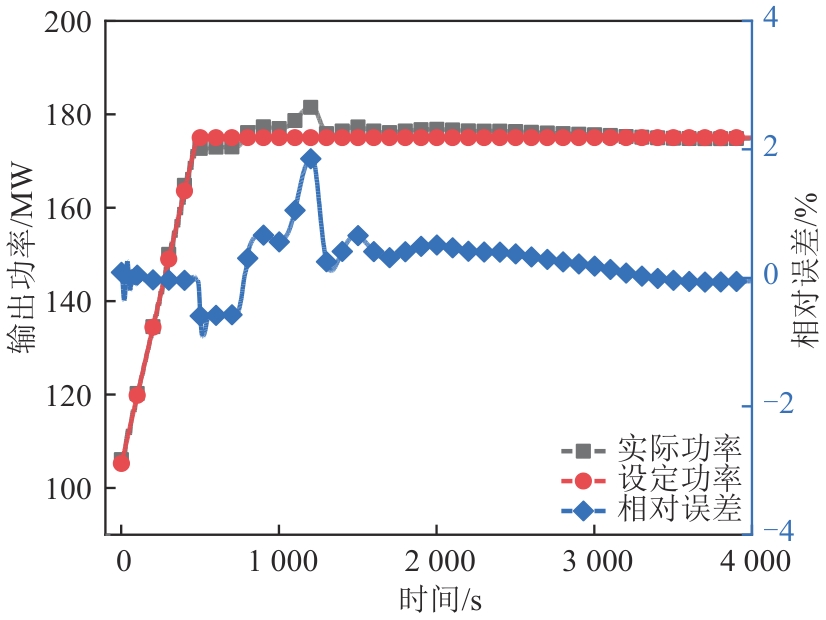
Fig. 9 Output power changes under optimized control strategy
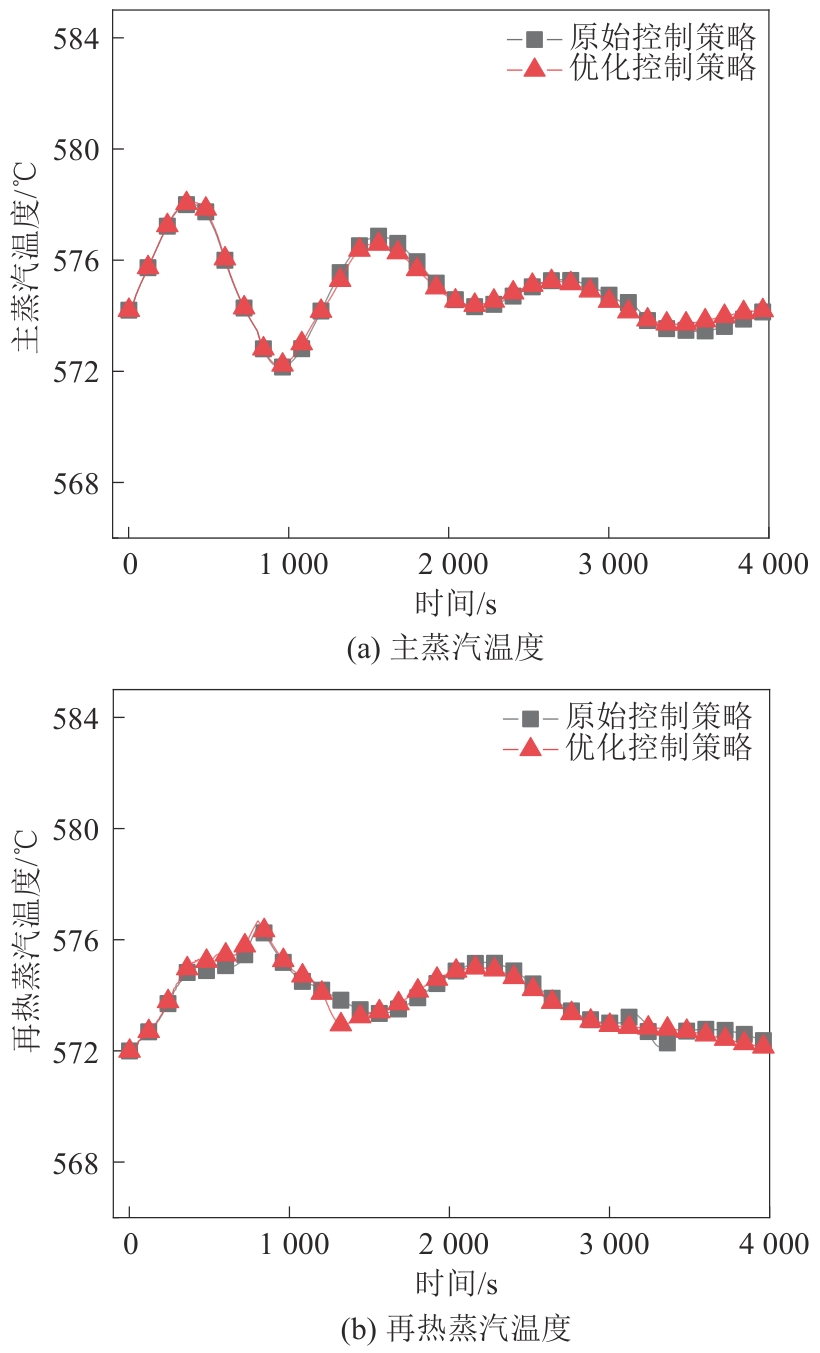
Fig. 10 Comparison of main and reheat steam temperatures under original and optimized control strategies
| [1] | 龙潇,张晋宾,陈令特 .未来能源技术展望[J].发电技术,2025,46(4):651-693. |
| LONG X, ZHANG J B, CHEN L T .Prospects for future energy technologies[J].Power Generation Technology,2025,46(4):651-693. | |
| [2] | 崔茗莉,冯天天,刘利利 .双碳目标下区块链与可再生能源的融合发展研究[J].智慧电力,2024,52(2):17-24. |
| CUI M L, FENG T T, LIU L L .Integration and development of blockchain and renewable energy under double carbon target[J].Smart Power,2024,52(2):17-24. | |
| [3] | 邵天铭,王利宁,高鑫,等 .“双碳”目标下中国建筑部门能源转型模拟[J].全球能源互联网,2024,7(6):640-649. |
| SHAO T M, WANG L N, GAO X,et al .Modelling energy transition of China’s building sector under the dual-carbon goal[J].Journal of Global Energy Interconnection,2024,7(6):640-649. | |
| [4] | 周勤勇,郝绍煦,董武,等 .“十五五”电网规划安全稳定分析关键问题[J].中国电力,2025,58(9):138-147. |
| ZHOU Q Y, HAO S X, DONG W,et al .Key issues in security and stability analysis for the “15 th five-year”power grid planning[J].Electric Power,2025,58(9):138-147. | |
| [5] | 张文博,邢海军,聂立君,等 .考虑高渗透率可再生能源的新型电力系统可靠性评估综述[J].电测与仪表,2025,62(9):51-61. |
| ZHANG W B, XING H J, NIE L J,et al .Review of the novel power system reliability assessment with high penetration renewable energy[J].Electrical Measurement & Instrumentation,2025,62(9):51-61. | |
| [6] | 汤明润,李若旸,刘慕然,等 .电力系统稳态下可再生能源大规模接入量预测[J].中国电力,2025,58(2):126-132. |
| TANG M R, LI R Y, LIU M R,et al .Prediction of large-scale renewable energy access under steady state of electric power system[J].Electric Power,2025,58(2):126-132. | |
| [7] | 朱继忠,高美云,肖鹏飞,等 .大规模海上风电并网与运行技术综述[J].电力工程技术,2025,44(5):2-24. |
| ZHU J Z, GAO M Y, XIAO P F,et al .Review of grid integration and operation technologies for large-scale offshore wind power[J].Electric Power Engineering Technology,2025,44(5):2-24. | |
| [8] | 周倩,樊宇姣,张艳丽,等 .考虑大规模可再生能源接入的电力系统多目标无功优化方法[J].电网与清洁能源,2025,41(4):97-103. |
| ZHOU Q, FAN Y J, ZHANG Y L,et al .The multi-objective reactive power optimization of power systems considering large-scale renewable integration[J].Power System and Clean Energy,2025,41(4):97-103. | |
| [9] | 骆国铭,黄小耘,范心明 .考虑可再生能源特性的实时电力调度优化研究[J].电力科学与技术学报,2025,40(3):163-173. |
| LUO G M, HUANG X Y, FAN X M .Research on real-time power scheduling optimization considering renewable energy characteristics[J].Journal of Electric Power Science and Technology,2025,40(3):163-173. | |
| [10] | 严新荣,胡志勇,张鹏威,等 .煤电机组运行灵活性提升技术研究与应用[J].发电技术,2024,45(6):1074-1086. |
| YAN X R, HU Z Y, ZHANG P W,et al .Research and application of operation flexibility improvement technology for coal-fired power unit[J].Power Generation Technology,2024,45(6):1074-1086. | |
| [11] | CHEN C, LIU M, LI M J,et al .Digital twin modeling and operation optimization of the steam turbine system of thermal power plants[J].Energy,2024,290:129969. doi:10.1016/j.energy.2023.129969 |
| [12] | 樊梦阳,赵永亮,张成宇,等 .高低位分轴布置燃煤发电机组不同抽汽节流方案的运行灵活性研究[J].工程热物理学报,2023,44(11):2991-2998. |
| FAN M Y, ZHAO Y L, ZHANG C Y,et al .Research on the operational flexibility of different extraction steam throttling schemes for coal-fired generating units arranged by high-low position axis[J].Journal of Engineering Thermophysics,2023,44(11):2991-2998. | |
| [13] | 丁湧 .1 000 MW超超临界燃煤锅炉深度调峰研究[J].发电技术,2024,45(3):382-391. |
| DING Y .Research on deep peak shaving performance of 1 000 MW ultra-supercritical coal-fired boiler[J].Power Generation Technology,2024,45(3):382-391. | |
| [14] | 窦文雷,张娜,胡旌伟,等 .寒地新能源与灵活供热煤电改造协同规划模型[J].电力建设,2024,45(9):13-25. |
| DOU W L, ZHANG N, HU J W,et al .Cooperative planning model for renewable energy and flexible coal-fired CHP in cold regions[J].Electric Power Construction,2024,45(9):13-25. | |
| [15] | DENG B Y, ZHANG M, SHAN L,et al .Modeling study on the dynamic characteristics in the full-loop of a 350 MW supercritical CFB boiler under load regulation[J].Journal of the Energy Institute,2021,97:117-130. doi:10.1016/j.joei.2021.04.014 |
| [16] | 王志轩,张晶杰,董博,等 .“双碳”目标下燃煤电厂灵活性改造及政策建议[J].电力科技与环保,2024,40(3):213-220. |
| WANG Z X, ZHANG J J, DONG B,et al .Research on technology and policy of flexibility renovation for coal-fired power plants under carbon peaking and carbon neutrality goal[J].Electric Power Technology and Environmental Protection,2024,40(3):213-220. | |
| [17] | 杨正,孙亦鹏,温志强,等 .深度调峰工况下超临界机组的干湿态转换策略研究[J].发电技术,2024,45(2):233-239. |
| YANG Z, SUN Y P, WEN Z Q,et al .Research on dry-wet conversion strategy of supercritical thermal power units under deep peaking condition[J].Power Generation Technology,2024,45(2):233-239. | |
| [18] | 刘志强,李建锋,潘荔,等 .中国煤电机组改造升级效果分析与展望[J].中国电力,2024,57(7):1-11. |
| LIU Z Q, LI J F, PAN L,et al .Analysis and prospect of transformation and upgrading effects of coal-fired power units in China[J].Electric Power,2024,57(7):1-11. | |
| [19] | 丁天阳,陈辉,张超群,等 .熔盐储热用于煤电机组灵活性改造的研究进展[J].电力科技与环保,2025,41(4):528-541. |
| DING T Y, CHEN H, ZHANG C Q,et al .Research progress on molten salt thermal energy storage for flexibility retrofit of tcoal-fired power units[J].Electric Power Technology and Environmental Protection,2025,41(4):528-541. | |
| [20] | WANG C Y, LIU M, LI B X,et al .Thermodynamic analysis on the transient cycling of coal-fired power plants:Simulation study of a 660 MW supercritical unit[J].Energy,2017,122:505-527. doi:10.1016/j.energy.2017.01.123 |
| [21] | WANG Z, LIU M, ZHAO Y L,et al .Flexibility and efficiency enhancement for double-reheat coal-fired power plants by control optimization considering boiler heat storage[J].Energy,2020,201:117594. doi:10.1016/j.energy.2020.117594 |
| [22] | LIU Z F, WANG C Y, FAN J L,et al .Enhancing the flexibility and stability of coal-fired power plants by optimizing control schemes of throttling high-pressure extraction steam[J].Energy,2024,288:129756. doi:10.1016/j.energy.2023.129756 |
| [23] | ZHAO Y L, LIU M, WANG C Y,et al .Increasing operational flexibility of supercritical coal-fired power plants by regulating thermal system configuration during transient processes[J].Applied Energy,2018,228:2375-2386. doi:10.1016/j.apenergy.2018.07.070 |
| [24] | ZHAO Y L, WANG C Y, LIU M,et al .Improving operational flexibility by regulating extraction steam of high-pressure heaters on a 660 MW supercritical coal-fired power plant:a dynamic simulation[J].Applied Energy,2018,212:1295-1309. doi:10.1016/j.apenergy.2018.01.017 |
| [25] | 叶青,王朝阳,易广宙,等 .超超临界二次再热尾部三烟道锅炉汽温动态特性及协同优化控制[J].动力工程学报,2023,43(2):117-125. |
| YE Q, WANG C Y, YI G Z,et al .Dynamic characteristics of steam temperature and collaborative optimization control of ultra-supercritical secondary reheat tail three-flue boiler[J].Journal of Chinese Society of Power Engineering,2023,43(2):117-125. | |
| [26] | 侯国莲,黄婷,郭志强,等 .适应大型燃煤机组全工况灵活性运行的快速变负荷控制策略[J].热力发电,2024,53(12):93-101. |
| HOU G L, HUANG T, GUO Z Q,et al .A rapid load varying control strategy for flexible operation of large scale coal-fired power unit under full operating conditions[J].Thermal Power Generation,2024,53(12):93-101. | |
| [27] | WANG Z, LIU M, YAN H,et al .Improving flexibility of thermal power plant through control strategy optimization based on orderly utilization of energy storage[J].Applied Thermal Engineering,2024,240:122231. doi:10.1016/j.applthermaleng.2023.122231 |
| [28] | 赵征,孙赫宇,陈江丽 .基于AGC负荷指令优化分解的火电机组蓄能综合利用[J].动力工程学报,2023,43(5):575-581. |
| ZHAO Z, SUN H Y, CHEN J L .Optimized decomposition of AGC load command for comprehensive utilization of energy storage in the thermal power unit[J].Journal of Chinese Society of Power Engineering,2023,43(5):575-581. | |
| [29] | 马良玉,赵晶璇,马进 .高压加热器抽汽切除及灵活调节仿真试验研究[J].热能动力工程,2021,36(8):114-120. |
| MA L Y, ZHAO J X, MA J .Simulation study on cutting-off and flexible regulation of the extraction steam to high-pressure heaters[J].Journal of Engineering for Thermal Energy and Power,2021,36(8):114-120. | |
| [30] | 王唯铧,高明明,王勇权,等 .350 MW热电联产循环流化床机组负荷响应特性[J].洁净煤技术,2024,30(9):102-110. |
| WANG W H, GAO M M, WANG Y Q,et al .Load response characteristics of 350 MW cogeneration CFB unit[J].Clean Coal Technology,2024,30(9):102-110. | |
| [31] | WANG Z, LIU M, YAN J J .Flexibility and efficiency co-enhancement of thermal power plant by control strategy improvement considering time varying and detailed boiler heat storage characteristics[J].Energy,2021,232:121048. doi:10.1016/j.energy.2021.121048 |
| [32] | YAN H, LIU M, WANG Z,et al .Flexibility enhancement of solar-aided coal-fired power plant under different direct normal irradiance conditions[J].Energy,2023,262:125349. doi:10.1016/j.energy.2022.125349 |
| [33] | 国家能源局 . 火力发电厂模拟量控制系统验收测试规程: [S].北京:中国电力出版社,2015. |
| National Energy Administration . Code for acceptance test of modulating control system in fossil fuel power plant: [S].Beijing:China Electric Power Press,2015. | |
| [34] | 赵永亮,许朋江,居文平,等 .燃煤发电机组瞬态过程灵活高效协同运行的理论与技术研究综述[J].中国电机工程学报,2023,43(6):2080-2100. |
| ZHAO Y L, XU P J, JU W P,et al .Overview of theoretical and technical research on flexible and efficient synergistic operation of coal-fired power units during transient processes[J].Proceedings of the CSEE,2023,43(6):2080-2100. |
| [1] | Yiwei XU, Yan HONG, Xiaopeng ZHAO, Bingwei SUI. Analysis of Influence of Coal-Ammonia Co-firing on the Heat Transfer Characteristics of Heating Surfaces in Coal-Fired Boiler [J]. Power Generation Technology, 2025, 46(5): 1022-1031. |
| [2] | Jing CHEN, Hui LIU, Meng ZHU, Can WANG, Lei CHEN, Jing ZHOU, Kai XU, Long JIANG, Song HU, Jun XIANG. Analysis of Influence of Flue Gas Recirculation on Thermodynamic Performance and Economic Efficiency of 125 MW Supercritical CO2 Coal-Fired Power Generation Unit [J]. Power Generation Technology, 2025, 46(5): 986-995. |
| [3] | Shuaining ZHANG, Mingming GAO, Yongquan WANG, Weihua WANG, Haoyang YU, Zhong HUANG. Integrated Modeling Study of Desulfurization in Circulating Fluidized Bed Boilers Under Wide Load Conditions [J]. Power Generation Technology, 2025, 46(4): 849-856. |
| [4] | Yicai WANG, Xin YU, Dunxi YU. Research Progress on Utilization of Arundo Donax L. Combustion [J]. Power Generation Technology, 2025, 46(3): 570-578. |
| [5] | Haibao ZHAO, Yuzhong HE, Hanxiao LIU, Jiang LIANG. Improvement and Engineering Application on Pulse Power Supply of Electrostatic Precipitator in Coal-Fired Power Plant [J]. Power Generation Technology, 2025, 46(1): 154-160. |
| [6] | Xinrong YAN, Zhiyong HU, Pengwei ZHANG, Chenghang ZHENG, Jun XIANG, Guo’an TANG, Jinliang LIU, Jianxiong GUO, Yibo HUANG, Pengfeng YU, Xiang GAO. Research and Application of Operation Flexibility Improvement Technology for Coal-Fired Power Unit [J]. Power Generation Technology, 2024, 45(6): 1074-1086. |
| [7] | Qiwei ZHENG, Xinyue ZHAO, Di LU, Heng CHEN, Peiyuan PAN, Tong LIU. Comparative Evaluation of Thermoelectric Decoupling Potential and Economy of Multi-Type Small Capacity Thermal Power Units [J]. Power Generation Technology, 2024, 45(5): 929-940. |
| [8] | Yinan WANG, Jiayang LÜ, Heng CHEN, Guoqiang ZHANG, Gang XU, Rongrong ZHAI. Research on Modeling and Variable Operating Condition Characteristics of Entrained Flow Coal Gasifier Based on Aspen Plus [J]. Power Generation Technology, 2024, 45(5): 951-958. |
| [9] | Yong DING. Research on Deep Peak Shaving Performance of 1 000 MW Ultra-Supercritical Coal-Fired Boiler [J]. Power Generation Technology, 2024, 45(3): 382-391. |
| [10] | Huasong DAI, Shaoxu PU, Guoxu CHAI, Li JIN, Weiping CHEN, Mingliang XIE. Research and Application of Deep Peak Shaving of 350 MW Supercritical Fluidized Bed Unit [J]. Power Generation Technology, 2024, 45(3): 401-411. |
| [11] | Zhijun JIA, Wei FAN, Shaojun REN, Tangbin WEI. Research on Combustion Stability of a 600 MW Subcritical Power Unit Under Long-Term Deep Peak Shaving [J]. Power Generation Technology, 2024, 45(2): 216-225. |
| [12] | Sihai ZHANG, Chaoran LI, Guangliang WAN, Yinxue LIU, Hainan XU, Zhong HUANG, Hairui YANG. Deep Peak Shaving Technology for 330 MW Circulating Fluidized Bed Boiler [J]. Power Generation Technology, 2024, 45(2): 199-206. |
| [13] | Yanbing LI, Shuwang JIA, Junliang ZHANG, Yue FU, Ming LIU, Junjie YAN. Exergy Economic Analysis of Ultra-Supercritical Coal-Fired Power Plants With High-Level Layout of Turbine Under Load-Cycling Conditions [J]. Power Generation Technology, 2024, 45(1): 69-78. |
| [14] | Lixin HUO, Richeng WANG. Study on Steam Supply Scheme of Seawater Desalination System Under Low Load Condition of Dual-Purpose Power and Water Plant Units [J]. Power Generation Technology, 2023, 44(5): 722-730. |
| [15] | Shuai CHU, Aihua WANG, Weichun GE, Yinxuan LI, Dai CUI. Analytical Method for Power Grid Dispatching Centralized Thermal Storage to Reduce Wind Abandoned Rate [J]. Power Generation Technology, 2023, 44(1): 18-24. |
| Viewed | ||||||
|
Full text |
|
|||||
|
Abstract |
|
|||||
