

发电技术 ›› 2025, Vol. 46 ›› Issue (3): 590-599.DOI: 10.12096/j.2096-4528.pgt.23184
• 新能源 • 上一篇
张志勇1, 孔令刚1, 范多进1, 路小娟2
收稿日期:2024-03-01
修回日期:2024-06-02
出版日期:2025-06-30
发布日期:2025-06-16
通讯作者:
孔令刚
作者简介:基金资助:Zhiyong ZHANG1, Linggang KONG1, Duojin FAN1, Xiaojuan LU2
Received:2024-03-01
Revised:2024-06-02
Published:2025-06-30
Online:2025-06-16
Contact:
Linggang KONG
Supported by:摘要:
目的 为提高线性菲涅尔集热系统(linear Fresnel collector,LFC)聚光拦截率,增加跟踪系统的误差控制阈值,提高系统光热转换效率,研究一次反射镜光斑宽度的变化规律十分有必要。为此,对LFC微弧形反射镜反射光斑宽度进行了建模仿真和实验研究。 方法 根据LFC的结构特点,建立LFC微弧形一次反射镜聚光模型,通过MATLAB仿真分析,获得微弧形一次反射镜边界条件下的光斑宽度变化规律,并搭建光斑测试平台,利用测试平台角度旋转和接收板位置变换模拟不同季节和时刻太阳光线入射方向,以验证仿真结果的准确性和有效性。 结果 仿真结果显示,因太阳张角的存在,反射光斑宽度比平行光条件下增加75.8%;旋转平台实验结果显示,实测光斑宽度变化规律与仿真结果一致,在太阳张角的作用下,LFC在冬季最大跟踪误差控制余量为0.173°,在夏季最大跟踪误差控制余量为0.207°。 结论 在冬季时,LFC系统跟踪控制精度要求较夏季时需提升16.4%,因此,LFC微弧反射镜焦距应按照冬季时光斑宽度的跟踪控制余量进行设计。
中图分类号:
张志勇, 孔令刚, 范多进, 路小娟. 线性菲涅尔集热系统焦距优化建模仿真及实验验证[J]. 发电技术, 2025, 46(3): 590-599.
Zhiyong ZHANG, Linggang KONG, Duojin FAN, Xiaojuan LU. Modeling Simulation and Experimental Verification of Focal Length Optimization in Linear Fresnel Collector[J]. Power Generation Technology, 2025, 46(3): 590-599.
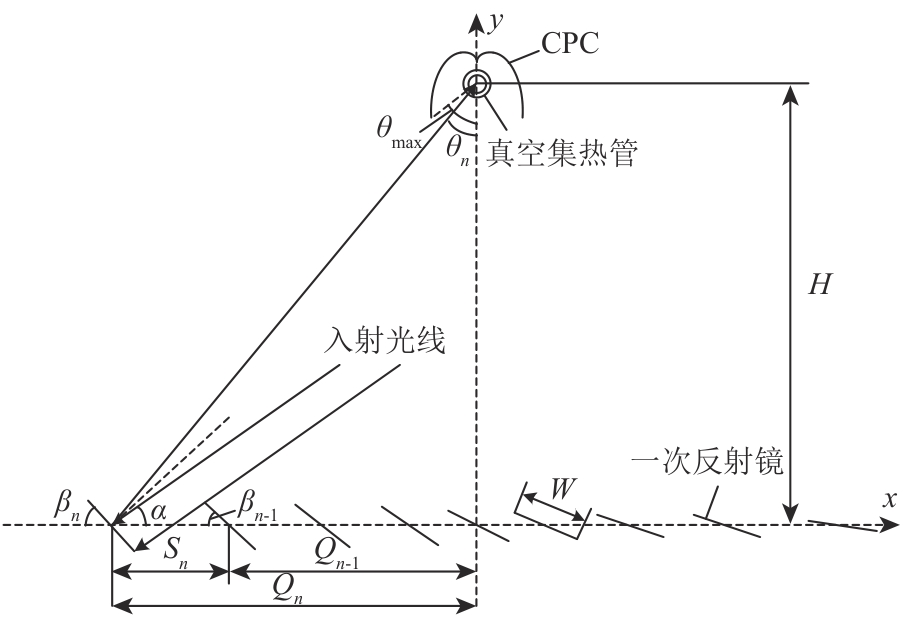
图1 线性菲涅尔聚光集热器结构
Fig. 1 Structure of linear Fresnel concentrating collector
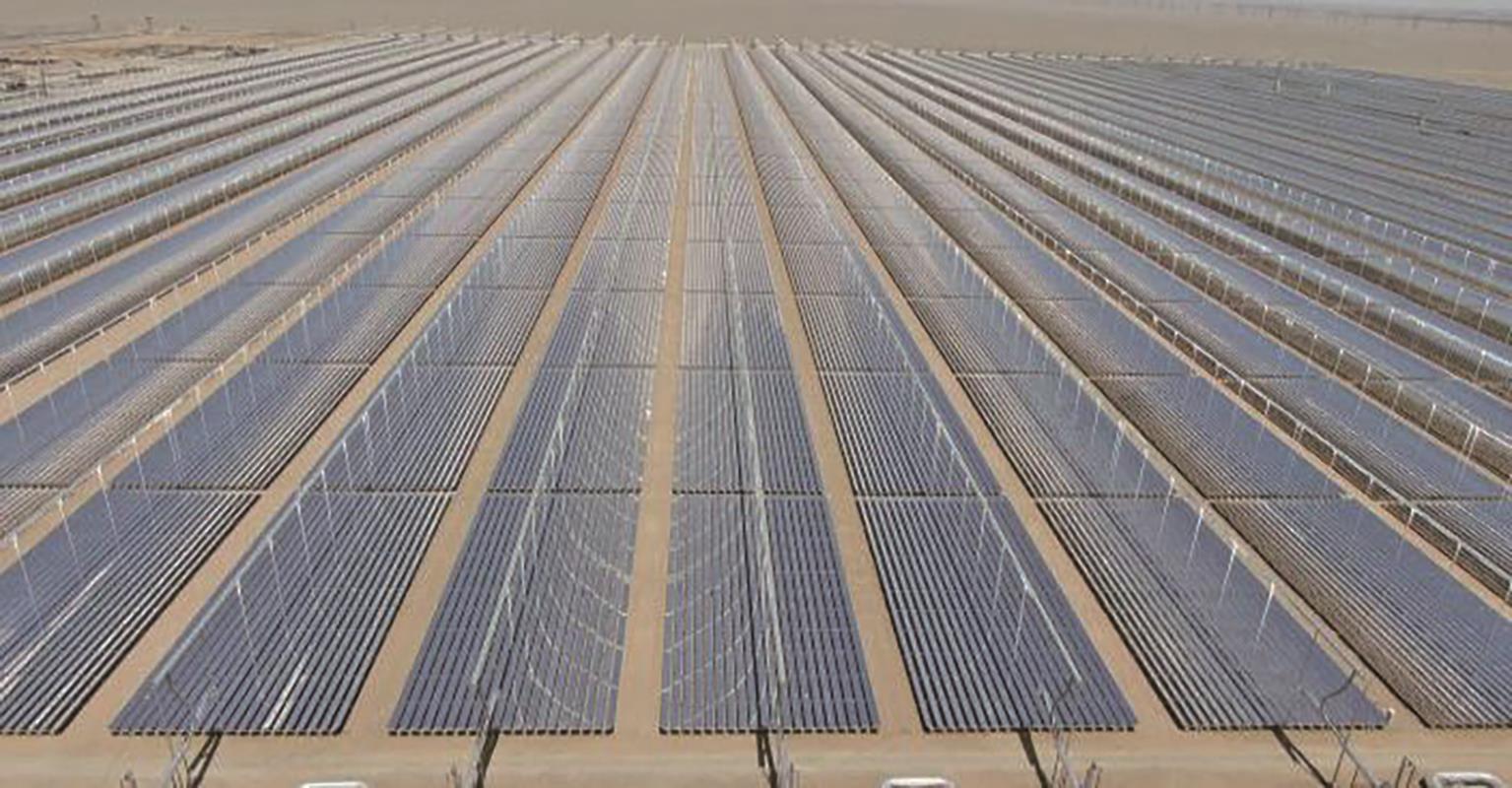
图2 敦煌50 MW熔盐线性菲涅尔式光热电站
Fig. 2 Dunhuang 50 MW molten salt linear Fresnel photothermal power station
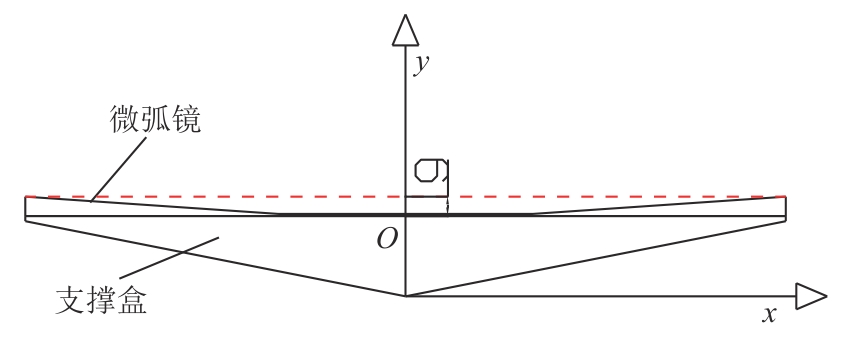
图3 微弧形一次反射镜结构
Fig. 3 Structure of micro-arc primary reflector
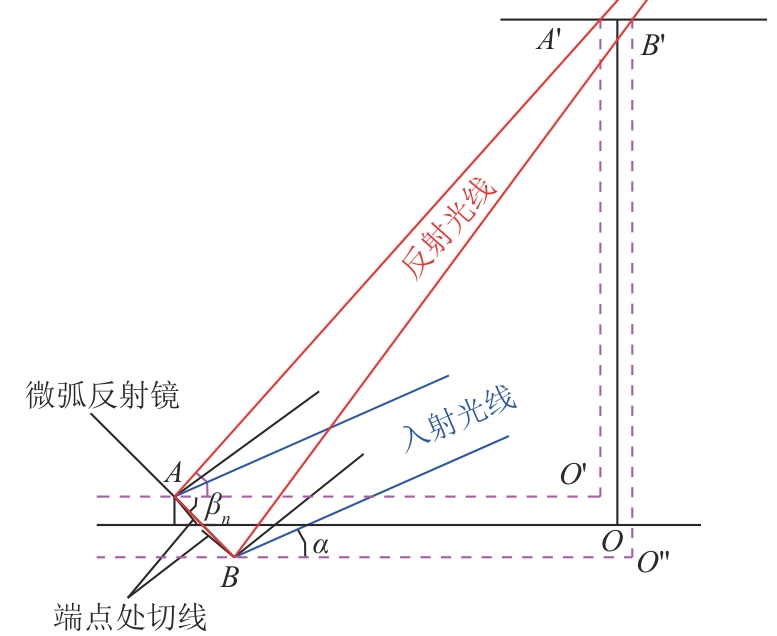
图4 微弧反射镜边沿处光线反射示意图
Fig. 4 Light reflection schematic diagram at the edge of micro-arc reflector
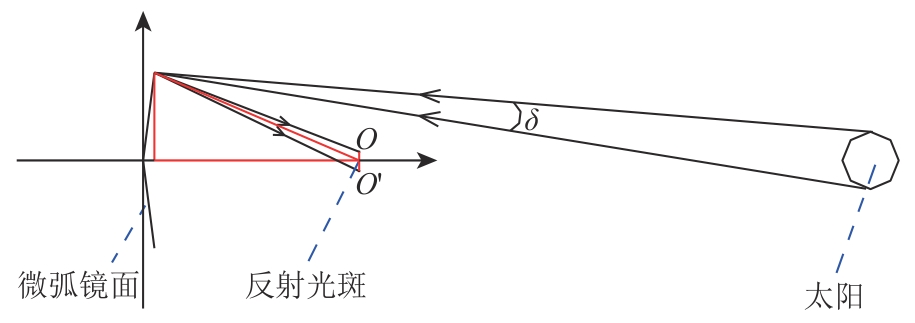
图5 太阳张角对反射光路的影响示意图
Fig. 5 Schematic diagram of the effect of solar angle on the reflected light path
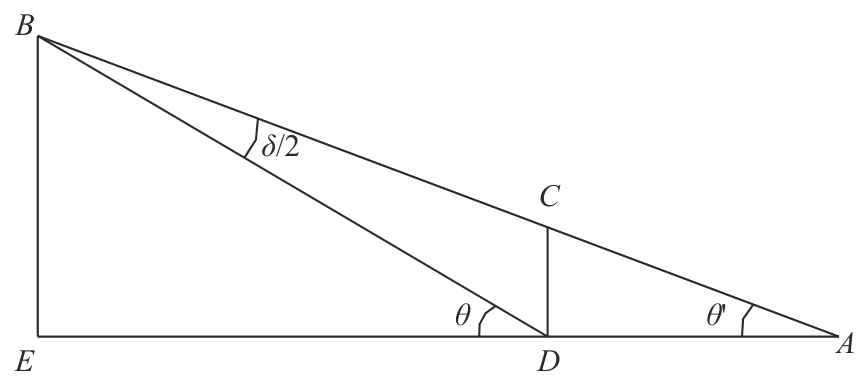
图6 太阳张角、光斑宽度与焦距关系等效图
Fig. 6 Equivalent diagram of the relationship between solar angle, light spot width, and focal length
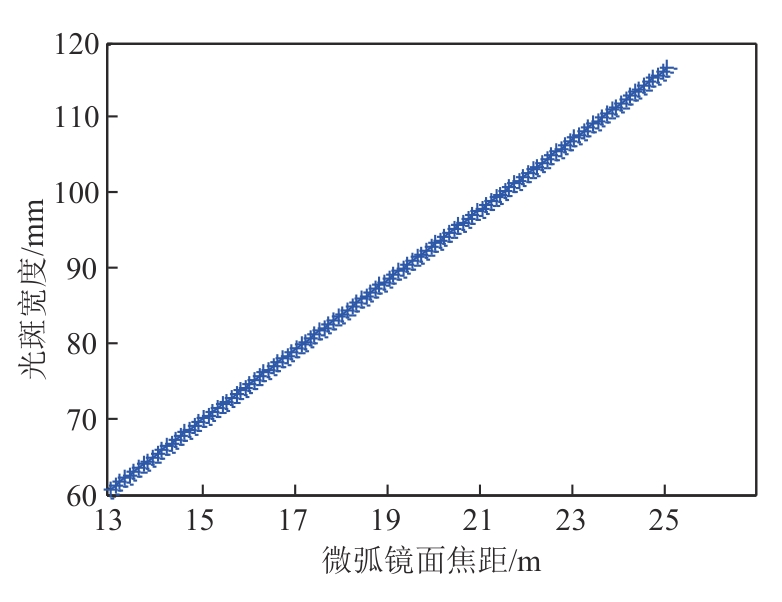
图7 太阳张角引起的光斑宽度与焦距的对应关系
Fig. 7 The corresponding relationship between light spot width and focal length caused by the solar angle
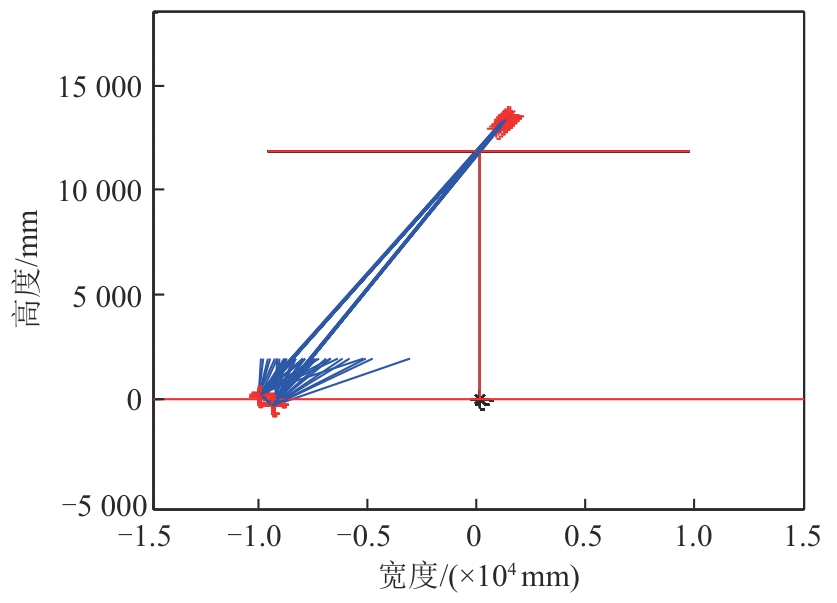
图8 微弧镜边沿处反射光线仿真轨迹
Fig. 8 Simulation path of reflected light at the edge of micro-arc reflector
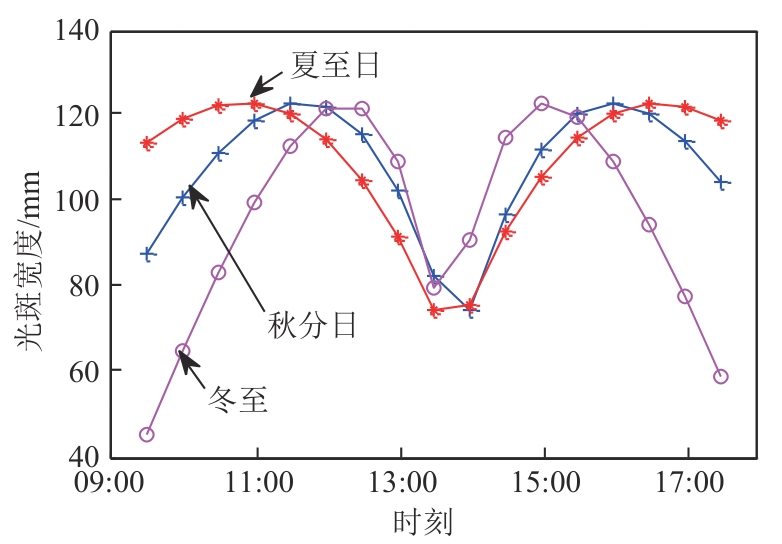
图9 典型日微弧镜反射光斑宽度变化曲线
Fig. 9 Change curve of light spot widths of micro-arc reflector on typical day
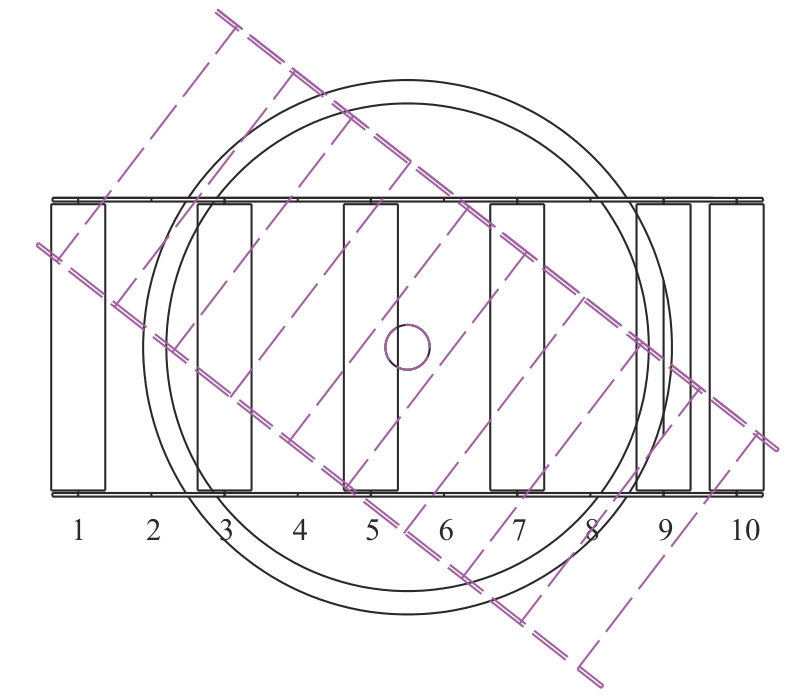
图10 旋转测试平台结构示意图1—10表示微弧反射镜在集热器中的位置。
Fig. 10 Schematic diagram of rotating test platform structure
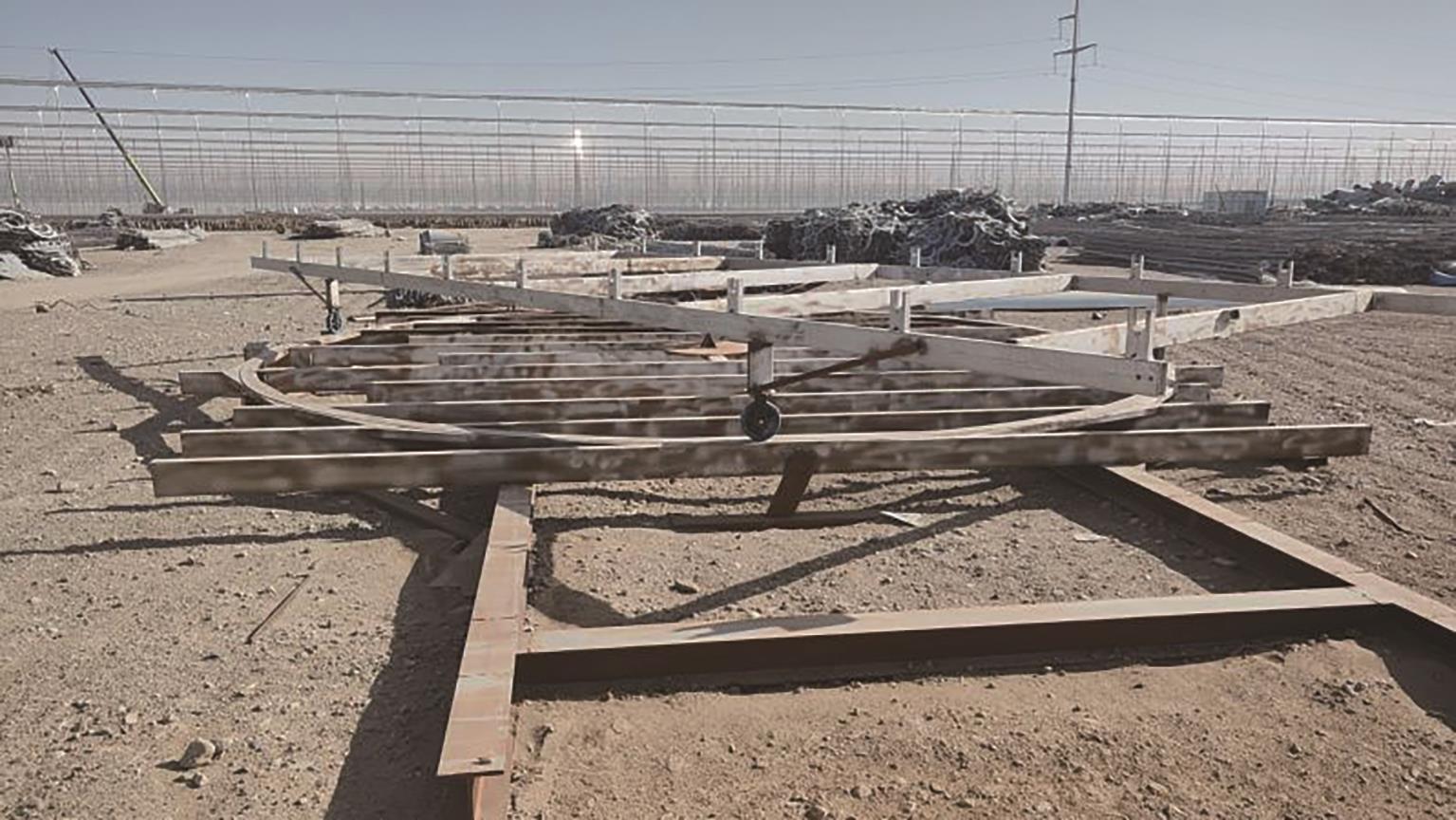
图11 旋转测试平台
Fig. 11 Rotating test platform
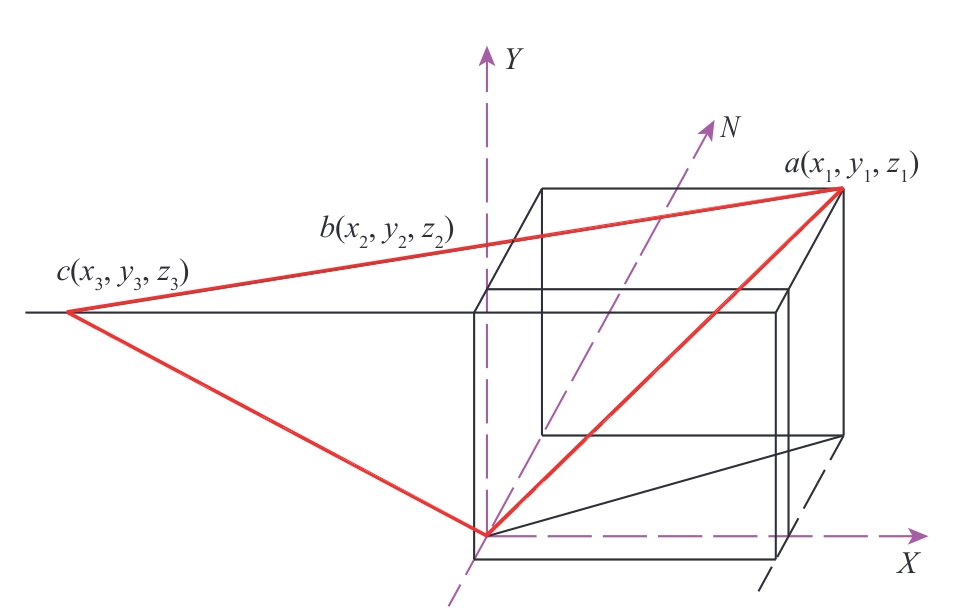
图12 反射光斑位置几何关系图
Fig. 12 Geometric relationship diagram of of reflected light spot position
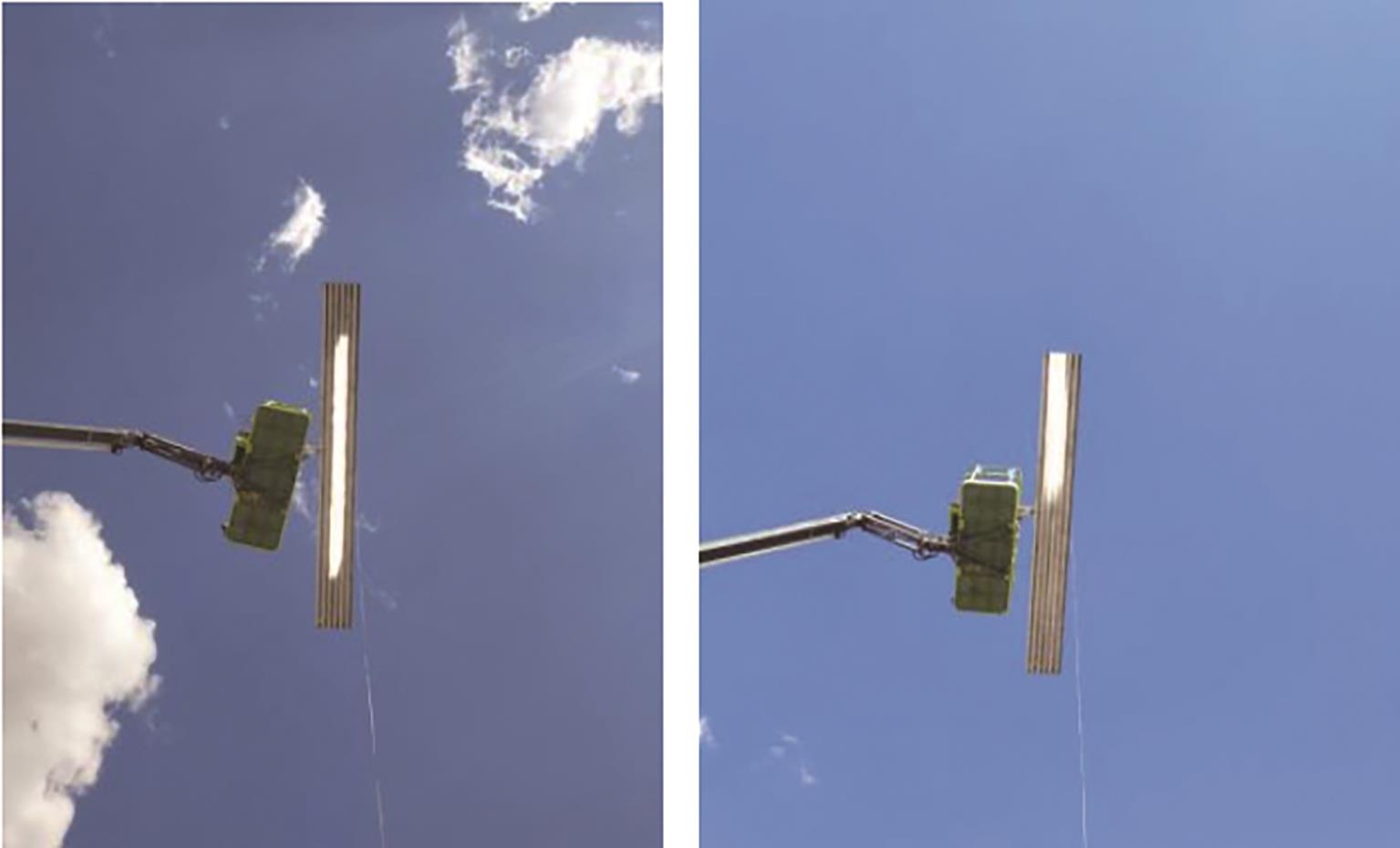
图13 光斑测试结果
Fig. 13 Light spot test results
| 测试数据 | 09:30 | 10:30 | 11:30 | 12:30 | 13:30 |
|---|---|---|---|---|---|
| 测试结果/mm | 250 | 295 | 340 | 315 | 245 |
| 仿真结果(平行光)/mm | 88 | 112 | 122 | 115 | 80 |
| 仿真结果修正值(考虑太阳张角)/mm | 182 | 206 | 216 | 209 | 174 |
| (测试结果/仿真结果修正值)/% | 137 | 143 | 157 | 150 | 140 |
表1 D型镜春分日各时刻光斑宽度均值对比
Tab. 1 Comparison of average light spot widths of D-type reflector at different times on spring equinox
| 测试数据 | 09:30 | 10:30 | 11:30 | 12:30 | 13:30 |
|---|---|---|---|---|---|
| 测试结果/mm | 250 | 295 | 340 | 315 | 245 |
| 仿真结果(平行光)/mm | 88 | 112 | 122 | 115 | 80 |
| 仿真结果修正值(考虑太阳张角)/mm | 182 | 206 | 216 | 209 | 174 |
| (测试结果/仿真结果修正值)/% | 137 | 143 | 157 | 150 | 140 |
| 测试数据 | 11:00 | 12:00 | 13:00 | 13:45 |
|---|---|---|---|---|
| 测试结果/mm | 335 | 360 | 345 | 315 |
| 仿真结果(平行光)/mm | 100 | 122 | 110 | 85 |
| 仿真结果修正值(考虑太阳张角)/mm | 194 | 216 | 204 | 179 |
| (测试结果/仿真结果修正值)/% | 172 | 166 | 169 | 175 |
表2 D型镜冬至日各时刻光斑宽度均值对比
Tab. 2 Comparison of average light spot widths of D-type reflector at different times on winter solstice
| 测试数据 | 11:00 | 12:00 | 13:00 | 13:45 |
|---|---|---|---|---|
| 测试结果/mm | 335 | 360 | 345 | 315 |
| 仿真结果(平行光)/mm | 100 | 122 | 110 | 85 |
| 仿真结果修正值(考虑太阳张角)/mm | 194 | 216 | 204 | 179 |
| (测试结果/仿真结果修正值)/% | 172 | 166 | 169 | 175 |
| 1 | 詹晶,王志峰 .太阳能热发电技术在新一代能源系统中定位的思考[J].电力与能源进展,2018,6(1):1-9. |
| ZHAN J, WANG Z F .Solar thermal power generation technology in a new generation of energy system positioning[J].Advances in Energy and Power Engineering,2018,6(1):1-9. | |
| 2 | 孙岩,于海龙,张长政 .我国太阳能发电技术现状及发展趋势分析[J].智能电网,2014,4(4):163-169. |
| SUN Y, YU H L, ZHANG C Z . Present situation and development trend analysis of solar power technology in China[J].Smart Grid,2014,4(4):163-169. | |
| 3 | 李富春,刘飞,邵成成,等 .光热与光伏发电综合对比[J].电力工程技术,2024,43(1):246-253. |
| LI F C, LIU F, SHAO C C,et al .Comprehensive comparison between photothermal power generation and photovoltaic power generation[J].Electric Power Engineering Technology,2024,43(1):246-253. | |
| 4 | 张涛,刘伉,陶然,等 .计及热惯性及光热电站的综合能源系统优化[J].电力建设,2023,44(1):109-117. doi:10.12204/j.issn.1000-7229.2023.01.013 |
| ZHANG T, LIU K, TAO R,et al .Integrated energy system optimization considering thermal inertia and CSP atation[J].Electric Power Construction,2023,44(1):109-117. doi:10.12204/j.issn.1000-7229.2023.01.013 | |
| 5 | 马云聪,武传涛,林湘宁,等 .计及碳排放权交易的光热电站市场竞价策略研究[J].电力系统保护与控制,2023,51(4):82-92. |
| MA Y C, WU C T, LIN X N,et al .Bidding strategy for a concentrated solar power plant participating in the electricity market with the background of carbon trading[J].Power System Protection and Control,2023,51(4):82-92. | |
| 6 | 王立,张智,施瑶璐,等 .基于数值仿真的抛物槽式太阳能集热器研究进展[J].发电技术,2021,42(6):643-652. doi:10.12096/j.2096-4528.pgt.21061 |
| WANG L, ZHANG Z, SHI Y L,et al .Research progress of parabolic trough solar collector based on numerical simulation[J].Power Generation Technology,2021,42(6):643-652. doi:10.12096/j.2096-4528.pgt.21061 | |
| 7 | 刘兰华,王瑞林,洪慧 .塔式太阳能辅助燃气蒸汽联合循环钙基碳捕集系统设计[J].发电技术,2021,42(4):517-524. doi:10.12096/j.2096-4528.pgt.21081 |
| LIU L H, WANG R L, HONG H .Design of calcium-based carbon capture system for gas-steam combined cycle assisted by solar thermal tower[J].Power Generation Technology,2021,42(4):517-524. doi:10.12096/j.2096-4528.pgt.21081 | |
| 8 | 潘康,庞玉昌 .太阳能光热发电技术研究综述[J].中国太阳能工程,2019(3):35-36. |
| PAN K, PANG Y C .A review of solar photothermal power generation technology[J].Solar Engineering in China,2019(3):35-36. | |
| 9 | 陈昕,范海涛 .太阳能光热发电技术发展现状[J].能源与环境,2012(1):90-92. |
| CHEN X, FAN H T .Development status of solar photothermal power generation technology[J].Energy and Environment,2012(1):90-92. | |
| 10 | 李英峰,张涛,张衡,等 .太阳能光伏光热高效综合利用技术[J].发电技术,2022,43(3):373-391. doi:10.12096/j.2096-4528.pgt.22052 |
| LI Y F, ZHANG T, ZHANG H,et al .Efficient and comprehensive photovoltaic/photothermal utilization technologies for solar energy[J].Power Generation Technology,2022,43(3):373-391. doi:10.12096/j.2096-4528.pgt.22052 | |
| 11 | QIU Y, HE Y L, WU M,et al .A comprehensive model for optical and thermal characterization of a linear Fresnel solar reflector with a trapezoidal cavity receiver[J].Renewable Energy,2016,97:129-144. doi:10.1016/j.renene.2016.05.065 |
| 12 | BELLOS E, TZIVANIDIS C .Multi-criteria evaluation of a nanofluid-based linear Fresnel solar collector[J].Solar Energy,2018,163:200-214. doi:10.1016/j.solener.2018.02.007 |
| 13 | 孟庆宇,汪洪源,王维,等 .基于光程变化量的反射式光学系统敏感度理论分析与降敏设计方法[J].光学精密工程,2021,29(1):72-83. doi:10.37188/ope.20212901.0072 |
| MENG Q Y, WANG H Y, WANG W,et al .Sensitivity theoretical analysis and desensitization design method for reflective optical system based on optical path variation[J].Optics and Precision Engineering,2021,29(1):72-83. doi:10.37188/ope.20212901.0072 | |
| 14 | 雷德胜,杨谋存,朱跃钊 .微型抛物面槽式聚光集热器光学性能研究[J].南京工业大学学报(自然科学版),2018,40(5):85-89. |
| LEI D S, YANG M C, ZHU Y Z .Study on optical efficiency of a microparabolic trough concentrator[J].Journal of Nanjing Tech University (Natural Science Edition),2018,40(5):85-89. | |
| 15 | 马军,王成龙,夏养君 .线性菲涅尔式太阳能聚光系统二次聚光器研究进展[J].中国科学:技术科学,2020,50(8):997-1008. doi:10.1360/sst-2020-0190 |
| MA J, WANG C L, XIA Y J .Research progress on secondary concentrator for linear Fresnel reflector[J].Scientia Sinica (Technologica),2020,50(8):997-1008. doi:10.1360/sst-2020-0190 | |
| 16 | 宋景慧,马继帅,湛志钢,等 .线性菲涅尔集热器光学特性实例分析与模拟[J].动力工程学报,2016,36(7):563-568. |
| SONG J H, MA J S, ZHAN Z G,et al .Optical analysis and simulation of a linear Fresnel solar collector[J].Journal of Chinese Society of Power Engineering,2016,36(7):563-568. | |
| 17 | GÜVEN H M, BANNEROT R B .Derivation of universal error parameters for comprehensive optical analysis of parabolic troughs[J].Journal of Solar Energy Engineering,1986,108(4):275-281. doi:10.1115/1.3268106 |
| 18 | 杨妮,燕必希,董明利,等 .跟踪与装配误差对PTC截断因子的影响分析[J].可再生能源,2016,34(2):159-165. |
| YANG N, YAN B X, DONG M L,et al .Influence analysis of tracking and assembly error on PTC intercept factor[J].Renewable Energy Resources,2016,34(2):159-165. | |
| 19 | BINOTTI M, ZHU G, GRAY A,et al .Geometric analysis of three-dimensional effects of parabolic trough collectors[J].Solar Energy,2013,88:88-96. doi:10.1016/j.solener.2012.10.025 |
| 20 | 王显龙,姚远,李华山,等 .槽式集热器反射镜抛物变形对允许跟踪误差的影响[J].热力发电,2019,48(7):86-91. |
| WANG X L, YAO Y, LI H S,et al .Influence of reflector deformation on allowed tracking error of parabolic trough collector[J].Thermal Power Generation,2019,48(7):86-91. | |
| 21 | 马保宏,葛素红,李守义 .槽式抛物面聚光器能流密度分布的理论研究[J].激光与光电子学进展,2015,52(8):124-129. doi:10.3788/lop52.080801 |
| MA B H, GE S H, LI S Y .Investigation of energy-flux-density distribution of parabolic trough solar concentrators[J].Laser & Optoelectronics Progress,2015,52(8):124-129. doi:10.3788/lop52.080801 | |
| 22 | HUANG F, LI L, HUANG W .Optical performance of an azimuth tracking linear Fresnel solar concentrator[J].Solar Energy,2014,108:1-12. doi:10.1016/j.solener.2014.06.028 |
| 23 | HOFER A, BÜCHNER D, KRAMER K,et al .Comparison of two different (quasi-) dynamic testing methods for the performance evaluation of a linear Fresnel process heat collector[J].Energy Procedia,2015,69:84-95. doi:10.1016/j.egypro.2015.03.011 |
| 24 | 王成龙,马军,范多旺,等 .用于线性菲涅尔式聚光系统的CPC仿真研究[J].红外与激光工程,2015,44(2):556-560. |
| WANG C L, MA J, FAN D W,et al .Simulation study of a CPC for linear Fresnel reflector system[J].Infrared and Laser Engineering,2015,44(2):556-560. | |
| 25 | 马军,王成龙,夏养君 .用于线性菲涅尔式聚光系统的复合抛物面聚光器[J].光学 精密工程,2019,27(12):2542-2548. doi:10.3788/ope.20192712.2542 |
| MA J, WANG C L, XIA Y J .Compound parabolic collector for linear Fresnel reflector system[J].Optics and Precision Engineering,2019,27(12):2542-2548. doi:10.3788/ope.20192712.2542 | |
| 26 | 杜春旭,王普,马重芳,等 .一种高精度太阳位置算法[J].能源工程,2010,30(2):41-44. |
| DU C X, WANG P, MA C F,et al .A high accuracy algorithm for the calculation of solar position[J].Energy Engineering,2010,30(2):41-44. | |
| 27 | 杜春旭,王普,马重芳,等 .用天文测量简历精确计算太阳位置的方法[J].可再生能源,2010,28(3):85-88. |
| DU C X, WANG P, MA C F,et al .Algorithm for the calculation of solar position by using astronomical almanac[J].Renewable Energy Resources,2010,28(3):85-88. | |
| 28 | 张志勇,孔令刚,范多进,等 .线性菲涅耳集热器聚光误差分析及其补偿算法研究[J].激光与光电子学进展,2022,59(7):140-147. doi:10.3788/LOP202259.0708001 |
| ZHANG Z Y, KONG L G, FAN D J,et al .Analysis of light concentration error and compensation algorithm of linear Fresnel collector[J].Laser & Optoelectronics Progress,2022,59(7):140-147. doi:10.3788/LOP202259.0708001 | |
| 29 | 肖瑶,钮文泽,魏高升,等 .太阳能光伏/光热技术研究现状与发展趋势综述[J].发电技术,2022,43(3):392-404. doi:10.12096/j.2096-4528.pgt.21145 |
| XIAO Y, NIU W Z, WEI G S,et al .Review on research status and developing tendency of solar photovoltaic/thermal technology[J].Power Generation Technology,2022,43(3):392-404. doi:10.12096/j.2096-4528.pgt.21145 |
| [1] | 黄斌, 赵伟, 廖力达, 肖孟, 黄佳亮, 星可. 基于环境参数模型的缓坡光伏阵列反阴影策略研究[J]. 发电技术, 2025, 46(3): 579-589. |
| [2] | 曾宪民, 李柏云, 沈向阳, 陈嘉澍, 丁力行. 半周受热下太阳能吸热器横纹管的热应力分析[J]. 发电技术, 2025, 46(1): 190-199. |
| [3] | 杨琛, 牛锋杰, 韩茂林, 周宁, 周定璇. 基于改进灰狼算法优化极限学习机的光伏阵列故障诊断方法研究[J]. 发电技术, 2025, 46(1): 72-82. |
| [4] | 邱立翔, 黄超, 魏高升, 崔柳, 杜小泽. 颗粒团聚对太阳盐纳米流体导热性能的影响特性研究[J]. 发电技术, 2024, 45(5): 878-887. |
| [5] | 屠楠, 刘家琛, 徐静, 方嘉宾, 马彦花. 管壳式相变蓄热器的蓄释热过程性能分析[J]. 发电技术, 2024, 45(3): 508-516. |
| [6] | 董军, 汤建方, 臧春城, 徐立, 王志峰. 抛物面槽式太阳能集热器球形接头测试系统的研制与应用[J]. 发电技术, 2024, 45(2): 291-298. |
| [7] | 徐立, 孙飞虎, 李钧, 张强强. 抛物面槽式太阳能集热器热损失因素研究[J]. 发电技术, 2023, 44(2): 229-234. |
| [8] | 王晓文, 屠楠, 方嘉宾, 刘晓群, 王驰宇, 刘家琛. 布置螺旋管的太阳能腔式吸热器光学性能模拟[J]. 发电技术, 2023, 44(2): 221-228. |
| [9] | Mohamed ABD-HAMID, 夏龙禹, 魏高升, 崔柳, 徐超, 杜小泽. 集成相变储热材料的光伏/热复合系统性能分析[J]. 发电技术, 2023, 44(1): 53-62. |
| [10] | 岳晓鹏, 赵兴, 闫慧琳, 樊冰冰, 黄浩, 闫路遥, 崔鹏, 马峻峰, 李美成. 基于SnO2电子传输层的n-i-p型钙钛矿太阳能电池关键技术研究[J]. 发电技术, 2023, 44(1): 63-77. |
| [11] | 张泽栋, 王维, 叶季蕾, 申洪. 储热型太阳能光热发电稳态功率模型[J]. 发电技术, 2022, 43(5): 731-739. |
| [12] | 徐运飞, 吴水木, 李英杰. 面向太阳能热发电的CaO-CO2热化学储热技术研究进展[J]. 发电技术, 2022, 43(5): 740-747. |
| [13] | 徐立, 孙飞虎, 李志, 张强强. 一种太阳能集热器流体平均温度计算方法[J]. 发电技术, 2022, 43(3): 405-412. |
| [14] | 李英峰, 张涛, 张衡, 崔鹏, 付在国, 高中亮, 耿奇, 柳志晗, 朱群志, 李和兴, 李美成. 太阳能光伏光热高效综合利用技术[J]. 发电技术, 2022, 43(3): 373-391. |
| [15] | 肖瑶, 钮文泽, 魏高升, 崔柳, 杜小泽. 太阳能光伏/光热技术研究现状与发展趋势综述[J]. 发电技术, 2022, 43(3): 392-404. |
| 阅读次数 | ||||||
|
全文 |
|
|||||
|
摘要 |
|
|||||
