

Power Generation Technology ›› 2025, Vol. 46 ›› Issue (6): 1223-1230.DOI: 10.12096/j.2096-4528.pgt.24038
• Power Generation and Environmental Protection • Previous Articles
Chao LIU1, Liangde LIU1, Tiancheng LIAN1, Wei ZHAO2, Xufei YANG2, Guanglin LIU3
Received:2024-09-05
Revised:2024-11-28
Published:2025-12-31
Online:2025-12-25
Contact:
Guanglin LIU
Supported by:CLC Number:
Chao LIU, Liangde LIU, Tiancheng LIAN, Wei ZHAO, Xufei YANG, Guanglin LIU. Parameter Optimization of Geothermal Organic Rankine Cycle Power Generation System Based on Ton of Water Generation[J]. Power Generation Technology, 2025, 46(6): 1223-1230.
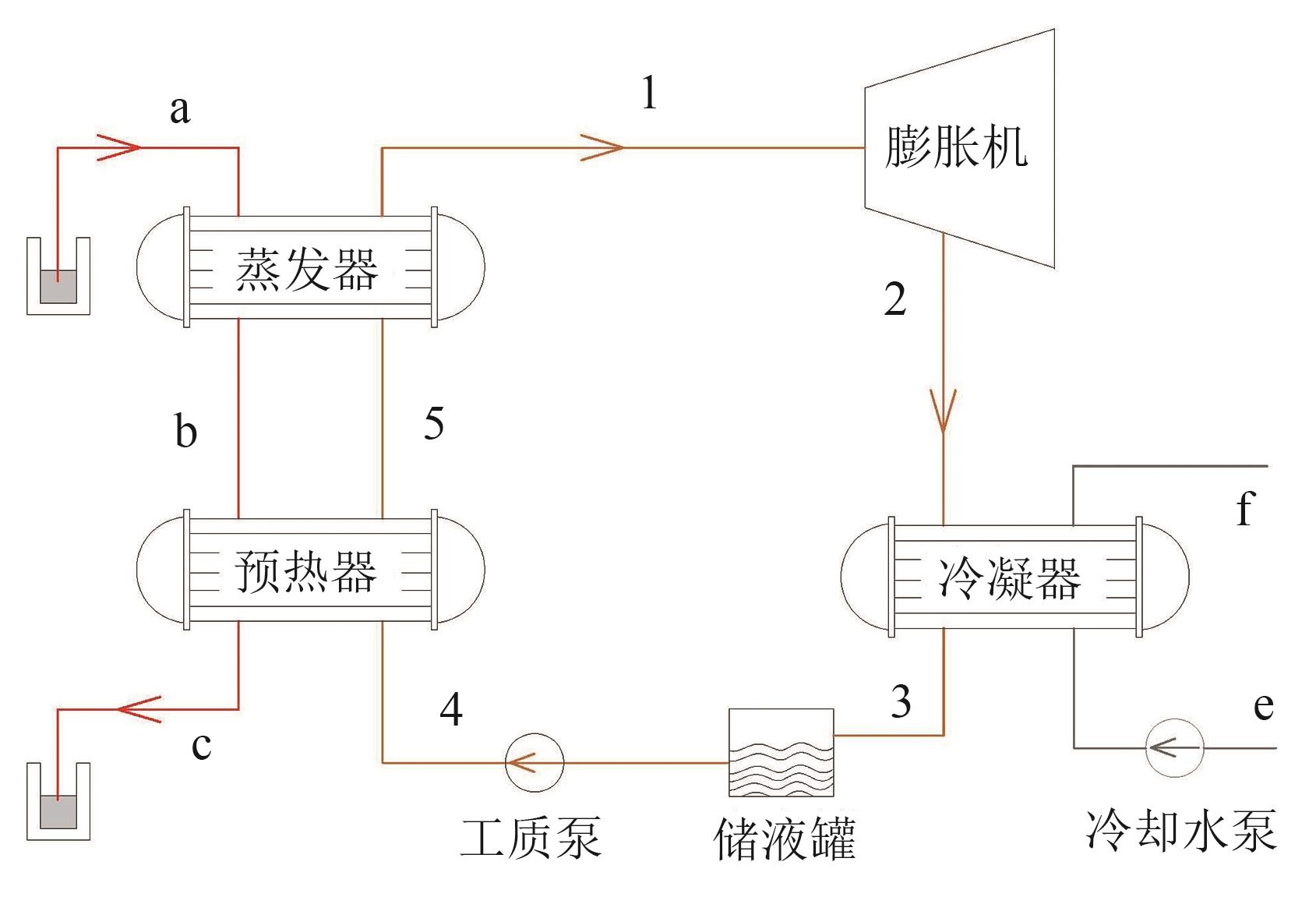
Fig. 1 Schematic diagram of geothermal ORC dual cycle power generation system
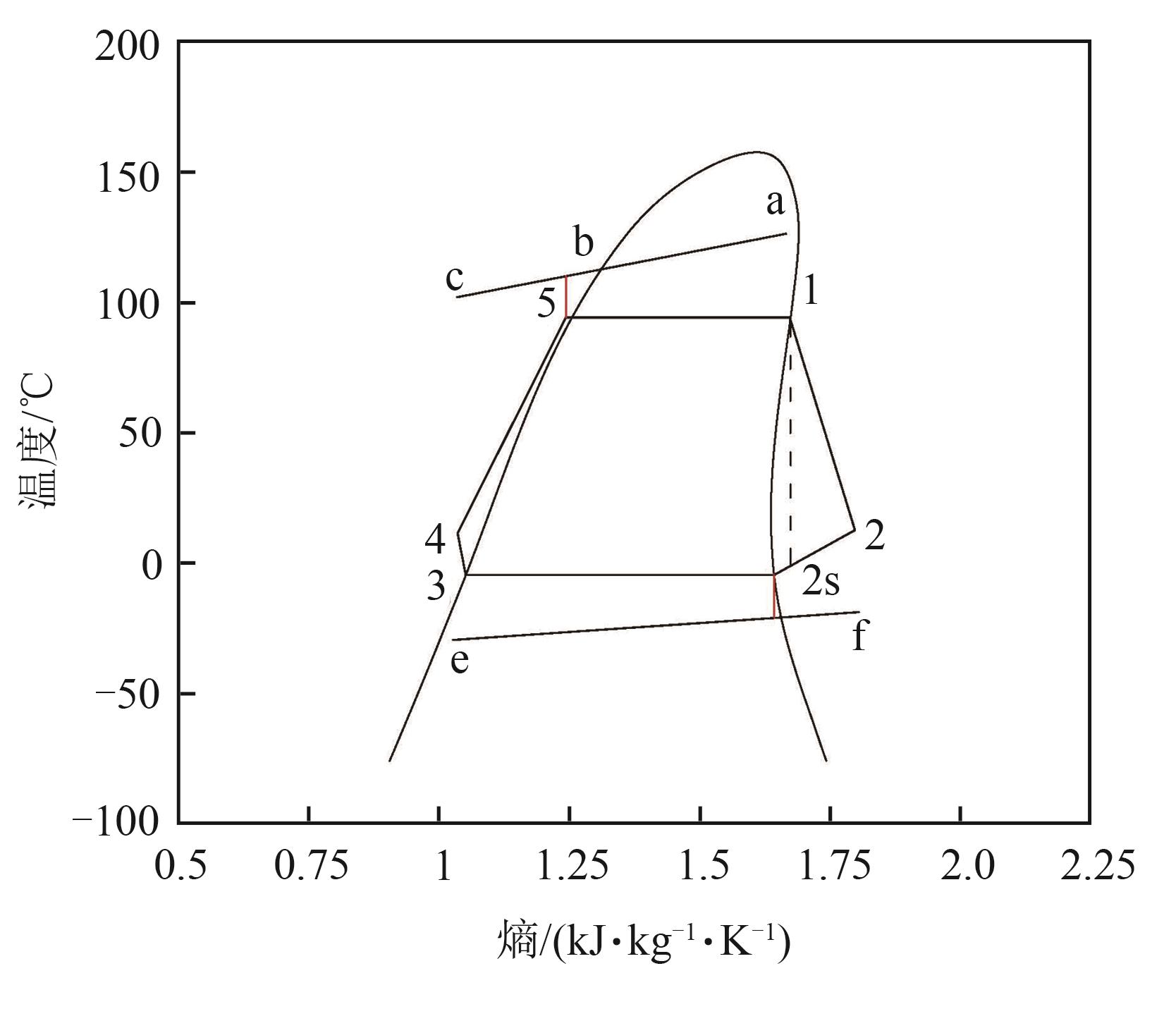
Fig. 2 Temperature entropy diagram of saturated geothermal dual cycle power generation system
| 工质 | 临界温度/℃ | 临界压力/MPa | ODP | GWP | 安全级别 |
|---|---|---|---|---|---|
| R245fa | 154.1 | 4.43 | 0 | 1 020 | B1 |
| R1233zd(E) | 165.6 | 3.57 | 0 | 1 | A1 |
| R134a | 101.1 | 4.06 | 0 | 1 300 | A1 |
| R152a | 113.3 | 4.52 | 0 | 140 | A2 |
Tab. 1 Properties of the selected organic working fluids
| 工质 | 临界温度/℃ | 临界压力/MPa | ODP | GWP | 安全级别 |
|---|---|---|---|---|---|
| R245fa | 154.1 | 4.43 | 0 | 1 020 | B1 |
| R1233zd(E) | 165.6 | 3.57 | 0 | 1 | A1 |
| R134a | 101.1 | 4.06 | 0 | 1 300 | A1 |
| R152a | 113.3 | 4.52 | 0 | 140 | A2 |
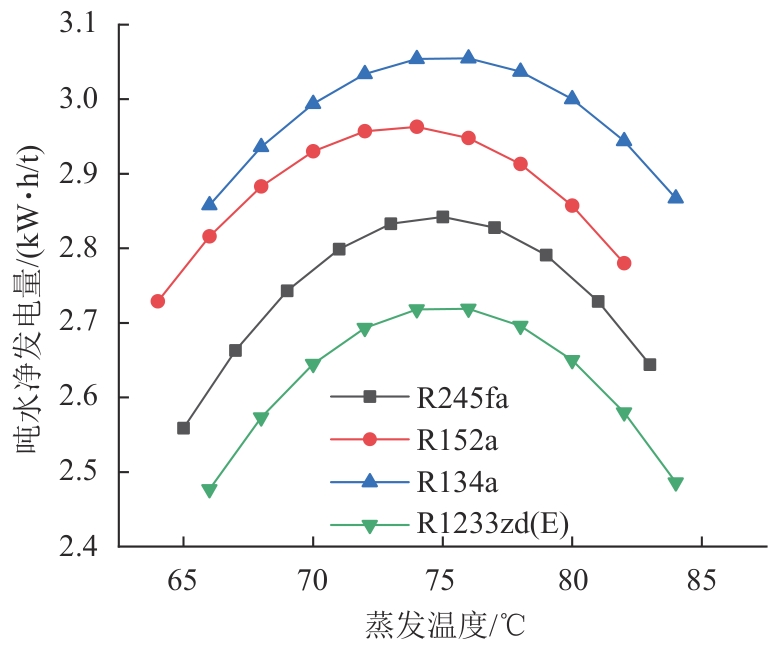
Fig. 3 Net power generation per ton of water varying with evaporation temperature
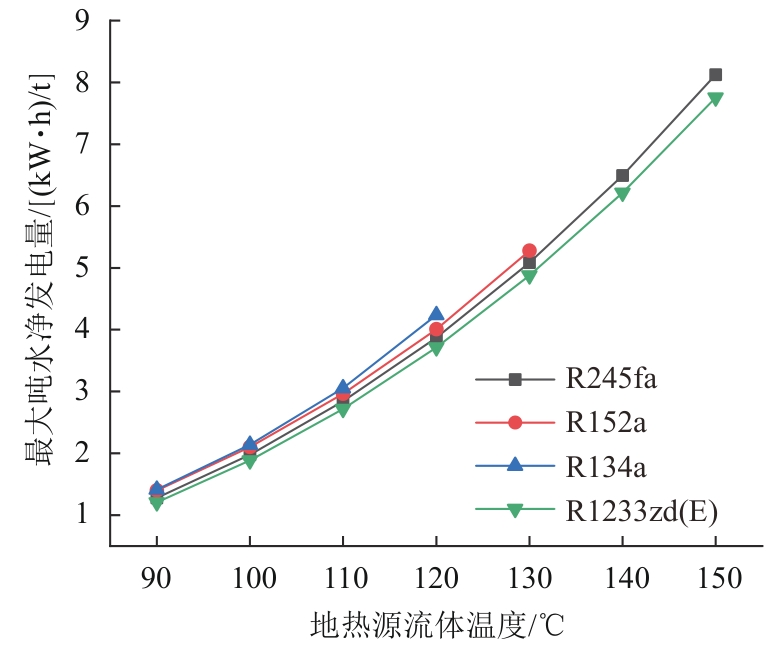
Fig. 4 Relationship between the maximum net power generation per ton of water and geothermal sources temperature
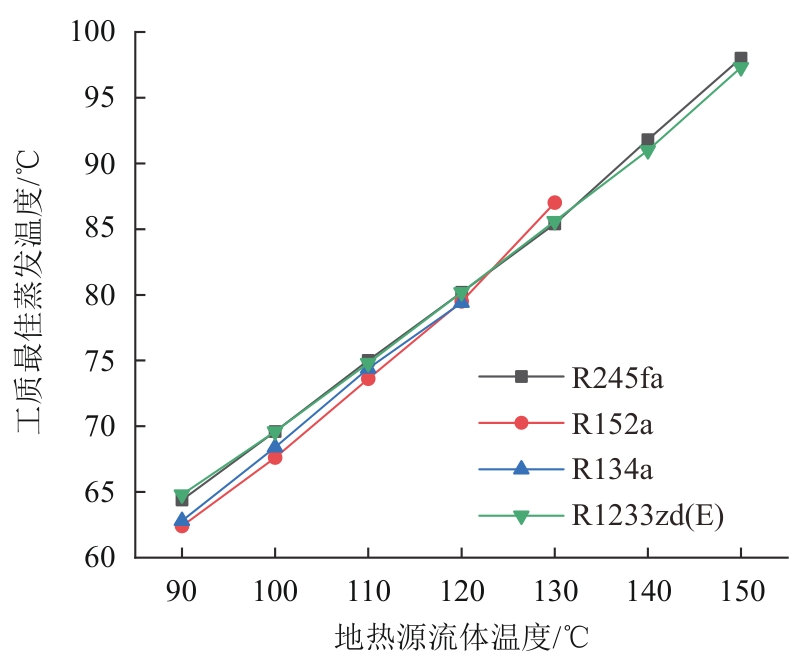
Fig. 5 Relationship between the optimal evaporation temperature of the working fluid and heat source temperature
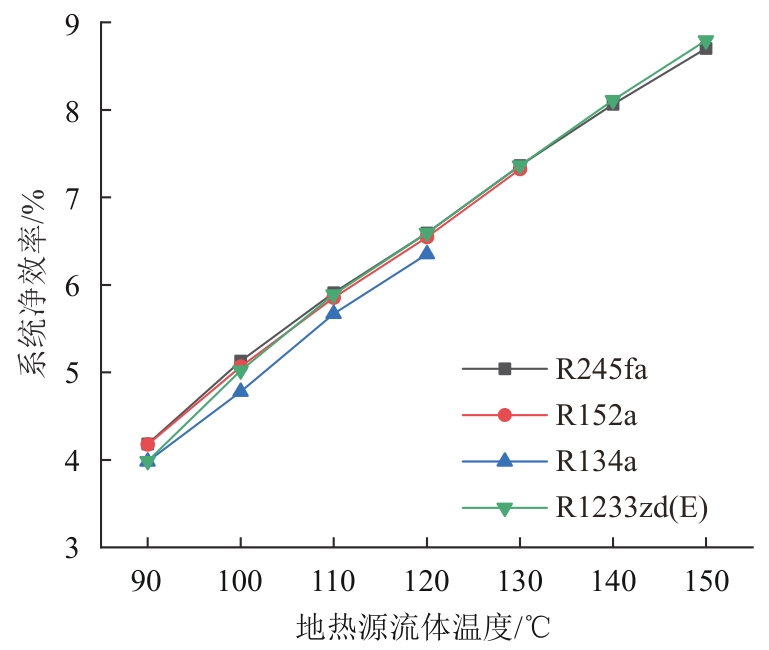
Fig. 6 Relationship between the system net efficiency and heat source temperature
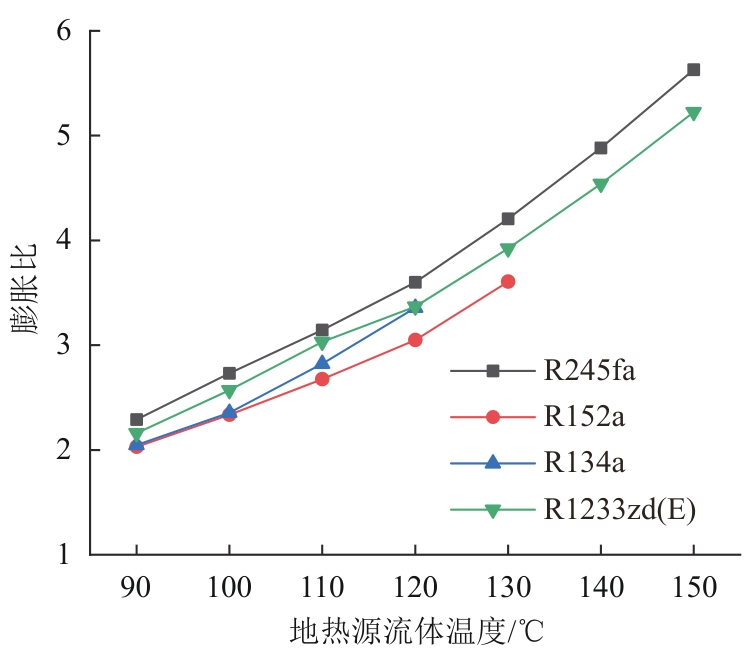
Fig. 7 Relationship between the expansion ratio and heat source temperature
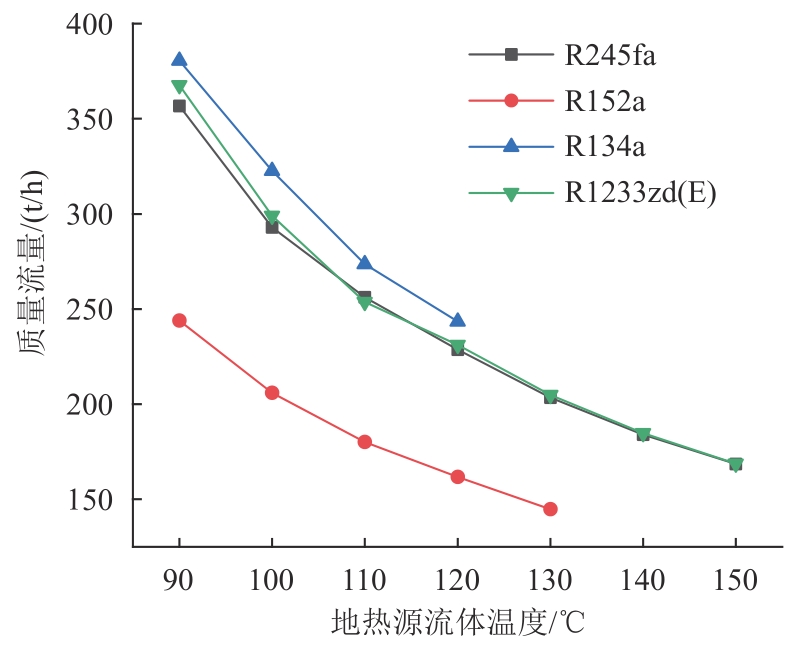
Fig. 8 Relationship between the mass flow rate of working fluids and heat source temperature
| [1] | 龙潇,张晋宾,陈令特 .未来能源技术展望[J].发电技术,2025,46(4):651-693. |
| LONG X, ZHANG J B, CHEN L T .Prospects for future energy technologies[J].Power Generation Technology,2025,46(4):651-693. | |
| [2] | 张郁,苑波,黄石成,等 .考虑高比例可再生能源接入的有源配电网经济调度策略研究[J].电测与仪表,2025,62(1):158-166. |
| ZHANG Y, YUAN B, HUANG S C,et al .Research on economic dispatching strategy for active distribution network considering high penetration of renewable energy source[J].Electrical Measurement & Instrumentation,2025,62(1):158-166. | |
| [3] | 赵冬梅,宋晨铭,冯向阳,等 .100%新能源场景下考虑频率稳定约束的源网荷储一体化系统储能优化配置[J].电工技术学报,2025,40(7):2146-2161. |
| ZHAO D M, SONG C M, FENG X Y,et al .Optimal allocation of energy storage for integrated system of source,grid,load and storage considering frequency stability constraints in 100% new energy scenario[J].Transactions of China Electrotechnical Society,2025,40(7):2146-2161. | |
| [4] | 路诗梦,孙建林,曾凡杰,等 .零碳地热能综合利用技术研究进展[J].发电技术,2025,46(5):909-922. |
| LU S M, SUN J L, ZENG F J,et al .Research progress on comprehensive utilization technologies of zero-carbon geothermal energy[J].Power Generation Technology,2025,46(5):909-922. | |
| [5] | 李克勋,宗明珠,魏高升 .地热能及与其他新能源联合发电综述[J].发电技术,2020,41(1):79-87. doi:10.12096/j.2096-4528.pgt.19013 |
| LI K X, ZONG M Z, WEI G S .Overview of geothermal power generation and joint power generation with other new energy sources[J].Power Generation Technology,2020,41(1):79-87. doi:10.12096/j.2096-4528.pgt.19013 | |
| [6] | AHMADI A,EL M, ASSAD H,et al .Applications of geothermal organic rankine cycle for electricity production[J].Journal of Cleaner Production,2020,274:122950. doi:10.1016/j.jclepro.2020.122950 |
| [7] | 李健,武江元,杨震,等 .地热发电技术及其关键影响因素综述[J].热力发电,2022,51(3):1-8. |
| LI J, WU J Y, YANG Z,et al .Review of geothermal power generation technologies and key influencing factors[J].Thermal Power Generation,2022,51(3):1-8. | |
| [8] | LI J F, GUO H, LEI B,et al .An overview on subcritical organic Rankine cycle configurations with pure organic fluids[J].International Journal of Energy Research,2021,45(9):12536-12563. doi:10.1002/er.6653 |
| [9] | 李慧君,蒋长辉,范伟,等 .变热源有机朗肯循环系统的综合性能分析[J].动力工程学报,2022,42(3):286-292. |
| LI H J, JIANG C H, FAN W,et al .Comprehensive performance analysis of organic Rankine cycle system with variable heat source[J].Journal of Chinese Society of Power Engineering,2022,42(3):286-292. | |
| [10] | 杨凤叶,崔四齐,赵鹏飞,等 .地热温度对有机朗肯循环系统性能的影响研究[J].低温与超导,2017,45(10):65-70. |
| YANG F Y, CUI S Q, ZHAO P F,et al .Study on the influence of ground-heat temperature on organic Rankine cycle[J].Cryogenics & Superconductivity,2017,45(10):65-70. | |
| [11] | 王建永,王江峰,王红阳,等 .有机朗肯循环地热发电系统工质选择[J].工程热物理学报,2017,38(1):11-17. |
| WANG J Y, WANG J F, WANG H Y,et al .Selection of working fluid for organic Rankine cycle used in geothermal power plant[J].Journal of Engineering Thermophysics,2017,38(1):11-17. | |
| [12] | 王华荣,徐进良 .采用BP-GA算法的有机朗肯循环多目标优化[J].中国电机工程学报,2016,36(12):3168-3176. |
| WANG H R, XU J L .Multi-objective optimization for organic Rankine cycle using BP-GA algorithm[J].Proceedings of the CSEE,2016,36(12):3168-3176. | |
| [13] | 刘庆庆,陶乐仁,黄理浩 .不同工质对有机朗肯循环系统的热力性能影响[J].制冷学报,2019,40(6):159-165. |
| LIU Q Q, TAO L R, HUANG L H .Effects of working fluids on thermal performance of organic Rankine cycle system[J].Journal of Refrigeration,2019,40(6):159-165. | |
| [14] | 韩中合,梅中恺,李鹏 .中温有机朗肯循环多目标优化及工质筛选[J].太阳能学报,2019,40(10) :2739-2747. |
| HAN Z H, MEI Z K, LI P .Multi-objective optimization and working fluid selection for medium temperature organic Rankine cycle[J].Acta Energiae Solaris Sinica,2019,40(10):2739-2747. | |
| [15] | 刘玉兰 .低品位热能有机朗肯循环特性与效率优化的研[D].南京:东南大学,2016:24-30. |
| LIU Y L .A study on characteristic and efficiency optimization of organic Rankine cycle driven by low-enthalpy heat[D].Nanjing:Southeast University,2016:24-30. | |
| [16] | 周耀东 .非共沸混合工质部分蒸发有机朗肯循环热力学研究[D].上海:上海交通大学,2019. |
| ZHOU Y D .The thermodynamic research of partial evaporation organic Rankine cycle with zeotropic mixture working fluids[D].Shanghai: Shanghai Jiao Tong University,2019. | |
| [17] | XUE K, WANG J J, ZHU X P,et al .Energy and exergy analysis of waste heat recovery from pressurized hot smothering steel slag by solar organic Rankine cycle[J].Journal of Thermal Analysis and Calorimetry,2023,148(19):10241-10250. doi:10.1007/s10973-023-12408-6 |
| [18] | 陈然,刘强,蒙冬玉 .过冷度对地热发电非共沸工质有机朗肯循环热力性能的影响[J].发电技术,2020,41(2):190-197. doi:10.12096/j.2096-4528.pgt.19098 |
| CHEN R, LIU Q, MENG D Y .Effect of subcooling on thermal performance of organic rankine cycle with zeotropic mixture in geothermal power generation[J].Power Generation Technology,2020,41(2):190-197. doi:10.12096/j.2096-4528.pgt.19098 | |
| [19] | LIM T W, CHOI Y S, HWANG D H .Optimal working fluids and economic estimation for both double stage organic Rankine cycle and added double stage organic Rankine cycle used for waste heat recovery from liquefied natural gas fueled ships[J].Energy Conversion and Management,2021,242:114323. doi:10.1016/j.enconman.2021.114323 |
| [20] | LI J, GE Z, DUAN Y,et al .Parametric optimization and thermodynamic performance comparison of single-pressure and dual-pressure evaporation organic rankine cycles[J].Applied Energy,2018,217:409-421. doi:10.1016/j.apenergy.2018.02.096 |
| [21] | 李应超,杨佐卫,高秀志,等 .兆瓦级干热岩ORC地热发电系统研究[J].东方汽轮机,2023(2):58-62. |
| LI Y C, YANG Z W, GAO X Z,et al .Research on 1 MW organic rankine cycle system for hot dry rock geothermal energy[J].Dongfang Turbine,2023(2):58-62. |
| [1] | Zhikang WANG, Ruqi ZHANG, Shaoke YUAN, Dongjiang HAN, Jun SUI. Research Progress on Organic Rankine Cycle-Vapor Compression Cycle Systems [J]. Power Generation Technology, 2025, 46(6): 1059-1073. |
| [2] | Zongbo ZHAN, Jiping REN, Liping DING, Zhaolong SUN, Heng DING, Yue CAO. Research on Modeling and Rapid Load Change Control Strategy for High Back- Pressure Extraction-Condensing Combined Heat and Power System [J]. Power Generation Technology, 2025, 46(6): 1074-1084. |
| [3] | Bin LUO, Xiaolong BAI, Tianlei ZANG, Yan HUANG, Lin ZHANG, Meng LI, Xuexia ZHANG, Yonglong JIANG. Review of Research on Wind-Solar-Hydro Complementary Power Generation Systems [J]. Power Generation Technology, 2025, 46(6): 1097-1111. |
| [4] | Xiaowei ZHANG, Zhenxiao YI, Kai WANG. State of Health Estimation of On-Board Lithium-Ion Batteries Using Temporal Convolutional Network Optimized by Improved Self-Adaptive Honey Badger Algorithm [J]. Power Generation Technology, 2025, 46(6): 1154-1163. |
| [5] | Bo ZOU, Jiandi REN, Daoming XU, Lisheng DENG, Lida LIAO, Junbing XIAO. Recent Developments on the Application of Chloride Molten Salt Heat Storage Technology to New Energy Power Generation [J]. Power Generation Technology, 2025, 46(5): 872-884. |
| [6] | Fugui DONG, Wei ZHANG. Research on Optimization of Operation Strategy for Independent New Energy Storage Power Stations Considering Capacity Value [J]. Power Generation Technology, 2025, 46(5): 897-908. |
| [7] | Kun ZHUANG, Zhonghong WANG, Yifan ZHANG, Wenqian YIN, Maoyun LEI, Jing ZHU, Feng LI, Jilei YE. Economic Model and Key Influencing Factors of Rooftop Distributed Photovoltaic Power Generation in the Whole County [J]. Power Generation Technology, 2025, 46(5): 950-958. |
| [8] | Yanan LU, Tao XU, Zenan LIU. Effect of Hydrogen Production System on Sub-Synchronous Oscillation Characteristics of Doubly Fed Induction Generator Systems With Series Compensation [J]. Power Generation Technology, 2025, 46(4): 715-726. |
| [9] | Haoran MA, Zhi YUAN, Weiqing WANG, Ji LI. Research on Economic Scheduling of Active Distribution Networks With Inclusion of Data Center and Energy Storage [J]. Power Generation Technology, 2025, 46(4): 748-757. |
| [10] | Yazhuo ZHAO, Wenjie ZHANG, Yinghui LIAO, Jinlei LIN, Rongyong ZHANG, Yuanyuan DUAN. Research on Power Generation Technologies for Low-Grade Waste Heat in Nuclear Power Plants [J]. Power Generation Technology, 2025, 46(4): 818-828. |
| [11] | Yong SUN, Zihang GAO, Zeyin HOU, Dexin LI, Yao WANG, Haifeng ZHANG, Shuai LU. Gas Network Aggregate Modeling and Identification Method for Integrated Energy System Operation [J]. Power Generation Technology, 2025, 46(2): 274-283. |
| [12] | Yangfan ZHANG, Yilin LI, Lin YE, Xuejiao FU, Zhengyu WANG, Yaohan WANG. Short-Term Wind Power Prediction Method Considering Wind Turbine Operation Status Clustering Under Low-Temperature Conditions [J]. Power Generation Technology, 2025, 46(2): 326-335. |
| [13] | Yang ZHENG, Yucheng REN, Yuwei WANG, Dingji XU, Huimin YANG. Evaluation of Comprehensive Benefits of Electric Energy Substitution in Regional Power Grids Based on Improved Cloud Model [J]. Power Generation Technology, 2025, 46(2): 399-408. |
| [14] | Shanying HU, Yong JIN, Zhenye ZHANG. Developing New Quality Productive Forces to Achieve Carbon Neutrality [J]. Power Generation Technology, 2025, 46(1): 1-8. |
| [15] | Jianfeng YANG, Ting LI, Aimin YANG, Zining FENG. Research on Tidal Optimization of Voltage Overrun Problem in Photovoltaic Distribution Network With Electrical Energy Router [J]. Power Generation Technology, 2025, 46(1): 113-125. |
| Viewed | ||||||
|
Full text |
|
|||||
|
Abstract |
|
|||||
