

Power Generation Technology ›› 2026, Vol. 47 ›› Issue (2): 431-442.DOI: 10.12096/j.2096-4528.pgt.260219
• New Energy • Previous Articles
Bin ZHAO1, Xuan GAO1, Jiaxiang CHEN1, Zhang BAI2, Kun WANG3
Received:2025-07-04
Revised:2025-09-29
Published:2026-04-30
Online:2026-04-21
Supported by:CLC Number:
Bin ZHAO, Xuan GAO, Jiaxiang CHEN, Zhang BAI, Kun WANG. Thermal Performance Simulation of Solar Thermal Power Tower System Based on Supercritical CO2 Brayton-Organic Rankine Cycle[J]. Power Generation Technology, 2026, 47(2): 431-442.
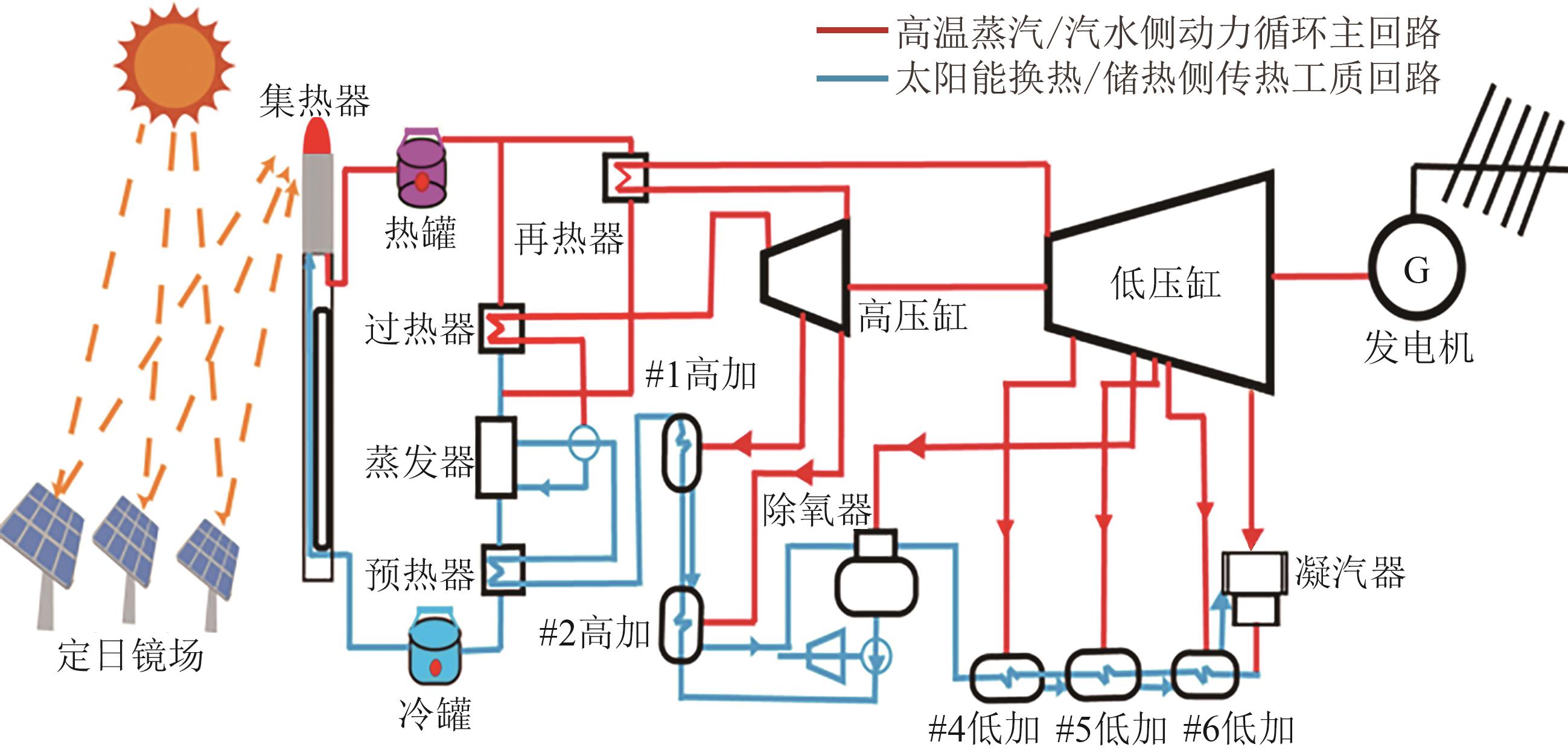
Fig. 1 Configuration of tower type conventional solar thermal power system
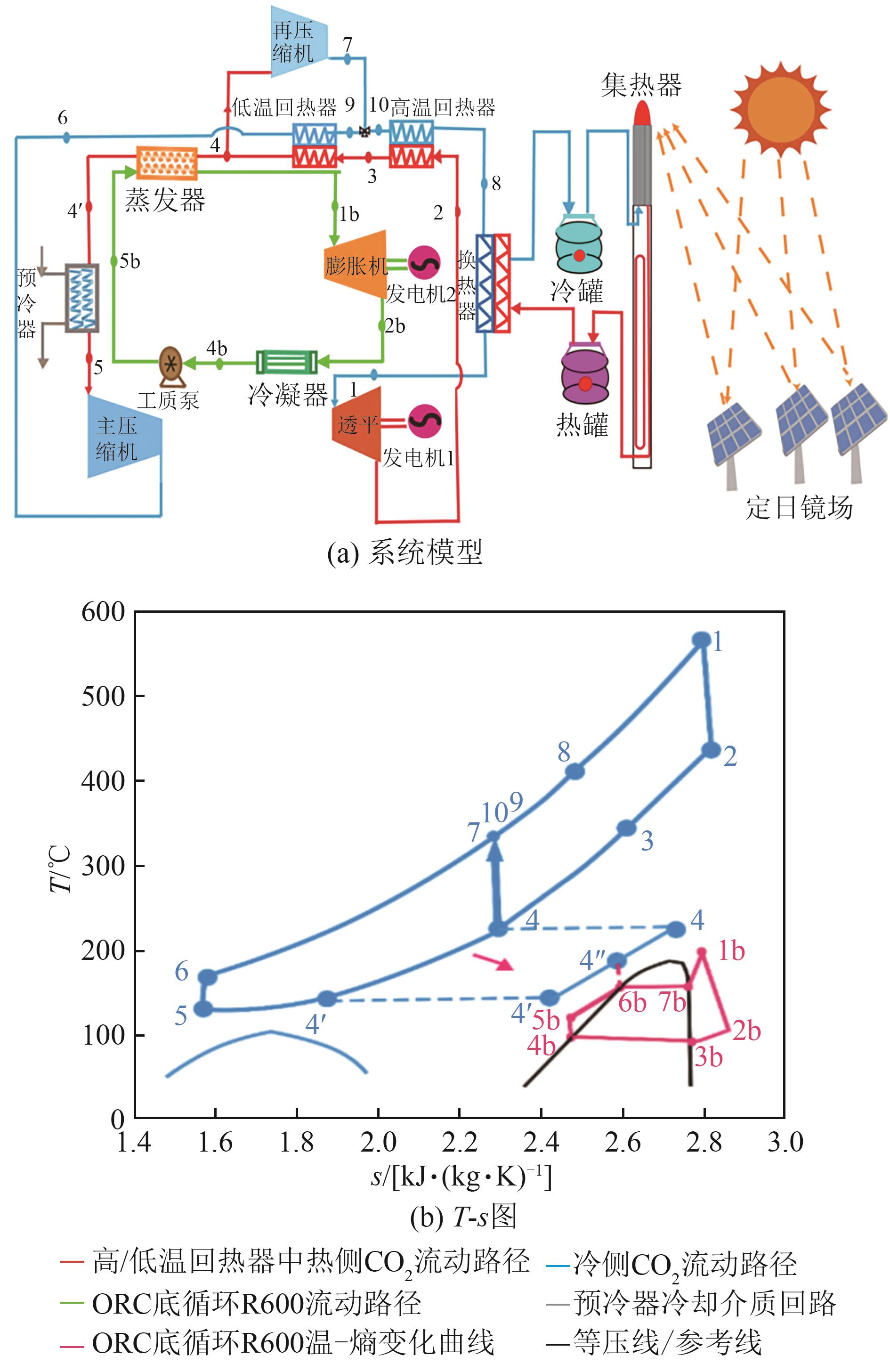
Fig. 2 Configuration and T-s diagram of SCRBC/ORC solar power tower system
| 参数 | 数值 | 参数 | 数值 |
|---|---|---|---|
| 太阳辐照度/(W·m-2) | 800 | 高温回热器换热效能/% | 95 |
| 定日镜场面积/m2 | 1 000 | 低温回热器换热效能/% | 89 |
| 定日镜场效率/% | 75 | 透平等熵效率/% | 90 |
| 表面吸收比 | 0.95 | 主压缩机等熵效率/% | 89 |
| 表面发射率 | 0.85 | 再压缩机等熵效率/% | 89 |
| 吸热器管道外径/m | 0.019 | 透平入口压力/MPa | 18~28 |
| 吸热器管壁厚度/m | 0.001 65 | 透平入口温度/℃ | 350~750 |
| 对流传热系数/(W·m-2·K-1) | 10 | 主压缩机入口压力/MPa | 7.4 |
| 视角因子 | 1 | 主压缩机入口温度/℃ | 32~46 |
| 集热器温差/℃ | 150 | 分流比 | 0.45~0.95 |
| 风速/(m·s-1) | 5 | 循环压比 | 2.0~4.0 |
| 管程数 | 500 | 膨胀机等熵效率/% | 93 |
| 蒸发温度/℃ | 50~95 | 工质泵等熵效率/% | 88 |
| 冷凝温度/℃ | 25 | 过热度/℃ | 2 |
| 回热器传热温差/℃ | 5 | 蒸发器窄点温差/℃ | 2 |
Tab. 1 SCRBC/ORC-SPT system design parameters
| 参数 | 数值 | 参数 | 数值 |
|---|---|---|---|
| 太阳辐照度/(W·m-2) | 800 | 高温回热器换热效能/% | 95 |
| 定日镜场面积/m2 | 1 000 | 低温回热器换热效能/% | 89 |
| 定日镜场效率/% | 75 | 透平等熵效率/% | 90 |
| 表面吸收比 | 0.95 | 主压缩机等熵效率/% | 89 |
| 表面发射率 | 0.85 | 再压缩机等熵效率/% | 89 |
| 吸热器管道外径/m | 0.019 | 透平入口压力/MPa | 18~28 |
| 吸热器管壁厚度/m | 0.001 65 | 透平入口温度/℃ | 350~750 |
| 对流传热系数/(W·m-2·K-1) | 10 | 主压缩机入口压力/MPa | 7.4 |
| 视角因子 | 1 | 主压缩机入口温度/℃ | 32~46 |
| 集热器温差/℃ | 150 | 分流比 | 0.45~0.95 |
| 风速/(m·s-1) | 5 | 循环压比 | 2.0~4.0 |
| 管程数 | 500 | 膨胀机等熵效率/% | 93 |
| 蒸发温度/℃ | 50~95 | 工质泵等熵效率/% | 88 |
| 冷凝温度/℃ | 25 | 过热度/℃ | 2 |
| 回热器传热温差/℃ | 5 | 蒸发器窄点温差/℃ | 2 |
| 有机工质 | 临界温度/℃ | 临界压力/MPa | ODP | GWP | 成本/(元/kg) | 安全性 |
|---|---|---|---|---|---|---|
| R245fa | 155.11 | 3.649 | 0 | 859 | 75 | B1 |
| R601a | 187.80 | 3.370 | 0 | 20 | 70 | A3 |
| R11 | 198.05 | 4.408 | 1 | 4 660 | 24 | A1 |
| R123 | 183.70 | 3.670 | 0.012 | 120 | 228 | B1 |
| R600a | 134.95 | 3.648 | 0 | 20 | 36 | A3 |
| R600 | 151.98 | 3.796 | 0 | 4 | 34 | A3 |
Tab. 2 Physical properties of organic working fluid
| 有机工质 | 临界温度/℃ | 临界压力/MPa | ODP | GWP | 成本/(元/kg) | 安全性 |
|---|---|---|---|---|---|---|
| R245fa | 155.11 | 3.649 | 0 | 859 | 75 | B1 |
| R601a | 187.80 | 3.370 | 0 | 20 | 70 | A3 |
| R11 | 198.05 | 4.408 | 1 | 4 660 | 24 | A1 |
| R123 | 183.70 | 3.670 | 0.012 | 120 | 228 | B1 |
| R600a | 134.95 | 3.648 | 0 | 20 | 36 | A3 |
| R600 | 151.98 | 3.796 | 0 | 4 | 34 | A3 |
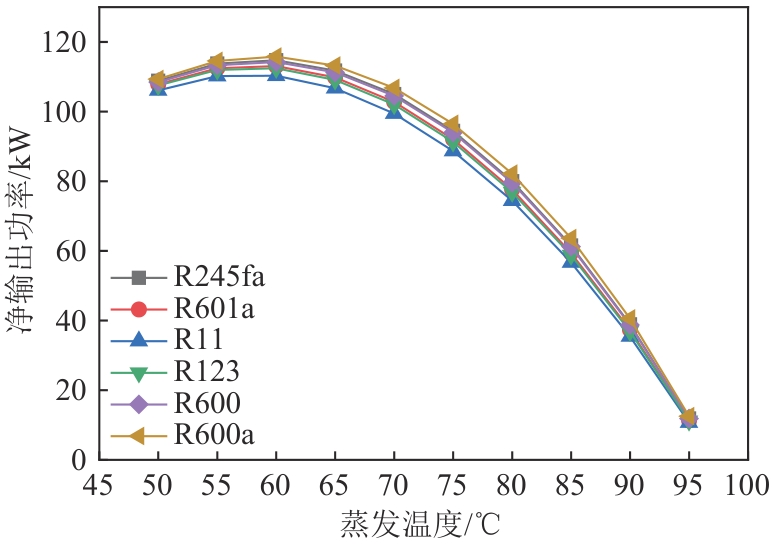
Fig. 3 Effect of evaporation temperature on net output power of bottom cycle
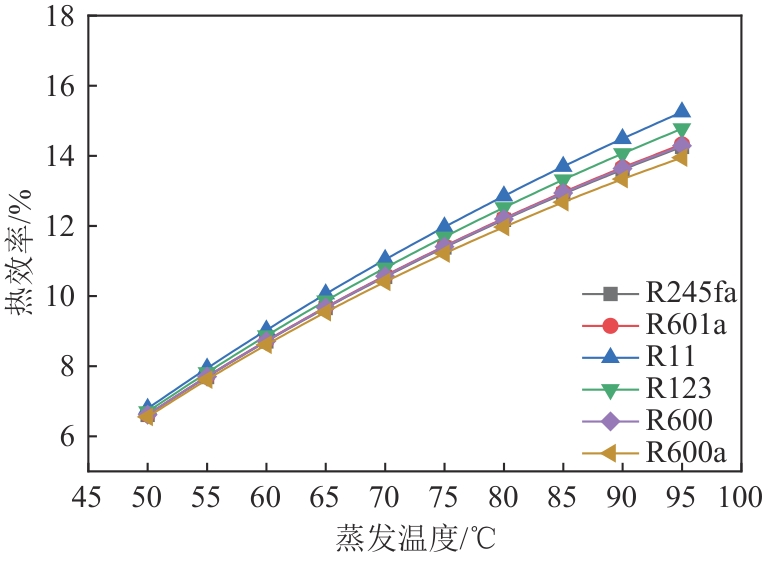
Fig. 4 Effect of evaporation temperature on thermal efficiency of bottom cycle
| 参数 | 文献测量值 | 本文计算值 | 误差/% |
|---|---|---|---|
| 透平功率[ | 388.00 MW | 394.71 MW | 1.73 |
| 主压缩机功耗[ | 56.30 MW | 57.65 MW | 2.34 |
| 再压缩机功耗[ | 45.89 MW | 46.63 MW | 1.59 |
| 高温回热器功率[ | 1 452.34 MW | 1 465.37 MW | 0.90 |
| 低温回热器功率[ | 375.00 MW | 375.65 MW | 0.17 |
| SCRBC净输出功率[ | 285.81 MW | 290.42 MW | 1.59 |
| SCRBC热效率[ | 47.60% | 47.86% | 0.54 |
| ORC循环热效率[ | 14.89% | 14.59% | 2.01 |
Tab. 3 Comparison and verification of model results
| 参数 | 文献测量值 | 本文计算值 | 误差/% |
|---|---|---|---|
| 透平功率[ | 388.00 MW | 394.71 MW | 1.73 |
| 主压缩机功耗[ | 56.30 MW | 57.65 MW | 2.34 |
| 再压缩机功耗[ | 45.89 MW | 46.63 MW | 1.59 |
| 高温回热器功率[ | 1 452.34 MW | 1 465.37 MW | 0.90 |
| 低温回热器功率[ | 375.00 MW | 375.65 MW | 0.17 |
| SCRBC净输出功率[ | 285.81 MW | 290.42 MW | 1.59 |
| SCRBC热效率[ | 47.60% | 47.86% | 0.54 |
| ORC循环热效率[ | 14.89% | 14.59% | 2.01 |
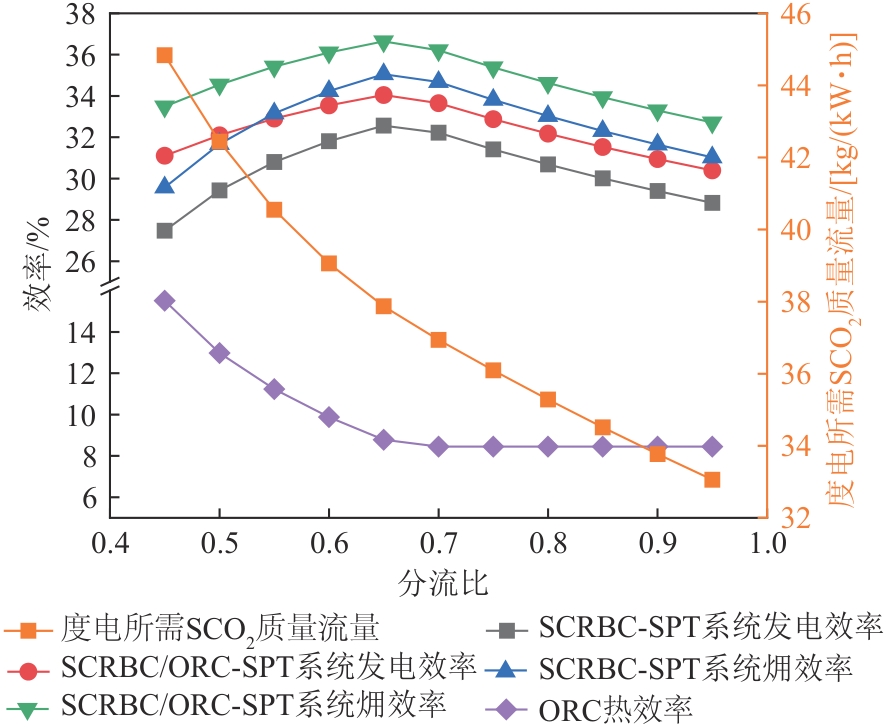
Fig. 5 Effect of split ratio on thermodynamic performance of SCRBC/ORC-SPT system
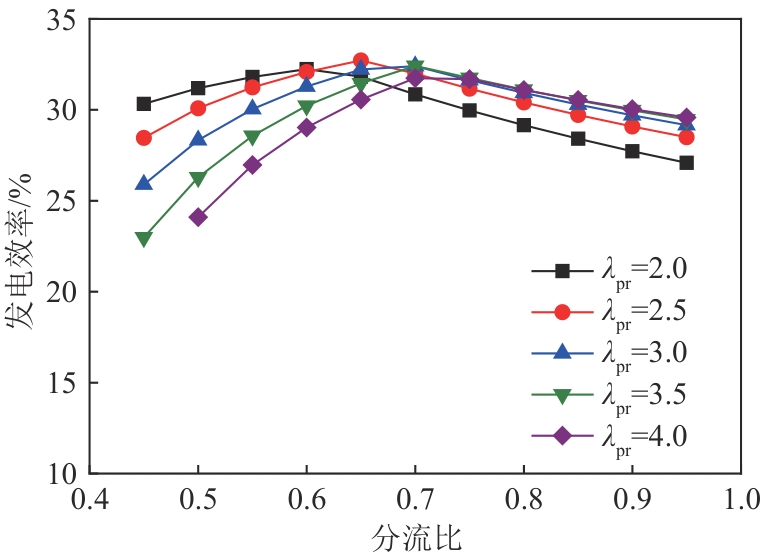
Fig. 6 Effect of split ratio on the power generation efficiency of SCRBC-SPT system under different pressure ratios
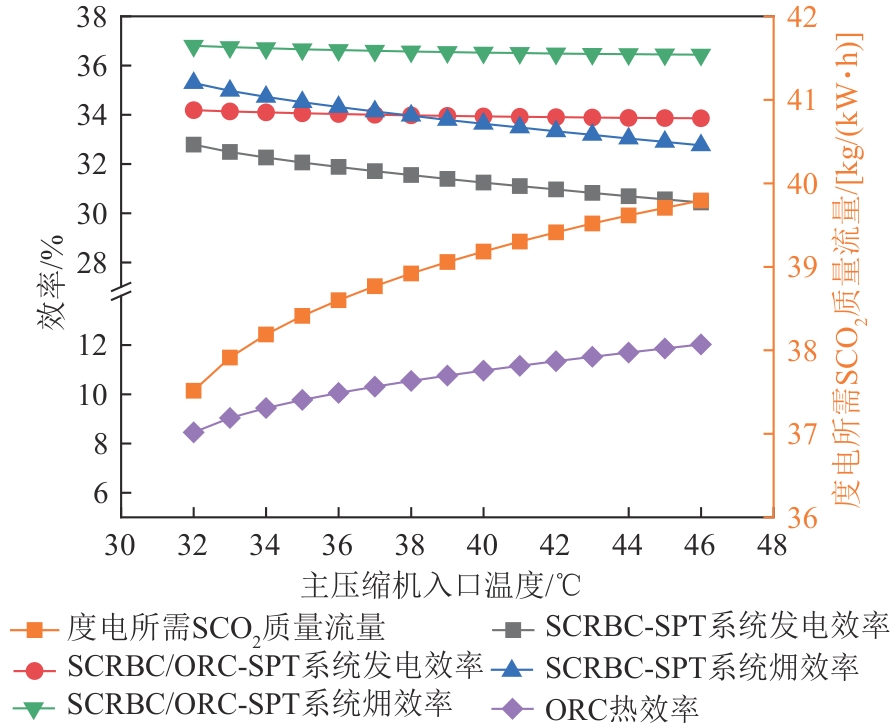
Fig. 7 Effect of main compressor inlet temperature on thermodynamic performance of SCRBC/ORC-SPT system
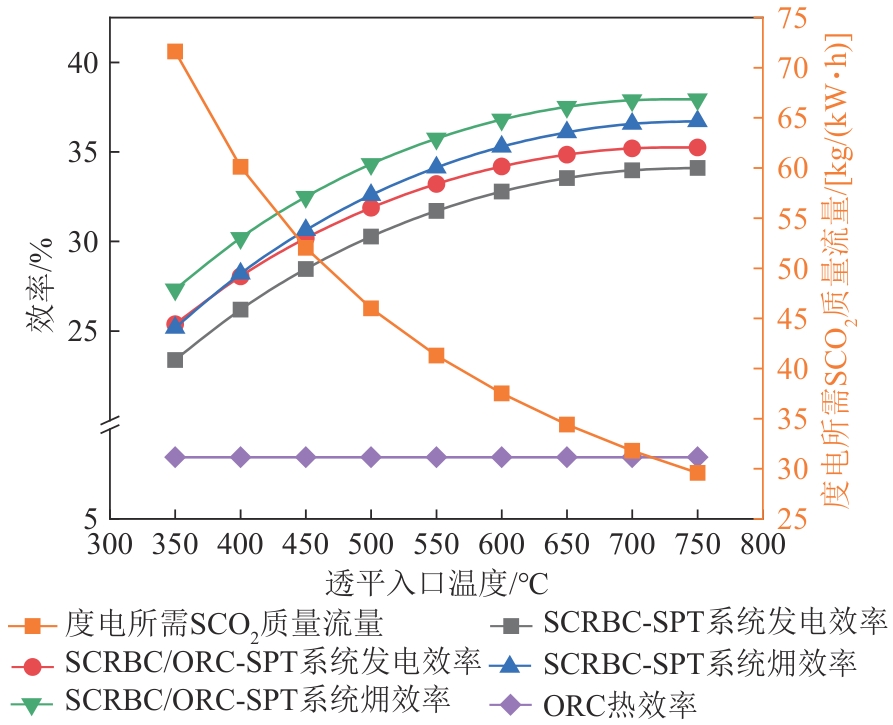
Fig. 8 Effect of turbine inlet temperature on thermodynamic performance of SCRBC/ORC-SPT system
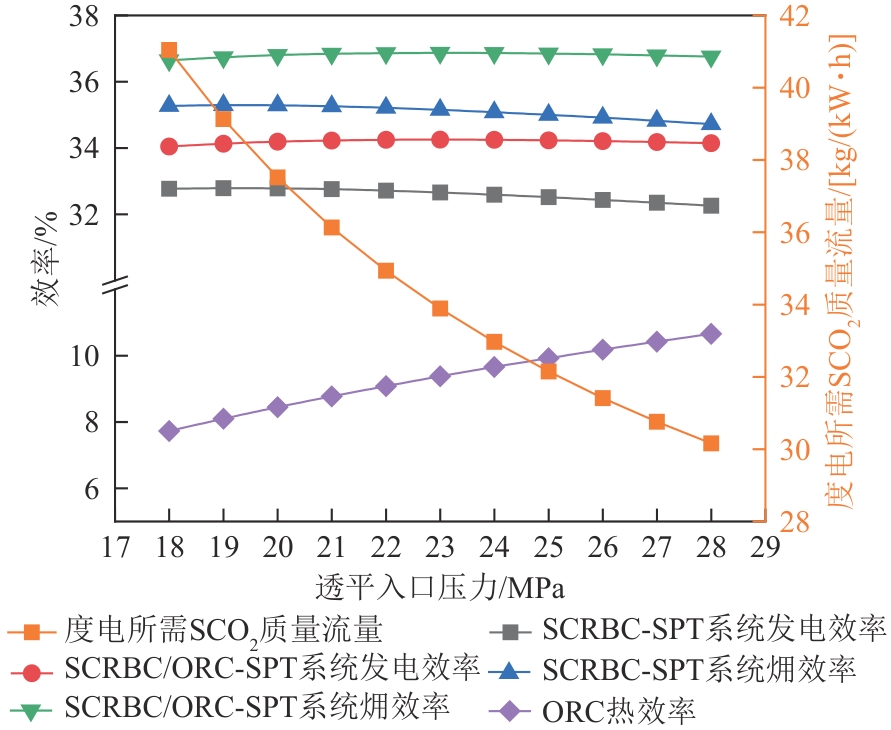
Fig. 9 Effect of turbine inlet pressure on thermodynamic performance of SCRBC/ORC-SPT system
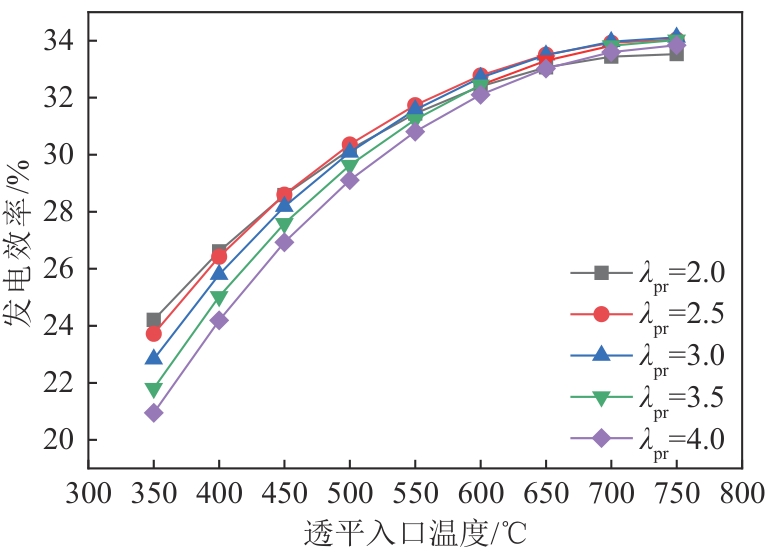
Fig. 10 Effect of turbine inlet temperature on the power generation efficiency of SCRBC-SPT system under different pressure ratios
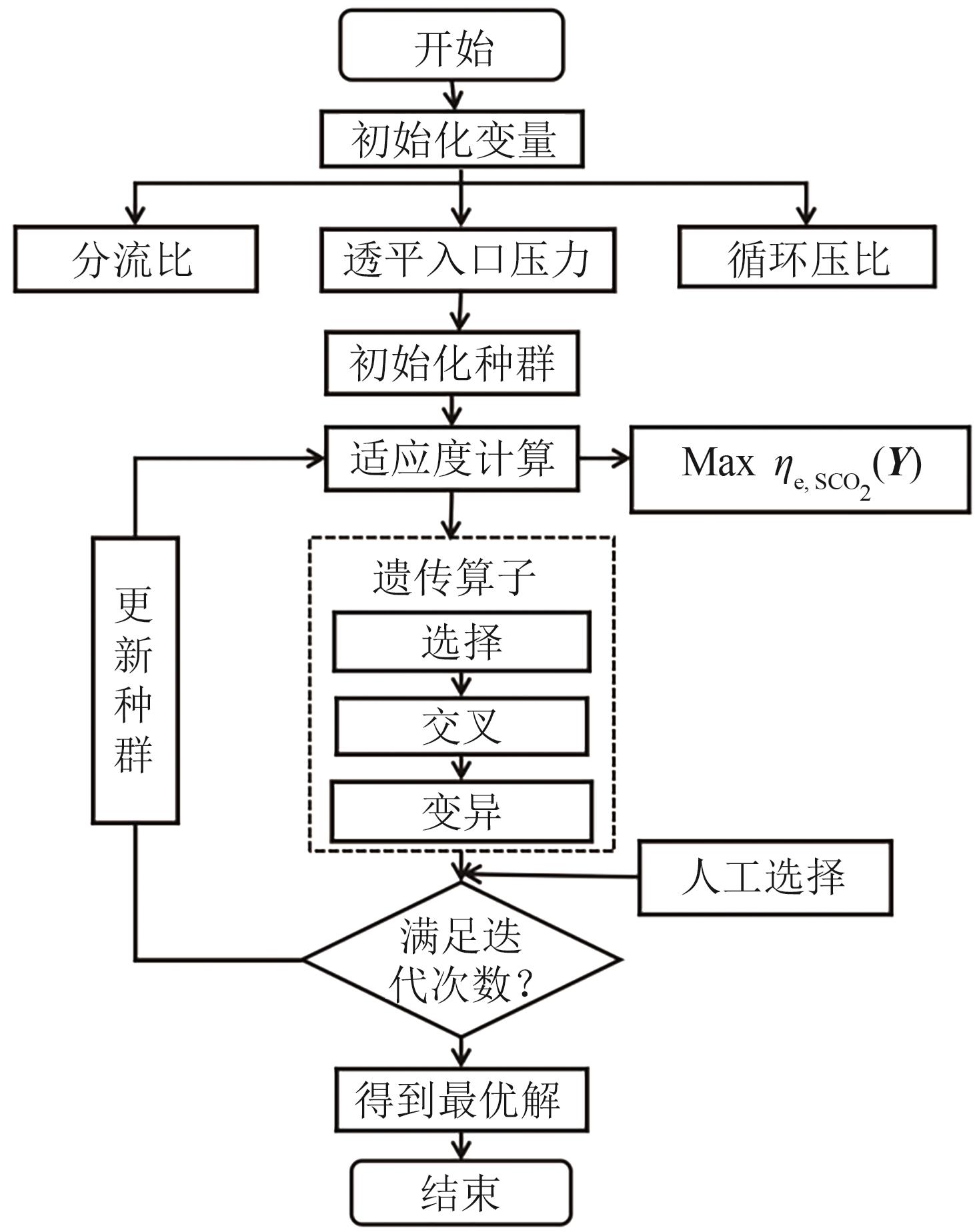
Fig. 11 GA optimization flowchart
| 循环设计参数 | 数值 | |
|---|---|---|
| 透平入口压力/MPa | 19.865 | |
| 分流比 | 0.668 | |
| 循环压比 | 2.684 | |
| 底循环热效率/% | 14.29 | |
| 常规塔式光热电站发电效率/% | 25.51[ | |
| 顶循环发电系统 | 发电效率/% | 32.78 |
| 㶲效率/% | 35.28 | |
| SPT联合系统 | 发电效率/% | 34.19 |
| 㶲效率/% | 36.80 | |
| 发电效率提升量/% | 4.31 | |
| 㶲效率提升量/% | 4.31 | |
Tab. 4 Optimization results of key parameters
| 循环设计参数 | 数值 | |
|---|---|---|
| 透平入口压力/MPa | 19.865 | |
| 分流比 | 0.668 | |
| 循环压比 | 2.684 | |
| 底循环热效率/% | 14.29 | |
| 常规塔式光热电站发电效率/% | 25.51[ | |
| 顶循环发电系统 | 发电效率/% | 32.78 |
| 㶲效率/% | 35.28 | |
| SPT联合系统 | 发电效率/% | 34.19 |
| 㶲效率/% | 36.80 | |
| 发电效率提升量/% | 4.31 | |
| 㶲效率提升量/% | 4.31 | |
| [1] | 谢菁,吕涛,方德斌 .低碳转型目标下的电力社会价值研究[J].全球能源互联网,2024,7(6):650-661. |
| XIE J,LYU T, FANG D B .The social value analysis of electric power considering the target of low-carbon transition[J].Journal of Global Energy Interconnection,2024,7(6):650-661. | |
| [2] | 马月婧,潘利生,魏小林,等 .太阳能热发电超临界CO2布雷顿循环性能理论研究[J].太阳能学报,2018,39(5):1255-1262. |
| MA Y J, PAN L S, WEI X L,et al .Theoretical investigation on performance of supercritical CO2 brayton cycle for solar thermal power generation system[J].Acta Energiae Solaris Sinica,2018,39(5):1255-1262. | |
| [3] | 肖瑶,钮文泽,魏高升,等 .太阳能光伏/光热技术研究现状与发展趋势综述[J].发电技术,2022,43(3):392-404. doi:10.12096/j.2096-4528.pgt.21145 |
| XIAO Y, NIU W Z, WEI G S,et al .Review on research status and developing tendency of solar photovoltaic/thermal technology[J].Power Generation Technology,2022,43(3):392-404. doi:10.12096/j.2096-4528.pgt.21145 | |
| [4] | 纪宇轩,邢凯翔,岑可法,等 .超临界二氧化碳布雷顿循环研究进展[J].动力工程学报,2022,42(1):1-9. doi:10.19805/j.cnki.jcspe.2022.01.001 |
| JI Y X, XING K X, CEN K F,et al .A review on supercritical carbon dioxide brayton cycle[J].Journal of Chinese Society of Power Engineering,2022,42(1):1-9. doi:10.19805/j.cnki.jcspe.2022.01.001 | |
| [5] | LIU Y, WANG Y, ZHANG Y,et al .Design and performance analysis of compressed CO2 energy storage of a solar power tower generation system based on the S-CO2 Brayton cycle[J].Energy Conversion and Management,2021,249:114856. doi:10.1016/j.enconman.2021.114856 |
| [6] | HU Y, ZHAI R, LIU L,et al .Capacity optimization and performance analysis of wind power-photovoltaic-concentrating solar power generation system integrating different S-CO2 Brayton cycle layouts[J].Journal of Cleaner Production,2023,433:139342. doi:10.1016/j.jclepro.2023.139342 |
| [7] | TRAN T S, VU M P, PHAM M H,et al .Study on the impact of rooftop solar power systems on the low voltage distribution power grid:a case study in ha tinh province,Vietnam[J].Energy Reports,2023,10:1151-1160. doi:10.1016/j.egyr.2023.07.048 |
| [8] | ALMUTAIRI K, ALHUYI NAZARI M, SALEM M,et al .A review on applications of solar energy for preheating in power plants[J].Alexandria Engineering Journal,2022,61(7):5283-5294. doi:10.1016/j.aej.2021.10.045 |
| [9] | 吴毅,王佳莹,王明坤,等 .基于超临界CO2布雷顿循环的塔式太阳能集热发电系统[J].西安交通大学学报,2016,50(5):108-113. doi:10.7652/xjtuxb201605016 |
| WU Y, WANG J Y, WANG M K,et al .A towered solar thermal power plant based on supercritical CO2 Brayton cycle[J].Journal of Xi’an Jiaotong University,2016,50(5):108-113. doi:10.7652/xjtuxb201605016 | |
| [10] | 高超,段立强,高统彤,等 .集成塔式太阳能的新型超临界压缩二氧化碳储能系统性能分析[J].中国电机工程学报,2024,44(10):3949-3962. doi:10.13334/j.0258-8013.pcsee.230710 |
| GAO C, DUAN L Q, GAO T T,et al .Performance analysis of novel supercritical compressed carbon dioxide energy storage systems integrated with tower solar energy[J].Proceedings of the CSEE,2024,44(10):3949-3962. doi:10.13334/j.0258-8013.pcsee.230710 | |
| [11] | MILANI D, LUU M T, MCNAUGHTON R,et al .A comparative study of solar heliostat assisted supercritical CO2 recompression brayton cycles:dynamic modelling and control strategies[J].The Journal of Supercritical Fluids,2017,120:113-124. doi:10.1016/j.supflu.2016.09.009 |
| [12] | 陈恺祺, 蒲文灏, 张豪,等 .基于S-CO2分流再热式布雷顿循环的塔式太阳能热发电系统研究[J].重庆理工大学学报(自然科学),2020,34(8):190-197. doi:10.3969/j.issn.1674-8425(z).2020.08.027 |
| CHEN K Q, PU W H, ZHANG H,et al .Research on tower solar thermal power generation system based on supercritical carbon dioxide diffluent flow reheating brayton cycle[J].Journal of Chongqing University of Technology (Natural Science),2020,34(8):190-197. doi:10.3969/j.issn.1674-8425(z).2020.08.027 | |
| [13] | ALSAGRI A S, CHIASSON A, GADALLA M .Viability assessment of a concentrated solar power tower with a supercritical CO2 brayton cycle power plant[J].Journal of Solar Energy Engineering,2019,141(5):051006. doi:10.1115/1.4043515 |
| [14] | WANG X, DAI Y .Exergoeconomic analysis of utilizing the transcritical CO2 cycle and the ORC for a recompression supercritical CO2 cycle waste heat recovery:a comparative study[J].Applied Energy,2016,170:193-207. doi:10.1016/J.APENERGY.2016.02.112 |
| [15] | 郑雅文,徐进良,杨绪飞 .超临界CO2分流循环及联合循环的热力学分析[J].中国电机工程学报,2018,38(3):814-822. |
| ZHENG Y W, XU J L, YANG X F .Thermodynamic analysis of supercritical CO2 part-flow cycle and combined cycle[J].Proceedings of the CSEE,2018,38(3):814-822. | |
| [16] | LI Q, ERQI E, QIU Y,et al .Conceptual design of novel He-SCO2 Brayton cycles for ultra-high-temperature concentrating solar power[J].Energy Conversion and Management,2022,260:115618. doi:10.1016/j.enconman.2022.115618 |
| [17] | 宋昱希 .基于太阳能塔的SCO2布雷顿循环耦合ORC的分析和优化[D].南昌:南昌大学,2023. |
| SONG Y X .Analysis and optimization of SCO2 Brayton cycle coupling ORC based on solar tower[D].Nanchang:Nanchang University,2023. | |
| [18] | 朱含慧,王坤,何雅玲 .直接式S-CO2塔式太阳能热发电系统光-热-功一体化热力学分析[J].工程热物理学报,2017,38(10):2045-2053. |
| ZHU H H, WANG K, HE Y L .Thermodynamic analysis of solar thermal power tower systems integrated with the direct-heated supercritical CO2 Brayton cycles[J].Journal of Engineering Thermophysics,2017,38(10):2045-2053. | |
| [19] | LI X, KONG W, WANG Z,et al .Thermal model and thermodynamic performance of molten salt cavity receiver[J].Renewable Energy,2010,35(5):981-988. doi:10.1016/j.renene.2009.11.017 |
| [20] | CARSTENS N A, HEJZLAR P, DRISCOLL M J .Control system strategies and dynamic response for supercritical CO2 power conversion cycles[R].Cambridge:MIT Nuclear Engineering Department MIT-GFR-038,2006. |
| [21] | WANG X, LEVY E K, PAN C,et al .Working fluid selection for organic Rankine cycle power generation using hot produced supercritical CO2 from a geothermal reservoir[J].Applied Thermal Engineering,2019,149:1287-1304. doi:10.1016/j.applthermaleng.2018.12.112 |
| [1] | Yazhuo ZHAO, Wenjie ZHANG, Yinghui LIAO, Jinlei LIN, Rongyong ZHANG, Yuanyuan DUAN. Research on Power Generation Technologies for Low-Grade Waste Heat in Nuclear Power Plants [J]. Power Generation Technology, 2025, 46(4): 818-828. |
| [2] | Wenjing WANG, Yixuan HAN, Jibin LI, Xiaoxu SHEN, Zhaoyi HUO, Lianghua FENG. Multi-Objective Optimization Analysis of Gas-Steam Combined Cycle Power Generation Systems [J]. Power Generation Technology, 2025, 46(4): 839-848. |
| [3] | Tiankun WANG, Tianye LIU, Jiafei QIAO, Bingbing WANG, Zhen YANG, Yuanyuan DUAN. Research Progress on Supercritical CO2-Based Mixture Brayton Cycle [J]. Power Generation Technology, 2025, 46(3): 617-626. |
| [4] | Yinan WANG, Jiayang LÜ, Heng CHEN, Guoqiang ZHANG, Gang XU, Rongrong ZHAI. Research on Modeling and Variable Operating Condition Characteristics of Entrained Flow Coal Gasifier Based on Aspen Plus [J]. Power Generation Technology, 2024, 45(5): 951-958. |
| [5] | Jiawei LÜ, Zhaoyi HUO, Feng LIU, Ning XIE, Wenjing WANG. Advanced Exergoeconomics Analysis of Gas-Steam Combined Cycle Power Generation System [J]. Power Generation Technology, 2024, 45(5): 941-950. |
| [6] | Daijun CHEN, Lili CHEN, Yangtao LI. Electrical Power Output Prediction of Combined Cycle Power Station [J]. Power Generation Technology, 2024, 45(1): 99-105. |
| [7] | Xin TANG, Yiran QIAN, Huawei FANG, Yang LI, Siguang LI, Jingwei YI, Weixiong CHEN, Junjie YAN. A Review of Control Strategies for Supercritical Carbon Dioxide Brayton Cycle [J]. Power Generation Technology, 2023, 44(4): 492-501. |
| [8] | Quanbin ZHANG, Qiongfang ZHOU. Research on the Development Path of China’s Thermal Power Generation Technology Based on the Goal of “Carbon Peak and Carbon Neutralization” [J]. Power Generation Technology, 2023, 44(2): 143-154. |
| [9] | Lingjie FENG, Rongrong ZHAI, Yicun GUO, Ning MA, Jiaxin FU. Study on the Comprehensive Performance of Natural Gas Combined Cycle Plant Integrated With Carbon Capture System [J]. Power Generation Technology, 2022, 43(4): 584-592. |
| [10] | Kejia HU, Jun ZHANG, Tianyu ZHANG, Lixin GAO. Harmonic Analysis of H Class Gas Turbine Generator Starting With Static Frequency Converter Based on Matlab/Simulink Simulation [J]. Power Generation Technology, 2020, 41(6): 697-705. |
| [11] | Jun YANG,Xiaolei PAN,Longhai CAI,Daquan ZHANG,Chong ZHU,Yong YAO. Research on Technical Scheme for Shutdown Maintenance Design of 9F Class Combined Cycle Heating Unit [J]. Power Generation Technology, 2020, 41(4): 391-398. |
| [12] | Chenqi TANG,Lingen CHEN,Wenhua WANG,Huijun FENG,Shaojun XIA. Performance Optimization of Endoreversible Simple MCBC Coupled to Variable-temperature Reservoirs Based on NSGA-Ⅱ Algorithm [J]. Power Generation Technology, 2020, 41(3): 301-316. |
| [13] | Ran CHEN,Qiang LIU,Dongyu MENG. Effect of Subcooling on Thermal Performance of Organic Rankine Cycle With Zeotropic Mixture in Geothermal Power Generation [J]. Power Generation Technology, 2020, 41(2): 190-197. |
| [14] | Xi CHEN,Yanping ZHANG. Design and Performance Analysis of Blade Disc Turbine in Low-grade Heat Source ORC System [J]. Power Generation Technology, 2019, 40(3): 230-238. |
| [15] | Chao WANG. Power Generating Utilization of Liquefied Natural Gas Cold Energy Integrated With Gas Turbine Combined Cycle [J]. Power Generation Technology, 2018, 39(3): 263-267. |
| Viewed | ||||||
|
Full text |
|
|||||
|
Abstract |
|
|||||
