

Power Generation Technology ›› 2026, Vol. 47 ›› Issue (2): 295-303.DOI: 10.12096/j.2096-4528.pgt.260207
• Power Generation and Environmental Protection • Previous Articles
Baoqun GUO1, Jiahao YUE2, Maozhan CONG2, Hongpeng LIU2, Baizhong SUN2
Received:2025-10-21
Revised:2025-12-20
Published:2026-04-30
Online:2026-04-21
Supported by:CLC Number:
Baoqun GUO, Jiahao YUE, Maozhan CONG, Hongpeng LIU, Baizhong SUN. Low-Load Stable Combustion Technology of 600 MW Supercritical Low-Calorific Value Lignite Octagonal Tangentially Fired Boiler[J]. Power Generation Technology, 2026, 47(2): 295-303.
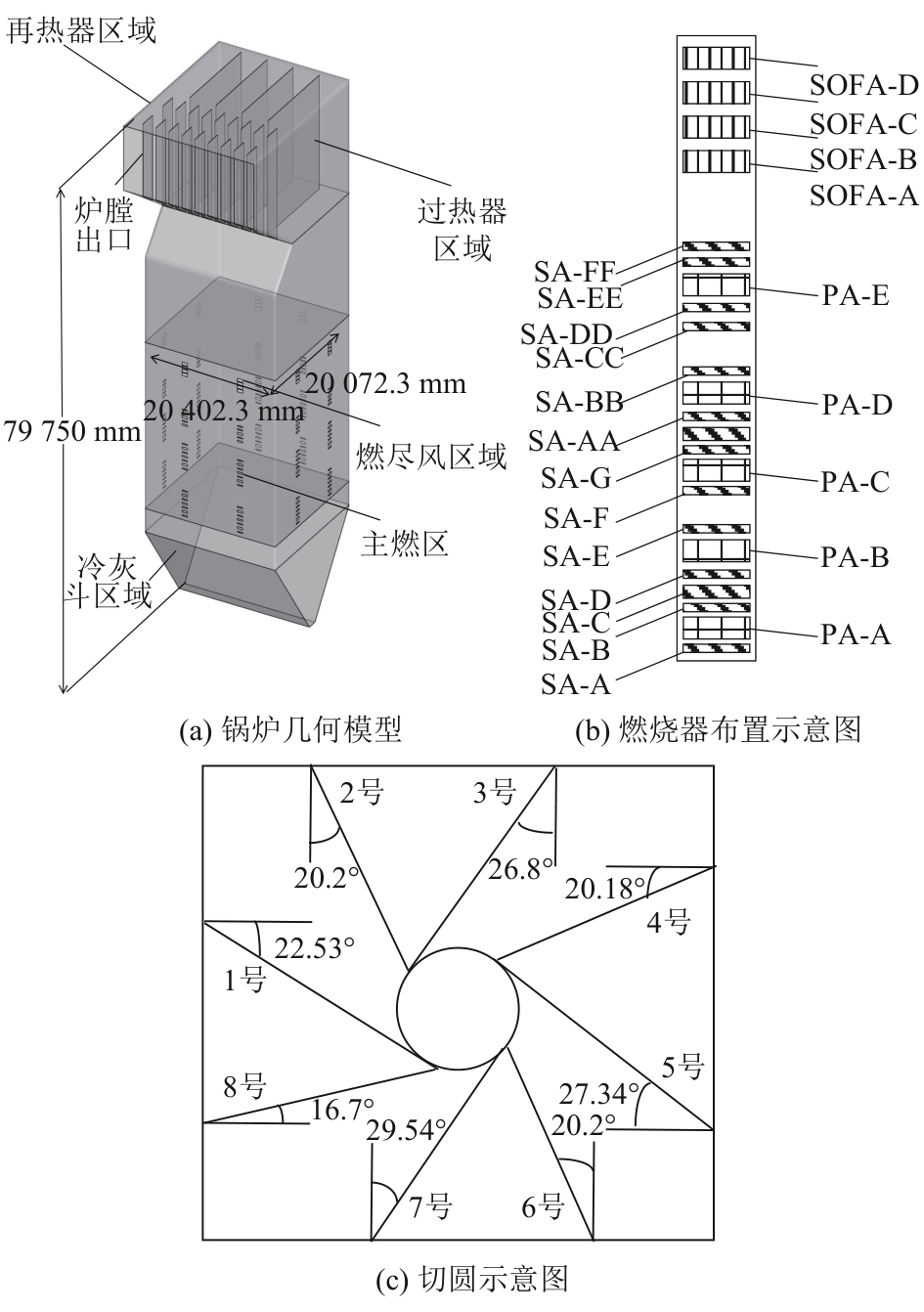
Fig. 1 Geometric model of boiler and schematic diagram of burner layout
| 参数 | 数值 |
|---|---|
| 收到基碳质量分数Car/% | 25.28 |
| 收到基氢质量分数Har/% | 2.22 |
| 收到基氧质量分数Oar/% | 9.80 |
| 收到基氮质量分数Nar/% | 0.24 |
| 收到基硫质量分数Sar/% | 0.26 |
| 水分质量分数Mt/% | 50.00 |
| 收到基灰分质量分数Aar/% | 12.20 |
| 干燥无灰基挥发分质量分数Vdaf/% | 62.88 |
| 收到基低位发热量Qnet,ar/(MJ/kg) | 8.85 |
Tab. 1 Fuel characteristics
| 参数 | 数值 |
|---|---|
| 收到基碳质量分数Car/% | 25.28 |
| 收到基氢质量分数Har/% | 2.22 |
| 收到基氧质量分数Oar/% | 9.80 |
| 收到基氮质量分数Nar/% | 0.24 |
| 收到基硫质量分数Sar/% | 0.26 |
| 水分质量分数Mt/% | 50.00 |
| 收到基灰分质量分数Aar/% | 12.20 |
| 干燥无灰基挥发分质量分数Vdaf/% | 62.88 |
| 收到基低位发热量Qnet,ar/(MJ/kg) | 8.85 |
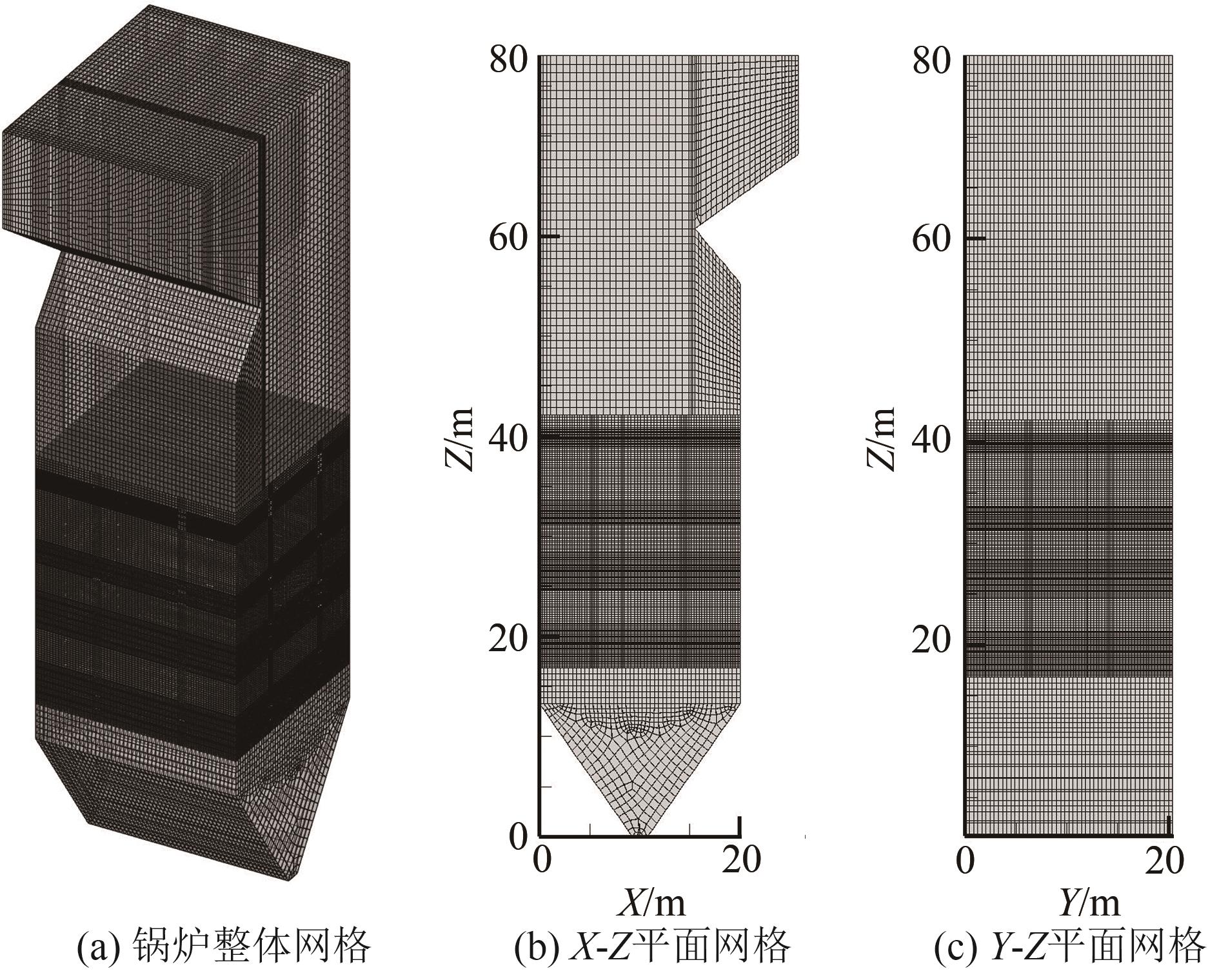
Fig. 2 Schematic diagram of boiler grid division
| 参数 | 100%负荷 | 75%负荷 | 50%负荷 | 35%负荷 |
|---|---|---|---|---|
| 煤粉量/(t/h) | 584.80 | 482.75 | 364.24 | 262.90 |
| 一次风量/(m3/h) | 639.34 | 493.17 | 399.73 | 307.46 |
| 总二次风量/(m3/h) | 1 479.52 | 1 101.02 | 875.08 | 744.69 |
| 燃尽风量/(m3/h) | 613.98 | 386.02 | 311.63 | 263.81 |
Tab. 2 Simulated working conditions
| 参数 | 100%负荷 | 75%负荷 | 50%负荷 | 35%负荷 |
|---|---|---|---|---|
| 煤粉量/(t/h) | 584.80 | 482.75 | 364.24 | 262.90 |
| 一次风量/(m3/h) | 639.34 | 493.17 | 399.73 | 307.46 |
| 总二次风量/(m3/h) | 1 479.52 | 1 101.02 | 875.08 | 744.69 |
| 燃尽风量/(m3/h) | 613.98 | 386.02 | 311.63 | 263.81 |
| 项目 | 炉膛出口温度/K | 炉膛出口O2体积分数/% | 炉膛出口NO x 质量浓度/(mg/m3) |
|---|---|---|---|
| 误差/% | 0.12 | 2.78 | 4.07 |
| 数值计算 | 1 177.43 | 3.5 | 318.0 |
| 电厂运行 | 1 176.00 | 3.6 | 331.5 |
Tab. 3 Comparison between numerical calculation results and power plant operational results
| 项目 | 炉膛出口温度/K | 炉膛出口O2体积分数/% | 炉膛出口NO x 质量浓度/(mg/m3) |
|---|---|---|---|
| 误差/% | 0.12 | 2.78 | 4.07 |
| 数值计算 | 1 177.43 | 3.5 | 318.0 |
| 电厂运行 | 1 176.00 | 3.6 | 331.5 |
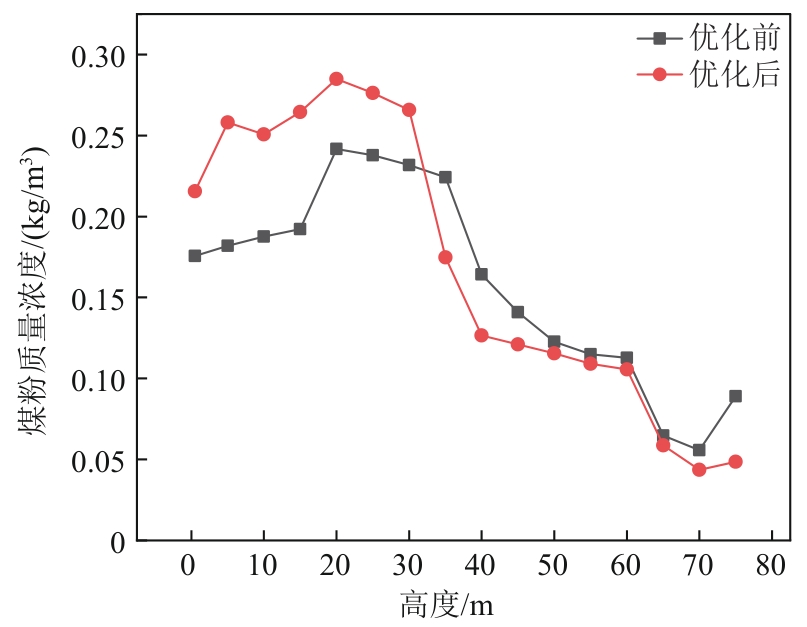
Fig. 3 Pulverized coal concentration distribution during 35% load operation of boiler before and after optimization
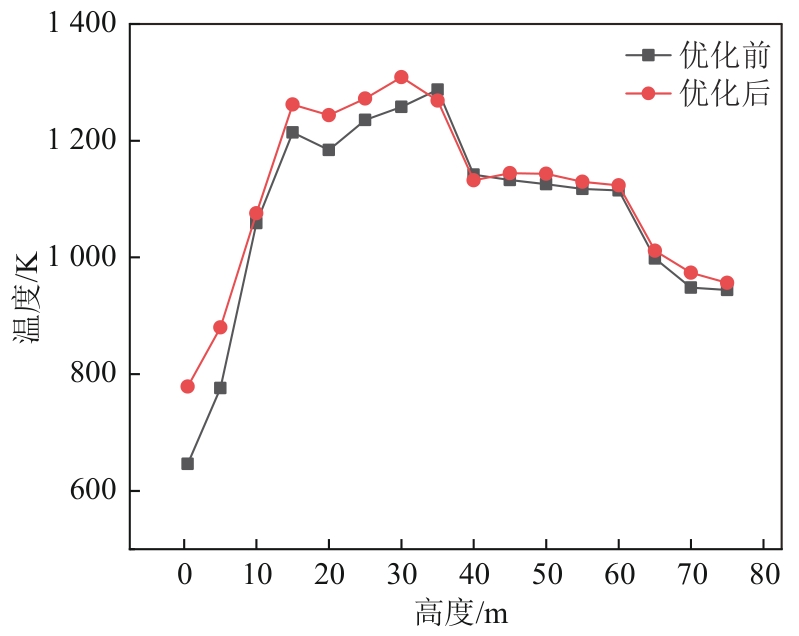
Fig. 4 Temperature distribution during 35% load operation of the boiler before and after optimization
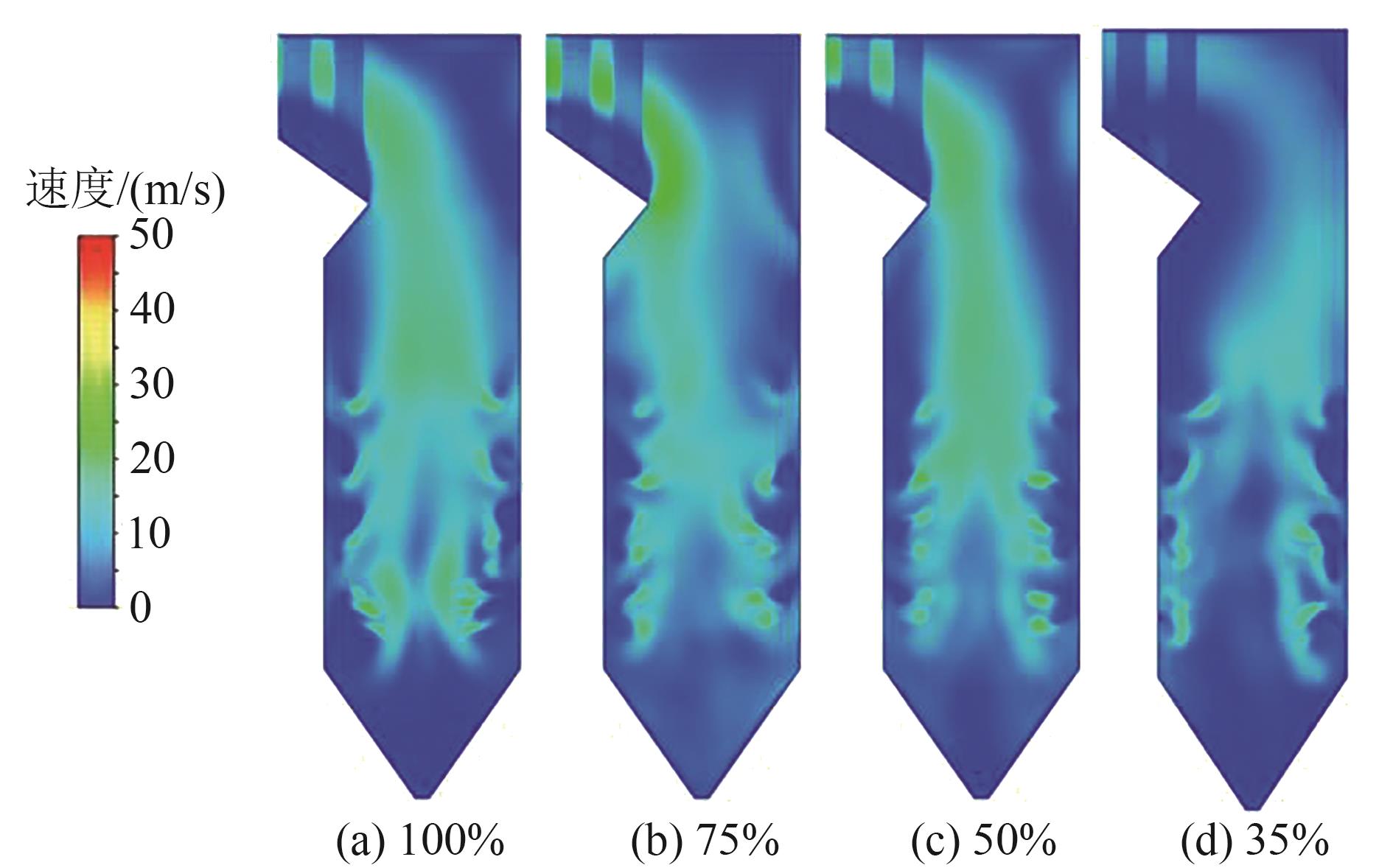
Fig. 5 Velocity distribution of furnace cross-section under different loads
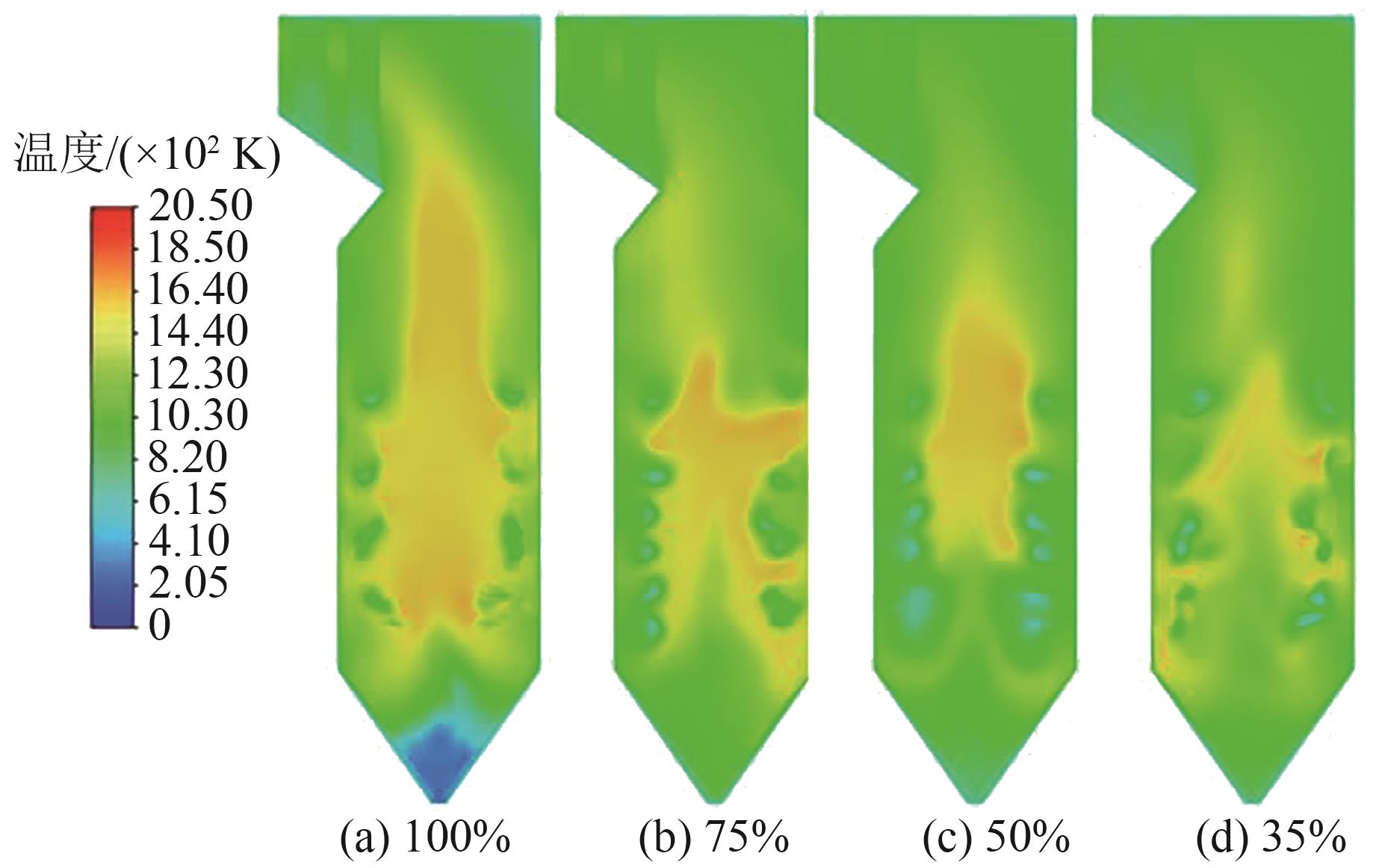
Fig. 6 Temperature distribution of furnace longitudinal section under different loads
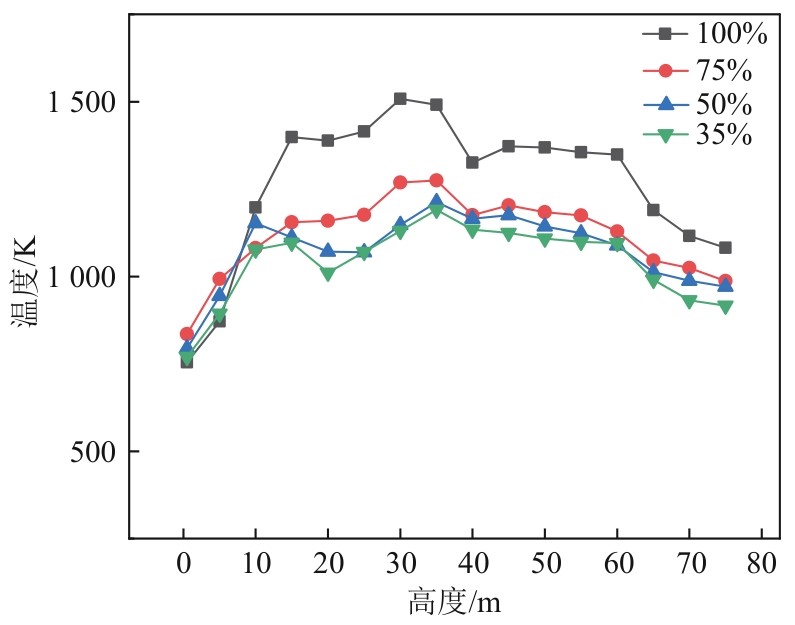
Fig. 7 Distribution of furnace temperature with furnace height under different loads
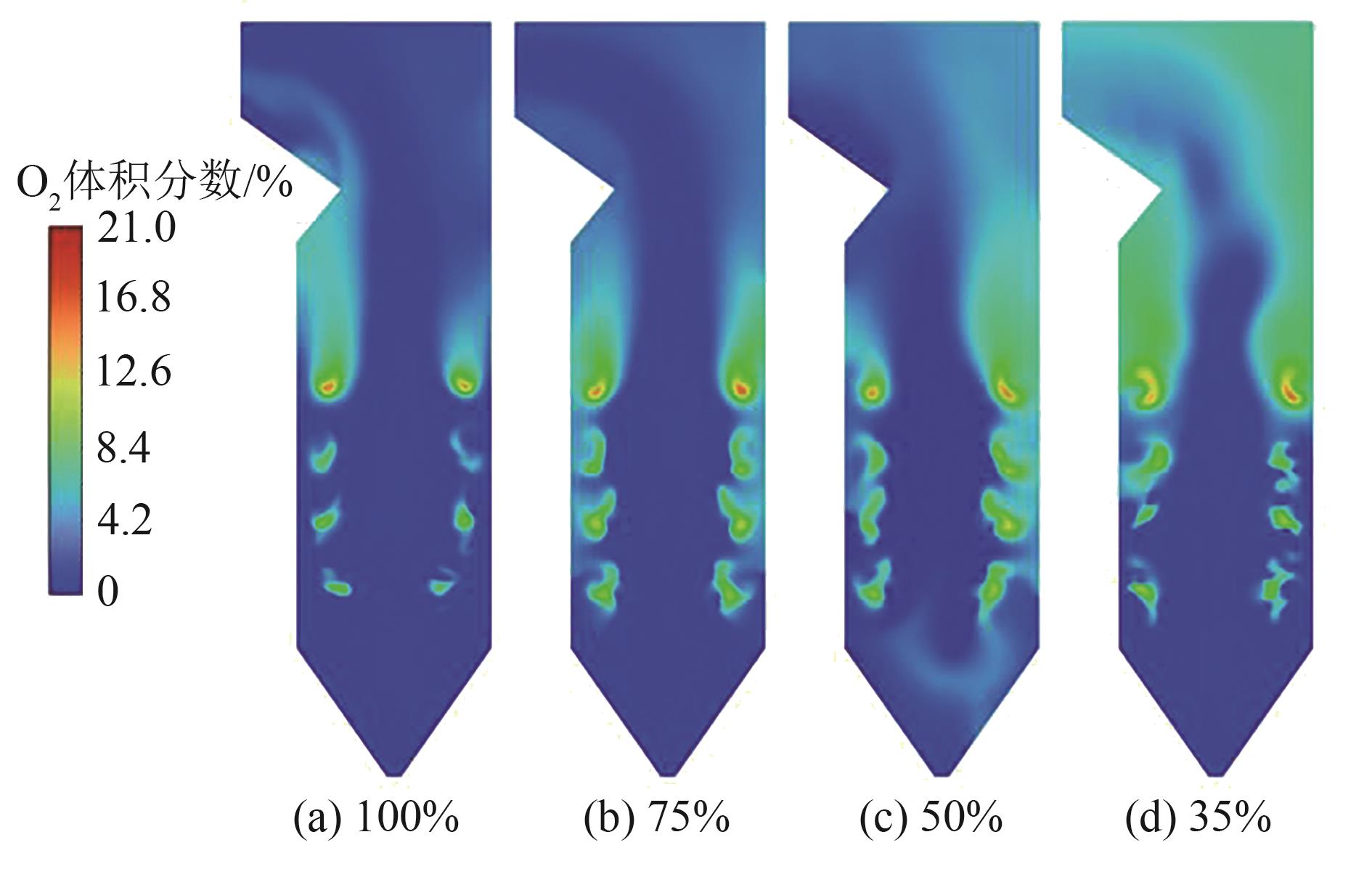
Fig. 8 O2 concentration distribution at the center section of the furnace under different loads
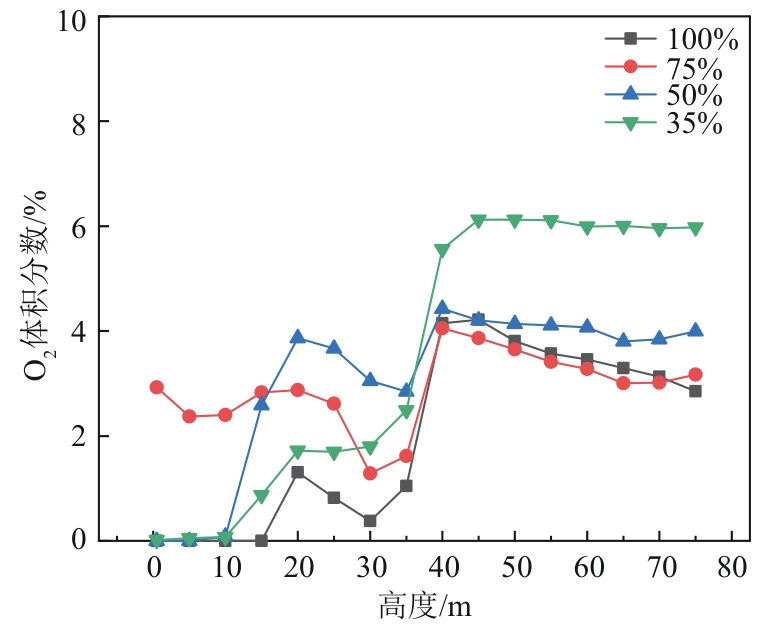
Fig. 9 Distribution of O2 concentration with furnace height under different loads
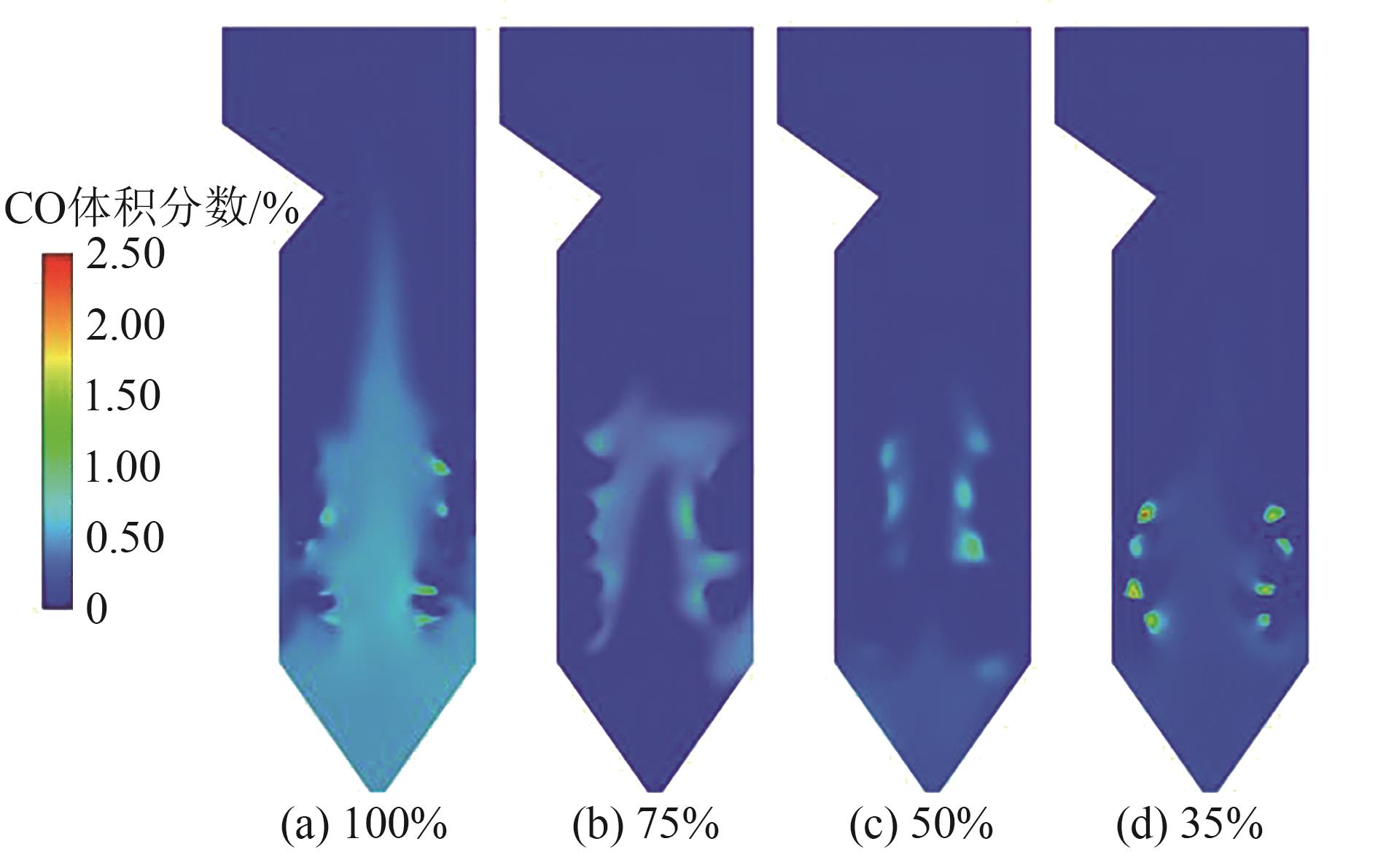
Fig. 10 CO concentration distribution in furnace section under different loads
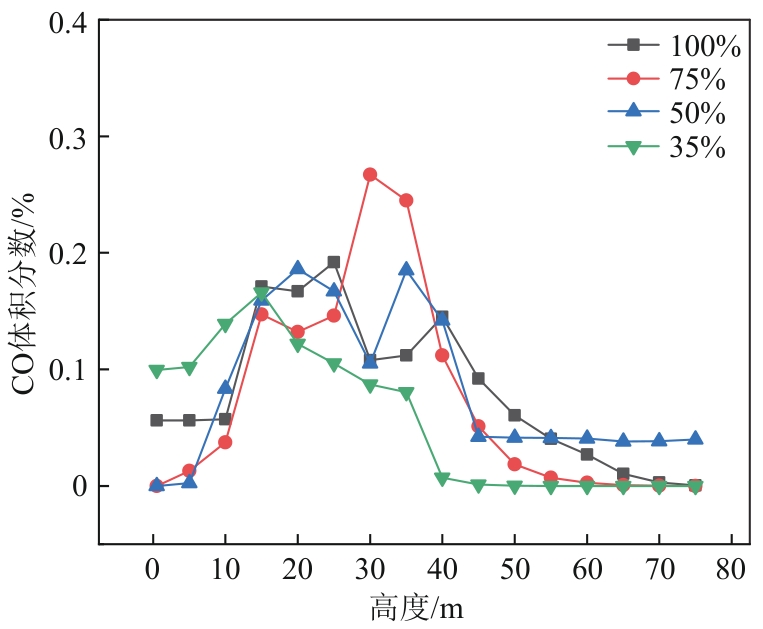
Fig. 11 CO concentration distribution with furnace height under different loads
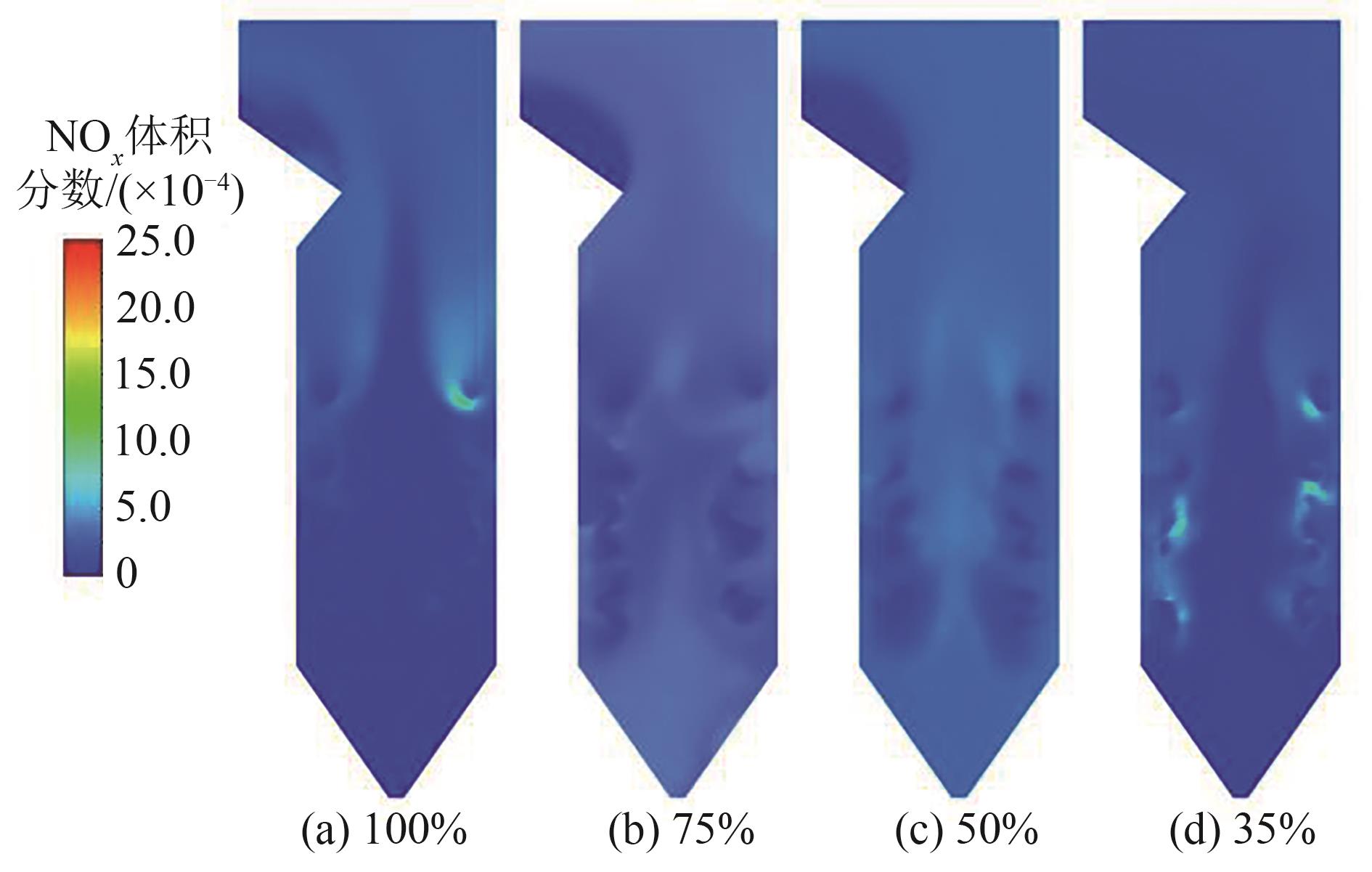
Fig. 12 Distribution of NO x concentration in furnace cross-section under different loads
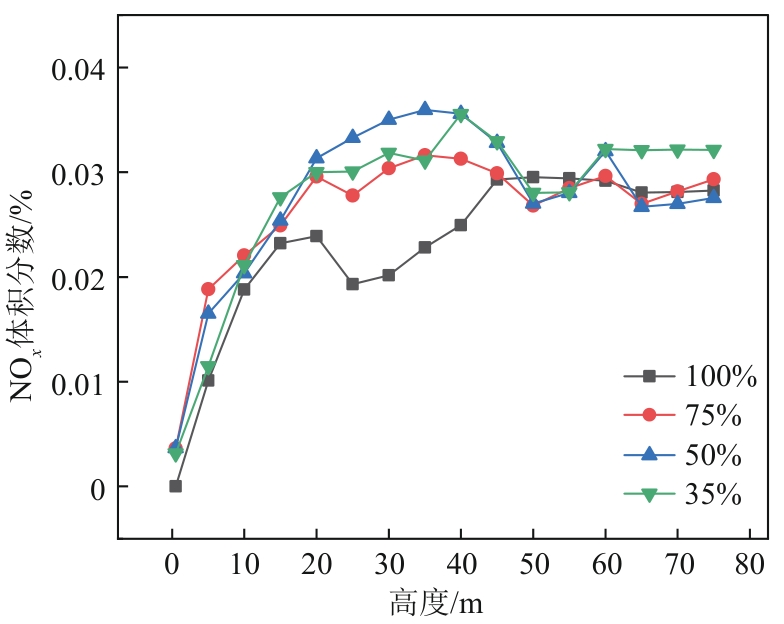
Fig. 13 Distribution of actual coal NO x concentration with furnace height under different loads
| 参数 | 测试结果 |
|---|---|
| 电负荷/MW | 210 |
| 运行O2体积分数/% | 6.2 |
| 排烟温度/℃ | 133.1 |
| 排烟CO体积分数/% | 0 |
| 飞灰可燃物体积分数/% | 0.20 |
| 底渣可燃物体积分数/% | 0.25 |
| 修正后排烟温度/℃ | 139.2 |
| 未燃碳热损失/% | 0.18 |
| 干烟气热损失/% | 7.59 |
| CO引起的热损失/% | 0 |
| 修正后锅炉效率/% | 89.84 |
Tab. 4 Results of 35% load stable combustion test of unit
| 参数 | 测试结果 |
|---|---|
| 电负荷/MW | 210 |
| 运行O2体积分数/% | 6.2 |
| 排烟温度/℃ | 133.1 |
| 排烟CO体积分数/% | 0 |
| 飞灰可燃物体积分数/% | 0.20 |
| 底渣可燃物体积分数/% | 0.25 |
| 修正后排烟温度/℃ | 139.2 |
| 未燃碳热损失/% | 0.18 |
| 干烟气热损失/% | 7.59 |
| CO引起的热损失/% | 0 |
| 修正后锅炉效率/% | 89.84 |
| [1] | 王华佳,张岩,尹书林,等 .分布式光伏并网系统电压越限风险及谐波影响[J].电网与清洁能源,2024,40(3):128-138. |
| WANG H J, ZHANG Y, YIN S L,et al .Voltage instability and harmonic risk for the distributed photovoltaic grid-connected system[J].Advances of Power System & Hydroelectric Engineering,2024,40(3):128-138. | |
| [2] | 罗斌,白小龙,臧天磊,等 .风光水互补发电系统研究综述[J].发电技术,2025,46(6):1097-1111. doi:10.12096/j.2096-4528.pgt.24231 |
| LUO B, BAI X L, ZANG T L,et al .Review of research on wind-solar-hydro complementary power generation systems[J].Power Generation Technology,2025,46(6):1097-1111. doi:10.12096/j.2096-4528.pgt.24231 | |
| [3] | 赵俊华,白焰,王智冬 .电碳耦合视角下新型电力系统低碳运行调度的关键问题及展望[J].电力建设,2025,46(7):133-149. |
| ZHAO J H, BAI Y, WANG Z D .Key issues and prospects for low-carbon operation and scheduling of the new power system from an electricity-carbon coupling perspective[J].Electric Power Construction,2025,46(7):133-149. | |
| [4] | 郭婷婷,曹蕃 .低碳能源系统发展趋势与应用实践[J].分布式能源,2025,10(1):1-13. doi:10.16513/j.2096-2185.DE.(2025)010-01-0001-13 |
| GUO T T, CAO F .Development trend and application of low-carbon energy system[J].Distributed Energy,2025,10(1):1-13. doi:10.16513/j.2096-2185.DE.(2025)010-01-0001-13 | |
| [5] | 王放放,杨鹏威,赵光金,等 .新型电力系统下火电机组灵活性运行技术发展及挑战[J].发电技术,2024,45(2):189-198. doi:10.12096/j.2096-4528.pgt.23079 |
| WANG F F, YANG P W, ZHAO G J,et al .Development and challenge of flexible operation technology of thermal power units under new power system[J].Power Generation Technology,2024,45(2):189-198. doi:10.12096/j.2096-4528.pgt.23079 | |
| [6] | 陶劲宇,秦川,金宇清,等 .面向新型电力系统的负荷模型研究综述[J].电力系统保护与控制,2025,53(5):168-187. |
| TAO J Y, QIN C, JIN Y Q,et al .A review of load models for new power systems[J].Power System Protection and Control,2025,53(5):168-187. | |
| [7] | 刘志强,李建锋,潘荔,等 .中国煤电机组改造升级效果分析与展望[J].中国电力,2024,57(7):1-11. doi:10.11930/j.issn.1004-9649.202402031 |
| LIU Z Q, LI J F, PAN L,et al .Analysis and prospect of transformation and upgrading effects of coal-fired power units in China[J].Electric Power,2024,57(7):1-11. doi:10.11930/j.issn.1004-9649.202402031 | |
| [8] | 陈艳波,董华玉,佘永康,等 .考虑风电退役再建和煤电灵活性改造的低碳电力系统多阶段协同规划方法[J].电力系统保护与控制,2025,53(15):48-58. |
| CHEN Y B, DONG H Y, SHE Y K,et al .Multi-stage coordinated planning method for low-carbon power systems considering wind power decommissioning and reconstruction and coal power flexibility upgrade[J].Power System Protection and Control,2025,53(15):48-58. | |
| [9] | 江少辉,潘洪鹏,黄浩,等 .660 MW燃煤锅炉低负荷稳燃特性数值模拟[J].广东电力,2025,38(12):114-120. |
| JIANG S H, PAN H P, HUANG H,et al .Numerical simulation of low-load combustion stability characteristics for 660 MW coal-fired boiler[J].Guangdong Electric Power,2025,38(12):114-120. | |
| [10] | 张斐 .平凉电厂300 MW机组灵活性改造研究[D].徐州:中国矿业大学,2021. doi:10.15251/djnb.2020.154.1075 |
| ZHANG F .Study on flexibility modification of 300 MW unit in Pingliang power plant[D].Xuzhou:China University of Mining and Technology,2021. doi:10.15251/djnb.2020.154.1075 | |
| [11] | 佟博恒,程亮,李战国,等 .亚临界强制循环锅炉20%低负荷稳燃优化调整的数值模拟与试验研究[J].热能动力工程,2022,37(8):117-127. doi:10.16146/j.cnki.rndlgc.2022.08.015 |
| TONG B H, CHENG L, LI Z G,et al .Numerical simulation and experimental study on optimal adjustment of stable combustion of subcritical forced circulation boiler at 20% low load[J].Journal of Engineering for Thermal Energy and Power,2022,37(8):117-127. doi:10.16146/j.cnki.rndlgc.2022.08.015 | |
| [12] | 曹保生,王兴 .某330 MW燃用贫煤机组深度调峰试验研究[J].山西电力,2022(6):43-46. |
| CAO B S, WANG X .Experimental study on deep peak-regulation of a 330 MW lean-coal-fired unit[J]. Shanxi Electric Power,2022(6):43-46. | |
| [13] | 付旭晨,郭洋,于英利,等 .300 MW等级锅炉变工况低负荷稳燃能力数值模拟与预测[J].热能动力工程,2020,35(5):112-118. doi:10.16146/j.cnki.rndlgc.2020.05.016 |
| FU X C, GUO Y, YU Y L,et al .Numerical simulation and prediction on low load stable combustion of 300 MW grad unit boiler at off-design condition[J].Journal of Engineering for Thermal Energy and Power,2020,35(5):112-118. doi:10.16146/j.cnki.rndlgc.2020.05.016 | |
| [14] | JIN W, SI F, KHEIRKHAH S,et al .Numerical study on the effects of primary air ratio on ultra-low-load combustion characteristics of a 1 050 MW coal-fired boiler considering high-temperature corrosion[J].Applied Thermal Engineering,2023,221:119811. doi:10.1016/j.applthermaleng.2022.119811 |
| [15] | 陈铭 .电厂锅炉掺烧污泥燃烧特性及数值模拟研究[D].徐州:中国矿业大学,2019. doi:10.1016/j.net.2019.04.018 |
| CHEN M .Combustion characteristics and numerical simulation of blended sludge in power plant boilers[D].Xuzhou:China University of Mining and Technology,2019. doi:10.1016/j.net.2019.04.018 | |
| [16] | 王俊 .生物质掺混对煤粉锅炉燃烧及NO x 排放影响的数值模拟研究[D].济南:山东大学,2022. |
| WANG J .Numerical simulation research on the influence of biomass blending on the combustion and NO x emission of pulverized coal boiler[D].Jinan:Shandong University,2022. | |
| [17] | 李可君,李芳芹,任建兴,等 .富氧燃烧对投运混煤锅炉低负荷稳燃性的影响[J].热能动力工程,2023,38(5):88-96. doi:10.16146/j.cnki.rndlgc.2023.05.011 |
| LI K J, LI F J, REN J X,et al .Influence of oxygen enriched combustion on low load combustion stability of mixed coal boiler[J].Journal of Engineering for Thermal Energy and Power,2023,38(5):88-96. doi:10.16146/j.cnki.rndlgc.2023.05.011 | |
| [18] | 徐义巍,洪岩,赵晓鹏,等 .煤氨混燃对燃煤锅炉受热面传热特性影响分析[J].发电技术,2025,46(5):1022-1031. doi:10.12096/j.2096-4528.pgt.23160 |
| XU Y W, HONG Y, ZHAO X P,et al .Analysis of influence of coal-ammonia co-firing on the heat transfer characteristics of heating surfaces in coal-fired boiler[J].Power Generation Technology,2025,46(5):1022-1031. doi:10.12096/j.2096-4528.pgt.23160 | |
| [19] | 黄思林,李德波,阙正斌,等 .600 MW超临界四角切圆燃煤锅炉燃烧过程数值模拟[J].洁净煤技术,2023,29(S2):167-175. |
| HUANG S L, LI D B, QUE Z B,et al .Numerical simulation of combustion processes of 600 MW supercritical tangentially fired boiler[J].Clean Coal Technology,2023,29(S2):167-175. | |
| [20] | 曹梁 .40 MW燃煤锅炉低氮燃烧技术与NO x 排放预测研究[D].吉林:东北电力大学,2023. |
| CAO L .Research on low-nitrogen combustion technology and NO x emission prediction of 40 MW coal-fired boiler[D].Jilin:Northeast Electric Power University,2023. | |
| [21] | 袁来运 .超临界煤粉锅炉变负荷燃烧的数值模拟及配风优化[D].南京:东南大学,2019. |
| YUAN L Y .Numerical simulation of variable load combustion of supercritical pulverized coal boiler and optimization of air distribution[D].Nanjing:Southeast University,2019. |
| [1] | Zhiting TONG, Yue FAN, Xinxia LIU, Chao ZHANG. Performance Analysis of Ammonia-Doped Combustion in Micro Gas Turbine Combustion Chamber [J]. Power Generation Technology, 2026, 47(2): 274-284. |
| [2] | Lu CHEN, Bo WANG, Dengliang WANG, Weixiong CHEN, Jiping LIU. Research on Performance Optimization of Transient Load Change Process in Coal-Fired Power Units [J]. Power Generation Technology, 2026, 47(1): 157-167. |
| [3] | Yiwei XU, Yan HONG, Xiaopeng ZHAO, Bingwei SUI. Analysis of Influence of Coal-Ammonia Co-firing on the Heat Transfer Characteristics of Heating Surfaces in Coal-Fired Boiler [J]. Power Generation Technology, 2025, 46(5): 1022-1031. |
| [4] | Qianxin GUO, Jianbo LI, Hu WANG, Yintang LIANG, Xinjian HAN, Xiongwei RUAN, Xiaofeng LU. Study on Numerical Simulation of Dynamic Deposition and Shedding Characteristics of Zhundong Coal Ash [J]. Power Generation Technology, 2025, 46(4): 829-838. |
| [5] | Lidong ZHANG, Zhixiang YANG, Wenfeng LI, Jiangzhe FENG, Bo ZHANG, Huaihui REN, Zhe CHEN, Zhaoxin WANG. Numerical Simulation Study on Effect of Deflectors on Aerodynamic Characteristics of Horizontal Axis Wind Turbines [J]. Power Generation Technology, 2025, 46(2): 336-343. |
| [6] | Lifeng ZHANG, Xianghu DONG. Reconstruction of Temperature Distribution in Acoustic Tomography Based on Robust Regularized Extreme Learning Machine [J]. Power Generation Technology, 2025, 46(2): 361-369. |
| [7] | Kai LI, Pingheng ZHANG, Zhihao MENG, Yunning CAO, Yao XU, Li LIU, Lianming LI. Numerical Simulation of Fly Ash Deposition Characteristics and Flow Field Optimization for SCR External Flue [J]. Power Generation Technology, 2025, 46(1): 145-153. |
| [8] | Kaihui WANG, Bin LIU, Xiaohui ZHE, Wei LIU, Hao FAN, Zongyao KANG, Li XU. Kinetic Characterization and NO x Reduction Mechanism of Mixed Ammonia-Hydrogen Combustion in Cyclone Combustor [J]. Power Generation Technology, 2025, 46(1): 171-179. |
| [9] | Xianmin ZENG, Boyun LI, Xiangyang SHEN, Jiashu CHEN, Lixing DING. Thermal Stress Analysis of Transversally Corrugated Tube in Solar Receiver Under Semi-Circumference Heating [J]. Power Generation Technology, 2025, 46(1): 190-199. |
| [10] | Zhuo LIU, Donglin CHEN, Shuqi WANG, Yijiang YANG, Youyang YAN, Zhan YANG. Optimization Method of Flow Field for Alleviating Clogging of Mist Eliminator in Desulfurization Tower [J]. Power Generation Technology, 2024, 45(6): 1087-1094. |
| [11] | Jianning DONG, Jizhen AN, Heng CHEN, Peiyuan PAN, Gang XU, Xiuyan WANG. Performance Prediction Method for Air Cooling System of Thermal Power Unit Considering Weather Effect [J]. Power Generation Technology, 2024, 45(6): 1105-1113. |
| [12] | Mingyang ZHAO, Linlin YIN, Wentao WEI, Yun CHEN, Richen LIU, Jun LI. Impact of Falling Blocks of High Pressure Turbine Rotor Blades With Squealer Tip on the Aerodynamic Performance and Vibration Characteristics [J]. Power Generation Technology, 2024, 45(5): 856-867. |
| [13] | Tingting XIE, Youyuan SUN, Zhen GUO, Mingguang SONG. Summary of Research and Application of Continuous Monitoring Technology for Carbon Emissions From Thermal Power Units [J]. Power Generation Technology, 2024, 45(5): 919-928. |
| [14] | Qiwei ZHENG, Xinyue ZHAO, Di LU, Heng CHEN, Peiyuan PAN, Tong LIU. Comparative Evaluation of Thermoelectric Decoupling Potential and Economy of Multi-Type Small Capacity Thermal Power Units [J]. Power Generation Technology, 2024, 45(5): 929-940. |
| [15] | Huasong DAI, Shaoxu PU, Guoxu CHAI, Li JIN, Weiping CHEN, Mingliang XIE. Research and Application of Deep Peak Shaving of 350 MW Supercritical Fluidized Bed Unit [J]. Power Generation Technology, 2024, 45(3): 401-411. |
| Viewed | ||||||
|
Full text |
|
|||||
|
Abstract |
|
|||||
