

Power Generation Technology ›› 2026, Vol. 47 ›› Issue (2): 285-294.DOI: 10.12096/j.2096-4528.pgt.260206
• Power Generation and Environmental Protection • Previous Articles
ZhiHai CHEN1,2, Peng TAN1,2, Fang WU1,2, ShuTao XIE2, Cheng ZHANG2, QingYang FANG2, Gang CHEN2
Received:2025-05-26
Revised:2025-07-30
Published:2026-04-30
Online:2026-04-21
Supported by:CLC Number:
ZhiHai CHEN, Peng TAN, Fang WU, ShuTao XIE, Cheng ZHANG, QingYang FANG, Gang CHEN. Study of Water Wall Flow Distribution and Mass Outlet Temperature Distribution in Ultra-Supercritical Boiler Based on Pot-Furnace Coupling[J]. Power Generation Technology, 2026, 47(2): 285-294.
| 参数 | 数值 |
|---|---|
| 炉膛宽度/mm | 22 162.4 |
| 炉膛深度/mm | 15 456.8 |
| 炉膛容积/m3 | 19 722.0 |
| 炉膛断面积/m2 | 342.6 |
| 顶棚拐点标高/mm | 72 500.0 |
| 相邻燃烧器中心线之间的水平距离/mm | 3 048.0 |
| 顶层燃烧器至屏底的距离/mm | 26 353.5 |
| 底层燃烧器至冷灰斗折角的距离/mm | 2 397.7 |
| 燃尽风至燃烧器的距离/mm | 5 980.8 |
| 水冷壁下集箱标高/mm | 7 500.0 |
Tab. 1 Basic boiler dimensions
| 参数 | 数值 |
|---|---|
| 炉膛宽度/mm | 22 162.4 |
| 炉膛深度/mm | 15 456.8 |
| 炉膛容积/m3 | 19 722.0 |
| 炉膛断面积/m2 | 342.6 |
| 顶棚拐点标高/mm | 72 500.0 |
| 相邻燃烧器中心线之间的水平距离/mm | 3 048.0 |
| 顶层燃烧器至屏底的距离/mm | 26 353.5 |
| 底层燃烧器至冷灰斗折角的距离/mm | 2 397.7 |
| 燃尽风至燃烧器的距离/mm | 5 980.8 |
| 水冷壁下集箱标高/mm | 7 500.0 |
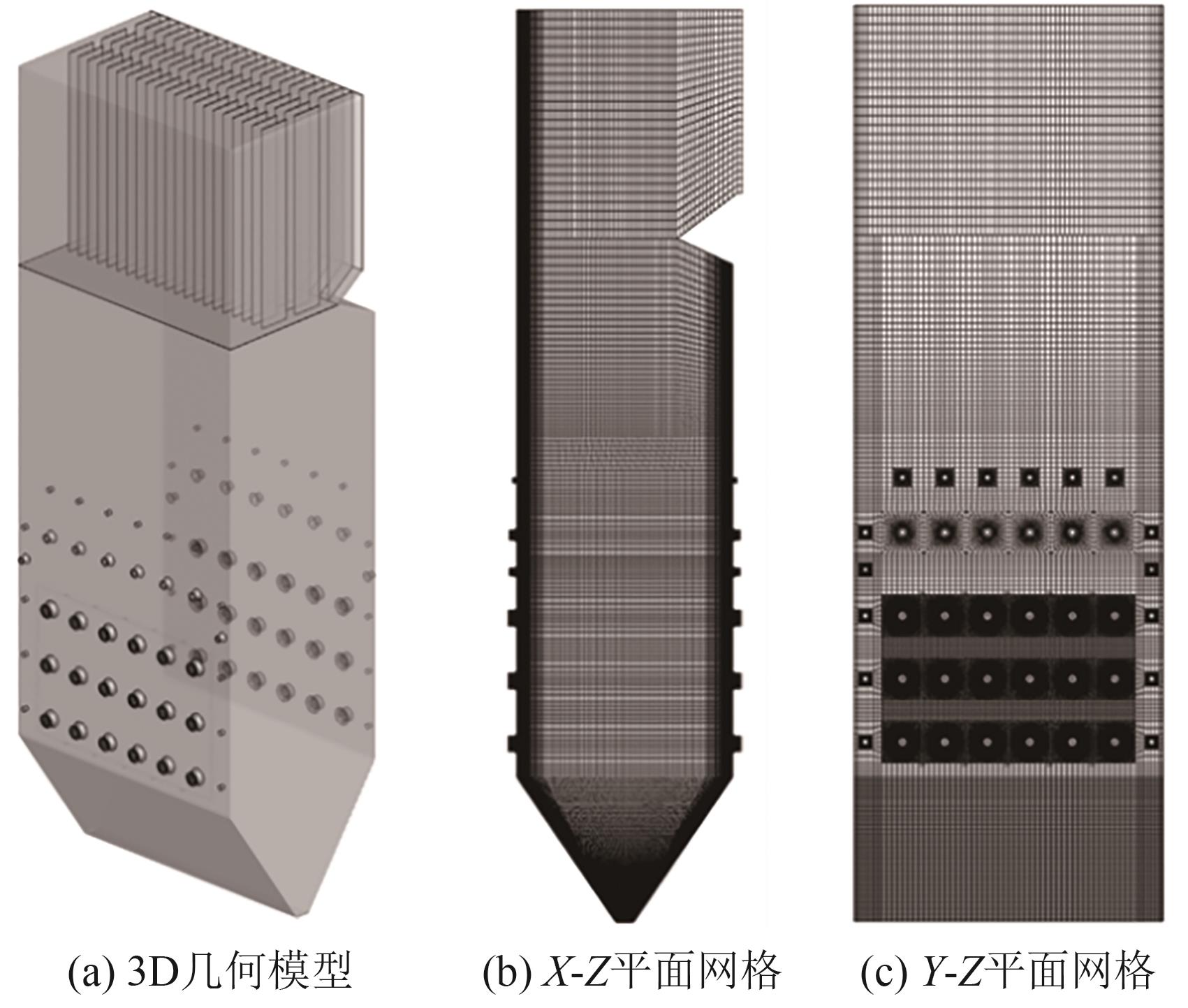
Fig. 1 Schematic diagram of the overall furnace structure and mesh
| 模型类型 | 主要子模型 |
|---|---|
| 湍流流动模型 | Realizable k-ε模型[ |
| 颗粒运动模型 | P1模型[ |
| 煤粉挥发分模型 | 单速率方程反应模型[ |
| 焦炭燃烧模型 | 动力-扩散模型[ |
| 气相燃烧模型 | PDF模型[ |
Tab. 2 Main sub-models used for combustion modelling in the furnace
| 模型类型 | 主要子模型 |
|---|---|
| 湍流流动模型 | Realizable k-ε模型[ |
| 颗粒运动模型 | P1模型[ |
| 煤粉挥发分模型 | 单速率方程反应模型[ |
| 焦炭燃烧模型 | 动力-扩散模型[ |
| 气相燃烧模型 | PDF模型[ |
| 参数 | 数值 | |
|---|---|---|
| 工业分析 | 收到基水分质量分数/% | 12.7 |
| 收到基灰分质量分数/% | 12.54 | |
| 收到基挥发分质量分数/% | 20.43 | |
| 收到基固定碳质量分数/% | 54.33 | |
| 元素分析 | 收到基碳元素质量分数/% | 80.94 |
| 收到基氢元素质量分数/% | 4.84 | |
| 收到基氧元素质量分数/% | 12.47 | |
| 收到基氮元素质量分数/% | 0.94 | |
| 收到基硫元素质量分数/% | 0.82 | |
| 低位发热量Qnet,ar/(MJ/kg) | 22.8 | |
Tab. 3 Coal quality analysis
| 参数 | 数值 | |
|---|---|---|
| 工业分析 | 收到基水分质量分数/% | 12.7 |
| 收到基灰分质量分数/% | 12.54 | |
| 收到基挥发分质量分数/% | 20.43 | |
| 收到基固定碳质量分数/% | 54.33 | |
| 元素分析 | 收到基碳元素质量分数/% | 80.94 |
| 收到基氢元素质量分数/% | 4.84 | |
| 收到基氧元素质量分数/% | 12.47 | |
| 收到基氮元素质量分数/% | 0.94 | |
| 收到基硫元素质量分数/% | 0.82 | |
| 低位发热量Qnet,ar/(MJ/kg) | 22.8 | |
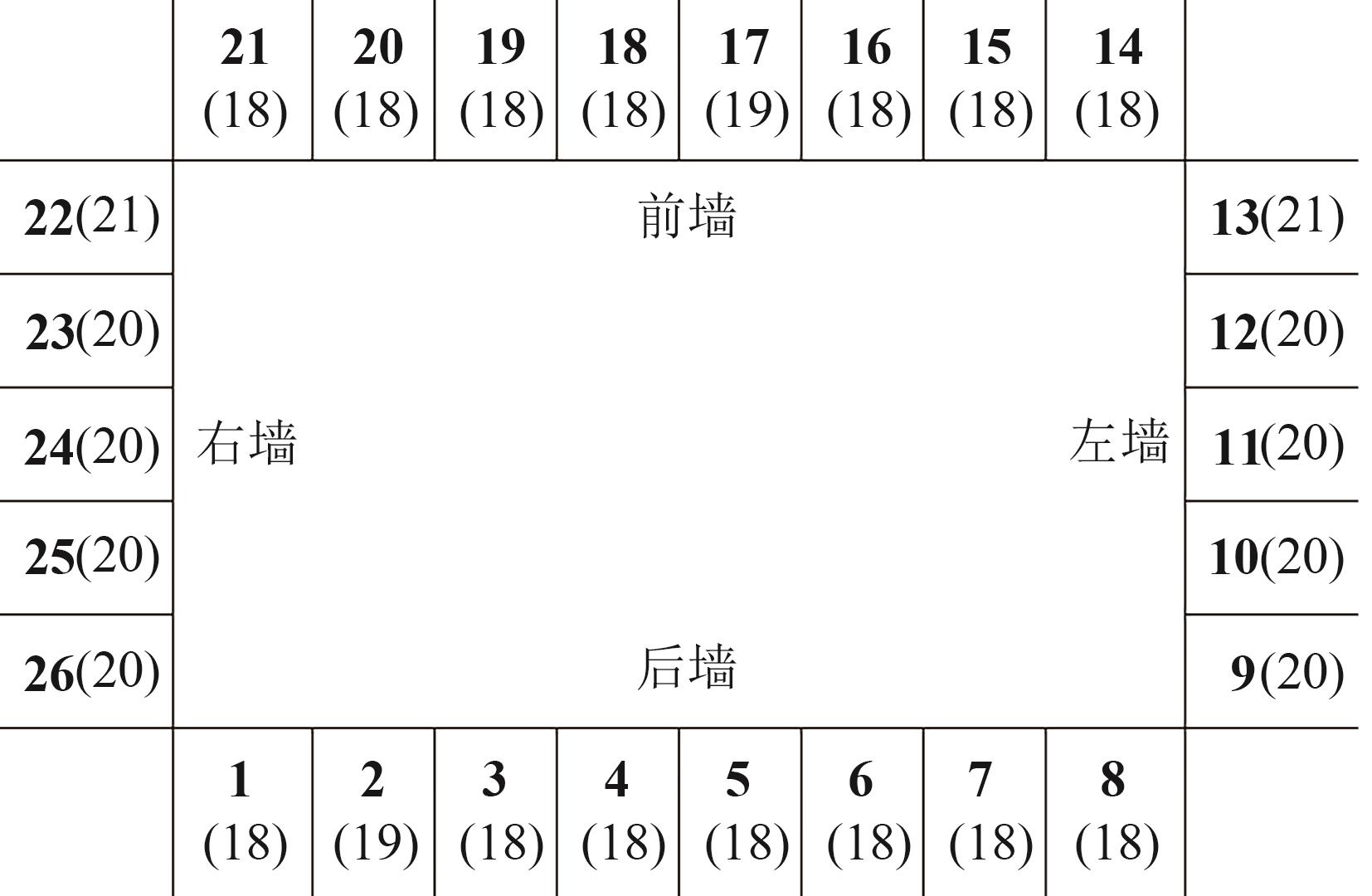
Fig. 2 Schematic diagram of spiral water-cooled wall division in the lower furnace
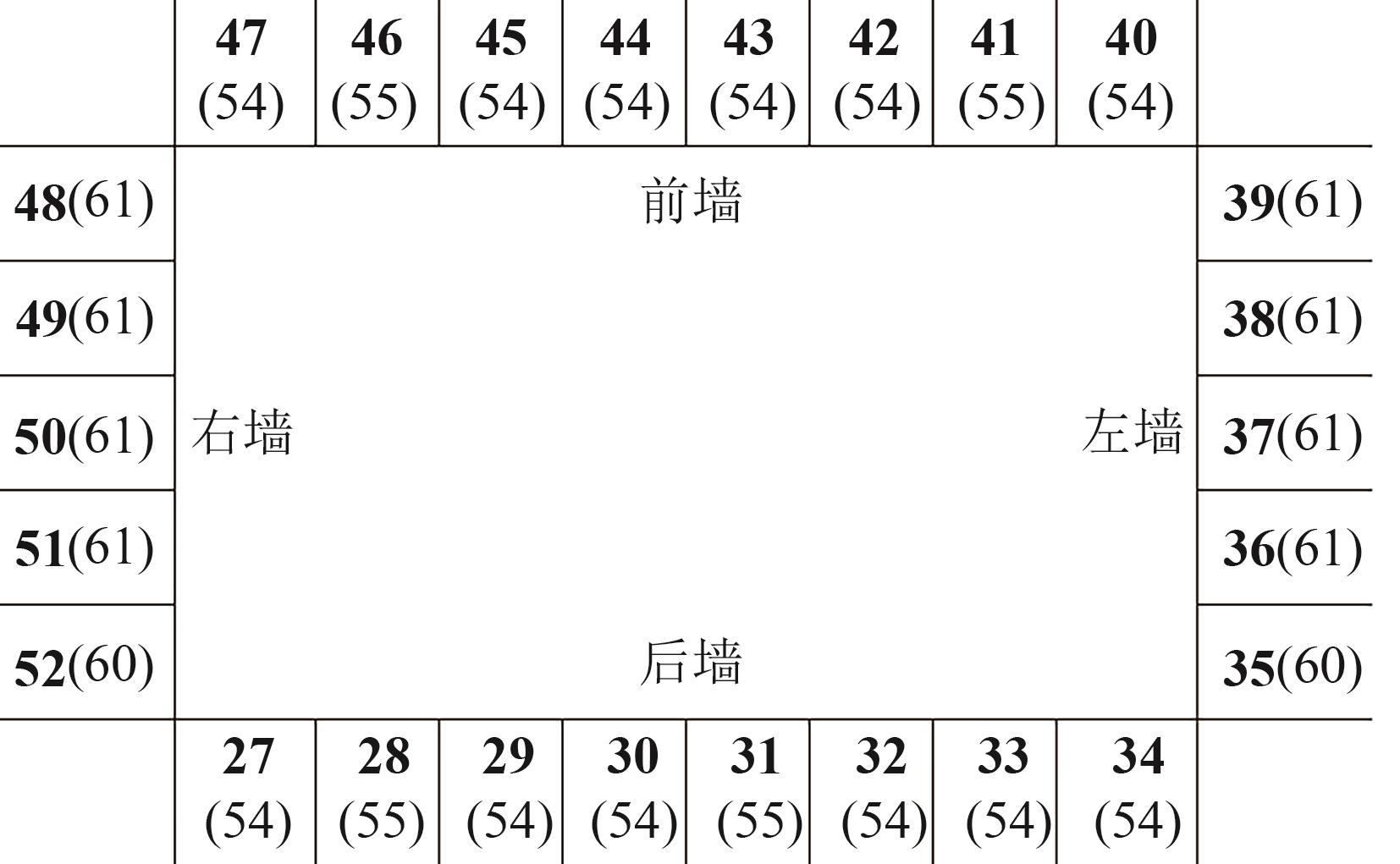
Fig. 3 Schematic diagram of vertical water-cooled wall division in the upper furnace
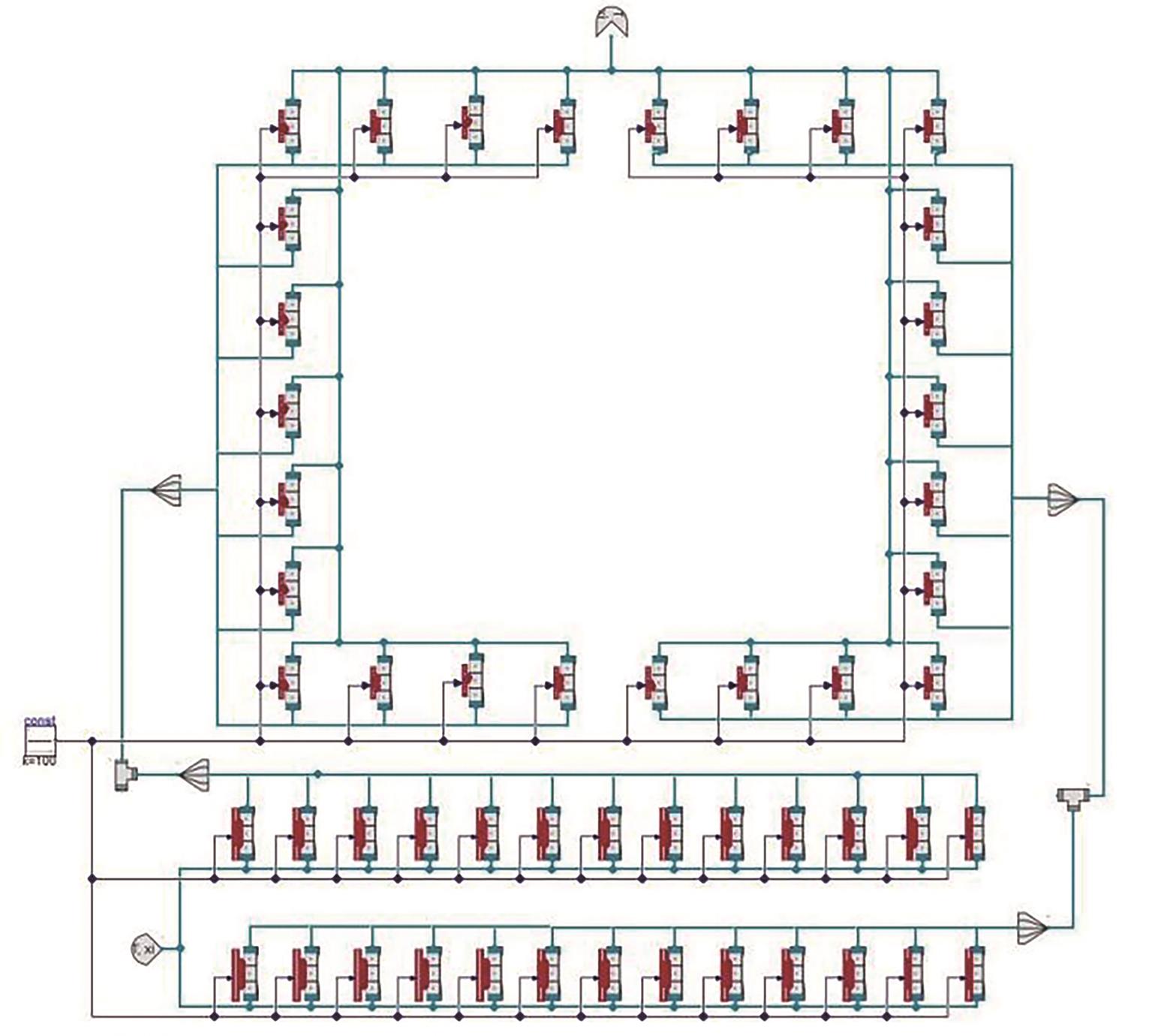
Fig. 4 Working fluid side model
| 负荷 | 参数 | 设计值/实测值 | 计算值 | 相对误差/% |
|---|---|---|---|---|
| 100%THA | 流量 | 498.17 kg/s | 504.80 kg/s | 1.33 |
| 出口温度 | 421.00 ℃ | 422.70 ℃ | 0.40 | |
| 出口压力 | 29.13 MPa | 28.73 MPa | -1.37 | |
| 40%THA | 流量 | 198.61 kg/s | 193.94 kg/s | -2.35 |
| 出口温度 | 340.00 ℃ | 332.69 ℃ | -2.15 | |
| 出口压力 | 11.77 MPa | 11.53 MPa | -2.04 | |
| 30%THA | 流量 | 160.96 kg/s | 162.89 kg/s | 1.20 |
| 出口温度 | 362.09 ℃ | 367.61 ℃ | 1.52 | |
| 出口压力 | 10.85 MPa | 10.82 MPa | -2.77 |
Tab. 4 Comparison of main parameters of water wall outlet for each load
| 负荷 | 参数 | 设计值/实测值 | 计算值 | 相对误差/% |
|---|---|---|---|---|
| 100%THA | 流量 | 498.17 kg/s | 504.80 kg/s | 1.33 |
| 出口温度 | 421.00 ℃ | 422.70 ℃ | 0.40 | |
| 出口压力 | 29.13 MPa | 28.73 MPa | -1.37 | |
| 40%THA | 流量 | 198.61 kg/s | 193.94 kg/s | -2.35 |
| 出口温度 | 340.00 ℃ | 332.69 ℃ | -2.15 | |
| 出口压力 | 11.77 MPa | 11.53 MPa | -2.04 | |
| 30%THA | 流量 | 160.96 kg/s | 162.89 kg/s | 1.20 |
| 出口温度 | 362.09 ℃ | 367.61 ℃ | 1.52 | |
| 出口压力 | 10.85 MPa | 10.82 MPa | -2.77 |
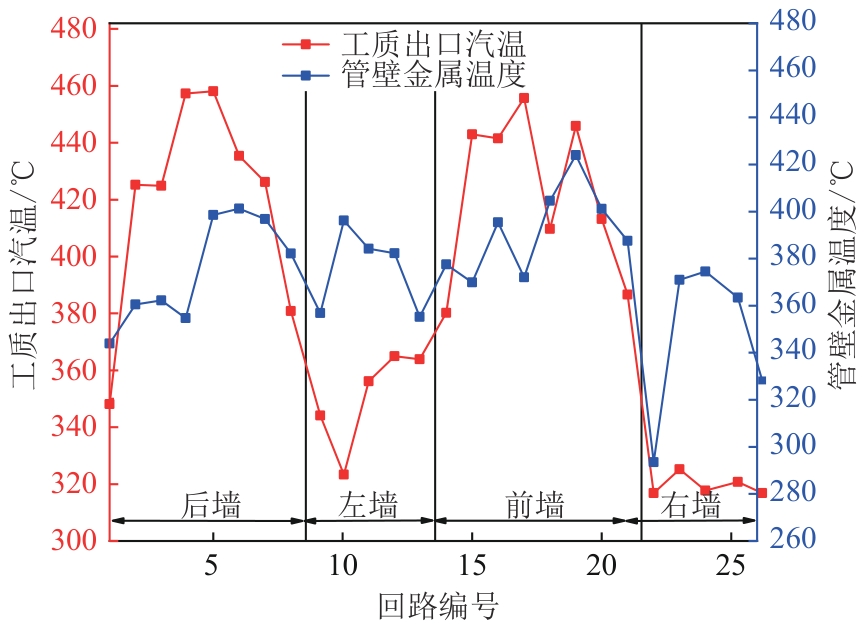
Fig. 5 Wall temperature measurements and calculated steam temperatures at 30% THA
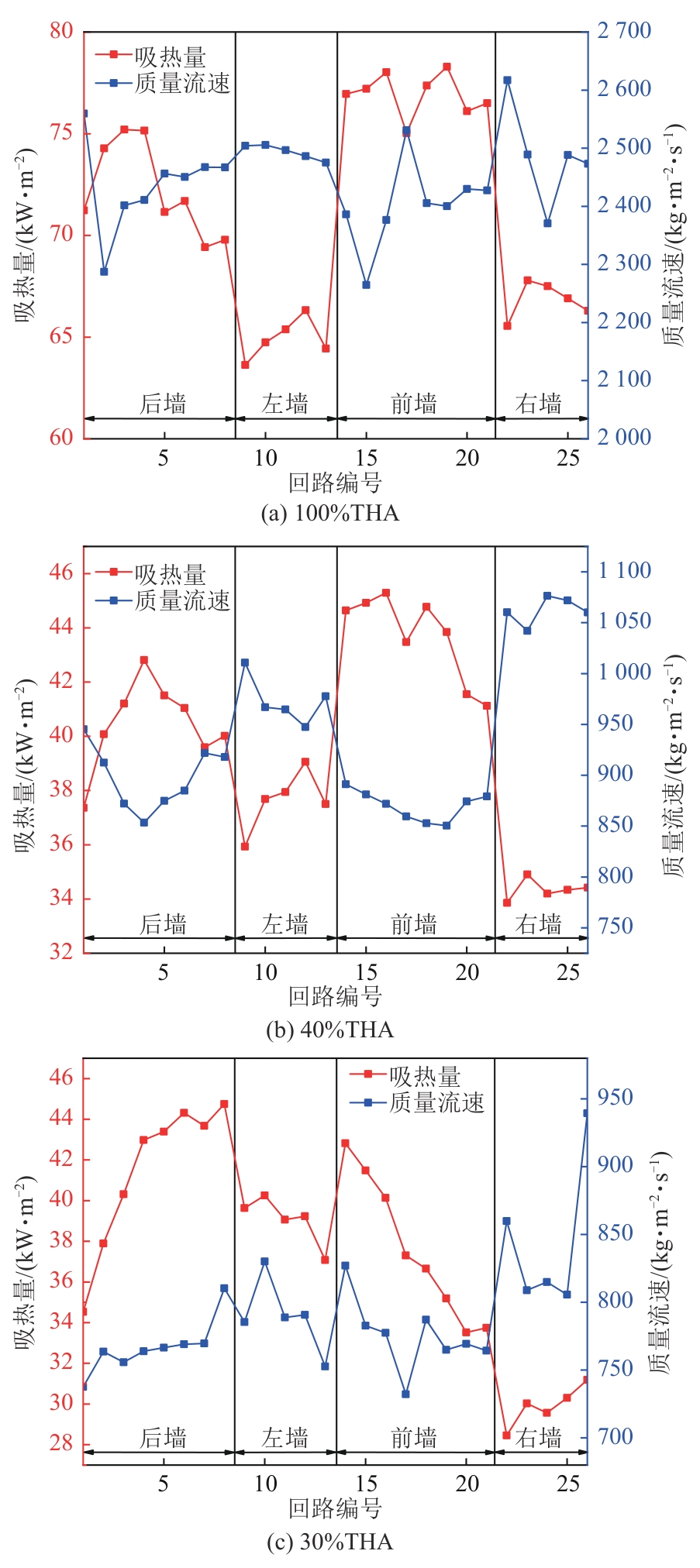
Fig. 6 Distribution of heat load and mass flow rate in each circuit of the spiral water wall
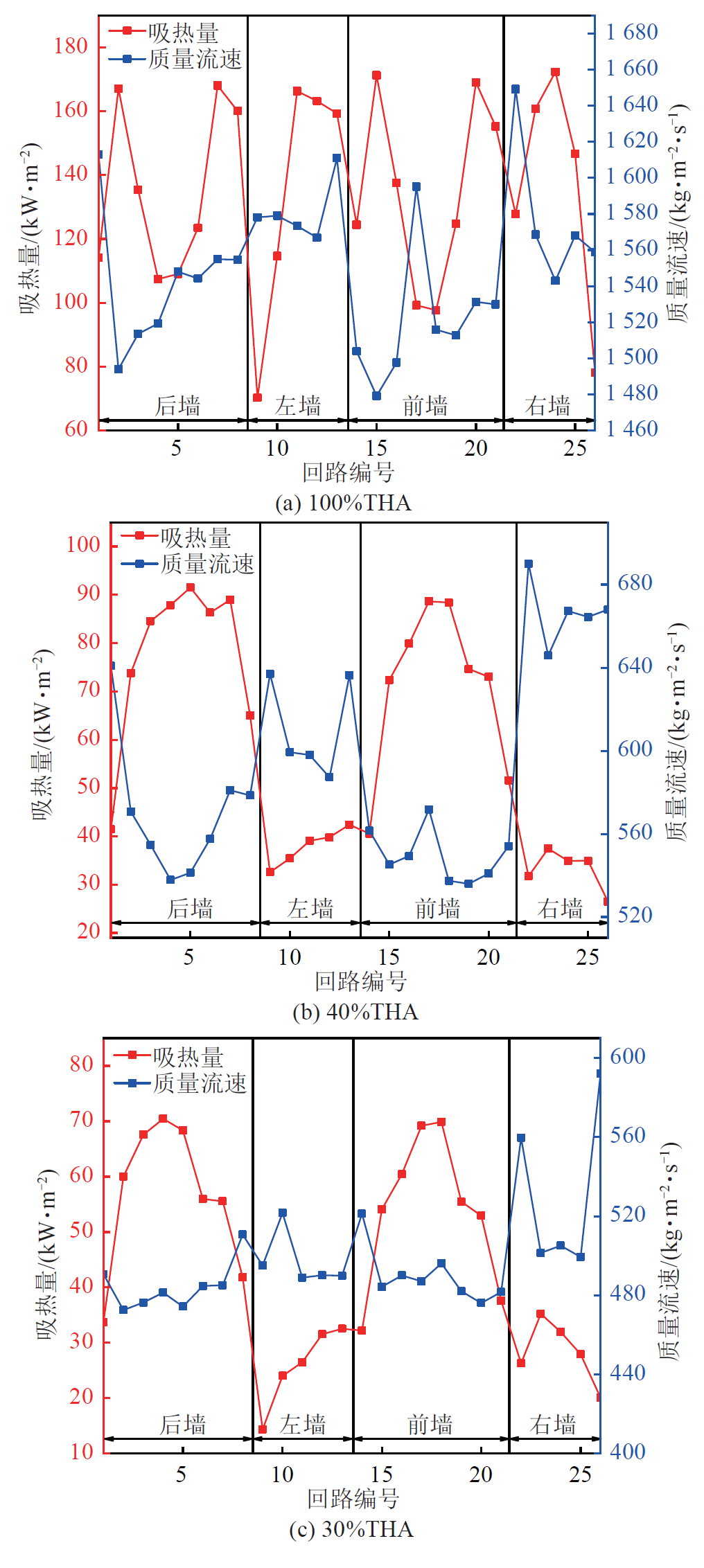
Fig. 7 Distribution of heat absorption and mass flow rate in each circuit of the vertical water wall
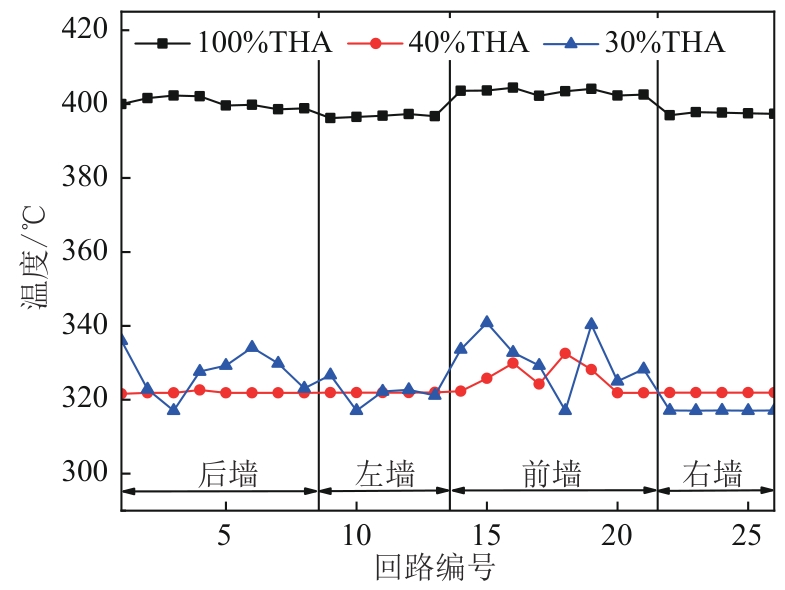
Fig. 8 Spiral water wall outlet mass temperature distribution
| 负荷 | 最低温度 | 最高温度 | 最大温差 |
|---|---|---|---|
| 100%THA | 396.19 | 404.45 | 8.24 |
| 40%THA | 321.63 | 332.02 | 10.39 |
| 30%THA | 317.04 | 348.14 | 31.10 |
Tab. 5 Spiral water wall outlet mass temperature comparison
| 负荷 | 最低温度 | 最高温度 | 最大温差 |
|---|---|---|---|
| 100%THA | 396.19 | 404.45 | 8.24 |
| 40%THA | 321.63 | 332.02 | 10.39 |
| 30%THA | 317.04 | 348.14 | 31.10 |
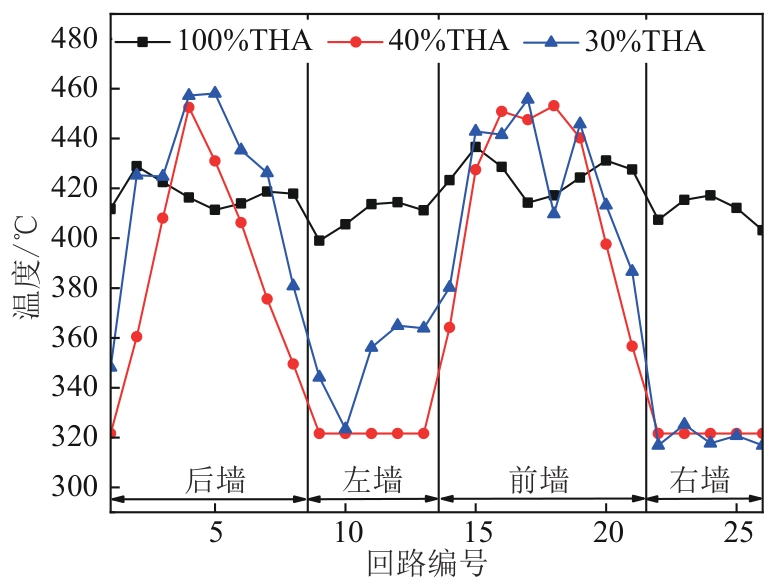
Fig. 9 Vertical water wall outlet mass temperature distribution
| 负荷 | 最低温度 | 最高温度 | 最大温差 |
|---|---|---|---|
| 100%THA | 398.96 | 436.56 | 37.60 |
| 40%THA | 321.63 | 459.96 | 138.33 |
| 30%THA | 316.81 | 458.09 | 141.27 |
Tab. 6 Vertical water wall outlet mass temperature comparison
| 负荷 | 最低温度 | 最高温度 | 最大温差 |
|---|---|---|---|
| 100%THA | 398.96 | 436.56 | 37.60 |
| 40%THA | 321.63 | 459.96 | 138.33 |
| 30%THA | 316.81 | 458.09 | 141.27 |
| [1] | 许洪华,邵桂萍,鄂春良,等 .我国未来能源系统及能源转型现实路径研究[J].发电技术,2023,44(4):484-491. doi:10.12096/j.2096-4528.pgt.23002 |
| XU H H, SHAO G P, E C L,et al .Research on China’s future energy system and the realistic path of energy transformation[J].Power Generation Technology,2023,44(4):484-491. doi:10.12096/j.2096-4528.pgt.23002 | |
| [2] | 任卓亚,郭宁,解佗,等 .我国清洁能源发展规律分析及其与经济系统的协调发展评价[J].电网与清洁能源,2024,40(12):128-134. |
| REN Z Y, GUO N, XIE T,et al .A study on the development patterns of clean energy in China and evaluation of its coordinated development with the economic system[J].Power System and Clean Energy,2024,40(12):128-134. | |
| [3] | 郭婷婷,曹蕃 .低碳能源系统发展趋势与应用实践[J].分布式能源,2025,10(1):1-13. doi:10.16513/j.2096-2185.DE.(2025)010-01-0001-13 |
| GUO T T, CAO F .Development trend and application of low-carbon energy system[J].Distributed Energy,2025,10(1):1-13. doi:10.16513/j.2096-2185.DE.(2025)010-01-0001-13 | |
| [4] | 周太东,王泺,施训鹏 .能源清洁转型与全球发展路径[J].全球能源互联网,2024,7(6):627-628. |
| ZHOU T D, WANG L, SHI X P .Clean energy transition and international development path[J].Journal of Global Energy Interconnection,2024,7(6):627-628. | |
| [5] | 国家发展改革委,国家能源局 .“十四五”现代能源体系规划[EB/OL].(2022-01-29)[2024-06-25].. |
| National Development and Reform Commission,National Energy Administration .The 14th Five-Year Plan for the modern energy system[EB/OL].(2022-01-29)[2024-06-25].. | |
| [6] | 中国电力企业联合会 .2023—2024年度全国电力供需形势分析预测报告[EB/OL].(2024-01-30)[2024-06-25].. doi:10.3969/j.issn.1009-5578.2017.02.003 |
| China Electricity Council .Analysis and forecast report on national power supply and demand situation for 2023-2024[EB/OL].(2024-01-30)[2024-06-25].. doi:10.3969/j.issn.1009-5578.2017.02.003 | |
| [7] | MODLIŃSKI N, SZCZEPANEK K, NABAGŁO D,et al .Mathematical procedure for predicting tube metal temperature in the second stage reheater of the operating flexibly steam boiler[J].Applied Thermal Engineering,2019,146:854-865. doi:10.1016/j.applthermaleng.2018.10.063 |
| [8] | 黄越辉,卢慧,李建华,等 .新能源极端出力特性及典型电力电量平衡场景研究[J].电网与清洁能源,2024,40(2):1-9. |
| HUANG Y H, LU H, LI J H,et al .A study on the characteristics of renewable energy extreme output and typical power and energy balancing scenarios for new type power systems[J].Advances of Power System & Hydroelectric Engineering,2024,40(2):1-9. | |
| [9] | 谢菁,吕涛,方德斌 .低碳转型目标下的电力社会价值研究[J].全球能源互联网,2024,7(6):650-661. |
| XIE J,LYU T, FANG D B .The social value analysis of electric power considering the target of low-carbon transition[J].Journal of Global Energy Interconnection,2024,7(6):650-661. | |
| [10] | 闫群民,任效煜,宋潇,等 .考虑源荷不确定性的电力系统灵活调度策略[J].电力工程技术,2025,44(2):172-184. doi:10.12158/j.2096-3203.2025.02.016 |
| YAN Q M, REN X Y, SONG X,et al .Flexible scheduling strategy for power systems considering source-load uncertainty[J].Electric Power Engineering Technology,2025,44(2):172-184. doi:10.12158/j.2096-3203.2025.02.016 | |
| [11] | 刘新苗,刘俊磊,娄源媛,等 .基于时序模拟的风火打捆送出消纳规划优化方法[J].南方电网技术,2025,19(8):53-63. doi:10.13648/j.cnki.issn1674-0629.2025.08.006 |
| LIU X M, LIU J L, LOU Y Y,et al .Planning optimization method for transmission and consumption of wind-thermal bundled based on time series simulation[J].Southern Power System Technology,2025,19(8):53-63. doi:10.13648/j.cnki.issn1674-0629.2025.08.006 | |
| [12] | 刘志强,李建锋,潘荔,等 .中国煤电机组改造升级效果分析与展望[J].中国电力,2024,57(7):1-11. doi:10.11930/j.issn.1004-9649.202402031 |
| LIU Z Q, LI J F, PAN L,et al .Analysis and prospect of transformation and upgrading effects of coal-fired power units in China[J].Electric Power,2024,57(7):1-11. doi:10.11930/j.issn.1004-9649.202402031 | |
| [13] | 王志轩,张晶杰,董博,等 .“双碳”目标下燃煤电厂灵活性改造及政策建议[J].电力科技与环保,2024,40(3):213-220. doi:10.19944/j.eptep.1674-8069.2024.03.001 |
| WANG Z X, ZHANG J J, DONG B,et al .Research on technology and policy of flexibility renovation for coal-fired power plants under carbon peaking and carbon neutrality goal[J].Electric Power Technology and Environmental Protection,2024,40(3):213-220. doi:10.19944/j.eptep.1674-8069.2024.03.001 | |
| [14] | 严新荣,胡志勇,张鹏威,等 .煤电机组运行灵活性提升技术研究与应用[J].发电技术,2024,45(6):1074-1086. doi:10.12096/j.2096-4528.pgt.24170 |
| YAN X R, HU Z Y, ZHANG P W,et al .Research and application of operation flexibility improvement technology for coal-fired power unit[J].Power Generation Technology,2024,45(6):1074-1086. doi:10.12096/j.2096-4528.pgt.24170 | |
| [15] | YUE X, LIAO S, XU J,et al .Collaborative optimization of renewable energy power systems integrating electrolytic aluminum load regulation and thermal power deep peak shaving[J].Applied Energy,2024,373:123869. doi:10.1016/j.apenergy.2024.123869 |
| [16] | 倪晓滨,周克毅,徐青蓝 .30%BMCR工况下超临界锅炉水冷壁水动力安全性评估[J].发电设备,2021,35(3):149-156. doi:10.19806/j.cnki.fdsb.2021.03.001 |
| NI X B, ZHOU K Y, XU Q L .Hydrodynamic calculation and safety evaluation for the water wall in a supercritical boiler under 30% BMCR[J].Power Equipment,2021,35(3):149-156. doi:10.19806/j.cnki.fdsb.2021.03.001 | |
| [17] | 聂鑫,杨冬,吕宏彪,等 .某1 000 MW对冲燃烧超超临界锅炉水冷壁汽温偏差分析及设计运行对策[J].中国电机工程学报,2019,39(3):744-753. doi:10.13334/j.0258-8013.pcsee.180582 |
| NIE X, YANG D, LÜ H B,et al .Analysis on the steam temperature deviation of water wall and the countermeasures of design and operation for a 1 000 MW ultra supercritical boiler with opposed firing[J].Proceedings of the CSEE,2019,39(3):744-753. doi:10.13334/j.0258-8013.pcsee.180582 | |
| [18] | 邓启刚,吕卓,石友,等 .不带外置床的700 MW超超临界循环流化床锅炉失电后水冷壁安全计算分析[J].发电技术,2024,45(2):240-249. doi:10.12096/j.2096-4528.pgt.23134 |
| DENG Q G, LÜ Z, SHI Y,et al .Safety calculation and analysis of water wall for a 700 MW ultra-supercritical circulating fluidized bed boiler without external bed after power failure[J].Power Generation Technology,2024,45(2):240-249. doi:10.12096/j.2096-4528.pgt.23134 | |
| [19] | 王为术,郭会军,上官闪闪,等 .超临界锅炉螺旋水冷壁流量分配和壁温特性的研究[J].热能动力工程,2016,31(1):59-65. doi:10.16146/j.cnki.rndlgc.2016.01.010 |
| WANG W S, GUO H J, SHANGGUAN S S,et al .Study of the flow rate distribution and wall temperature characteristics of the spirally-coiled tube water wall in a supercritical boiler[J].Journal of Engineering for Thermal Energy and Power,2016,31(1):59-65. doi:10.16146/j.cnki.rndlgc.2016.01.010 | |
| [20] | MAGNUSSEN B F, HJERTAGER B H .On mathematical modeling of turbulent combustion with special emphasis on soot formation and combustion[J].Symposium (International) on Combustion,1977,16(1):719-729. doi:10.1016/S0082-0784(77)80366-4 |
| [21] | 董乐,辛亚飞,李娟,等 .660 MW超超临界循环流化床锅炉水动力及流动不稳定特性计算分析[J].中国电机工程学报,2020,40(5):1545-1554. doi:10.13334/j.0258-8013.pcsee.191718 |
| DONG L, XIN Y F, LI J,et al .Computational analysis on thermal-hydraulic characteristics and flow instability of a 660 MW ultra-supercritical circulating fluidized bed boiler[J].Proceedings of the CSEE,2020,40(5):1545-1554. doi:10.13334/j.0258-8013.pcsee.191718 | |
| [22] | 唐斌,顾君苹,张缦,等 .350 MW超临界循环流化床锅炉水冷壁流量分配及壁温计算[J].煤炭学报,2016,41(10):2560-2567. doi:10.13225/j.cnki.jccs.2016.8016 |
| TANG B, GU J P, ZHANG M,et al .Calculation on distribution of flow rate and temperature in water wall of 350 MW supercritical circulating fluidized bed boiler[J].Journal of China Coal Society,2016,41(10):2560-2567. doi:10.13225/j.cnki.jccs.2016.8016 | |
| [23] | 滕敏华,胡卿,万李,等 .1 000 MW宽负荷超超临界机组锅炉水动力特性计算及分析[J].热力发电,2019,48(4):60-67. doi:10.19666/j.rlfd.201809193 |
| TENG M H, HU Q, WAN L,et al .Calculation and analysis on hydrodynamic characteristics of an ultra-supercritical unit boiler with 1 000 MW broad regulation load[J].Thermal Power Generation,2019,48(4):60-67. doi:10.19666/j.rlfd.201809193 | |
| [24] | ZIMA W, NOWAK-OCŁOŃ M, OCŁOŃ P .Simulation of fluid heating in combustion chamber waterwalls of boilers for supercritical steam parameters[J].Energy,2015,92:117-127. doi:10.1016/j.energy.2015.02.111 |
| [25] | KHAUSTOV S A, ZAVORIN A S, BUVAKOV K V,et al .Computer simulation of the fire-tube boiler hydrodynamics[J].EPJ Web of Conferences,2015,82:01039. |
| [26] | ELGANDELWAR A M, JHA R S, LELE M M . Steady-state flow distribution analysis of natural circulation in water tube boiler[J].Computational Thermal Sciences,2020,12(3):275-288. doi:10.1615/computthermalscien.2020033963 |
| [27] | XUE W, LU Y, WANG Z,et al .Reconstructing near-water-wall temperature in coal-fired boilers using improved transfer learning and hidden layer configuration optimization[J].Energy,2024,294:130860. doi:10.1016/j.energy.2024.130860 |
| [28] | 姚杨,陈鑫科,马仑,等 .某1 000 MW双切圆锅炉燃烧侧和工质侧耦合建模及应用[J/OL].中国电机工程学报,1-14[2024-06-29]. . |
| YAO Y, CHEN X K, MA L,et al .Coupled modeling and application of combustion-side and mass-side coupling in a 1000 MW double-cut circular boiler[J/OL].Chinese Journal of Electrical Engineering,1-14[2024-06-29]. . | |
| [29] | 安吉华,马庆华,张一帆,等 .超超临界1 000 MW二次再热机组塔式锅炉水动力特性及壁温分布规律[J].热力发电,2018,47(12):134-140. |
| AN J H, MA Q H, ZHANG Y F,et al .Thermal hydrodynamic characteristics and wall temperature distribution of an ultra-supercritical 1 000 MW unit double-reheat tower type boiler[J].Thermal Power Generation,2018,47(12):134-140. | |
| [30] | 庞力平,袁虎,丘文生,等 .深度调峰锅炉水动力特性分析[J].化工进展,2023,42(4):1708-1718. doi:10.16085/j.issn.1000-6613.2022-1143 |
| PANG L P, YUAN H, QIU W S,et al .Hydrodynamic characteristics during peaking operation in utility boiler[J].Chemical Industry and Engineering Progress,2023,42(4):1708-1718. doi:10.16085/j.issn.1000-6613.2022-1143 | |
| [31] | 王超,王研凯,陈相如,等 .660 MW超临界直流锅炉水冷壁动态特性仿真研究[J].动力工程学报,2024,44(7):1001-1009. doi:10.19805/j.cnki.jcspe.2024.230297 |
| WANG C, WANG Y K, CHEN X R,et al .Simulation study on dynamic characteristics of water-cooled wall of a 660 MW supercritical once-through boiler[J].Journal of Chinese Society of Power Engineering,2024,44(7):1001-1009. doi:10.19805/j.cnki.jcspe.2024.230297 | |
| [32] | 方庆艳,周怀春,汪华剑,等 .W火焰锅炉结渣特性数值模拟[J].中国电机工程学报,2008,28(23):1-7. doi:10.3321/j.issn:1000-6761.2008.05.005 |
| FANG Q Y, ZHOU H C, WANG H J,et al .Numerical simulation of the ash deposition characteristics in a W-flame boiler furnace[J].Proceedings of the CSEE,2008,28(23):1-7. doi:10.3321/j.issn:1000-6761.2008.05.005 | |
| [33] | MAJUMDAR A K, SPALDING D B .Numerical computation of Taylor vortices[J].Journal of Fluid Mechanics,1977,81(2):295-304. doi:10.1017/S0022112077002043 |
| [34] | LAUNDER B E, SPALDING D B .Lectures in mathematical models of turbulence[M].London,New York:Academic Press,1972:8-11. |
| [35] | FANG Q, MUSA A A B, WEI Y,et al .Numerical simulation of multifuel combustion in a 200 MW tangentially fired utility boiler[J].Energy & Fuels,2012,26(1):313-323. doi:10.1021/ef201149p |
| [36] | BAUM M M, STREET P J .Predicting the combustion behaviour of coal particles[J].Combustion Science and Technology,1971,3(5):231-243. doi:10.1080/00102207108952290 |
| [37] | TAN P, MA L, FANG Q,et al .Application of different combustion models for simulating the co-combustion of sludge with coal in a 100 MW tangentially coal-fired utility boiler[J].Energy & Fuels,2016,30(3):1685-1692. doi:10.1021/acs.energyfuels.5b02236 |
| [1] | Xiaofei ZHEN, Li ZHANG, Yongheng ZHANG. Thermodynamic Analysis of Heat Absorption Temperature Difference of Supercritical CO2 Recompression Cycle [J]. Power Generation Technology, 2026, 47(2): 266-273. |
| [2] | Chao LIU, Liangde LIU, Tiancheng LIAN, Wei ZHAO, Xufei YANG, Guanglin LIU. Parameter Optimization of Geothermal Organic Rankine Cycle Power Generation System Based on Ton of Water Generation [J]. Power Generation Technology, 2025, 46(6): 1223-1230. |
| [3] | Cheng LUO, Lei WANG, Yang LI, Qingming MENG, Guibin ZHANG, Yuanbin ZHAO. Effects of Variable-Flow Water Distribution on Cooling Performance of Wet Cooling Towers and Its Optimization [J]. Power Generation Technology, 2025, 46(5): 1041-1049. |
| [4] | Bo ZOU, Jiandi REN, Daoming XU, Lisheng DENG, Lida LIAO, Junbing XIAO. Recent Developments on the Application of Chloride Molten Salt Heat Storage Technology to New Energy Power Generation [J]. Power Generation Technology, 2025, 46(5): 872-884. |
| [5] | Jing CHEN, Hui LIU, Meng ZHU, Can WANG, Lei CHEN, Jing ZHOU, Kai XU, Long JIANG, Song HU, Jun XIANG. Analysis of Influence of Flue Gas Recirculation on Thermodynamic Performance and Economic Efficiency of 125 MW Supercritical CO2 Coal-Fired Power Generation Unit [J]. Power Generation Technology, 2025, 46(5): 986-995. |
| [6] | Zhiyong ZHANG, Linggang KONG, Duojin FAN, Xiaojuan LU. Modeling Simulation and Experimental Verification of Focal Length Optimization in Linear Fresnel Collector [J]. Power Generation Technology, 2025, 46(3): 590-599. |
| [7] | Pengxin ZHANG, Mingming GAO, Peiran XIE, Haoyang YU, Hongfu ZHANG, Zhong HUANG. NO x Prediction for Deep Peaking Regulation of Circulating Fluidized Bed Units Based on Data-Driven [J]. Power Generation Technology, 2025, 46(3): 627-636. |
| [8] | Guolin ZHANG, Zhezhao ZENG, Yuqi TANG. Research on Auto-Coupling PID Control Method of Firing Rate to Feed Water Ratio System of Supercritical Unit [J]. Power Generation Technology, 2025, 46(2): 344-352. |
| [9] | Jianning DONG, Jizhen AN, Heng CHEN, Peiyuan PAN, Gang XU, Xiuyan WANG. Performance Prediction Method for Air Cooling System of Thermal Power Unit Considering Weather Effect [J]. Power Generation Technology, 2024, 45(6): 1105-1113. |
| [10] | Lixiang QIU, Chao HUANG, Gaosheng WEI, Liu CUI, Xiaoze DU. Effect of Particle Agglomeration on Thermal Conductivity of Solar Salt Nanofluids [J]. Power Generation Technology, 2024, 45(5): 878-887. |
| [11] | Zheng YANG, Yipeng SUN, Zhiqiang WEN, Liang CHENG, Zhanguo LI. Research on Dry-Wet Conversion Strategy of Supercritical Thermal Power Units Under Deep Peaking Condition [J]. Power Generation Technology, 2024, 45(2): 233-239. |
| [12] | Jun DONG, Jianfang TANG, Chuncheng ZANG, Li XU, Zhifeng WANG. Development and Application of Test System for Ball Joints of Parabolic Trough Solar Collector [J]. Power Generation Technology, 2024, 45(2): 291-298. |
| [13] | Yanbing LI, Shuwang JIA, Junliang ZHANG, Yue FU, Ming LIU, Junjie YAN. Exergy Economic Analysis of Ultra-Supercritical Coal-Fired Power Plants With High-Level Layout of Turbine Under Load-Cycling Conditions [J]. Power Generation Technology, 2024, 45(1): 69-78. |
| [14] | Jingcheng SU, Zhiqiang WANG, Jiangjiang QU, Kai ZHANG. Pressure Difference Prediction of Air Preheater in Coal-Fired Power Plant Based on BP Neural Network and Support Vector Regression [J]. Power Generation Technology, 2023, 44(4): 550-556. |
| [15] | Jizhen AN, Fuhao ZHENG, Yifan LIU, Heng CHEN, Gang XU. Study on Induced Draft Fan Fault Warning of Thermal Power Unit Based on Big Data Analysis [J]. Power Generation Technology, 2023, 44(4): 557-564. |
| Viewed | ||||||
|
Full text |
|
|||||
|
Abstract |
|
|||||
