

发电技术 ›› 2026, Vol. 47 ›› Issue (1): 1-13.DOI: 10.12096/j.2096-4528.pgt.260101
• 碳中和 •
邵雁1, 谢颖2, 刘子豪1, 方梦祥2, 许晓明1, 胡昔鸣3, 夏阳1, 陈伟3, 朴永玉4
收稿日期:2025-07-27
修回日期:2025-09-24
出版日期:2026-02-28
发布日期:2026-02-12
通讯作者:
谢颖
作者简介:基金资助:Yan SHAO1, Ying XIE2, Zihao LIU1, Mengxiang FANG2, Xiaoming XU1, Ximing HU3, Yang XIA1, Wei CHEN3, Young-Ok PARK4
Received:2025-07-27
Revised:2025-09-24
Published:2026-02-28
Online:2026-02-12
Contact:
Ying XIE
Supported by:摘要:
目的 在“双碳”目标下,以CO2为主的温室气体排放控制受到高度关注,2023年,我国CO2排放量为126亿t,居世界首位,其中钢铁行业是主要的CO2排放源之一,约占我国CO2排放量的15%。我国粗钢产量占全球1/2以上,降低钢铁行业碳排放,需要考虑我国国情及能源利用特点。因此,有必要研究适合我国钢铁行业的碳捕集与利用技术。 方法 对钢铁生产过程中CO2的排放特性进行了分析,并综述了现有碳捕集技术的研究进展,重点讨论了吸收法、吸附法和膜分离法在高炉煤气CO2捕集中的应用。此外,探讨了炉顶煤气循环氧气高炉技术的利用,并分析了其与吸收、吸附技术的耦合潜力,以期实现钢铁行业的低碳转型。 结论 利用炉顶煤气循环氧气高炉技术,可以结合吸收或吸附法在降低高炉耗碳量的同时降低高炉碳排放,且钢厂余热的有效利用有助于提高碳捕集的经济可行性。转炉CO2喷吹、钢渣矿化利用和钢化联产CO2制化工产品技术的结合,可实现钢铁行业的碳捕集与利用一体化,不仅能够减少钢铁行业的碳排放,还能通过产能优化提升行业的经济和环境效益。
中图分类号:
邵雁, 谢颖, 刘子豪, 方梦祥, 许晓明, 胡昔鸣, 夏阳, 陈伟, 朴永玉. 钢铁行业碳捕集与利用技术研究进展[J]. 发电技术, 2026, 47(1): 1-13.
Yan SHAO, Ying XIE, Zihao LIU, Mengxiang FANG, Xiaoming XU, Ximing HU, Yang XIA, Wei CHEN, Young-Ok PARK. Research Progress on Carbon Capture and Utilization Technology in Steel Industry[J]. Power Generation Technology, 2026, 47(1): 1-13.
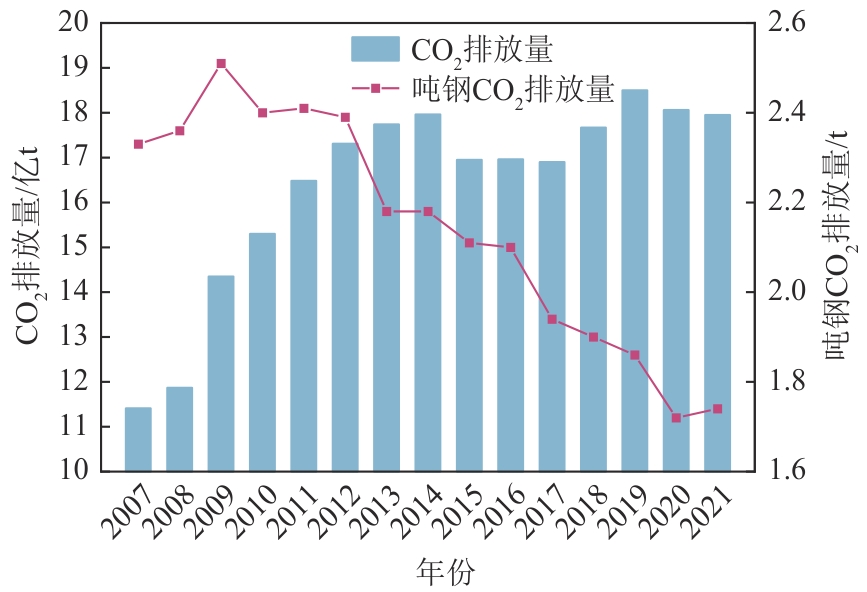
图1 2007—2021年我国钢铁行业CO2排放情况
Fig. 1 CO2 emissions of China’s steel industry from 2007 to 2021
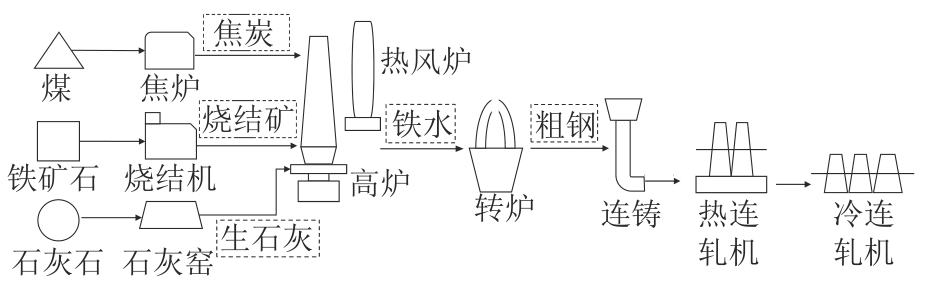
图2 BF-BOF长流程生产工序
Fig. 2 Production process of BF-BOF long process
| 排放源 | 温度/℃ | 压力 | CO2体积分数/% |
|---|---|---|---|
| 石灰窑烟气 | 110 | 环境压力 | 20 |
| 热风炉烟气 | 200 | 环境压力 | 28 |
| 焦炉烟气 | 210 | 环境压力 | 10 |
| 高炉煤气 | 100~350 | 0.2~0.3 MPa | 20 |
| 转炉煤气 | 1 200 | 环境压力 | 15 |
| 自备电厂烟气 | 100 | 环境压力 | 15~20 |
表1 钢铁行业不同CO2排放源特征
Tab. 1 Characteristics of different CO2 emission sources in the steel industry
| 排放源 | 温度/℃ | 压力 | CO2体积分数/% |
|---|---|---|---|
| 石灰窑烟气 | 110 | 环境压力 | 20 |
| 热风炉烟气 | 200 | 环境压力 | 28 |
| 焦炉烟气 | 210 | 环境压力 | 10 |
| 高炉煤气 | 100~350 | 0.2~0.3 MPa | 20 |
| 转炉煤气 | 1 200 | 环境压力 | 15 |
| 自备电厂烟气 | 100 | 环境压力 | 15~20 |
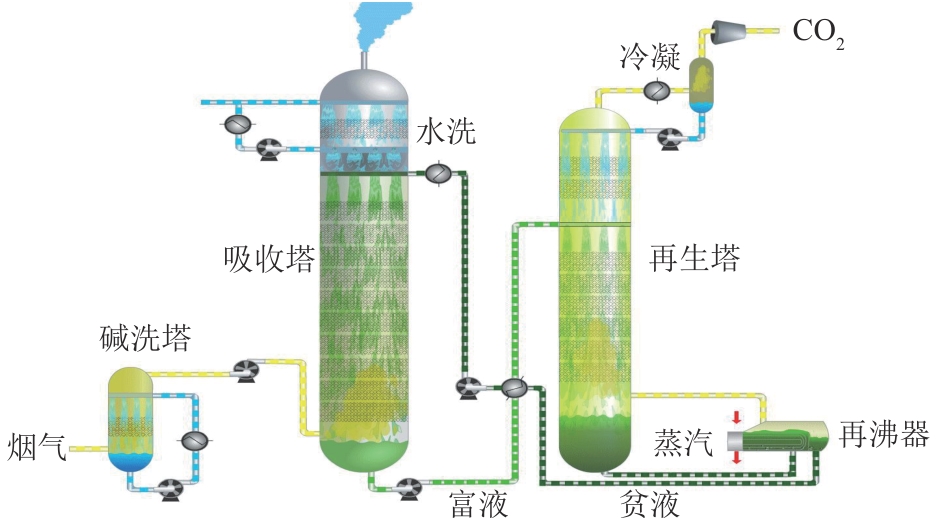
图3 化学吸收法碳捕集工艺流程
Fig. 3 Carbon capture process of chemical absorption method
| 国家 | 应用排放源 | 吸收剂 | 捕集率/% | 能耗/ [GJ/(t CO2)] | 来源 |
|---|---|---|---|---|---|
| 阿联酋 | 竖炉 | MEA | 90 | 4.00 | 文献[ |
| 韩国 | 高炉 | 氨水 | 90 | 2.50 | 文献[ |
| 日本 | 高炉 | IPEA | 98 | 2.34 | 文献[ |
| 中国 | 欧冶炉 | NCMA | 95 | — | 文献[ |
表2 钢铁行业化学吸收法典型应用
Tab. 2 Typical applications of chemical absorption method in steel industry
| 国家 | 应用排放源 | 吸收剂 | 捕集率/% | 能耗/ [GJ/(t CO2)] | 来源 |
|---|---|---|---|---|---|
| 阿联酋 | 竖炉 | MEA | 90 | 4.00 | 文献[ |
| 韩国 | 高炉 | 氨水 | 90 | 2.50 | 文献[ |
| 日本 | 高炉 | IPEA | 98 | 2.34 | 文献[ |
| 中国 | 欧冶炉 | NCMA | 95 | — | 文献[ |
| 吸收剂 | 典型溶剂 | 能耗/ [GJ/(t CO2)] | 特点 | 来源 |
|---|---|---|---|---|
| 单一胺 | MEA | 4.0 | 循环容量小,能耗高,吸收速率低 | 文献[ |
| 混合胺 | MDEA/PZ | 2.8~3.5 | 循环容量大,能耗较低,吸收速率快 | 文献[ |
| 两相吸收剂 | DEEA/MAPA | 2.0~2.8 | 循环容量大,能耗低,连续运行考验分相稳定性 | 文献[ |
| 少水吸收剂 | AMP/AEEA/NMP | 2.1~2.8 | 循环容量大,能耗低,缺乏工业验证 | 文献[ |
表3 胺基吸收剂特性
Tab. 3 Characteristics of amino absorbents
| 吸收剂 | 典型溶剂 | 能耗/ [GJ/(t CO2)] | 特点 | 来源 |
|---|---|---|---|---|
| 单一胺 | MEA | 4.0 | 循环容量小,能耗高,吸收速率低 | 文献[ |
| 混合胺 | MDEA/PZ | 2.8~3.5 | 循环容量大,能耗较低,吸收速率快 | 文献[ |
| 两相吸收剂 | DEEA/MAPA | 2.0~2.8 | 循环容量大,能耗低,连续运行考验分相稳定性 | 文献[ |
| 少水吸收剂 | AMP/AEEA/NMP | 2.1~2.8 | 循环容量大,能耗低,缺乏工业验证 | 文献[ |
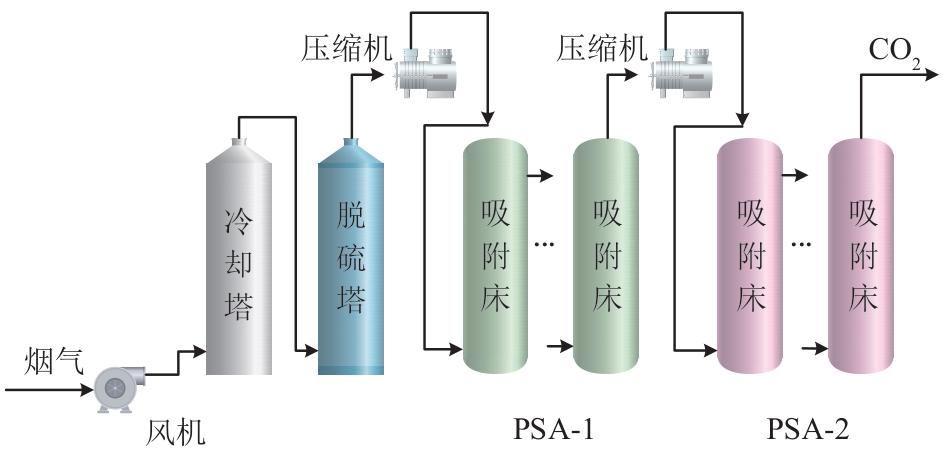
图4 变压吸附法技术路线
Fig. 4 Technical route of pressure swing adsorption method
| 国家 | 应用排放源 | 工艺 | 吸附剂 | 捕集率/% | 来源 |
|---|---|---|---|---|---|
| 德国 | 高炉 | VPSA | — | 70 | 文献[ |
| 日本 | 高炉 | PSA | 沸石 | 80 | 文献[ |
| 中国 | 石灰窑 | PSA | 沸石、活性炭 | 80 | 文献[ |
表4 钢铁行业吸附分离法典型应用
Tab. 4 Typical applications of adsorption separation method in steel industry
| 国家 | 应用排放源 | 工艺 | 吸附剂 | 捕集率/% | 来源 |
|---|---|---|---|---|---|
| 德国 | 高炉 | VPSA | — | 70 | 文献[ |
| 日本 | 高炉 | PSA | 沸石 | 80 | 文献[ |
| 中国 | 石灰窑 | PSA | 沸石、活性炭 | 80 | 文献[ |
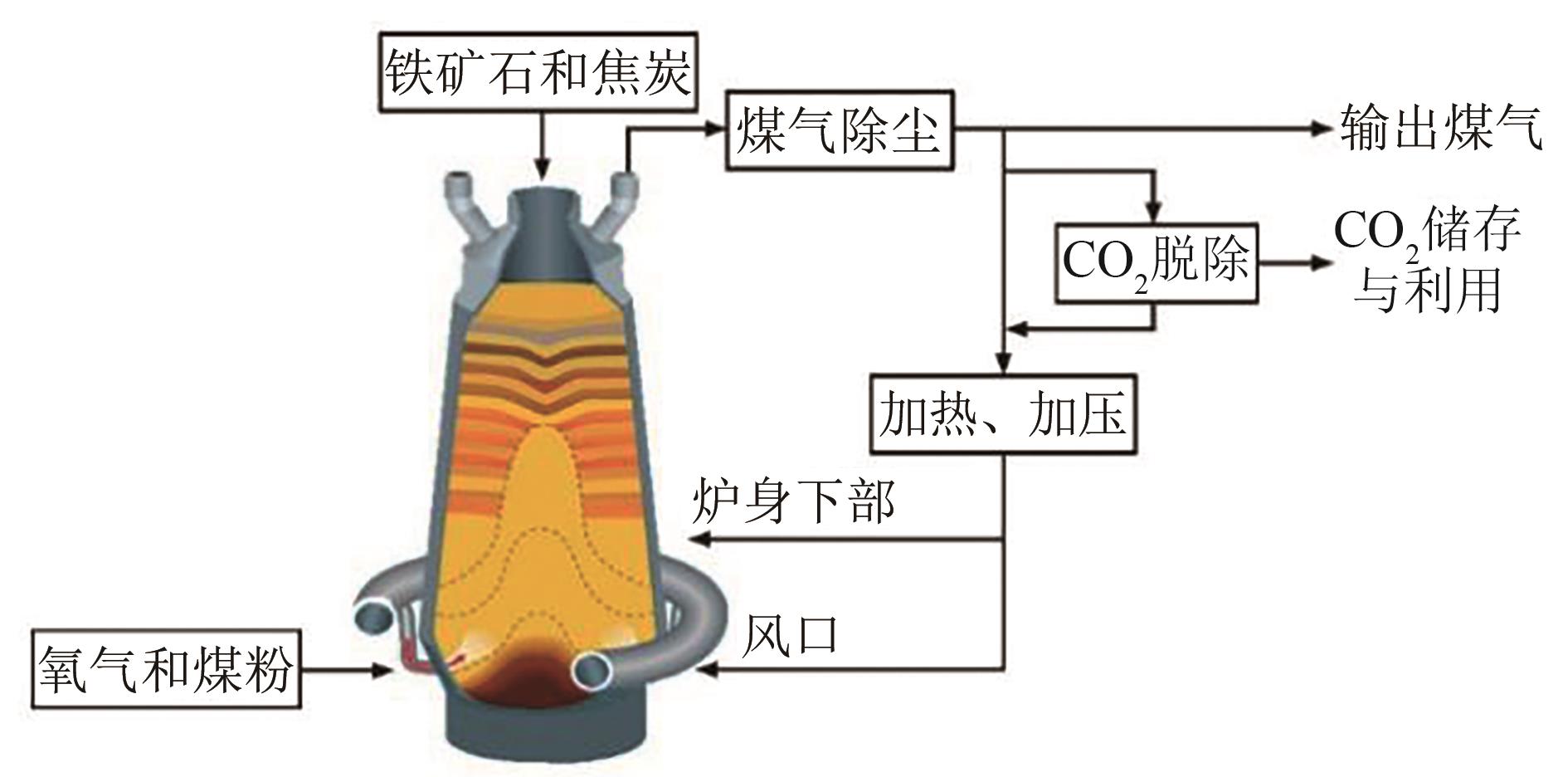
图5 TGR-OBF工艺流程图
Fig. 5 TGR-OBF process flow diagram
| [1] | 田煜昆,陈彦奇,刘一帆,等 .考虑广义电热需求响应与阶梯式碳交易机制的园区综合能源系统优化调度策略[J].电测与仪表,2025,62(6):152-160. doi:10.1016/s0920-5632(97)00652-x |
| TIAN Y K, CHEN Y Q, LIU Y F,et al .Optimal dispatching strategy of community integrated energy system considering generalized electric heating demand response and stepped carbon trading mechanism[J].Electrical Measurement & Instrumentation,2025,. 62(6):152-160. doi:10.1016/s0920-5632(97)00652-x | |
| [2] | International Energy Agency .CO2 Emissions in 2023[R].Paris:International Energy Agency,2024. doi:10.1787/12ad1e1a-en |
| [3] | 袁家海,胡玥琳,张健 .基于改进三阶段松弛测量-数据包络模型的火电上市公司碳排放效率评估研究[J].发电技术,2024,45(3):458-467. |
| YUAN J H, HU Y L, ZHANG J .The carbon emission efficiency of China’s listed thermal power companies:an improved three-stage slack based measure-data envelopment analysis model[J].Power Generation Technology,2024,45(3):458-467. | |
| [4] | 唐磊,黄欣婷,曾祥耀,等 .“双碳”目标下钢铁企业煤气发电技术发展及影响[J].冶金动力,2024,43(1):13-16. |
| TANG L, HUANG X T, ZENG X Y,et al .Development and impact of gas power generation technology in iron and steel companies under dual carbon targets[J].Metallurgical Power,2024,43(1):13-16. | |
| [5] | 张娜,赵琳,商文颖,等 .基于STIRPAT模型的大连市全流程碳足迹溯源[J].中国电力,2024,57(1):133-139. |
| ZHANG N, ZHAO L, SHANG W Y,et al .Whole process carbon footprint traceability of Dalian City based on STIRPAT model[J].Electric Power,2024,57(1):133-139. | |
| [6] | 孙宇航,李超,王争荣,等 .甲基二乙醇胺-二元胺混合体系烟气CO2吸收再生性能研究[J].发电技术,2024,45(3):468-477. |
| SUN Y H, LI C, WANG Z R,et al .Study on CO2 absorption and regeneration property of flue gas from methyldiethanolamine-amine mixture system[J].Power Generation Technology,2024,45(3):468-477. | |
| [7] | 国家统计局 .中国工业统计年鉴[M].北京:中国统计出版社,2022. |
| National Bureau of Statistics of China .China statistical yearbook[M].Beijing:China Statistics Press,2022. | |
| [8] | 李晨晓,张昀,张凯璇,等 .钢铁行业中CO2资源化利用的研究进展[J].材料导报,2023,37(S2):468-473. |
| LI C X, ZHANG Y, ZHANG K X,et al .Research on resource utilization of CO2 in steel industry[J].Materials Reports,2023,37(S2):468-473. | |
| [9] | 王楠 .基于碳捕集的联合钢铁企业减排系统优化研究[D].北京:华北电力大学,2018. |
| WANG N. Optimization study on carbon reduction scheme with carbon capture for an integrated iron and steel plant[D].Beijing:North China Electric Power University,2018. | |
| [10] | 周专,苗帅,袁铁江 .提升风电消纳的绿氢钢铁冶炼系统动力学建模[J].中国电力,2024,57(8):36-45. |
| ZHOU Z, MIAO S, YUAN T J .System dynamics modeling of green hydrogen steel smelting to improve wind power consumption[J].Electric Power,2024,57(8):36-45. | |
| [11] | World Steel Association .50 years of the world steel association[EB/OL].[2024-06-05].. |
| [12] | 崔少东 .碳减排背景下废钢铁再制造生产调度问题研究[D].南京:东南大学,2016. |
| CUI S D .Research on production scheduling in iron and steel scrap remanufacturing under the background of carbon reduction[D].Nanjing:Southeast University,2016. | |
| [13] | 侯环宇,田京雷,郝良元,等 .钢铁行业低温余热回收利用技术研究[C]//第十届全国能源与热工学术年会论文集.石家庄:河钢集团,2019:127-132. |
| HOU H Y, TIAN J L, HAO L Y,et al .Research on low temperature waste heat recovery and utilizationtechnology in iron and steel industry[C]// Proceedings of the 10th National Energy and Thermal Engineering Academic Annual Conference.Shijiazhuang:Hegang Group,2019:127-132. | |
| [14] | Carbon Capture Journal Group .The global status of CCS 2014[J].Carbon Capture Journal,2015(43):6-8. |
| [15] | MORROW W R, HASANBEIGI A, SATHAYE J,et al .Assessment of energy efficiency improvement and CO2 emission reduction potentials in India’s cement and iron & steel industries[J].Journal of Cleaner Production,2014,65:131-141. doi:10.1016/j.jclepro.2013.07.022 |
| [16] | HE K, WANG L .A review of energy use and energy-efficient technologies for the iron and steel industry[J].Renewable and Sustainable Energy Reviews,2017,70:1022-1039. doi:10.1016/j.rser.2016.12.007 |
| [17] | 汪龙,邱巍,许欣宇,等 .低碳园区综合能源系统捕碳-储能优化配置[J].电力工程技术,2024,43(6):235-246. |
| WANG L, QIU W, XU X Y,et al .Optimal planning of the carbon capture-energy storage joint system for integrated energy system in a low-carbon park[J].Electric Power Engineering Technology,2024,43(6):235-246. | |
| [18] | 袁鑫,刘骏,陈衡,等 .碳捕集技术应用对燃煤机组调峰能力的影响[J].发电技术,2024,45(3):373-381. |
| YUAN X, LIU J, CHEN H,et al .Effect of carbon capture technology application on peak shaving capacity of coal-fired units[J].Power Generation Technology,2024,45(3):373-381. | |
| [19] | 胡道成,王睿,赵瑞,等 .二氧化碳捕集技术及适用场景分析[J].发电技术,2023,44(4):502-513. doi:10.12096/j.2096-4528.pgt.22056 |
| HU D C, WANG R, ZHAO R,et al .Research on carbon dioxide capture technology and suitable scenarios[J].Power Generation Technology,2023,44(4):502-513. doi:10.12096/j.2096-4528.pgt.22056 | |
| [20] | International Energy Agency .Energy technology perspectives 2008:scenarios and strategies to 2050[M].Paris:OECD Publishing,2008. doi:10.1787/9789264041431-en |
| [21] | 江文敏 .化学吸收法捕集二氧化碳工艺的模拟及实验研究[D].杭州:浙江大学,2015. |
| JIANG W M .Simulation and experimental research of CO2 chemical absorption system[D].Hangzhou:Zhejiang University,2015. | |
| [22] | TSAI I T, AL ALI M, WADDI S EL,et al .Carbon capture regulation for the steel and aluminum industries in the UAE:an empirical analysis[J].Energy Procedia,2013,37:7732-7740. doi:10.1016/j.egypro.2013.06.719 |
| [23] | KIM J Y, HAN K, AHN C K,et al .Operating cost for CO2 capture process using aqueous ammonia[J].Energy Procedia,2013,37:677-682. doi:10.1016/j.egypro.2013.05.156 |
| [24] | GOTO K, OKABE H, CHOWDHURY F A,et al .Development of novel absorbents for CO2 capture from blast furnace gas[J].International Journal of Greenhouse Gas Control,2011,5(5):1214-1219. doi:10.1016/j.ijggc.2011.06.006 |
| [25] | 邹庆峰,刘鹏南,田果 .八钢欧冶炉冶金煤气CO2捕集技术应用[J].新疆钢铁,2021(2):1-3. |
| ZOU Q F, LIU P N, TIAN G .Application of CO2 trapping technology for metallurgical gas in OY furnace of Bayi steel[J].Xinjiang Iron and Steel,2021(2):1-3. | |
| [26] | ZHANG X, ZHU Z, SUN X,et al .Reducing energy penalty of CO2 capture using Fe promoted SO 4 2 - /ZrO2/MCM-41 catalyst[J].Environmental Science & Technology,2019,53(10):6094-6102. doi:10.1021/acs.est.9b01901 |
| [27] | CLOSMANN F, NGUYEN T, ROCHELLE G T .MDEA/piperazine as a solvent for CO2 capture[J].Energy Procedia,2009,1(1):1351-1357. doi:10.1016/j.egypro.2009.01.177 |
| [28] | PINTO D D D, ZAIDY S A H, HARTONO A,et al .Evaluation of a phase change solvent for CO2 capture:absorption and desorption tests[J].International Journal of Greenhouse Gas Control,2014,28:318-327. doi:10.1016/j.ijggc.2014.07.002 |
| [29] | LV B, YANG K, ZHOU X,et al .2-Amino-2-methyl-1-propanol based non-aqueous absorbent for energy-efficient and non-corrosive carbon dioxide capture[J].Applied Energy,2020,264:114703. doi:10.1016/j.apenergy.2020.114703 |
| [30] | TOBIESEN F A, SVENDSEN H F, MEJDELL T .Modeling of blast furnace CO2 capture using amine absorbents[J].Industrial & Engineering Chemistry Research,2007,46(23):7811-7819. doi:10.1021/ie061556j |
| [31] | CHOWDHURY F A, GOTO K, YAMADA H,et al .Results of RITE’s advanced liquid absorbents develop for low temperature CO2 capture[J].Energy Procedia,2017,114:1716-1720. doi:10.1016/j.egypro.2017.03.1300 |
| [32] | DREILLARD M, BROUTIN P, BRIOT P,et al .Application of the DMXTM CO2 capture process in steel industry[J].Energy Procedia,2017,114:2573-2589. doi:10.1016/j.egypro.2017.03.1415 |
| [33] | DANCKWERTS P V, Lannus A .Gas-liquid reactions[J]. Journal of The Electrochemical Society,1970,117(10):369. doi:10.1149/1.2407312 |
| [34] | 耿李妤 .高炉煤气精脱硫协同碳捕集配方型吸收剂研究[D].西安:西安理工大学,2023. |
| GENG L Y .Research on the formulated absorbents for fine desulfurization synergistic carbon capture of blast furnace gas[D].Xi’an:Xi’an University of Technology,2023. | |
| [35] | HAN K, AHN C K, LEE M S .Performance of an ammonia-based CO2 capture pilot facility in iron and steel industry[J].International Journal of Greenhouse Gas Control,2014,27:239-246. doi:10.1016/j.ijggc.2014.05.014 |
| [36] | 许思维,韩彩芸,张六一,等 .二氧化碳捕集分离的研究进展[J].天然气化工(C1化学与化工),2011,36(4):72-78. |
| XU S W, HAN C Y, ZHANG L Y,et al .Advances in carbon dioxide separation and capture[J].Natural Gas Chemical Industry,2011,36(4):72-78. | |
| [37] | GIELEN D .CO2 removal in the iron and steel industry[J].Energy Conversion and Management,2003,44(7):1027-1037. doi:10.1016/s0196-8904(02)00111-5 |
| [38] | 韩永嘉,王树立,张鹏宇,等 .CO2分离捕集技术的现状与进展[J].天然气工业,2009,29(12):79-82. |
| HAN Y J, WANG S L, ZHANG P Y,et al .Current status and advances in CO2 separation and capture technology[J].Natural Gas Industry,2009,29(12):79-82. | |
| [39] | 刘含笑,罗水源,刘小伟 .工业烟气CO2的排放特征、测试及捕集技术研究[J].发电技术,2024,45(1):62-68. |
| LIU H X, LUO S Y, LIU X W .Study on emission characteristics,test and capture technology of CO2 in industrial flue gas[J].Power Generation Technology,2024,45(1):62-68. | |
| [40] | ABDUL QUADER M, AHMED S, DAWAL S Z,et al .Present needs,recent progress and future trends of energy-efficient ultra-low carbon dioxide (CO2) steelmaking (ULCOS) program[J].Renewable and Sustainable Energy Reviews,2016,55:537-549. doi:10.1016/j.rser.2015.10.101 |
| [41] | ZHANG X, JIAO K, ZHANG J,et al .A review on low carbon emissions projects of steel industry in the World[J].Journal of Cleaner Production,2021,306:127259. doi:10.1016/j.jclepro.2021.127259 |
| [42] | 龚奂彰,黄秀玉 .钢铁行业碳捕集技术的典型应用[J].低碳化学与化工,2023,48(5):103-108. |
| GONG H Z, HUANG X Y .Typical application of carbon capture technology in steel industry[J].Low-Carbon Chemistry and Chemical Engineering,2023,48(5):103-108. | |
| [43] | SAIMA W H, MOGI Y, HARAOKA T .Development of PSA system for the recovery of carbon dioxide and carbon monoxide from blast furnace gas in steel works[J].Energy Procedia,2013,37:7152-7159. doi:10.1016/j.egypro.2013.06.652 |
| [44] | HO M T, BUSTAMANTE A, WILEY D E .Comparison of CO2 capture economics for iron and steel mills[J].International Journal of Greenhouse Gas Control,2013,19:145-159. doi:10.1016/j.ijggc.2013.08.003 |
| [45] | HO M T, ALLINSON G W, WILEY D E .Reducing the cost of CO2 capture from flue gases using pressure swing adsorption[J].Industrial & Engineering Chemistry Research,2008,47(14):4883-4890. doi:10.1021/ie070831e |
| [46] | KÁRÁSZOVÁ M, ZACH B, PETRUSOVÁ Z,et al .Post-combustion carbon capture by membrane separation,review[J].Separation and Purification Technology,2020,238:116448. doi:10.1016/j.seppur.2019.116448 |
| [47] | 中国石油和化工 .膜法捕集二氧化碳示范装置通过测试[J].中国石油和化工,2022(3):67. |
| China Petroleum and Chemical Industry .The membrane based carbon dioxide capture demonstration device has passed testing[J].China Petroleum and Chemical Industry,2022(3):67. | |
| [48] | LIE J A, VASSBOTN T, HÄGG M B,et al .Optimization of a membrane process for CO2 capture in the steelmaking industry[J].International Journal of Greenhouse Gas Control,2007,1(3):309-317. doi:10.1016/s1750-5836(07)00069-2 |
| [49] | YUN S, JANG M G, KIM J K .Techno-economic assessment and comparison of absorption and membrane CO2 capture processes for iron and steel industry[J].Energy,2021,229:120778. doi:10.1016/j.energy.2021.120778 |
| [50] | CHUNG W,ROH K, LEE J H .Design and evaluation of CO2 capture plants for the steelmaking industry by means of amine scrubbing and membrane separation[J].International Journal of Greenhouse Gas Control,2018,74:259-270. doi:10.1016/j.ijggc.2018.05.009 |
| [51] | RICHARDSON-BARLOW C, PIMM A J, TAYLOR P G,et al .Policy and pricing barriers to steel industry decarbonisation:a UK case study[J].Energy Policy,2022,168:113100. doi:10.1016/j.enpol.2022.113100 |
| [52] | 潘钊彬 .碳中和背景下我国低碳炼铁技术发展现状与前景[J].烧结球团,2024,49(1):35-41. |
| PAN Z B .Development status and prospect of Chinese low-carbon ironmaking technology under carbon neutrality background[J].Sintering and Pelletizing,2024,49(1):35-41. | |
| [53] | 严珺洁 .超低二氧化碳排放炼钢项目的进展与未来[J].中国冶金,2017,27(2):6-11. |
| YAN J J .Progress and future of ultra-low CO2 steel making program[J].China Metallurgy,2017,27(2):6-11. | |
| [54] | 李宏亮 .余热利用技术在钢铁行业的应用[J].科技展望,2016,26(3):72. |
| LI H L .Application of waste heat utilization technology in the steel industry[J].Technology Outlook,2016,26(3):72. | |
| [55] | 林伟 .余热利用技术在我国钢铁行业的使用[J].建材与装饰,2016(15):172-173. |
| LIN W .The use of waste heat utilization technology in China’s steel industry[J].Construction Materials & Decoration,2016(15):172-173. | |
| [56] | 宋清诗,张永杰,陈国军 .高炉煤气碳捕获技术浅析[J].宝钢技术,2017(3):53-58. |
| SONG Q S, ZHANG Y J, CHEN G J .Analysis of carbon capture technology for blast furnace gas[J].Baosteel Technology,2017(3):53-58. | |
| [57] | 何平,邓开文 .转炉中底吹CO2熔池搅拌能的探讨[J].化工冶金,1989(3):89-94. |
| HE P, DENG K W .Study on stirring energy in a converter with bottom blowing CO2 [J].The Chinese Journal of Process Engineering,1989(3):89-94. | |
| [58] | 吕明,朱荣,毕秀荣,等 .二氧化碳在转炉炼钢中的应用研究[J].北京科技大学学报,2011,33(S1):126-130. |
| LV M, ZHU R, BI X R,et al .Application research of carbon dioxide in BOF steelmaking process[J].Journal of Beijing University of Science and Technology,2011,33(S1):126-130. | |
| [59] | 冯超,董凯,朱荣,等 .120 t转炉顶吹CO2冶炼工艺研究与应用[J].炼钢,2023,39(5):11-16. |
| FENG C, DONG K, ZHU R,et al .Smelting process research and application of CO2 top blowing in 120 t converter[J].Steelmaking,2023,39(5):11-16. | |
| [60] | 杨楚荣 .二氧化碳在转炉中的资源化利用及在京唐钢厂的应用前景[J].冶金信息导刊,2018,55(3):21-24. |
| YANG C R .Resource utilization of carbon dioxide in BOF and its application prospect in Jingtang steel plant[J].Metallurgical Information Review,2018,55(3):21-24. | |
| [61] | 王会刚,吴龙,彭犇,等 .中外钢渣一次处理技术特点及进展[J].科学技术与工程,2020,20(13):5025-5031. |
| WANG H G, WU L, PENG B,et al .Characteristics and research progress of steel slag primary treatment technology[J].Science Technology and Engineering,2020,20(13):5025-5031. | |
| [62] | 隗一,马丽萍,王立春,等 .钢渣的综合利用现状及应用前景[C]//《环境工程》2019年全国学术年会论文集(下册).北京:《工业建筑》杂志社有限公司,2019:761-765. |
| KUI Y, MA L P, WANG L C,et al .Comprehensive utilization status and application prospect of steel slag[C]//Proceedings of the 2019 National Academic Conference on Environmental Engineering (Ⅱ).Beijing:Industrial Construction Magazine Agency Co.,Ltd.,2019:761-765. | |
| [63] | SEIFRITZ W .CO2 disposal by means of silicates[J].Nature,1990,345:486. doi:10.1038/345486b0 |
| [64] | 谢元涛,封孝信 .钢渣矿化固化二氧化碳研究现状及展望[J].金属矿山,2023(11):45-54. |
| XIE Y T, FENG X X .Research status and prospect of steel slag mineralization for carbon dioxide capture and sequestration[J].Metal Mine,2023(11):45-54. | |
| [65] | GHOULEH Z, GUTHRIE R I L, SHAO Y .High-strength KOBM steel slag binder activated by carbonation[J].Construction and Building Materials,2015,99:175-183. doi:10.1016/j.conbuildmat.2015.09.028 |
| [66] | 上海市能效中心 .基于工业固废高附加值利用的CO2矿化技术[J].上海节能,2024(3):537-538. |
| Shanghai Energy Efficiency Center .CO2 mineralization technology based on high value-added utilization of industrial solid waste[J].Shanghai Energy Saving,2024(3):537-538. | |
| [67] | 王雪琦,王改荣,李鹏阳,等 .钢铁行业CO2资源化利用技术应用现状及发展趋势[C]//第十四届中国钢铁年会论文集.重庆:中国金属学会,2023:6. |
| WANG X Q, WANG G R, LI P Y,et al .Application status and development trend of CO2 resource utilization technology in the steel industry[C]// Proceedings of the 14th China Iron and Steel Annual Conference.Chongqing:Chinese Society for Metals,2023:6. | |
| [68] | 何聂燕,李学琴,刘鹏,等 .二氧化碳加氢合成甲醇技术现状及催化剂研究进展[J/OL].洁净煤技术,1-9[2024-06-26]. . |
| HE N Y, LI X Q, LIU P,et al .Technical status of carbon dioxide hydrogenation to methanol and research progress of catalysts[J/OL].Clean Coal Technology,1-9[2024-06-26]. . | |
| [69] | 姚炜珊,侯雅磊,魏国强,等 .二氧化碳资源化利用研究进展[J].新能源进展,2024,12(2):182-192. |
| YAO W S, HOU Y L, WEI G Q,et al .Research progress of carbon dioxide resource utilization[J].Advances in New and Renewable Energy,2024,12(2):182-192. | |
| [70] | 何志勇,郭本帅,汪东,等 .CO2捕集和利用技术的应用与研发进展[J].油气藏评价与开发,2024,14(1):70-75. |
| HE Z Y, GUO B S, WANG D,et al .Application and research progress of CO2 capture and utilization technology[J].Petroleum Reservoir Evaluation and Development,2024,14(1):70-75. | |
| [71] | 路俊萍 .“以化固碳”的钢铁-化工协同耦合发展的路径分析[J].冶金标准化与质量,2022,60(5):41-44. |
| LU J P .Analysis on the development path of steel-chemical synergistic coupling of “carbon sequestration by chemical”[J].Metallurgical Standardization & Quality,2022,60(5):41-44. | |
| [72] | 李克兵,陈健 .焦炉煤气和转炉煤气综合利用新技术[J].化工进展,2010,29(S1):325-327. |
| LI K B, CHEN J .New technology for comprehensive utilization of coke oven gas and converter gas[J].Chemical Industry and Engineering Progress,2010,29(S1):325-327. | |
| [73] | 吕长剑,王娟 .二氧化碳甲烷化技术进展与应用分析[J].炼油技术与工程,2024,54(4):6-10. |
| LV C J, WANG J .Research progress and application analysis of CO2 methanation technology[J].Petroleum Refinery Engineering,2024,54(4):6-10. | |
| [74] | 李振宇,黄格省,乔明 .我国煤制天然气技术发展现状与经济性分析[J].国际石油经济,2013,21(12):65-71. |
| LI Z Y, HUANG G S, QIAO M .Synthetic natural gas technologies and economic analysis[J].International Petroleum Economics,2013,21(12):65-71. | |
| [75] | 常赵刚 .焦炉煤气综合利用现状和发展思路[J].煤化工,2024,52(4):33-37. |
| CHANG Z G .Current situation and development strategy of comprehensive utilization of coke oven gas[J].Coal Chemical Industry,2024,52(4):33-37. |
| [1] | 罗城鑫, 吕彦龙, 刘润宝, 谢玉荣, 王雨昊, 刘锋, 隋军. 基于热泵技术的低碳排冷热电联供系统㶲经济性能研究[J]. 发电技术, 2025, 46(6): 1085-1096. |
| [2] | 路诗梦, 孙建林, 曾凡杰, 林小杰, 吴均湛, 马添翼, 钟崴, 谢立坤, 谢伟. 零碳地热能综合利用技术研究进展[J]. 发电技术, 2025, 46(5): 909-922. |
| [3] | 杨龙, 郝黎明, 寻志伟, 顾永正, 于芳, 邓博文, 高腾飞. Mo掺杂石墨烯催化CO2加氢制甲醇的机理研究[J]. 发电技术, 2025, 46(5): 923-929. |
| [4] | 王文静, 韩依璇, 李继宾, 沈晓旭, 霍兆义, 冯亮花. 燃气-蒸汽联合循环发电系统多目标优化分析[J]. 发电技术, 2025, 46(4): 839-848. |
| [5] | 王永康, 易俊, 谢晓頔. 风光氢氨醇一体化技术和产业综述[J]. 发电技术, 2025, 46(3): 556-569. |
| [6] | 胡昔鸣, 董文峰, 王争荣, 孙路长, 王凯亮, 李超, 方梦祥, 李治甫. 二氧化碳捕集塔内熔融共混亲水改性聚丙烯规整填料性能研究[J]. 发电技术, 2025, 46(2): 296-303. |
| [7] | 黄忠源, 金绪良, 孟凡钦, 殷爱鸣, 张丽, 陈绍云. 天然气电厂新型多元胺基CO2吸收剂试验与应用研究[J]. 发电技术, 2025, 46(2): 304-313. |
| [8] | 郑杨, 任禹丞, 王雨薇, 徐丁吉, 杨慧敏. 基于改进云模型的区域电网电能替代综合效益评价[J]. 发电技术, 2025, 46(2): 399-408. |
| [9] | 胡山鹰, 金涌, 张臻烨. 发展新质生产力,实现碳中和[J]. 发电技术, 2025, 46(1): 1-8. |
| [10] | 李昌陵, 常喜强, 卢浩. 新疆能耗双控向碳排放双控转变分析和预测[J]. 发电技术, 2024, 45(6): 1114-1120. |
| [11] | 单思珂, 刘含笑, 刘美玲, 王帅, 崔盈. 我国火电行业碳足迹评估综述[J]. 发电技术, 2024, 45(4): 575-589. |
| [12] | 孙宇航, 李超, 王争荣, 孙路长, 王凯亮, 胡昔鸣, 方梦祥, 张锋. 甲基二乙醇胺-二元胺混合体系烟气CO2吸收再生性能研究[J]. 发电技术, 2024, 45(3): 468-477. |
| [13] | 袁家海, 胡玥琳, 张健. 基于改进三阶段松弛测量-数据包络模型的火电上市公司碳排放效率评估研究[J]. 发电技术, 2024, 45(3): 458-467. |
| [14] | 龚思琦, 云再鹏, 许明, 敖乐, 李初福, 黄凯, 孙晨. 基于三元催化剂的固体氧化物燃料电池尾气催化燃烧数值模拟[J]. 发电技术, 2024, 45(2): 331-340. |
| [15] | 陈思勤, 朱伊囡, 李晓辰, 王学海. 基于双层规划的碳减排配煤优化方法研究[J]. 发电技术, 2023, 44(2): 155-162. |
| 阅读次数 | ||||||
|
全文 |
|
|||||
|
摘要 |
|
|||||
