

发电技术 ›› 2025, Vol. 46 ›› Issue (3): 556-569.DOI: 10.12096/j.2096-4528.pgt.25021
• 新能源 • 上一篇
王永康, 易俊, 谢晓頔
收稿日期:2025-01-07
修回日期:2025-03-10
出版日期:2025-06-30
发布日期:2025-06-16
作者简介:基金资助:Yongkang WANG, Jun YI, Xiaodi XIE
Received:2025-01-07
Revised:2025-03-10
Published:2025-06-30
Online:2025-06-16
Supported by:摘要:
目的 绿氢、绿氨和绿色甲醇作为清洁能源和化工原料,对“双碳”目标的实现有重要作用,随着对清洁能源需求的日益增长,风光氢氨醇一体化产业应运而生,成为备受关注的新兴领域。然而我国风光氢氨醇一体化产业尚处于发展初期,产业链各环节仍存在大量问题,为此,有必要探索风光氢氨醇一体化相关技术并分析未来产业发展方向。 方法 首先,介绍了电解水制绿氢、合成绿氨、合成绿色甲醇的技术路线,并概述了应对风光电不稳定性相关技术;其次,分析了风光氢氨醇产业的经济性,介绍了多个重点项目的实施情况和近年来相关政策;再次,分析估测了制绿氨、绿色甲醇的电耗、水耗情况,并对制备绿氢、绿氨、绿色甲醇的成本进行预测,进一步针对风光氢氨醇产业化进程提出了技术创新、产业链协同和政策支持等产业发展建议;最后,分析了风光氢氨醇一体化产业未来的发展方向。 结论 未来风光氢氨醇一体化将呈现技术集成化、应用多元化、区域协同化、成本经济化趋势,成为实现“双碳”目标、重构能源体系的核心路径之一。
中图分类号:
王永康, 易俊, 谢晓頔. 风光氢氨醇一体化技术和产业综述[J]. 发电技术, 2025, 46(3): 556-569.
Yongkang WANG, Jun YI, Xiaodi XIE. Review of Wind-Solar-Hydrogen-Ammonia-Methanol Integrated Technologies and Industry[J]. Power Generation Technology, 2025, 46(3): 556-569.
| 参数 | AEC | PEM电解槽 | SOEC |
|---|---|---|---|
| 电解质 | KOH溶液 | PEM | Y2O3/ZrO2 |
| 运行温度/℃ | 70~90 | 50~80 | 600~1 000 |
| 电解效率/% | 60~75 | 70~90 | 85~100 |
| 电极/催化剂 | 镍、钴、锰 | 铂、铱、金 | 镍、钴、铁 |
| 使用寿命/a | 20~30 | 10~20 | 2~3 |
| 直流能耗/(kW⋅h/m3) | 4.5~5.5 | 3.8~5.0 | 2.6~3.6 |
| 电流密度/(A⋅cm-2) | 0.2~0.4 | 1~2 | 1~10 |
| 技术阶段 | 产业化应用 | 商业化初期 | 研发和示范阶段 |
| 环保特性 | 碱液污染 | 无污染 | 无污染 |
表1 主流电解水制氢技术路线对比
Tab. 1 Comparison of mainstream technological routes for hydrogen production through water electrolysis
| 参数 | AEC | PEM电解槽 | SOEC |
|---|---|---|---|
| 电解质 | KOH溶液 | PEM | Y2O3/ZrO2 |
| 运行温度/℃ | 70~90 | 50~80 | 600~1 000 |
| 电解效率/% | 60~75 | 70~90 | 85~100 |
| 电极/催化剂 | 镍、钴、锰 | 铂、铱、金 | 镍、钴、铁 |
| 使用寿命/a | 20~30 | 10~20 | 2~3 |
| 直流能耗/(kW⋅h/m3) | 4.5~5.5 | 3.8~5.0 | 2.6~3.6 |
| 电流密度/(A⋅cm-2) | 0.2~0.4 | 1~2 | 1~10 |
| 技术阶段 | 产业化应用 | 商业化初期 | 研发和示范阶段 |
| 环保特性 | 碱液污染 | 无污染 | 无污染 |
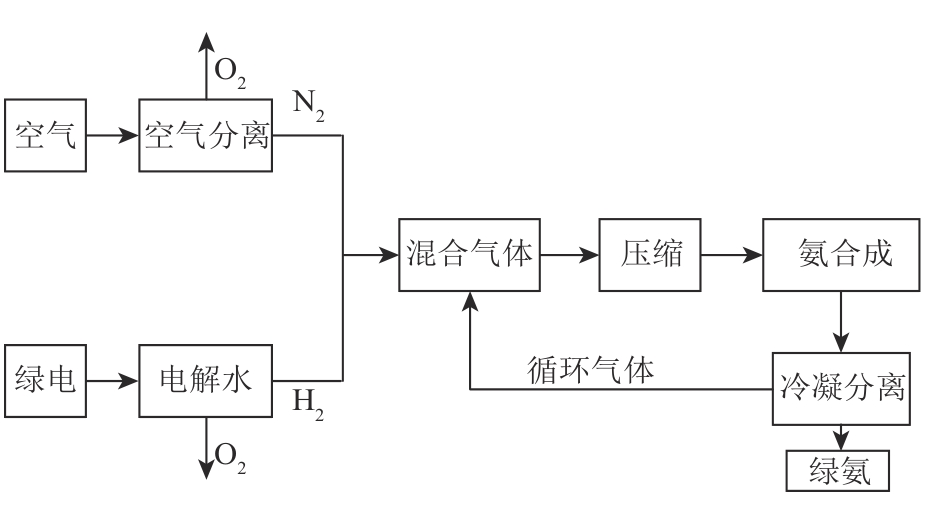
图1 空气分离N2合成绿氨工艺流程
Fig. 1 Process flow of green ammonia synthesis from air separated N2
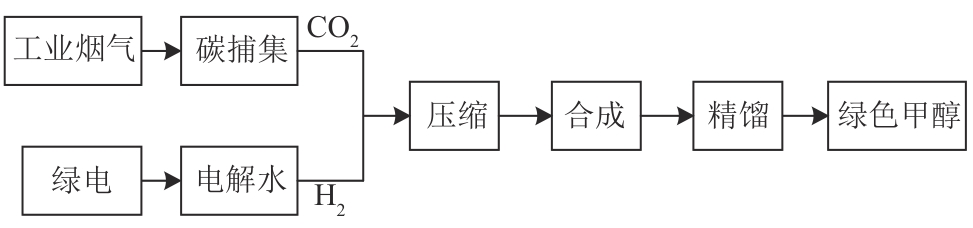
图2 碳捕集法合成绿色甲醇工艺流程
Fig. 2 Process flow of green methanol synthesis via carbon capture method
| 制氢技术 | 原料价格 | 成本 |
|---|---|---|
| 煤制氢 | 煤价600~1 000元/t | 15 000~20 000元/t |
| 天然气重整制氢 | 天然气价2.5~4.5元/m3 | 16 000~22 000元/t |
| 电解水制氢 | 电价0.4元/(kW⋅h) | 28 000~32 000元/t |
表2 不同制氢技术成本对比
Tab. 2 Cost comparison of different hydrogen production technologies
| 制氢技术 | 原料价格 | 成本 |
|---|---|---|
| 煤制氢 | 煤价600~1 000元/t | 15 000~20 000元/t |
| 天然气重整制氢 | 天然气价2.5~4.5元/m3 | 16 000~22 000元/t |
| 电解水制氢 | 电价0.4元/(kW⋅h) | 28 000~32 000元/t |
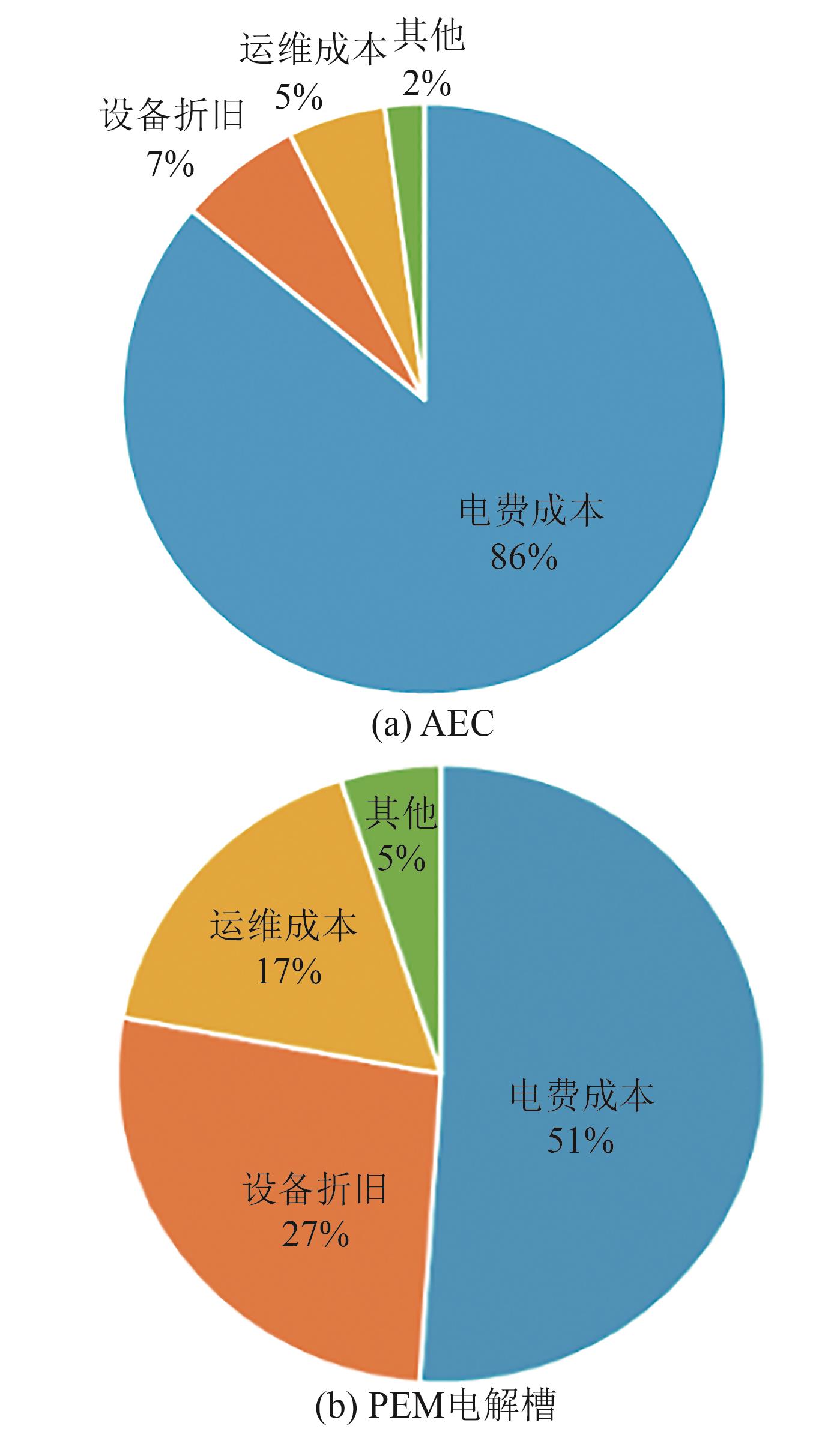
图3 AEC与PEM电解槽制氢成本结构
Fig. 3 Cost structure of hydrogen production via AEC and PEM electrolysis cell
| 制氨工艺 | 原料价格 | 成本/(元/t) |
|---|---|---|
| 煤制合成氨 | 煤价600~1 000元/t | 2 100~2 600 |
| 绿氨工艺 | 电价0.4元/(kW⋅h), 绿氢价28 000~32 000元/t | 4 000~4 500 |
表3 不同合成氨工艺成本对比
Tab. 3 Cost comparison of different ammonia synthesis processes
| 制氨工艺 | 原料价格 | 成本/(元/t) |
|---|---|---|
| 煤制合成氨 | 煤价600~1 000元/t | 2 100~2 600 |
| 绿氨工艺 | 电价0.4元/(kW⋅h), 绿氢价28 000~32 000元/t | 4 000~4 500 |
| 技术路线 | 煤制甲醇 | 生物质制甲醇 | 电制甲醇 |
|---|---|---|---|
| 成本/(元/t) | 2 100~2 800 | 3 400~5 300 | 4 600~5 500 |
表4 甲醇生产成本对比
Tab. 4 Cost comparison of methanol production
| 技术路线 | 煤制甲醇 | 生物质制甲醇 | 电制甲醇 |
|---|---|---|---|
| 成本/(元/t) | 2 100~2 800 | 3 400~5 300 | 4 600~5 500 |
| 发布主体 | 政策名称 | 相关政策内容概述 |
|---|---|---|
| 工业和信息化部等部门 | 《工业领域碳达峰实施方案》 | 支持氢能全产业链发展,鼓励因地制宜开展可再生能源制氢,绿氢合成绿氨、绿色甲醇 |
| 国家发改委等部门 | 《关于大力实施可再生能源替代行动的指导意见》 | 在合成氨、合成甲醇等领域鼓励低碳氢规模化替代高碳氢,探索建设风光氢氨醇一体化基地 |
| 国家发改委等部门 | 《关于推动现代煤化工产业健康发展的通知》 | 在资源禀赋和产业基础较好的地区,推动现代煤化工与可再生能源、绿氢、绿氨、二氧化碳捕集、利用与封存等耦合创新发展 |
| 工业和信息化部 | 《新型储能制造业高质量发展行动方案》(征求意见稿) | 拓展风光储氢等新能源应用场景,打通绿电-绿氢-绿氨/绿色甲醇产业链,推动多能互补 |
表5 近3年国家层面部分相关政策
Tab. 5 Selected national-level policies from the past three years
| 发布主体 | 政策名称 | 相关政策内容概述 |
|---|---|---|
| 工业和信息化部等部门 | 《工业领域碳达峰实施方案》 | 支持氢能全产业链发展,鼓励因地制宜开展可再生能源制氢,绿氢合成绿氨、绿色甲醇 |
| 国家发改委等部门 | 《关于大力实施可再生能源替代行动的指导意见》 | 在合成氨、合成甲醇等领域鼓励低碳氢规模化替代高碳氢,探索建设风光氢氨醇一体化基地 |
| 国家发改委等部门 | 《关于推动现代煤化工产业健康发展的通知》 | 在资源禀赋和产业基础较好的地区,推动现代煤化工与可再生能源、绿氢、绿氨、二氧化碳捕集、利用与封存等耦合创新发展 |
| 工业和信息化部 | 《新型储能制造业高质量发展行动方案》(征求意见稿) | 拓展风光储氢等新能源应用场景,打通绿电-绿氢-绿氨/绿色甲醇产业链,推动多能互补 |
| 发布主体 | 政策名称 | 相关政策内容概述 |
|---|---|---|
| 吉林省 | 《“氢动吉林”中长期发展规划(2021—2035年)》 | 积极推进风电及光伏制氢,实现绿氢在工业领域多元化应用 |
| 新疆维吾尔自治区 | 《自治区氢能产业发展三年行动方案(2023—2025年)》 | 以源网荷储一体化方式开展可再生能源制氢、氢能规模发电、合成氨、甲醇等试点项目,切实拓宽新能源应用场景,形成新能源就地消纳优势 |
| 山东省 | 《关于健全完善新能源消纳体系机制促进能源高质量发展的若干措施》 | 依托鲁北大型风光基地、海上风电基地等新能源规模化开发,探索建设可作为调峰资源的绿氢(氨、醇)项目,支持“风光氢氨醇”项目整体化推进 |
| 安徽省 | 《安徽省氢能产业高质量发展三年行动计划》 | 积极推进氢能在钢铁、电力等重点领域示范应用,引导合成氨、甲醇、炼化等行业由高碳工艺向低碳工业转变 |
| 内蒙古自治区包头市 | 《包头市氢能产业发展规划(2023—2030年)》 | 依托包头市绿氢合成氨、绿氢甲醇等项目进展,研究探索将液氨、甲醇等富氢产品作为储氢介质的输送技术路径和商业模式 |
表6 近3年地方层面部分相关政策
Tab. 6 Selected local-level policies from the past three years
| 发布主体 | 政策名称 | 相关政策内容概述 |
|---|---|---|
| 吉林省 | 《“氢动吉林”中长期发展规划(2021—2035年)》 | 积极推进风电及光伏制氢,实现绿氢在工业领域多元化应用 |
| 新疆维吾尔自治区 | 《自治区氢能产业发展三年行动方案(2023—2025年)》 | 以源网荷储一体化方式开展可再生能源制氢、氢能规模发电、合成氨、甲醇等试点项目,切实拓宽新能源应用场景,形成新能源就地消纳优势 |
| 山东省 | 《关于健全完善新能源消纳体系机制促进能源高质量发展的若干措施》 | 依托鲁北大型风光基地、海上风电基地等新能源规模化开发,探索建设可作为调峰资源的绿氢(氨、醇)项目,支持“风光氢氨醇”项目整体化推进 |
| 安徽省 | 《安徽省氢能产业高质量发展三年行动计划》 | 积极推进氢能在钢铁、电力等重点领域示范应用,引导合成氨、甲醇、炼化等行业由高碳工艺向低碳工业转变 |
| 内蒙古自治区包头市 | 《包头市氢能产业发展规划(2023—2030年)》 | 依托包头市绿氢合成氨、绿氢甲醇等项目进展,研究探索将液氨、甲醇等富氢产品作为储氢介质的输送技术路径和商业模式 |
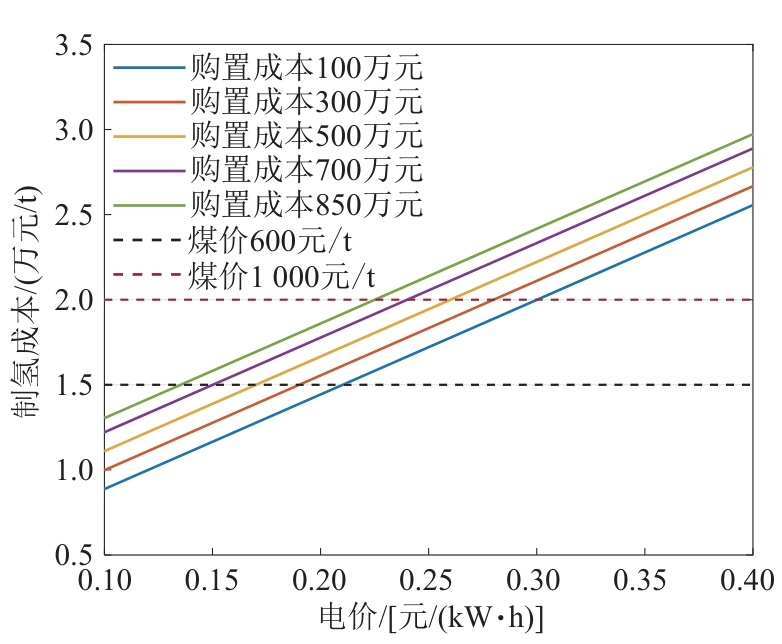
图4 不同电解槽购置成本下AEC制氢成本与可再生能源电价关系
Fig. 4 Relationship between AEC hydrogen production cost and renewable energy electricity price under different electrolyzer purchase costs
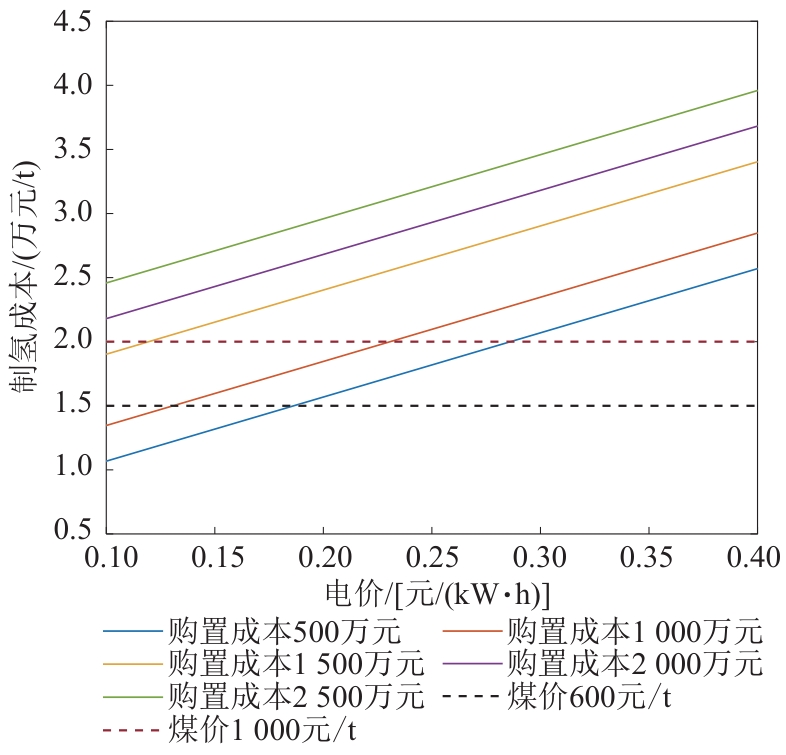
图5 不同电解槽购置成本下PEM制氢成本与可再生能源电价关系
Fig. 5 Relationship between PEM hydrogen production cost and renewable energy electricity price under different electrolyzer purchase costs
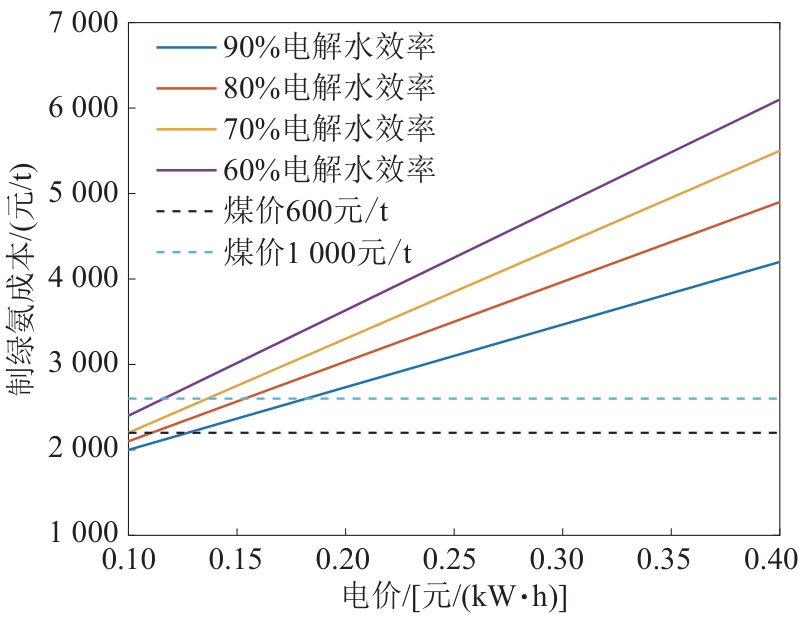
图6 不同制氢效率下制绿氨成本与可再生能源电价关系
Fig. 6 Relationship between green ammonia production cost and renewable energy electricity price under different hydrogen production efficiencies
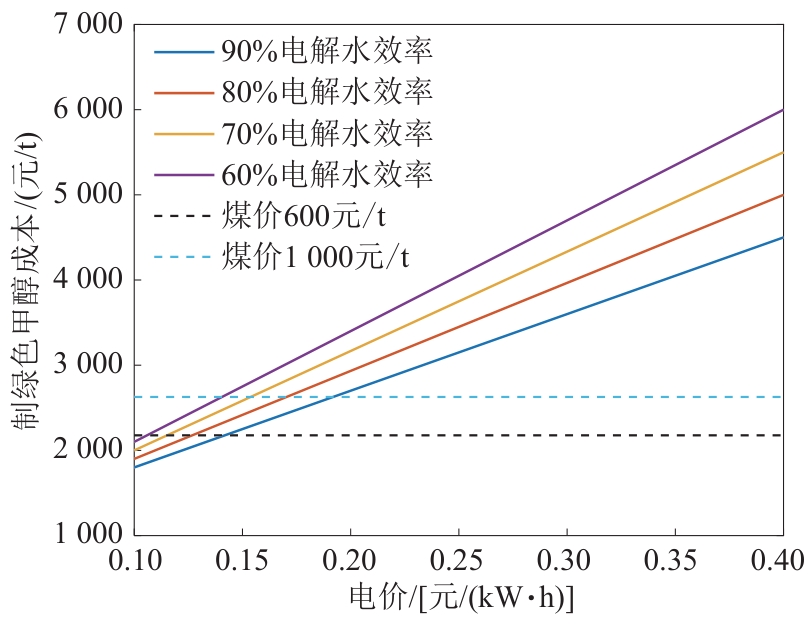
图7 不同制氢效率下制绿色甲醇成本与可再生能源电价关系
Fig. 7 Relationship between green methanol production cost and renewable energy electricity price under different hydrogen production efficiency
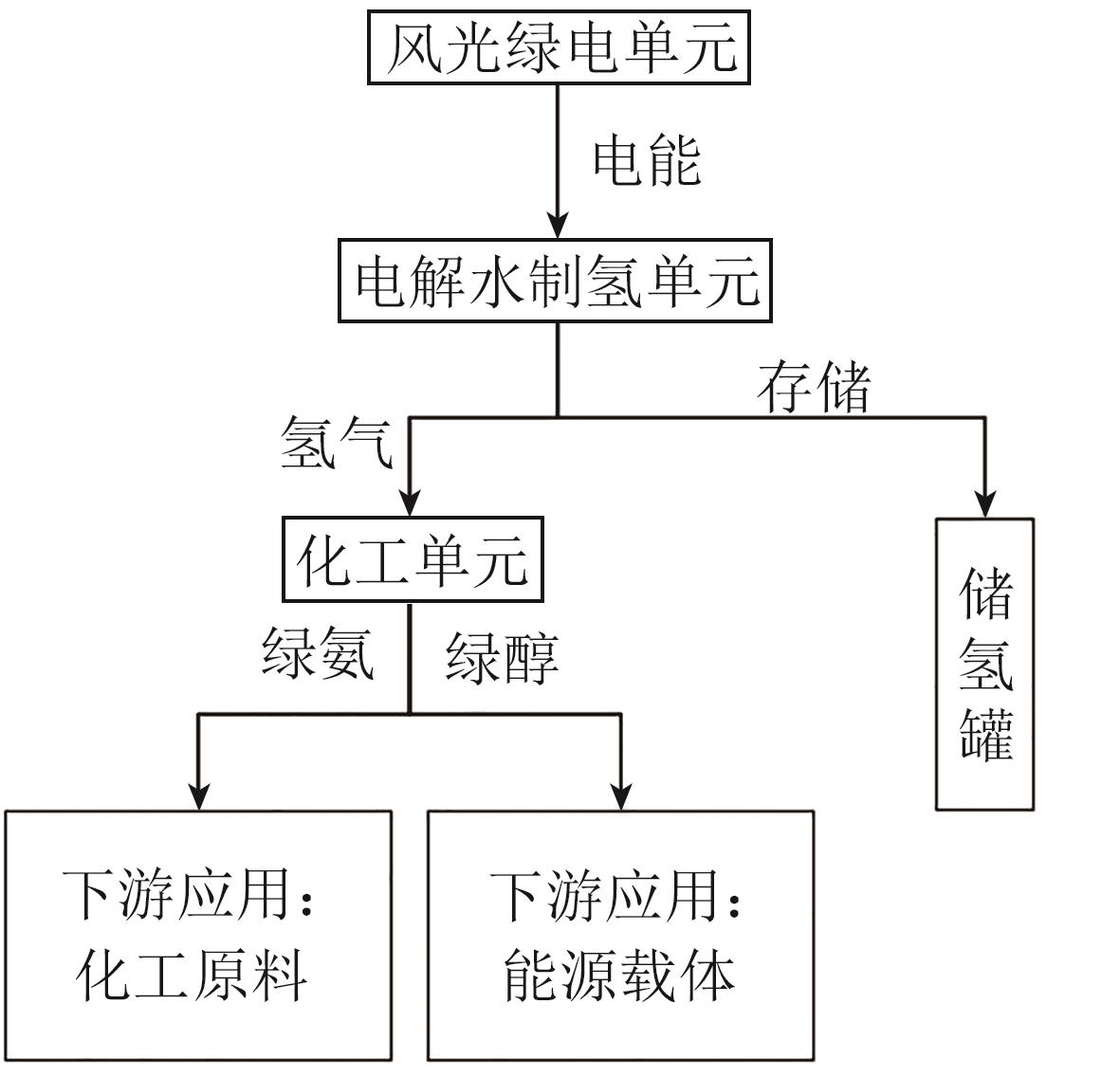
图8 风光氢氨醇产业链结构
Fig. 8 Structure of wind-solar-hydrogen-ammonia- methanol industry chain

图9 产业发展框架
Fig. 9 Industry development framework
| 1 | 周孝信,陈树勇,鲁宗相,等 .能源转型中我国新一代电力系统的技术特征[J].中国电机工程学报,2018,38(7):1893-1904. |
| ZHOU X X, CHEN S Y, LU Z X,et al .Technology features of the new generation power system in China[J].Proceedings of the CSEE,2018,38(7):1893-1904. | |
| 2 | 朱继忠,谢楚楚,张迪,等 .电碳耦合市场研究综述:现状、挑战与可持续发展[J].电力建设,2025,46(1):158-173. |
| ZHU J Z, XIE C C, ZHANG D,et al .Review of electric-carbon coupling market studies:status,challenges,and sustainability perspectives[J].Electric Power Construction,2025,46(1):158-173. | |
| 3 | 任大伟,肖晋宇,侯金鸣,等 .双碳目标下我国新型电力系统的构建与演变研究[J].电网技术,2022,46(10):3831-3839. |
| REN D W, XIAO J Y, HOU J M,et al .Construction and evolution of China’s new power system under dual carbon goal[J].Power System Technology,2022,46(10):3831-3839. | |
| 4 | 朱法华,徐静馨 .双碳背景下中国与主要发达国家电力低碳转型比较[J].电力科技与环保,2024,40(6):561-571. |
| ZHU F H, XU J X .Comparison of low-carbon transformation in electricity between China and major developed countries under the background of carbon peaking and carbon neutrality[J].Electric Power Technology and Environmental Protection,2024,40(6):561-571. | |
| 5 | 周君,安娟,杨宽辉,等 .现代能源体系耦合绿氢化工应用的研究进展[J].低碳化学与化工,2023,48(4):46-54. |
| ZHOU J, AN J, YANG K H,et al .Research progresses in application of modern energy system coupled with green hydrogen chemical industry[J].Natural Gas Chemical Industry,2023,48(4):46-54. | |
| 6 | 刘洋,樊珈池,白嘉琦,等 .我国绿氢氨醇产业发展现状及展望[J].云南化工,2024,51(11):1-5. |
| LIU Y, FAN J C, BAI J Q,et al .The current status and prospects of green hydrogen-ammonia-ethanol industry in China[J].Yunnan Chemical Technology,2024,51(11):1-5. | |
| 7 | 郭婷婷,曹蕃 .低碳能源系统发展趋势与应用实践[J].分布式能源,2025,10(1):1-13. |
| GUO T T, CAO F .Development trend and application of low-carbon energy system[J].Distributed Energy,2025,10(1):1-13. | |
| 8 | 白建明,张弛 .氢氨醇产业现状及发展前景[J].石油石化绿色低碳,2024,9(5):1-6. |
| BAI J M, ZHANG C .Current situation and development prospects of hydrogen,ammonia and methanol industry energy[J].Green Petroleum & Petrochemicals,2024,9(5):1-6. | |
| 9 | 张春雁,窦真兰,王俊,等 .电解水制氢-储氢-供氢在电力系统中的发展路线[J].发电技术,2023,44(3):305-317. |
| ZHANG C Y, DOU Z L, WANG J,et al .Development route of hydrogen production by water electrolysis,hydrogen storage and hydrogen supply in power system[J].Power Generation Technology,2023,44(3):305-317. | |
| 10 | 李彬,潘雨情,文华杰,等 .基于碳减排的氢电资源耦合发展现状及展望[J].供用电,2023,40(10):106-113. |
| LI B, PAN Y Q, WEN H J,et al .Current status and prospects of hydrogen electricity resource coupling development based on carbon emission reduction[J].Distribution & Utilization,2023,40(10):106-113. | |
| 11 | 李红伟,吴佳航,王佳怡,等 .计及P2G及碳捕集的风光氢储综合能源系统低碳经济调度[J].电力系统保护与控制,2024,52(16):26-36. |
| LI H W, WU J H, WANG J Y,et al .Low-carbon economic dispatch of a wind,solar,and hydrogen storage integrated energy system considering P2G and carbon capture[J].Power System Protection and Control,2024,52(16):26-36. | |
| 12 | ABE J O, POPOOLA A P I, AJENIFUJA E,et al .Hydrogen energy,economy and storage:review and recommendation[J].International Journal of Hydrogen Energy,2019,44(29):15072-15086. doi:10.1016/j.ijhydene.2019.04.068 |
| 13 | 石志鹏,石祥建,蔡丹,等 .绿电与绿氢耦合煤化工的系统建设方案[J].南方能源建设,2023,10(3):143-149. doi:10.16516/j.gedi.issn2095-8676.2023.03.016 |
| SHI Z P, SHI X J, CAI D,et al .Construction scheme for the system coupling coal chemical industry with green electricity and green hydrogen[J].Southern Energy Construction,2023,10(3):143-149. doi:10.16516/j.gedi.issn2095-8676.2023.03.016 | |
| 14 | 徐波,伍声宇,侯东羊,等 .考虑季节性储氢的区域能源系统优化模型[J].智慧电力,2024,52(2):40-47. |
| XU B, WU S Y, HOU D Y,et al .Regional energy system optimization model considering seasonal hydrogen storage[J].Smart Power,2024,52(2):40-47. | |
| 15 | 张学强,董龙,王栋 .考虑氢能需求的甘肃省电力行业低碳转型路径研究[J].中国电力,2023,56(12):262-272. |
| ZHANG X Q, DONG L, WANG D .Study on low-carbon transition path of power industry in Gansu Province considering hydrogen energy demand[J].Electric Power,2023,56(12):262-272. | |
| 16 | 李京光,王希,蔡雨辰,等 .大规模可再生能源制氨技术方案研究[J].电力勘测设计,2024(10):25-29,79. |
| LI J G, WANG X, CAI Y C,et al .Research on large-scale ammonia production using renewable energy[J].Electric Power Survey & Design,2024(10):25-29,79. | |
| 17 | 舒斌,陈建宏,熊健,等 .碳中和目标下推动绿色甲醇发展的必要性分析[J].化工进展,2023,42(9):4471-4478. |
| SHU B, CHEN J H, XIONG J,et al .Necessity analysis of promoting the development of green methanol under the goal of carbon neutrality[J].Chemical Industry and Engineering Progress,2023,42(9):4471-4478. | |
| 18 | 张杰,罗雪鹏 .液氢制-储-运-加关键技术发展现状及展望[J].发电技术,2024,45(5):888-898. |
| ZHANG J, LUO X P .Development status and prospect of key technologies for liquid hydrogen production-storage-transportation-refueling[J].Power Generation Technology,2024,45(5):888-898. | |
| 19 | 田江南,袁雄俊,贾江涛,等 .可再生能源制氢氨醇油关键技术研究[J].电力勘测设计,2024(10):18-24. |
| TIAN J N, YUAN X J, JIA J T,et al .Research on key technologies of producing green hydrogen,green ammonia,green methanol and sustainable aviation fuel from renewable energy sources[J].Electric Power Survey & Design,2024(10):18-24. | |
| 20 | 沙海伟,胡晓雨,韩倩倩 .电力设计企业开发氢氨醇油一体化项目的对策探讨[J].电力勘测设计,2024(10):30-34. |
| SHA H W, HU X Y, HAN Q Q .Discussion on the development countermeasures of hydro-ammonia alcohol oil integration project for power design enterprises[J].Electric Power Survey & Design,2024(10):30-34. | |
| 21 | 李建林,邵晨曦,张则栋,等 .氢能产业政策及商业化模式分析[J].发电技术,2023,44(3):287-295. |
| LI J L, SHAO C X, ZHANG Z D,et al .Analysis of hydrogen industry policy and commercialization model[J].Power Generation Technology,2023,44(3):287-295. | |
| 22 | 王梦川,洪子鑫,李峰,等 .绿色甲醇产业发展现状及前景分析[J].国际石油经济,2024,32(5):78-84. |
| WANG M C, HONG Z X, LI F,et al .Green methanol industry development status and prospect analysis[J].International Petroleum Economics,2024,32(5):78-84. | |
| 23 | 滕越,赵骞,袁铁江,等 .绿电-氢能-多域应用耦合网络关键技术现状及展望[J].发电技术,2023,44(3):318-330. |
| TENG Y, ZHAO Q, YUAN T J,et al .Key technology status and outlook for green electricity-hydrogen energy-multi-domain applications coupled network[J].Power Generation Technology,2023,44(3):318-330. | |
| 24 | 刘泽洪,孟婧,张瑾轩,等 .电-氢-碳耦合促进新能源基地开发模式研究[J].全球能源互联网,2024,7(5):473-491. |
| LIU Z H, MENG J, ZHANG J X,et al .Research on the development model of new energy bases based on the electricity-hydrogen-carbon synergy[J].Journal of Global Energy Interconnection,2024,7(5):473-491. | |
| 25 | 俞红梅,邵志刚,侯明,等 .电解水制氢技术研究进展与发展建议[J].中国工程科学,2021,23(2):146-152. doi:10.15302/j-sscae-2021.02.020 |
| YU H M, SHAO Z G, HOU M,et al .Hydrogen production by water electrolysis:progress and suggestions[J].Strategic Study of CAE,2021,23(2):146-152. doi:10.15302/j-sscae-2021.02.020 | |
| 26 | 李建林,李光辉,郭丽军,等 .“十四五”规划下氢能应用技术现状综述及前景展望[J].电气应用,2021,40(6):10-16. |
| LI J L, LI G H, GUO L J,et al .Overview and prospect of hydrogen energy application technology under the 14th Five Year Plan[J].Electrotechnical Application,2021,40(6):10-16. | |
| 27 | ZHAO Y, GONG M, ZHOU Y,et al .Thermo dynamics analysis of hydrogen storage based on compressed gaseous hydrogen,liquid hydrogen and cryo-compressed hydrogen[J].International Journal of Hydrogen Energy,2019,44(31):16833-16840. doi:10.1016/j.ijhydene.2019.04.207 |
| 28 | 宋洁,郜捷,梁丹曦,等 .质子交换膜电解制氢系统建模研究综述[J].电力建设,2024,45(2):58-78. |
| SONG J, GAO J, LIANG D X,et al .A review on modeling of hydrogen production system with proton exchange membrane electrolysis[J].Electric Power Construction,2024,45(2):58-78. | |
| 29 | 吉旭,周步祥,贺革,等 .大规模可再生能源电解水制氢合成氨关键技术与应用研究进展[J].工程科学与技术,2022,54(5):1-11. |
| JI X, ZHOU B X, HE G,et al .Research review of the key technology and application of large-scale water electrolysis powered by renewable energy to hydrogen and ammonia production[J].Advanced Engineering Sciences,2022,54(5):1-11. | |
| 30 | 周步祥,蔡宇豪,邱一苇,等 .考虑电、氢、氨市场的可再生能源电制氢合成氨系统多主体合作运行策略[J].电力建设,2024,45(11):50-64. |
| ZHOU B X, CAI Y H, QIU Y W,et al .Multi-stakeholder cooperative operation strategy of renewable power to ammonia systems considering the electricity,hydrogen and ammonia markets[J].Electric Power Construction,2024,45(11):50-64. | |
| 31 | 李育磊,刘玮,董斌琦,等 .双碳目标下中国绿氢合成氨发展基础与路线[J].储能科学与技术,2022,11(9):2891-2899. doi:10.19799/j.cnki.2095-4239.2022.0324 |
| LI Y L, LIU W, DONG B Q,et al .Green hydrogen ammonia synthesis in China under double carbon target:Research on development basis and route[J].Energy Storage Science and Technology,2022,11(9):2891-2899. doi:10.19799/j.cnki.2095-4239.2022.0324 | |
| 32 | 曾悦,王月,张学瑞,等 .可再生能源合成绿氨研究进展及氢-氨储运经济性分析[J].化工进展,2024,43(1):376-389. |
| ZENG Y, WANG Y, ZHANG X R,et al .Research progress of green ammonia synthesis from renewable energy and economic analysis of hydrogen-ammonia storage and transportation[J].Chemical Industry and Engineering Progress,2024,43(1):376-389. | |
| 33 | 林承顺 .合成氨工艺技术现状及发展趋势[J].能源化工,2024,45(1):12-15. |
| LIN C S .Current status and development trends of synthetic ammonia process technology[J].Energy Chemical Industry,2024,45(1):12-15. | |
| 34 | 胡道成,王睿,赵瑞,等 .二氧化碳捕集技术及适用场景分析[J].发电技术,2023,44(4):502-513. doi:10.12096/j.2096-4528.pgt.22056 |
| HU D C, WANG R, ZHAO R,et al .Research on carbon dioxide capture technology and suitable scenarios[J].Power Generation Technology,2023,44(4):502-513. doi:10.12096/j.2096-4528.pgt.22056 | |
| 35 | 杨攀峰,黄宁,程一步 .绿色甲醇生产技术比较研究[J].当代石油石化,2024,32(10):36-41. |
| YANG P F, HUANG N, CHENG Y B .Comparative study on green methanol production technology[J].Petroleum & Petrochemical Today,2024,32(10):36-41. | |
| 36 | 闫娜,严欢,贾宏刚,等 .面向新能源高占比地区的混合储能优化配置及运行策略[J].电网与清洁能源,2024,40(7):18-27. |
| YAN N, YAN H, JIA H G,et al .Optimization configuration and operation strategy of hybrid energy storage for areas with a high proportion of new energy[J].Power System and Clean Energy,2024,40(7):18-27. | |
| 37 | 郭可玟,续永杰,史瑞静 .3种制氢技术路线的经济性分析[J].电工技术,2024(7):40-43. |
| GUO K W, XU Y J, SHI R J .Economic analysis of three technology routes of hydrogen production[J].Electric Engineering,2024(7):40-43. | |
| 38 | 王明华 .新能源电解水制氢技术经济性分析[J].现代化工,2023,43(5):1-5. |
| WANG M H .Technical economic analysis on hydrogen production from water electrolysis by new energy[J].Modern Chemical Industry,2023,43(5):1-5. | |
| 39 | 东方证券 .从氢的供需拆解探寻氢能发展方向[EB/OL].(2024-04-25)[2024-12-01].. |
| Securities Oriental .Explore the development direction of hydrogen energy from the disassembly of hydrogen supply and demand[EB/OL].(2024-04-25)[2024-12-01].. | |
| 40 | 杜东,王小林,张国生,等 .氨能产业发展现状及展望[J].石油科技论坛,2023,42(2):96-104. |
| DU D, WANG X L, ZHANG G S,et al .Present conditions and prospects of ammonia energy industrial development[J].Petroleum Science and Technology Forum,2023,42(2):96-104. | |
| 41 | 陈发清 .中标国内最大绿色氢氨醇一体化项目[N].深圳商报,2024-08-08(2). |
| CHEN F Q .Wins bid for the largest domestic green hydrogen-ammonia-alcohol integration project[N].Shenzhen Economic Daily,2024-08-08(2). | |
| 42 | 傅向升 .煤化工未来高质量发展的思考[J].中国石油和化工,2023(9):6-9. |
| FU X S .Thoughts on the future high-quality development of coal chemical industry[J].China Petroleum and Chemical Industry,2023(9):6-9. | |
| 43 | 鲍仁 .工业和信息化部:加大对锂等矿产资源找矿支持力度[N].期货日报,2024-11-07(5). |
| BAO R .Ministry of industry and information technology:increase support for mineral exploration of lithium and other resources[N].Futures Daily,2024-11-07(5). | |
| 44 | 刘洋洋 .内蒙古通辽市总投资37.0亿元风光储氢氨一体化产业园示范项目开工建设[N].通辽统计微讯,2024-12-16(7). |
| LIU Y Y .Demonstration project of an integrated industrial park for wind,solar,storage,hydrogen,and ammonia with a total investment of 3.7 billion yuan launched in Tongliao,Inner Mongolia[N].Tongliao Statistics News,2024-12-16(7). | |
| 45 | 王雅岚 .投资新疆布局氢能产业正逢其时[N].新疆日报,2024-09-04(6). |
| WaNG Y L .Investing in Xinjiang and laying out the hydrogen energy industry is timely[N].Xinjiang Daily,2024-09-04(6). | |
| 46 | 邓振宇,张润之,张文韬,等 .风光电解水制氢平准化成本优化空间分析[J].广东电力,2024,37(7):22-31. |
| DENG Z Y, ZHANG R Z, ZHANG W T,et al .Levelized cost optimization space analysis for wind-solar electrolytic water electrolyzing hydrogen generation[J].Guangdong Electric Power,2024,37(7):22-31. | |
| 47 | 张轩,王凯,樊昕晔,等 .电解水制氢成本分析[J].现代化工,2021,41(12):7-11. |
| ZHANG X, WANG K, FAN X Y,et al .Cost analysis on hydrogen production via water electrolysis[J].Modern Chemical Industry,2021,41(12):7-11. | |
| 48 | 陈磊磊,年珩,赵建勇,等 .含多电解槽的新能源制氢能量管理优化[J].电力工程技术,2024,43(2):2-10. |
| CHEN L L, NIAN H, ZHAO J Y,et al .Energy management optimization of new energy hydrogen production system including multi-electrolyzers[J].Electric Power Engineering Technology,2024,43(2):2-10. | |
| 49 | 沈明军,孙祥鑫,曲顺利 .可再生能源制绿氨工艺技术分析[J].氮肥技术,2023,44(4):1-5. |
| SHEN M J, SUN X X, QU S L .Technology analysis of renewable energy to green ammonia process[J].Nitrogenous Fertilizer Technology,2023,44(4):1-5. | |
| 50 | 韩鹏飞,徐潇源,王晗,等 .基于功率-温度自适应控制的多堆质子交换膜电解制氢系统效率优化[J].电工技术学报,2024,39(7):2236-2248. |
| HAN P F, XU X Y, WANG H,et al .Operational efficiency enhancement of multi-stack proton exchange membrane electrolyzer systems with power-temperature adaptive control[J].Transactions of China Electrotechnical Society,2024,39(7):2236-2248. | |
| 51 | 马达夫,温霄瑨,闻哲,等 .生物质制取绿色甲醇技术及经济性分析[J].现代化工,2025,45(1):250-255. |
| MA D F, WEN X J, WEN Z,et al .Technology and economic analysis on green methanol production from biomass[J].Modern Chemical Industry,2025,45(1):250-255. |
| [1] | 徐浩然, 张瑾昀, 马歆, 雷文强, 曹杰铭. 基于大语言模型的图检索增强生成技术在核电领域的应用与展望[J]. 发电技术, 2025, 46(3): 454-466. |
| [2] | 刘忠, 黄彦铭, 朱光明, 邹淑云. 含风-光-电氢混合储能的多微电网系统容量优化配置方法[J]. 发电技术, 2025, 46(2): 240-251. |
| [3] | 张佳鑫, 彭勇刚, 孙静. 考虑需求响应和碳交易的园区氢电耦合系统两阶段鲁棒优化调度[J]. 发电技术, 2025, 46(2): 252-262. |
| [4] | 马恺, 袁至, 李骥. 考虑氢能多元化利用的综合能源系统低碳经济调度[J]. 发电技术, 2025, 46(2): 263-273. |
| [5] | 王奎, 余梦, 张海静, 李妍, 刘哲, 郭军红. 面向光伏消纳和冰蓄冷空调群低碳需求响应的新型配电系统多时间尺度优化策略[J]. 发电技术, 2025, 46(2): 284-295. |
| [6] | 孙正龙, 伞吉强. 面向扭振分析的含虚拟惯量双馈风机轴系研究[J]. 发电技术, 2025, 46(2): 314-325. |
| [7] | 张扬帆, 李奕霖, 叶林, 付雪姣, 王正宇, 王耀函. 低温天气下考虑风机运行状态聚类的短期风电功率预测方法[J]. 发电技术, 2025, 46(2): 326-335. |
| [8] | 张立栋, 杨智翔, 李文锋, 冯江哲, 张博, 任淮辉, 陈哲, 王兆新. 导流板对水平轴风力机气动特性影响的数值模拟研究[J]. 发电技术, 2025, 46(2): 336-343. |
| [9] | 胡山鹰, 金涌, 张臻烨. 发展新质生产力,实现碳中和[J]. 发电技术, 2025, 46(1): 1-8. |
| [10] | 杨剑锋, 李婷, 杨爱民, 冯子宁. 含电能路由器的光伏配电网电压越限问题潮流优化研究[J]. 发电技术, 2025, 46(1): 113-125. |
| [11] | 王凯卉, 刘斌, 折晓会, 刘伟, 范昊, 康宗耀, 徐礼. 氨氢混合燃烧在旋流燃烧器中的动力学特性与NO x 减排机理研究[J]. 发电技术, 2025, 46(1): 171-179. |
| [12] | 兰国芹, 陆烨, 阚严生, 张继广, 王欢欢, 钟芳, 王承才, 肖黎明, 王照阳. 综合能源服务发展趋势与对策研究[J]. 发电技术, 2025, 46(1): 19-30. |
| [13] | 匡洪海, 郭茜. 基于多特征提取-卷积神经网络-长短期记忆网络的短期风电功率预测方法[J]. 发电技术, 2025, 46(1): 93-102. |
| [14] | 严新荣, 胡志勇, 张鹏威, 郑成航, 向军, 唐郭安, 刘金亮, 郭剑雄, 黄一博, 于鹏峰, 高翔. 煤电机组运行灵活性提升技术研究与应用[J]. 发电技术, 2024, 45(6): 1074-1086. |
| [15] | 赵长红, 张李琳, 邵云姝, 袁家海, 邓祎璐. 发电上市公司低碳信息披露与低碳转型效率研究[J]. 发电技术, 2024, 45(6): 1121-1134. |
| 阅读次数 | ||||||
|
全文 |
|
|||||
|
摘要 |
|
|||||
