

发电技术 ›› 2025, Vol. 46 ›› Issue (3): 541-555.DOI: 10.12096/j.2096-4528.pgt.25146
• AI在新型电力系统中的应用 • 上一篇
郑如意1, 杨博1, 周率2, 蒋林3, 李鸿彪4, 郜登科4
收稿日期:2025-03-16
修回日期:2025-05-06
出版日期:2025-06-30
发布日期:2025-06-16
通讯作者:
杨博
作者简介:基金资助:Ruyi ZHENG1, Bo YANG1, Shuai ZHOU2, Lin JIANG3, Hongbiao LI4, Dengke GAO4
Received:2025-03-16
Revised:2025-05-06
Published:2025-06-30
Online:2025-06-16
Contact:
Bo YANG
Supported by:摘要:
目的 质子交换膜燃料电池(proton exchange membrane fuel cell,PEMFC)作为极具潜力的清洁能源技术,在能源转换领域备受关注。然而,PEMFC系统的高度复杂性及运行过程中存在的不确定性,使其状态估计和故障诊断面临诸多挑战,严重影响系统可靠性与安全性。为有效应对这些难题,对人工智能(artificial intelligence,AI)技术在PEMFC状态估计和故障诊断中的应用策略与成效进行了研究。 方法 分析了当前PEMFC在状态估计与故障诊断领域的研究进展。在状态估计领域,解析了PEMFC非线性模型特性,介绍了基于AI的状态估计技术,分析了不同算法在PEMFC状态估计中的应用原理及优势。在故障诊断领域,总结归纳了PEMFC常见故障类型,分析了故障表现及内部成因,介绍了基于AI的故障诊断技术。最后,对基于AI的PEMFC状态估计与故障诊断技术的未来发展提出了建议。 结论 AI技术能够凭借其强大的数据处理和模式识别能力,准确估计PEMFC的状态,有效诊断系统潜在故障,从而显著提升PEMFC系统的运行效率和稳定性,增强系统可靠性与安全性。未来,可在AI算法创新、状态估计与故障诊断优化、智能体系构建以及与其他技术协同合作等方面开展研究。
中图分类号:
郑如意, 杨博, 周率, 蒋林, 李鸿彪, 郜登科. 基于人工智能的质子交换膜燃料电池状态估计及故障诊断[J]. 发电技术, 2025, 46(3): 541-555.
Ruyi ZHENG, Bo YANG, Shuai ZHOU, Lin JIANG, Hongbiao LI, Dengke GAO. State Estimation and Fault Diagnosis of Proton Exchange Membrane Fuel Cells Based on Artificial Intelligence[J]. Power Generation Technology, 2025, 46(3): 541-555.
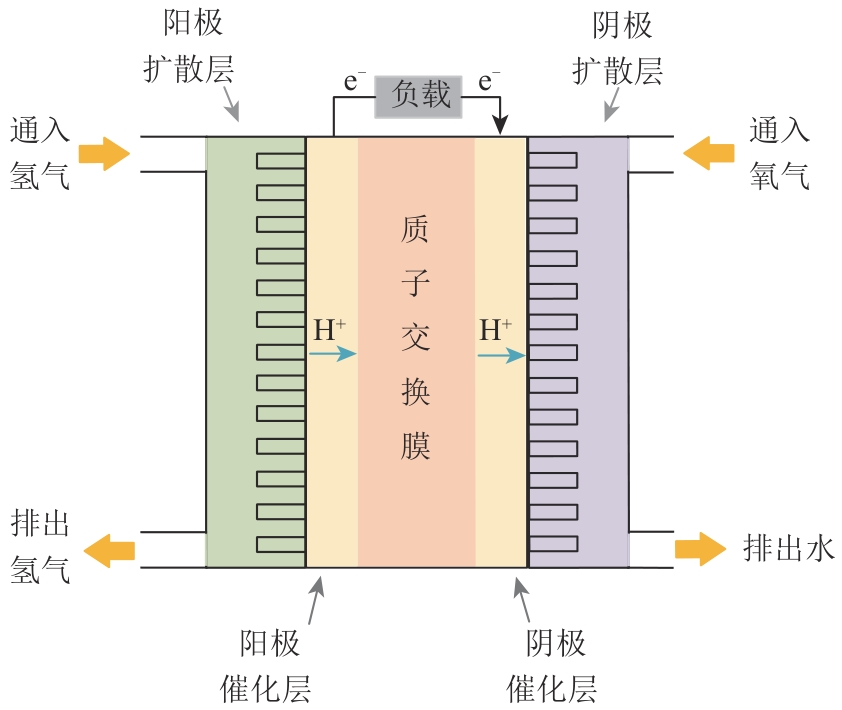
图1 PEMFC结构图
Fig. 1 Structure of PEMFC
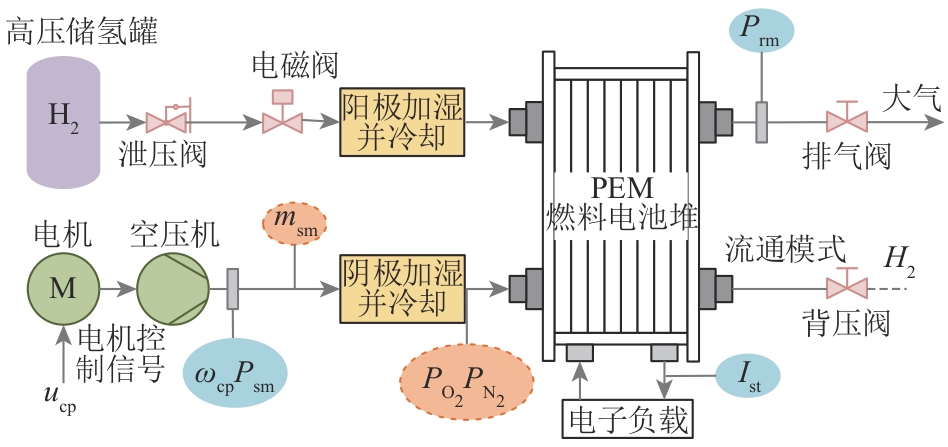
图2 PEMFC发电系统
Fig. 2 PEMFC power generation system
| 故障类型 | 原因 | 影响 | 位置 | 可恢复性 | 严重程度 | 经济影响程度 |
|---|---|---|---|---|---|---|
| 膜脱水[ | 湿度过低,温度过高,高电流密度运行,进气湿化不足,流道设计不合理,频繁变载 | 增加欧姆损失,降低电池效率,局部过热,机械应力开裂,化学降解 | 质子交换膜 | 部分可恢复(需重新湿化) | 中 | 中 |
| 水淹[ | 液态水过度积聚 | 电压波动或阶跃式下降,内阻增加,局部缺氧,氢氧直接反应产热 | 阴极侧气体扩散层或流道 | 可恢复(需排水) | 中 | 中 |
| 阳极氢气饥饿[ | 氢气供应不足,流道堵塞 | 电压反转、碳腐蚀、氢氧混合爆炸风险 | 阳极催化层 | 可恢复(需调整氢气供应或清理流道) | 高 | 高 |
| 阴极氧气饥饿[ | 空气压缩机故障,膜电极水淹 | 电压反转、碳腐蚀 | 阴极催化层 | 可恢复(需修复空气压缩机或排水) | 高 | 高 |
| 催化剂中毒[ | 一氧化碳、硫化物、金属离子污染 | 催化剂活性降低,活化极化升高,输出性能下降,加速性能衰减 | 催化层 | 部分可恢复(需更换或再生催化剂) | 中 | 中 |
| 膜降解[ | 化学、机械、热等多因素共同作用 | 氢气渗透率增加,开路电压降低,膜穿孔,气体交叉,效率骤降,短路 | 质子交换膜 | 不可恢复(需更换膜) | 极高 | 极高 |
表1 PEMFC主要故障类型
Tab. 1 Main fault types of PEMFC
| 故障类型 | 原因 | 影响 | 位置 | 可恢复性 | 严重程度 | 经济影响程度 |
|---|---|---|---|---|---|---|
| 膜脱水[ | 湿度过低,温度过高,高电流密度运行,进气湿化不足,流道设计不合理,频繁变载 | 增加欧姆损失,降低电池效率,局部过热,机械应力开裂,化学降解 | 质子交换膜 | 部分可恢复(需重新湿化) | 中 | 中 |
| 水淹[ | 液态水过度积聚 | 电压波动或阶跃式下降,内阻增加,局部缺氧,氢氧直接反应产热 | 阴极侧气体扩散层或流道 | 可恢复(需排水) | 中 | 中 |
| 阳极氢气饥饿[ | 氢气供应不足,流道堵塞 | 电压反转、碳腐蚀、氢氧混合爆炸风险 | 阳极催化层 | 可恢复(需调整氢气供应或清理流道) | 高 | 高 |
| 阴极氧气饥饿[ | 空气压缩机故障,膜电极水淹 | 电压反转、碳腐蚀 | 阴极催化层 | 可恢复(需修复空气压缩机或排水) | 高 | 高 |
| 催化剂中毒[ | 一氧化碳、硫化物、金属离子污染 | 催化剂活性降低,活化极化升高,输出性能下降,加速性能衰减 | 催化层 | 部分可恢复(需更换或再生催化剂) | 中 | 中 |
| 膜降解[ | 化学、机械、热等多因素共同作用 | 氢气渗透率增加,开路电压降低,膜穿孔,气体交叉,效率骤降,短路 | 质子交换膜 | 不可恢复(需更换膜) | 极高 | 极高 |
| 方法 | 原理 | 优点 | 缺点 | 精确性 | 抗噪性 | 适用类型 |
|---|---|---|---|---|---|---|
| 模态分解[ | 分析并分解复杂信号为多个简单成分 | 提取不易察觉的关键特征 | 可能引入分解误差 | 中高 | 中 | 复杂信号分析 |
| 机器学习[ | 自动学习数据的统计规律和潜在特征 | 自动化特征提取,适用于大规模数据 | 依赖样本质量和数量 | 高 | 中高 | 分类、预测任务 |
| 深度学习[ | 利用深度神经网络抽取高层次抽象特征 | 高精度特征提取,简化特征提取工程 | 需要大量数据和计算资源 | 极高 | 高 | 图像、语音、文本等 |
| 注意力机制[ | 动态调整数据部分权重,聚焦信息量大的部分 | 提升特征提取鲁棒性和效率 | 复杂度增加,可能导致计算开销大 | 高 | 高 | 需要聚焦关键信息的任务 |
表2 基于AI的4种数据特征提取方法
Tab. 2 Four data feature extraction methods based on AI
| 方法 | 原理 | 优点 | 缺点 | 精确性 | 抗噪性 | 适用类型 |
|---|---|---|---|---|---|---|
| 模态分解[ | 分析并分解复杂信号为多个简单成分 | 提取不易察觉的关键特征 | 可能引入分解误差 | 中高 | 中 | 复杂信号分析 |
| 机器学习[ | 自动学习数据的统计规律和潜在特征 | 自动化特征提取,适用于大规模数据 | 依赖样本质量和数量 | 高 | 中高 | 分类、预测任务 |
| 深度学习[ | 利用深度神经网络抽取高层次抽象特征 | 高精度特征提取,简化特征提取工程 | 需要大量数据和计算资源 | 极高 | 高 | 图像、语音、文本等 |
| 注意力机制[ | 动态调整数据部分权重,聚焦信息量大的部分 | 提升特征提取鲁棒性和效率 | 复杂度增加,可能导致计算开销大 | 高 | 高 | 需要聚焦关键信息的任务 |
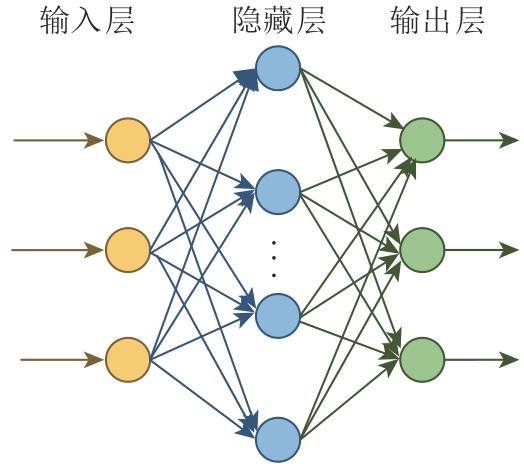
图3 BP神经网络结构
Fig. 3 Structure of BP neural network
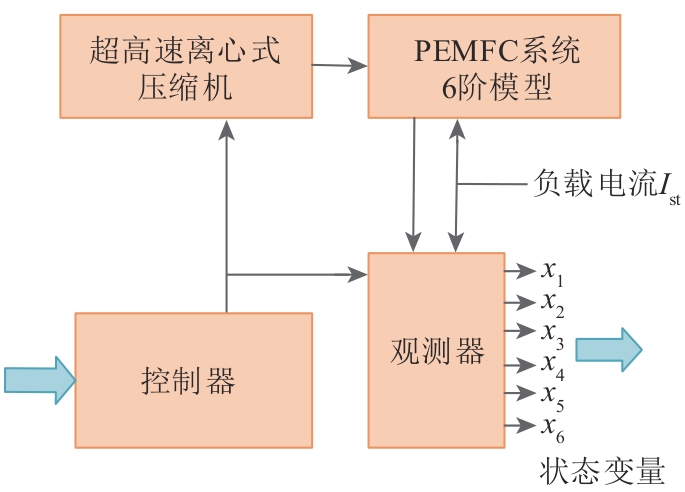
图4 非线性观测器结构
Fig. 4 Structure of nonlinear observer
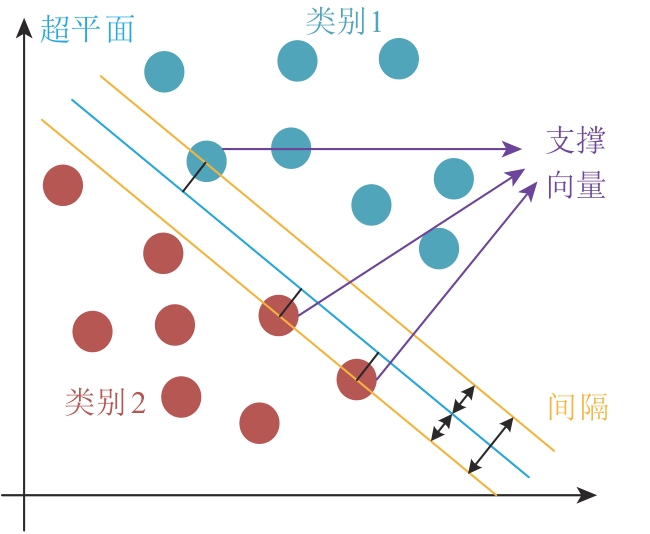
图5 支持向量机结构
Fig. 5 Structure of SVM
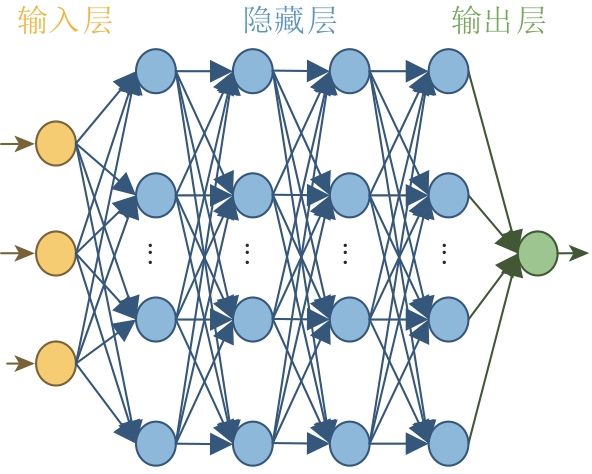
图6 深度学习结构
Fig. 6 Structure of deep learning
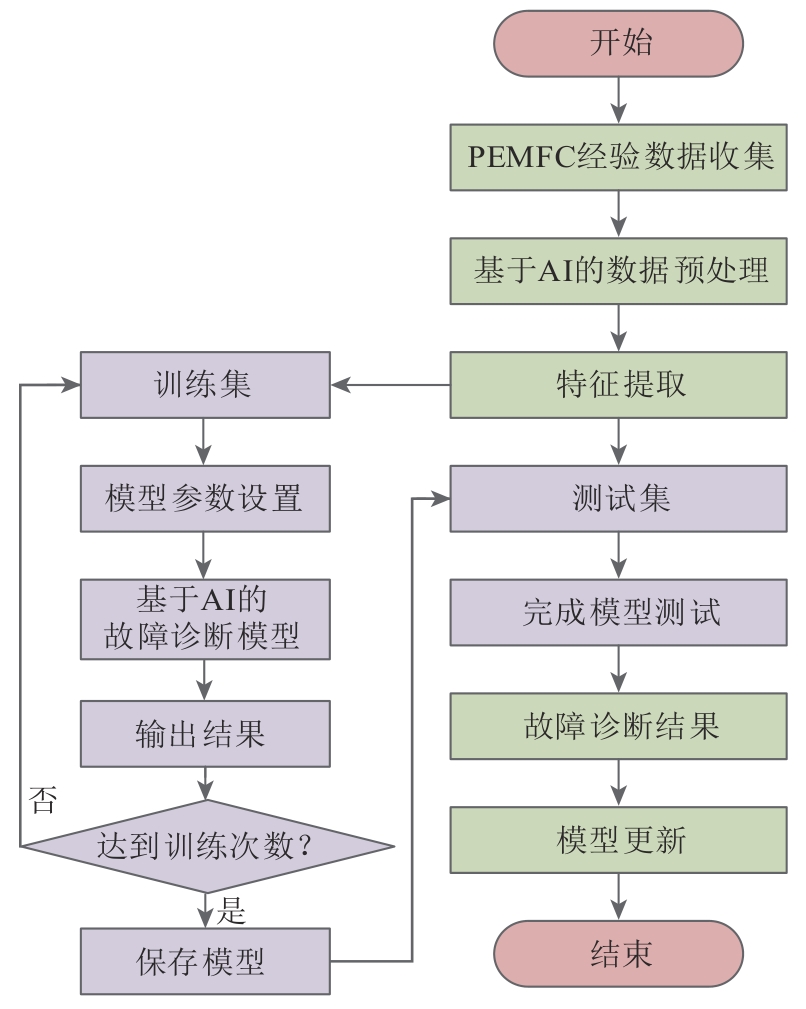
图7 基于AI的故障诊断流程
Fig. 7 Fault diagnosis process based on AI
| 诊断方法 | 具体类型 | 诊断故障类型 | 精确度/% | 功率等级/kW | 诊断状态 | 复杂性 | 经济性 |
|---|---|---|---|---|---|---|---|
| 机器学习 | SVM[ | 缺氧、水淹和膜干燥 | 96.15 | 60 | 离线 | 中 | 中 |
| 深度学习 | CNN[ | 水淹和膜干燥 | 98.5 | 5 | 离线 | 中 | 中 |
| 融合算法 | 迁移学习[ | 冷却系统故障、氢气饥饿、空气饥饿和水淹 | 99.50 | 100 | 离线 | 高 | 低 |
| 集成学习[ | 水淹、膜干燥和氢气泄漏 | 99.99 | 100 | 在线/离线 | 高 | 低 |
表3 基于AI的3种PEMFC故障诊断方法性能指标对比
Tab. 3 Comparison of performance indicators of three PEMFC fault diagnosis methods based on AI
| 诊断方法 | 具体类型 | 诊断故障类型 | 精确度/% | 功率等级/kW | 诊断状态 | 复杂性 | 经济性 |
|---|---|---|---|---|---|---|---|
| 机器学习 | SVM[ | 缺氧、水淹和膜干燥 | 96.15 | 60 | 离线 | 中 | 中 |
| 深度学习 | CNN[ | 水淹和膜干燥 | 98.5 | 5 | 离线 | 中 | 中 |
| 融合算法 | 迁移学习[ | 冷却系统故障、氢气饥饿、空气饥饿和水淹 | 99.50 | 100 | 离线 | 高 | 低 |
| 集成学习[ | 水淹、膜干燥和氢气泄漏 | 99.99 | 100 | 在线/离线 | 高 | 低 |
| 1 | 滕越,赵骞,袁铁江,等 .绿电-氢能-多域应用耦合网络关键技术现状及展望[J].发电技术,2023,44(3):318-330. |
| TENG Y, ZHAO Q, YUAN T J,et al .Key technology status and outlook for green electricity-hydrogen energy-multi-domain applications coupled network[J].Power Generation Technology,2023,44(3):318-330. | |
| 2 | 杨博,钱玉村 .锂离子电池健康状态估计综述[J].昆明理工大学学报(自然科学版),2024,49(3):147-165. |
| YANG B, QIAN Y C .A review on the state-of-health estimation for lithium-ion batteries[J].Journal of Kunming University of Science and Technology (Natural Science),2024,49(3):147-165. | |
| 3 | 樊伟杰,崔双喜,李浩博 .考虑两阶段P2G和燃气掺氢的综合能源系统双层优化调度[J].电测与仪表,2025,62(2):16-25. |
| FAN W J, CUI S X, LI H B .Double-layer optimal scheduling of integrated energy system considering two-stage P2G and gas hydrogen doping[J].Electrical Measurement & Instrumentation,2025,62(2):16-25. | |
| 4 | 吴磊,彭黎菊,李爽,等 .百千瓦级天然气制氢质子交换膜燃料电池热电联产系统稳态特性模拟分析[J].发电技术,2023,44(3):350-360. doi:10.12096/j.2096-4528.pgt.22078 |
| WU L, PENG L J, LI S,et al .Simulation and analysis of steady state characteristics of hundred kilowatt proton exchange membrane fuel cell combined heat and power system based on hydrogen production from natural gas[J].Power Generation Technology,2023,44(3):350-360. doi:10.12096/j.2096-4528.pgt.22078 | |
| 5 | 汪建锋,王荣杰,林安辉,等 .质子交换膜燃料电池退化预测方法[J].电工技术学报,2024,39(11):3367-3378. |
| WANG J F, WANG R J, LIN A H,et al .Degradation prediction method of proton exchange membrane fuel cell[J].Transactions of China Electrotechnical Society,2024,39(11):3367-3378. | |
| 6 | 吉平,林伟芳,冯长有,等 .氢能发电技术发展制约因素及未来方向综述[J].全球能源互联网,2025,8(2):165-175. |
| JI P, LIN W F, FENG C Y,et al .Review on the development constraints and directions of hydrogen power generation technology[J].Journal of Global Energy Interconnection,2025,8(2):165-175. | |
| 7 | 冯兴,杨威,张安安,等 .双向可逆的集中式电氢耦合系统容量优化配置[J].中国电力,2024,57(8):1-11. |
| FENG X, YANG W, ZHANG A A,et al .Capacity optimization configuration of a bidirectional reversible centralized electrohydrogen coupling system[J].Electric Power,2024,57(8):1-11. | |
| 8 | 姜智霖,郝峰杰,袁志昌,等 .考虑SOC优化设定的电-氢混合储能系统的运行优化[J].电力系统保护与控制,2024,52(8):65-76. |
| JIANG Z L, HAO F J, YUAN Z C,et al .Optimal operation of an electro-hydrogen hybrid energy storage system considering SOC optimization setting[J].Power System Protection and Control,2024,52(8):65-76. | |
| 9 | 吴青峰,杨艺涛,刘立群,等 .基于GA-SA-BP神经网络的锂电池健康状态估算方法[J].电力系统保护与控制,2024,52(19):74-84. |
| WU Q F, YANG Y T, LIU L Q,et al .Lithium battery state of health estimation method based on a GA-SA-BP neural network[J].Power System Protection and Control,2024,52(19):74-84. | |
| 10 | YANG B, LIANG B, QIAN Y,et al .Parameter identification of PEMFC via feedforward neural network-pelican optimization algorithm[J].Applied Energy,2024,361:122857. doi:10.1016/j.apenergy.2024.122857 |
| 11 | YANG B, LI J, LI Y,et al .A critical survey of proton exchange membrane fuel cell system control:Summaries,advances,and perspectives[J].International Journal of Hydrogen Energy,2022,. doi:10.1016/j.ijhydene.2022.01.065 |
| 47(17):9986-10020. doi:10.1016/j.ijhydene.2022.01.065 | |
| 12 | YANG B, LI D, ZENG C,et al .Parameter extraction of PEMFC via Bayesian regularization neural network based meta-heuristic algorithms[J].Energy,2021,228:120592. doi:10.1016/j.energy.2021.120592 |
| 13 | PETTOROSSI C, MORVILLIER R, HEIRIES V,et al .Physics-guided fault diagnosis method for proton exchange membrane fuel cells based on LSTM neural network[J].Journal of Power Sources,2025,626:235696. doi:10.1016/j.jpowsour.2024.235696 |
| 14 | 陈金奇,陈涛,王泽英,等 .PEMFC电堆水管理技术的阻抗谱分析[J].电源技术,2022,46(8):898-902. |
| CHEN J Q, CHEN T, WANG Z Y,et al .Impedance spectrum analysis of water management technology in PEMFC stacks[J].Chinese Journal of Power Sources,2022,46(8):898-902. | |
| 15 | 姜珮,陈泽凯,叶东浩,等 .弛豫时间分布阻抗分析PEMFC气体扩散层传质现象[J].电源技术,2023,47(4):493-497. |
| JIANG P, CHEN Z K, YE D H,et al .Analysis of GDL mass transfer for polymer electrolyte membrane fuel cell by distribution of relaxation time of impedance[J].Chinese Journal of Power Sources,2023,47(4):493-497. | |
| 16 | KHAN S S, SHAREEF H, IBRAHIM A A .Improved semi-empirical model of proton exchange membrane fuel cell incorporating fault diagnostic feature[J].Journal of Modern Power Systems and Clean Energy,2021,9(6):1566-1573. doi:10.35833/mpce.2019.000179 |
| 17 | 喻峰正,冼海珍 .质子交换膜燃料电池阴极侧糖葫芦型流道数值模拟研究[J].热力发电,2023,52(8):51-59. |
| YU F Z, XIAN H Z .Numerical simulation analysis of sugar gourd type channel on cathode side of proton exchange membrane fuel cell[J].Thermal Power Generation,2023,52(8):51-59. | |
| 18 | FAN L, TU Z, CHAN S H .Recent development in design a state-of-art proton exchange membrane fuel cell from stack to system:theory,integration and prospective[J].International Journal of Hydrogen Energy,2023,48(21):7828-7865. doi:10.1016/j.ijhydene.2022.11.212 |
| 19 | RONG M, WEI Y, XIAO Z,et al .RETRACTED:a bearing fault diagnosis method based on LSTM-GAN and convolutional neural network under small sample variable working conditions[J].Journal of Intelligent & Fuzzy Systems,2025,48(3):653-667. doi:10.3233/jifs-240105 |
| 20 | SU X, DENG C, SHAN Y,et al .Fault diagnosis based on interpretable convolutional temporal-spatial attention network for offshore wind turbines[J].Journal of Modern Power Systems and Clean Energy,2024,12(5):1459-1471. doi:10.35833/mpce.2023.000606 |
| 21 | 刘昕宇,韩莹,陈维荣,等 .基于改进SSA-DBN的质子交换膜燃料电池水故障智能分类方法[J].电力自动化设备,2024,44(4):18-24. |
| LIU X Y, HAN Y, CHEN W R,et al .Intelligent classification method of water faults for proton exchange membrane fuel cell based on improved SSA-DBN[J].Electric Power Automation Equipment,2024,44(4):18-24. | |
| 22 | XU J H, ZHANG B X, ZHU K Q,et al .Fault diagnosis of PEMFC based on fatal and recoverable failures using multi-scale convolutional neural networks[J].International Journal of Hydrogen Energy,2024,80:916-925. doi:10.1016/j.ijhydene.2024.07.190 |
| 23 | ZHANG W, WANG Y .Modification and durability of carbon paper gas diffusion layer in proton exchange membrane fuel cell[J].Ceramics International,2023,49(6):9371-9381. doi:10.1016/j.ceramint.2022.11.104 |
| 24 | 邓惠文,李奇,崔幼龙,等 .基于多边界层的RNO质子交换膜燃料电池发电系统状态估计研究[J].中国电机工程学报,2019,39(5):1532-1543. |
| DENG H W, LI Q, CUI Y L,et al .Research on states estimation for proton exchange membrane fuel cell generation systems based on RNO with multi-boundary layer[J].Proceedings of the CSEE,2019,39(5):1532-1543. | |
| 25 | 李飞,赵冬冬,皇甫宜耿,等 .适用于PEMFC系统状态估计的鲁棒非线性观测器[J].电源学报,2019,17(2):19-25. |
| LI F, ZHAO D D, HUANGFU Y G,et al .Robust nonlinear observer for state estimation of PEMFC system[J].Journal of Power Supply,2019,17(2):19-25. | |
| 26 | 雍加望,赵倩倩,冯能莲 .基于非线性动态模型的质子交换膜燃料电池故障诊断[J].化工学报,2022,73(9):3983-3993. |
| YONG J W, ZHAO Q Q, FENG N L .Fault diagnosis of proton exchange membrane fuel cell based on nonlinear dynamic model[J].CIESC Journal,2022,73(9):3983-3993. | |
| 27 | FANG S, FENG J, ZHU Y,et al .Coordinated optimization and management of oxygen content and cathode pressure for PEMFC based on hybrid nonlinear robust control[J].Science and Technology for Energy Transition,2025,80:5. doi:10.2516/stet/2024098 |
| 28 | 董晓红,董进波,王明深,等 .基于新型健康特征的锂电池健康状态快速估计方法[J].电力工程技术,2025,44(1):136-142. |
| DONG X H, DONG J B, WANG M S,et al .Rapid estimation method of lithium battery state of health based on novel health feature[J].Electric Power Engineering Technology,2025,44(1):136-142. | |
| 29 | 杨淇,陈景文,华志广,等 .基于集成型极限学习机的氢燃料电池寿命预测[J].电工技术学报,2025,40(3):964-974. |
| YANG Q, CHEN J W, HUA Z G,et al .Research on PEMFC lifetime prediction based on ensemble extreme learning machine[J].Transactions of China Electrotechnical Society,2025,40(3):964-974. | |
| 30 | YUE H, HE H, ZHAO X .Robustness enhanced estimation strategy using Kalman filter for oxygen excess ratio in air supply system of vehicular PEMFC[J].Sustainable Energy Technologies and Assessments,2025,75:104195. doi:10.1016/j.seta.2025.104195 |
| 31 | DIAB Y, AUGER F, SCHAEFFER E,et al .Real-time estimation of PEMFC parameters using a continuous-discrete extended Kalman filter derived from a pseudo two-dimensional model[J].Energies,2022,15(7):2337. doi:10.3390/en15072337 |
| 32 | BÖHLER L, RITZBERGER D, HAMETNER C,et al .Constrained extended Kalman filter design and application for on-line state estimation of high-order polymer electrolyte membrane fuel cell systems[J].International Journal of Hydrogen Energy,2021,46(35):18604-18614. doi:10.1016/j.ijhydene.2021.03.014 |
| 33 | 张杰,谌祺,韩小涛 .基于典型机器学习的PEMFC故障诊断综述[J].电源技术,2022,46(7):710-715. |
| ZHANG J, CHEN Q, HAN X T .Review of proton exchange membrane fuel cell fault diagnosis based on typical machine learning[J].Chinese Journal of Power Sources,2022,46(7):710-715. | |
| 34 | ZHANG C L, ZHANG B X, XU J H,et al .Fault diagnosis of the hybrid system composed of high-power PEMFCs and ammonia-hydrogen fueled internal combustion engines using ensemble deep learning methods[J].International Journal of Hydrogen Energy,2024,92:1215-1235. doi:10.1016/j.ijhydene.2024.10.332 |
| 35 | ZUO B, ZHANG Z, CHENG J,et al .Data-driven flooding fault diagnosis method for proton-exchange membrane fuel cells using deep learning technologies[J].Energy Conversion and Management,2022,251:115004. doi:10.1016/j.enconman.2021.115004 |
| 36 | YUAN Y, ZHANG X, LI N,et al .Fault diagnosis review of proton exchange membrane fuel cell systems:fault mechanisms,detection and identification,and fault mitigation[J].Energy Technology,2024,12(11):2400557. doi:10.1002/ente.202400557 |
| 37 | LV J, YU Z, SUN G,et al .Deep learning-based fault diagnosis and Electrochemical Impedance Spectroscopy frequency selection method for proton exchange membrane fuel cell[J].Journal of Power Sources,2024,591:233815. doi:10.1016/j.jpowsour.2023.233815 |
| 38 | ZHANG C, ZHANG Y, WANG L,et al .A health management review of proton exchange membrane fuel cell for electric vehicles:failure mechanisms,diagnosis techniques and mitigation measures[J].Renewable and Sustainable Energy Reviews,2023,182:113369. doi:10.1016/j.rser.2023.113369 |
| 39 | LIU Z, MAO L, HU Z,et al .A novel densely connected neural network for proton exchange membrane fuel cell fault diagnosis[J].International Journal of Hydrogen Energy,2022,47(94):40041-40053. doi:10.1016/j.ijhydene.2022.09.158 |
| 40 | LIU Z, SUN Y, TANG X,et al .Enabling unsupervised fault diagnosis of proton exchange membrane fuel cell stack:Knowledge transfer from single-cell to stack[J].Applied Energy,2024,360:122814. doi:10.1016/j.apenergy.2024.122814 |
| 41 | SUN Z, WANG Y, CHEN Z .Fault diagnosis method for proton exchange membrane fuel cell system based on digital twin and unsupervised domain adaptive learning[J].International Journal of Hydrogen Energy,2024,50:1207-1219. doi:10.1016/j.ijhydene.2023.10.148 |
| 42 | PARK J Y, LIM I S, CHOI E J,et al .Fault diagnosis of thermal management system in a polymer electrolyte membrane fuel cell[J].Energy,2021,214:119062. doi:10.1016/j.energy.2020.119062 |
| 43 | LIU Z, PEI M, HE Q,et al .A novel method for polymer electrolyte membrane fuel cell fault diagnosis using 2D data[J].Journal of Power Sources,2021,482:228894. doi:10.1016/j.jpowsour.2020.228894 |
| 44 | LIU L, LI L F, HANG X F,et al .Research on transformer fault diagnosis based on SMOTE and random forests[J].Shandong Electric Power,2023,50(11):11-19. |
| 45 | LIU X H, YANG K, ZOU B S,et al .Accurate estimation of state of health for lithium-ion batteries based on Pyraformer and TimeGAN data augmentation[J].Journal of Power Sources,2025,640:236722. doi:10.1016/j.jpowsour.2025.236722 |
| 46 | 吴永斌,张建忠,邓富金,等 .基于方差变化率判据-四分位的风电场功率异常数据识别[J].电力工程技术,2023,42(4):141-148. |
| WU Y B, ZHANG J Z, DENG F J,et al .Anomaly data identification of wind power in wind farm with the criterion of variance change rate and quartile[J].Electric Power Engineering Technology,2023,42(4):141-148. | |
| 47 | YANG J, RAHARDJA S, RAHARDJA S .FOOR:be careful for outlier-score outliers when using unsupervised outlier ensembles[J].IEEE Transactions on Computational Social Systems,2023,11(2):2843-2852. doi:10.1109/tcss.2023.3280593 |
| 48 | HU M, LIU X, LU Q,et al .Two-stage denoising of ground penetrating radar data based on deep learning[J].IEEE Geoscience and Remote Sensing Letters,2024,21:7505705. doi:10.1109/lgrs.2024.3417370 |
| 49 | CHENG C, ZHANG L, LI H,et al .A deep stochastic adaptive Fourier decomposition network for hyperspectral image classification[J].IEEE Transactions on Image Processing,2024,33:1080-1094. doi:10.1109/tip.2024.3357250 |
| 50 | LI Z, YU J, WANG Z,et al .A mobile switched attention network for defects classification on co-fired piezoelectric actuators[J].IEEE Transactions on Instrumentation and Measurement,2023,73:5004009. doi:10.1109/tim.2023.3338704 |
| 51 | WANG J, YANG B, ZENG C,et al .Recent advances and summarization of fault diagnosis techniques for proton exchange membrane fuel cell systems:a critical overview[J].Journal of Power Sources,2021,500:229932. doi:10.1016/j.jpowsour.2021.229932 |
| 52 | 钱玉村,杨博,郑如意,等 .基于经验模态分解-灰色关联度分析-蒲公英优化器改进Elman网络的锂离子电池健康状态估计[J].电网技术,2024,48(9):3695-3704. |
| QIAN Y C, YANG B, ZHENG R Y,et al .State-of-health estimation of lithium-ion batteries based on EMD-DO-Elman and GRA[J].Power System Technology,2024,48(9):3695-3704. | |
| 53 | HUO H, CHEN J, WANG K,et al .State estimation of membrane water content of PEMFC based on GA-BP neural network[J].Sustainability,2023,15(11):9094. doi:10.3390/su15119094 |
| 54 | 杨帅,曾文伟,杨凌云,等 .基于GOA-SVM的光伏阵列故障诊断方法研究[J].电力科学与技术学报,2024,39(5):172-180. |
| YANG S, ZENG W W, YANG L Y,et al .Research on fault diagnosis method for photovoltaic array based on GOA-SVM[J].Journal of Electric Power Science and Technology,2024,39(5):172-180. | |
| 55 | KHEIRANDISH A, SHAFIABADY N, DAHARI M,et al .Modeling of commercial proton exchange membrane fuel cell using support vector machine[J].International Journal of Hydrogen Energy,2016,41(26):11351-11358. doi:10.1016/j.ijhydene.2016.04.043 |
| 56 | CHEN K, LIU K, ZHOU Y,et al .State of health prognosis for polymer electrolyte membrane fuel cell based on principal component analysis and Gaussian process regression[J].International Journal of Hydrogen Energy,2025,98:933-943. doi:10.1016/j.ijhydene.2024.12.067 |
| 57 | LI H, CHEN Q, ZHANG L,et al .Degradation prediction of proton exchange membrane fuel cell based on the multi-inputs bi-directional long short-term memory[J].Applied Energy,2023,344:121294. doi:10.1016/j.apenergy.2023.121294 |
| 58 | NIE Z, LIU Z, WANG L,et al .Fault diagnosis for proton exchange membrane fuel cell systems via improved equivalent circuit model and multiple support vector machines[J].IEEE Transactions on Industrial Electronics,2025,72(4):4053-4062. doi:10.1109/tie.2024.3426099 |
| 59 | WANG Z, GAO Y, YU J,et al .Data-driven fault diagnosis of PEMFC water management with segmented cell and deep learning technologies[J].International Journal of Hydrogen Energy,2024,67:715-727. doi:10.1016/j.ijhydene.2024.04.206 |
| 60 | 焦昊,赵佳伟,韦磊,等 .基于深度迁移学习的电力系统暂态状态估计[J].电力建设,2025,46(1):97-106. |
| JIAO H, ZHAO J W, WEI L,et al .Transient state estimation for power system based on deep transfer learning[J].Electric Power Construction,2025,46(1):97-106. | |
| 61 | 赵波,刘相万,章雷其,等 .基于Goog Le Net与迁移学习的质子交换膜燃料电池集成系统故障诊断[J].中国电机工程学报,2024,44(13):5147-5158. |
| ZHAO B, LIU X W, ZHANG L Q,et al .Fault diagnosis of proton exchange membrane fuel cell integrated system based on GoogleNet and transfer learning[J].Proceedings of the CSEE,2024,44(13):5147-5158. | |
| 62 | 侯赛,成润坤,刘达 .基于二次采样和集成学习方法的变压器故障预测[J].智慧电力,2024,52(7):40-47. |
| HOU S, CHENG R K, LIU D .Transformer fault forecast based on re-sampling and integrated learning approach[J].Smart Power,2024,52(7):40-47. | |
| 63 | 袁铁江,郭泽林,方彤 .基于运行数据时空特征和Stacking集成学习的质子交换膜燃料电池故障诊断[J].中国电机工程学报,2023,43(14):5461-5471. |
| YUAN T J, GUO Z L, FANG T .Proton exchange membrane fuel cell fault diagnosis based on operation data temporal and spatial characteristics and stacking ensemble learning[J].Proceedings of the CSEE,2023,43(14):5461-5471. |
| [1] | 张俊, 蒲天骄, 高文忠, 刘友波, 裴玮, 许沛东, 高天露, 白昱阳. 电力系统智能计算的关键技术及应用展望[J]. 发电技术, 2025, 46(3): 421-437. |
| [2] | 张祖菡, 刘敦楠, 凡航, 杨柳青, 段赟杰, 李赟, 马振宇. 基于大语言模型的电力系统预测技术研究综述[J]. 发电技术, 2025, 46(3): 438-453. |
| [3] | 徐浩然, 张瑾昀, 马歆, 雷文强, 曹杰铭. 基于大语言模型的图检索增强生成技术在核电领域的应用与展望[J]. 发电技术, 2025, 46(3): 454-466. |
| [4] | 陈艺璇, 王嘉阳, 卓映君, 卢斯煜, 周保荣. 人工智能在电力系统运行模拟加速中的应用综述[J]. 发电技术, 2025, 46(3): 467-481. |
| [5] | 杨博, 张子健. 基于人工智能的可再生能源电解水制氢关键技术及发展前景分析[J]. 发电技术, 2025, 46(3): 482-495. |
| [6] | 刘宿城, 栾李, 李龙, 洪涛, 刘晓东. 基于人工智能的直流微电网大信号稳定性评估方法研究[J]. 发电技术, 2025, 46(3): 496-507. |
| [7] | 闫正义, 赵康, 王凯. 基于强化学习的新型电力系统优化策略应用综述[J]. 发电技术, 2025, 46(3): 508-520. |
| [8] | 席磊, 王艺晓, 熊雅慧, 董璐. 基于改进深度极限学习机的电网虚假数据注入攻击定位检测[J]. 发电技术, 2025, 46(3): 521-531. |
| [9] | 于子涵, 王赫鸣, 王建凯, 朱胜强, 孟祥忠. 基于无人机巡检的输电线路绝缘子及其异物检测算法[J]. 发电技术, 2025, 46(3): 532-540. |
| [10] | 刘忠, 黄彦铭, 朱光明, 邹淑云. 含风-光-电氢混合储能的多微电网系统容量优化配置方法[J]. 发电技术, 2025, 46(2): 240-251. |
| [11] | 张佳鑫, 彭勇刚, 孙静. 考虑需求响应和碳交易的园区氢电耦合系统两阶段鲁棒优化调度[J]. 发电技术, 2025, 46(2): 252-262. |
| [12] | 马恺, 袁至, 李骥. 考虑氢能多元化利用的综合能源系统低碳经济调度[J]. 发电技术, 2025, 46(2): 263-273. |
| [13] | 刘忠, 周泽华, 邹淑云, 刘圳, 乔帅程. 基于知识蒸馏-卷积神经网络的水轮机空化状态识别方法[J]. 发电技术, 2025, 46(1): 161-170. |
| [14] | 张杰, 宋科, 张瀚, 曾云, 郑鹏. 车载供氢系统发展现状及展望[J]. 发电技术, 2025, 46(1): 58-71. |
| [15] | 杨琛, 牛锋杰, 韩茂林, 周宁, 周定璇. 基于改进灰狼算法优化极限学习机的光伏阵列故障诊断方法研究[J]. 发电技术, 2025, 46(1): 72-82. |
| 阅读次数 | ||||||
|
全文 |
|
|||||
|
摘要 |
|
|||||
