

发电技术 ›› 2025, Vol. 46 ›› Issue (6): 1154-1163.DOI: 10.12096/j.2096-4528.pgt.24068
• 储能 • 上一篇
张效伟1, 衣振晓2,3,4, 王凯2
收稿日期:2024-05-13
修回日期:2024-07-20
出版日期:2025-12-31
发布日期:2025-12-25
通讯作者:
王凯
作者简介:基金资助:Xiaowei ZHANG1, Zhenxiao YI2,3,4, Kai WANG2
Received:2024-05-13
Revised:2024-07-20
Published:2025-12-31
Online:2025-12-25
Contact:
Kai WANG
Supported by:摘要:
目的 锂离子电池作为新能源汽车的重要动力来源,准确的健康状态(state of health,SOH)估计对于设计安全可靠的汽车电池管理系统至关重要。传统方法普遍存在忽略容量恢复及特征有效性不足等问题,严重影响估算精度。为此,提出了一种虑及电池容量恢复的锂离子电池SOH估算方法。 方法 将中值绝对偏差与Savitzky-Golay滤波相结合,在数据预处理阶段有效去除异常值和噪声以提高特征的有效性,然后进行特征分解,去除冗余信息,减轻模型计算负担。将高度相关的特征作为时间卷积网络模型的输入,降低数据维度并减轻神经网络计算复杂度。提出了一种改进的自适应蜜獾算法以优化网络的超参数,加快模型收敛并提高网络性能。 结果 所提方法具有较高的准确性,均方根误差和平均绝对误差均低于0.007。 结论 所提方法具有较高的鲁棒性,能够对车载锂离子电池SOH进行有效估计,并能满足实际应用需求。
中图分类号:
张效伟, 衣振晓, 王凯. 基于改进自适应蜜獾算法优化时间卷积网络的车载锂离子电池健康状态估计[J]. 发电技术, 2025, 46(6): 1154-1163.
Xiaowei ZHANG, Zhenxiao YI, Kai WANG. State of Health Estimation of On-Board Lithium-Ion Batteries Using Temporal Convolutional Network Optimized by Improved Self-Adaptive Honey Badger Algorithm[J]. Power Generation Technology, 2025, 46(6): 1154-1163.
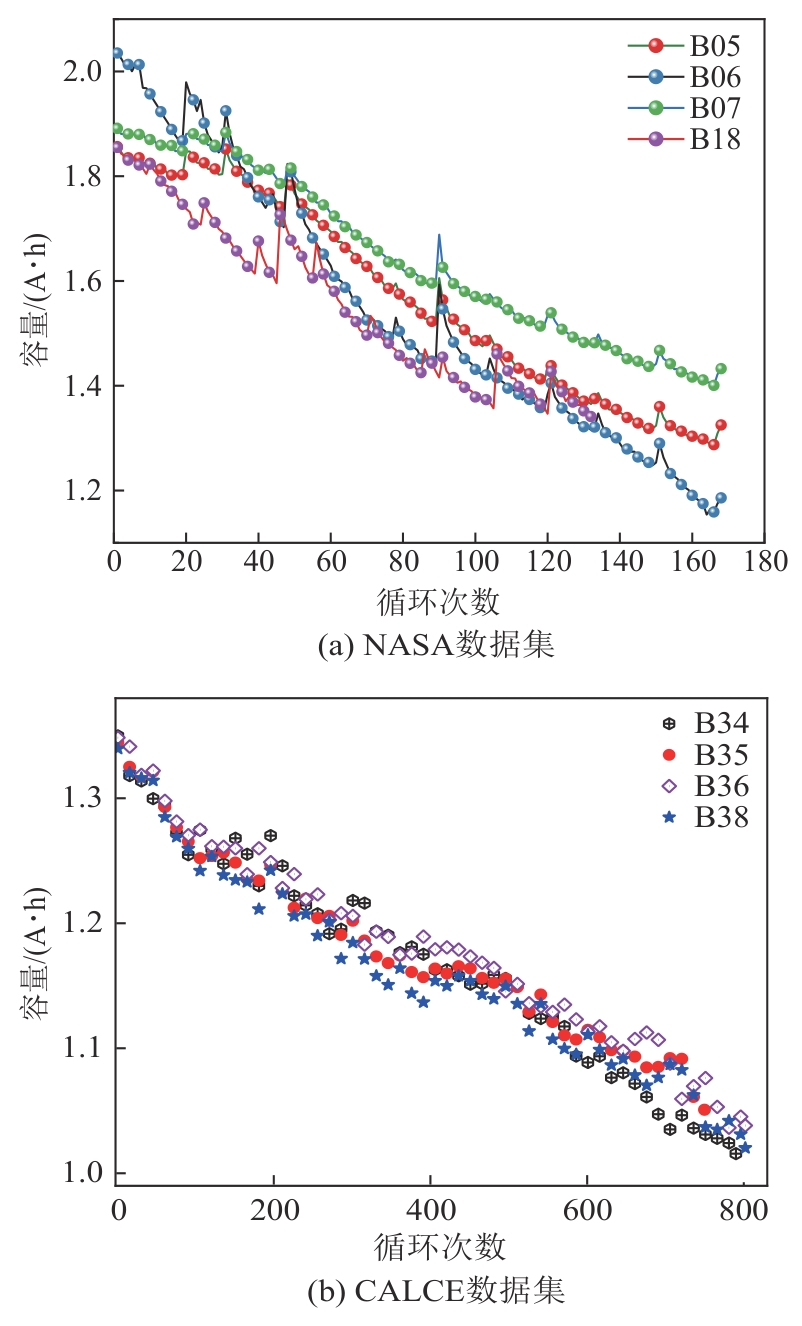
图1 各电池的容量衰减曲线
Fig. 1 Capacity decay curves of each battery
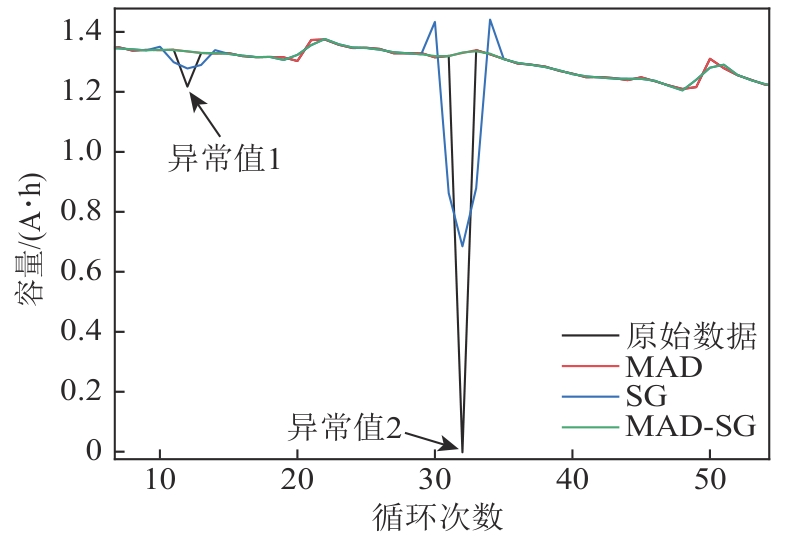
图2 B05电池不同滤波方法处理结果
Fig. 2 Processing results of B05 battery using different filtering methods
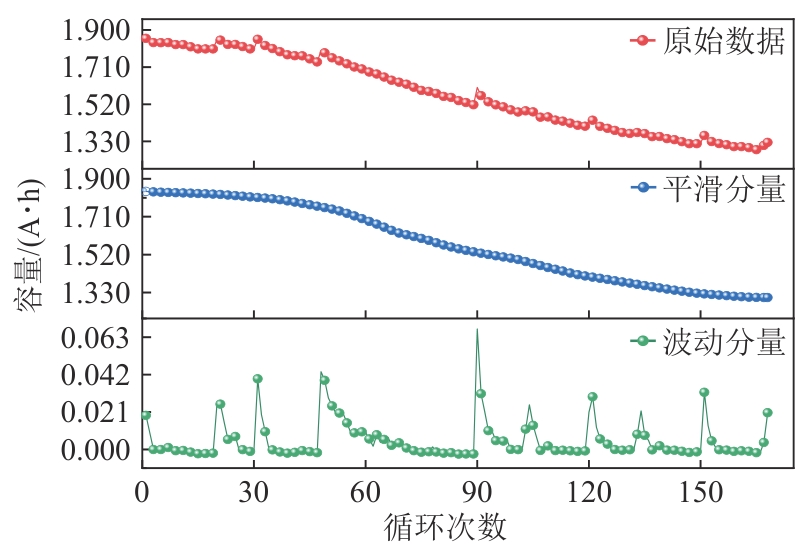
图3 B05电池容量分解结果
Fig. 3 Decomposition results of B05 battery capacity
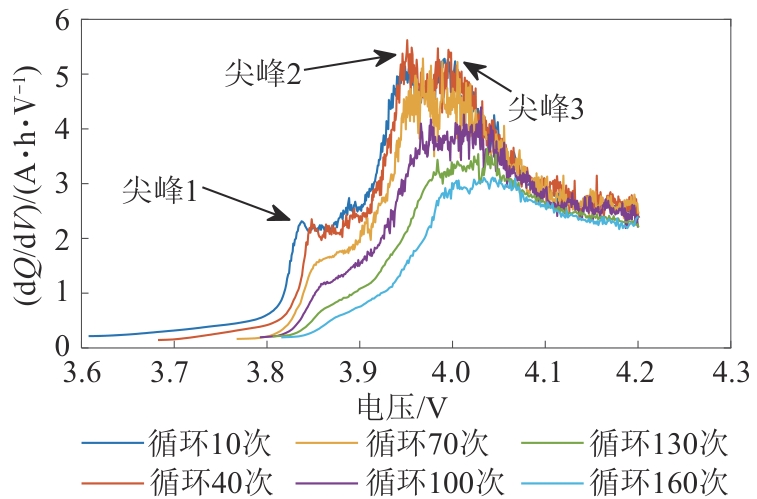
图4 容量增量曲线
Fig. 4 Capacity increment curves
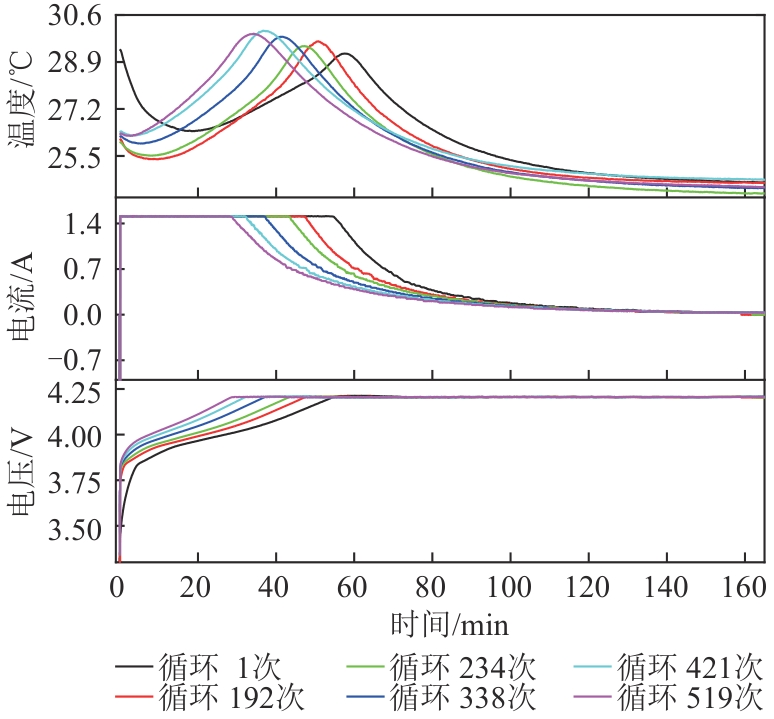
图5 B05电池温度、电流及电压变化曲线
Fig. 5 Variation curves of B05 battery temperature, current and voltage
起始电 压/V | 截止电压/V | ||||||
|---|---|---|---|---|---|---|---|
| 3.6 | 3.7 | 3.8 | 3.9 | 4.0 | 4.1 | 4.2 | |
| 3.5 | 0.616 4 | 0.646 3 | 0.775 8 | 0.902 6 | 0.932 9 | 0.936 6 | 0.937 5 |
| 3.6 | — | 0.686 9 | 0.796 6 | 0.908 7 | 0.933 6 | 0.936 8 | 0.937 4 |
| 3.7 | — | — | 0.835 6 | 0.918 8 | 0.934 5 | 0.936 7 | 0.937 0 |
| 3.8 | — | — | — | 0.928 4 | 0.935 2 | 0.936 1 | 0.935 8 |
| 3.9 | — | — | — | — | 0.934 1 | 0.933 2 | 0.931 6 |
| 4.0 | — | — | — | — | — | 0.917 8 | 0.908 8 |
| 4.1 | — | — | — | — | — | — | 0.880 6 |
表1 等电压差充电时间与电池容量相关性
Tab. 1 Correlation between charging time at constant voltage difference and battery capacity
起始电 压/V | 截止电压/V | ||||||
|---|---|---|---|---|---|---|---|
| 3.6 | 3.7 | 3.8 | 3.9 | 4.0 | 4.1 | 4.2 | |
| 3.5 | 0.616 4 | 0.646 3 | 0.775 8 | 0.902 6 | 0.932 9 | 0.936 6 | 0.937 5 |
| 3.6 | — | 0.686 9 | 0.796 6 | 0.908 7 | 0.933 6 | 0.936 8 | 0.937 4 |
| 3.7 | — | — | 0.835 6 | 0.918 8 | 0.934 5 | 0.936 7 | 0.937 0 |
| 3.8 | — | — | — | 0.928 4 | 0.935 2 | 0.936 1 | 0.935 8 |
| 3.9 | — | — | — | — | 0.934 1 | 0.933 2 | 0.931 6 |
| 4.0 | — | — | — | — | — | 0.917 8 | 0.908 8 |
| 4.1 | — | — | — | — | — | — | 0.880 6 |
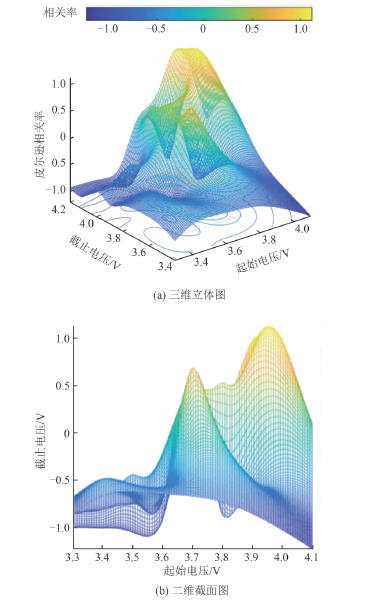
图6 不同电压区间所包含的面积与电池容量相关性
Fig. 6 Correlation between area under different voltage intervals and battery capacity
| 滤波方法 | F1 | F2 | F3 | F4 | F5 | F6 |
|---|---|---|---|---|---|---|
| 未处理 | 0.674 3 | 0.673 2 | -0.609 7 | -0.597 4 | 0.665 8 | 0.683 7 |
| MAD | 0.805 1 | 0.829 8 | -0.800 2 | -0.787 2 | 0.781 7 | 0.735 6 |
| SG | 0.882 3 | 0.891 9 | -0.864 8 | -0.857 9 | 0.868 2 | 0.876 3 |
| MAD-SG | 0.937 5 | 0.936 8 | -0.942 5 | -0.941 5 | 0.946 6 | 0.927 2 |
表2 不同特征的相关性分析
Tab. 2 Correlation analysis of different features
| 滤波方法 | F1 | F2 | F3 | F4 | F5 | F6 |
|---|---|---|---|---|---|---|
| 未处理 | 0.674 3 | 0.673 2 | -0.609 7 | -0.597 4 | 0.665 8 | 0.683 7 |
| MAD | 0.805 1 | 0.829 8 | -0.800 2 | -0.787 2 | 0.781 7 | 0.735 6 |
| SG | 0.882 3 | 0.891 9 | -0.864 8 | -0.857 9 | 0.868 2 | 0.876 3 |
| MAD-SG | 0.937 5 | 0.936 8 | -0.942 5 | -0.941 5 | 0.946 6 | 0.927 2 |
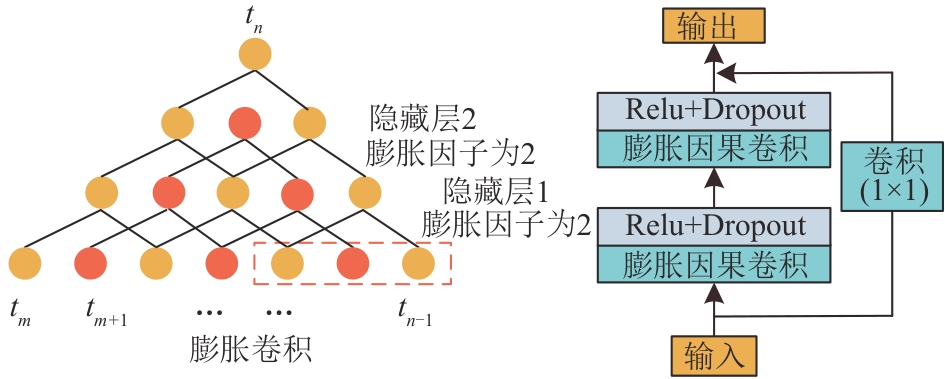
图7 时间卷积网络原理架构
Fig. 7 Diagram of temporal convolutional network principle
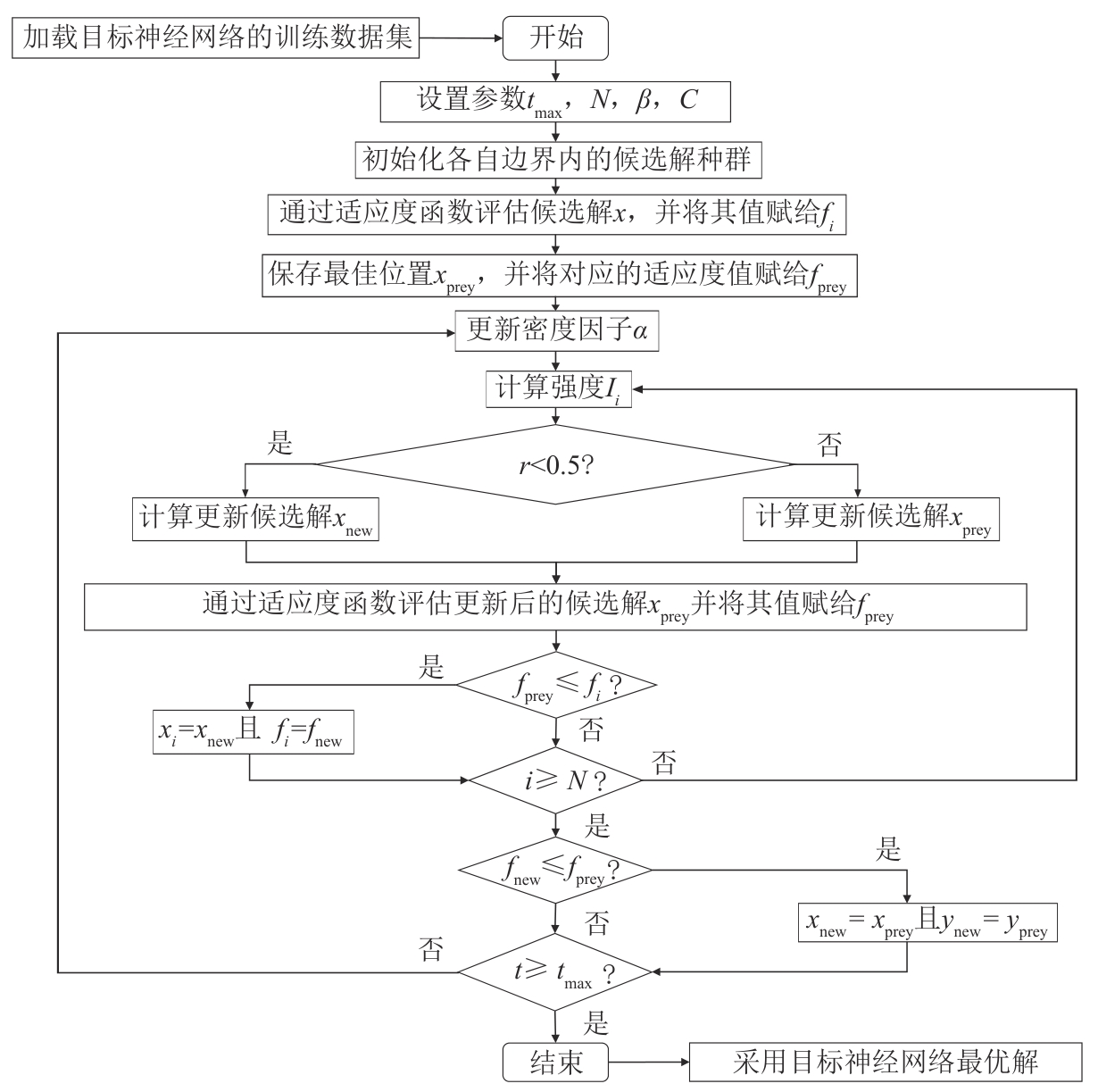
图8 SA-HBA的优化过程示意图
Fig. 8 Schematic diagram of SA-HBA optimization process
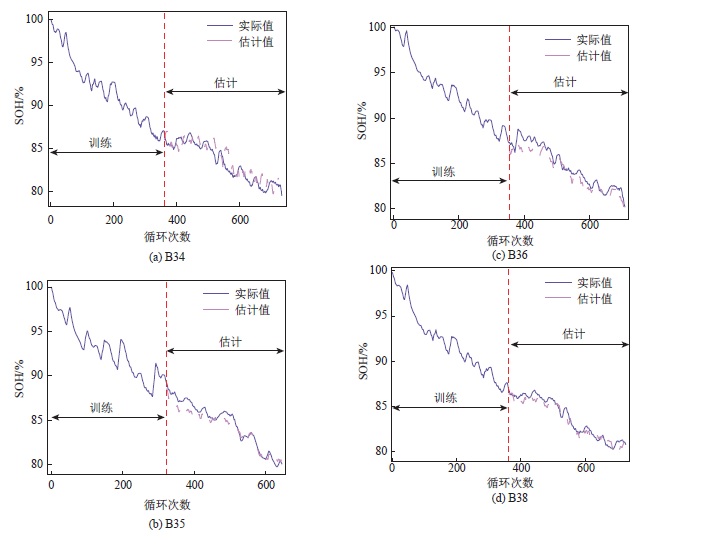
图9 不同电池SOH估算结果
Fig. 9 SOH estimation results of different batteries
| 电池型号 | RMSE | MAE |
|---|---|---|
| B34 | 0.006 2 | 0.005 1 |
| B35 | 0.006 4 | 0.005 2 |
| B36 | 0.006 9 | 0.006 2 |
| B38 | 0.005 6 | 0.004 8 |
表3 不同电池的SOH估计误差分析
Tab. 3 SOH estimation error analysis of different batteries
| 电池型号 | RMSE | MAE |
|---|---|---|
| B34 | 0.006 2 | 0.005 1 |
| B35 | 0.006 4 | 0.005 2 |
| B36 | 0.006 9 | 0.006 2 |
| B38 | 0.005 6 | 0.004 8 |
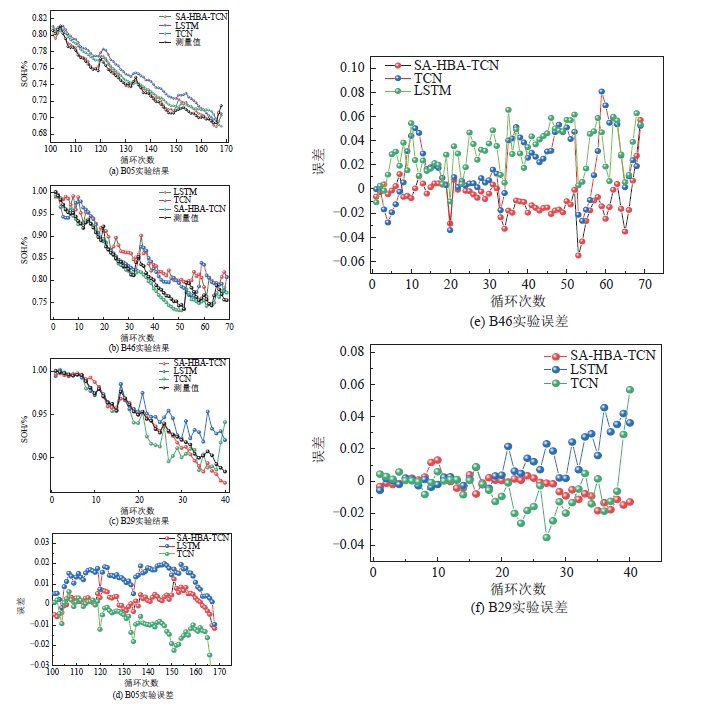
图10 不同工况下不同电池的SOH估算结果及误差
Fig. 10 SOH estimation results and errors of different batteries under different operating conditions
| 电池型号 | 模型 | RMSE | MAE |
|---|---|---|---|
| B05 | SA-HBA-TCN | 0.006 2 | 0.005 1 |
| TCN | 0.013 1 | 0.010 1 | |
| LSTM | 0.031 4 | 0.026 5 | |
| B46 | SA-HBA-TCN | 0.006 4 | 0.005 3 |
| TCN | 0.013 8 | 0.011 3 | |
| LSTM | 0.039 1 | 0.028 6 | |
| B29 | SA-HBA-TCN | 0.006 7 | 0.005 8 |
| TCN | 0.012 9 | 0.010 9 | |
| LSTM | 0.042 2 | 0.035 9 |
表4 不同工况下不同电池的SOH估计误差分析
Tab. 4 SOH estimation error analysis of different batteries under different operating conditions
| 电池型号 | 模型 | RMSE | MAE |
|---|---|---|---|
| B05 | SA-HBA-TCN | 0.006 2 | 0.005 1 |
| TCN | 0.013 1 | 0.010 1 | |
| LSTM | 0.031 4 | 0.026 5 | |
| B46 | SA-HBA-TCN | 0.006 4 | 0.005 3 |
| TCN | 0.013 8 | 0.011 3 | |
| LSTM | 0.039 1 | 0.028 6 | |
| B29 | SA-HBA-TCN | 0.006 7 | 0.005 8 |
| TCN | 0.012 9 | 0.010 9 | |
| LSTM | 0.042 2 | 0.035 9 |
| [1] | 李沂洹,李慷,余渐 .锂离子电池荷电状态与健康状态估计方法[J].发电技术,2021,42(5):537-546. doi:10.12096/j.2096-4528.pgt.21074 |
| LI Y H, LI K, YU J .Estimation approaches for states of charge and health of lithium-ion battery[J].Power Generation Technology,2021,42(5):537-546. doi:10.12096/j.2096-4528.pgt.21074 | |
| [2] | 刘萍,李泽文,蔡雨思,等 .基于等效电路模型和数据驱动模型融合的SOC和SOH联合估计方法[J].电工技术学报,2024,39(10):3232-3243. |
| LIU P, LI Z W, CAI Y S,et al .Joint estimation method of SOC and SOH based on fusion of equivalent circuit model and data-driven model[J].Transactions of China Electrotechnical Society,2024,39(10):3232-3243. | |
| [3] | 向铭,何怡刚,张慧 .基于改进集成经验模态分解和高斯过程回归的锂离子电池剩余容量及寿命预测方法[J].电测与仪表,2023,60(9):27-33. |
| XIANG M, HE Y G, ZHANG H .Capacity and remaining useful life prediction of lithium-ion battery based on MEEMD and GPR[J].Electrical Measurement & Instrumentation,2023,60(9):27-33. | |
| [4] | 宋海飞,王乐红,原义栋,等 .基于改进自适应卡尔曼滤波算法的锂离子电池荷电状态估计[J].电力系统保护与控制,2024,52(20):72-82. |
| SONG H F, WANG L H, YUAN Y D,et al .State of charge estimation of lithium-ion batteries based on improved adaptive Kalman filter algorithm[J].Power System Protection and Control,2024,52(20):72-82. | |
| [5] | 步传宇,姜昆,任军,等 .基于改进型ASRCKF算法的锂离子电池荷电状态估计[J].广东电力,2020,33(10):16-25. |
| BU C Y, JIANG K, REN J,et al .Estimation of SOC of lithium-ion battery based on improved ASRCKF[J].Guangdong Electric Power,2020,33(10):16-25. | |
| [6] | 李强龙,孙建瑞,赵坤,等 .基于IALO-SVR的锂电池健康状态预测[J].电子测量与仪器学报,2022,36(1):204-211. |
| LI Q L, SUN J R, ZHAO K,et al .Prediction for the state of health of lithium-ion batteries based on IALO-SVR[J].Journal of Electronic Measurement and Instrumentation,2022,36(1):204-211. | |
| [7] | 薄利明,郑惠萍,张世锋,等 .锂电池健康状态均衡技术综述[J].电测与仪表,2023,60(4):11-18. |
| BO L M, ZHENG H P, ZHANG S F,et al .Review on health state equalization technology for lithium batteries[J].Electrical Measurement & Instrumentation,2023,60(4):11-18. | |
| [8] | 赵珈卉,田立亭,程林 .锂离子电池状态估计与剩余寿命预测方法综述[J].发电技术,2023,44(1):1-17. |
| ZHAO J H, TIAN L T, CHENG L .Review on state estimation and remaining useful life prediction methods for lithium-ion battery[J].Power Generation Technology,2023,44(1):1-17. | |
| [9] | BARTLETT A, MARCICKI J, ONORI S,et al .Electrochemical model-based state of charge and capacity estimation for a composite electrode lithium-ion battery[J].IEEE Transactions on Control Systems Technology,2016,24(2):384-399. |
| [10] | LI J, ADEWUYI K, LOTFI N,et al .A single particle model with chemical/mechanical degradation physics for lithium ion battery state of health (SOH) estimation[J].Applied Energy,2018,212:1178-1190. doi:10.1016/j.apenergy.2018.01.011 |
| [11] | SALDAÑA G, MARTÍN J I S, ZAMORA I,et al .Empirical electrical and degradation model for electric vehicle batteries[J].IEEE Access,2020,8:155576-155589. doi:10.1109/access.2020.3019477 |
| [12] | YANG F, SONG X, DONG G,et al .A coulombic efficiency-based model for prognostics and health estimation of lithium-ion batteries[J].Energy,2019,171:1173-1182. doi:10.1016/j.energy.2019.01.083 |
| [13] | SINGH P, CHEN C, TAN C M,et al .Semi-empirical capacity fading model for SOH estimation of Li-ion batteries[J].Applied Sciences,2019,9(15):3012. doi:10.3390/app9153012 |
| [14] | LAI X, WANG S, MA S,et al .Parameter sensitivity analysis and simplification of equivalent circuit model for the state of charge of lithium-ion batteries[J].Electrochimica Acta,2020,330:135239. doi:10.1016/j.electacta.2019.135239 |
| [15] | CUI Z, KANG L, LI L,et al .A hybrid neural network model with improved input for state of charge estimation of lithium-ion battery at low temperatures[J].Renewable Energy,2022,198:1328-1340. doi:10.1016/j.renene.2022.08.123 |
| [16] | YU Z, HUAI R, LI H .CPSO-based parameter-identification method for the fractional-order modeling of lithium-ion batteries[J].IEEE Transactions on Power Electronics,2021,36(10):11109-11123. doi:10.1109/tpel.2021.3073810 |
| [17] | LI D, LI S, ZHANG S,et al .Aging state prediction for supercapacitors based on heuristic Kalman filter optimization extreme learning machine[J].Energy,2022,250:123773. doi:10.1016/j.energy.2022.123773 |
| [18] | REN P, WANG S, CHEN X,et al .Fusion estimation strategy based on dual adaptive Kalman filtering algorithm for the state of charge and state of health of hybrid electric vehicle Li-ion batteries[J].International Journal of Energy Research,2022,46(6):7374-7388. doi:10.1002/er.7643 |
| [19] | GOU B, XU Y, FENG X .State-of-health estimation and remaining-useful-life prediction for lithium-ion battery using a hybrid data-driven method[J].IEEE Transactions on Vehicular Technology,2020,69(10):10854-10867. doi:10.1109/tvt.2020.3014932 |
| [20] | SEVERSON K A, ATTIA P M, JIN N,et al .Data-driven prediction of battery cycle life before capacity degradation[J].Nature Energy,2019,4:383-391. doi:10.1038/s41560-019-0356-8 |
| [21] | LI Q, LI D, ZHAO K,et al .State of health estimation of lithium-ion battery based on improved ant lion optimization and support vector regression[J].Journal of Energy Storage,2022,50:104215. doi:10.1016/j.est.2022.104215 |
| [22] | SUN H, SUN J, ZHAO K,et al .Data-driven ICA-Bi-LSTM-combined lithium battery SOH estimation[J].Mathematical Problems in Engineering,2022,2022(1):9645892. doi:10.1155/2022/9645892 |
| [23] | 尚玉朝,刘春豪,王凯 .基于融合优化算法的超级电容器健康状态预测模型[J/OL].发电技术,1-11[2025-01-17].. doi:10.2139/ssrn.5114211 |
| SHANG Y Z, LIU C H, WANG K .Supercapacitor health state prediction model based on fusion optimization algorithm[J/OL].Power Generation Technology,1-11[2025-01-17].. doi:10.2139/ssrn.5114211 | |
| [24] | QU W, SHEN W, LIU J .A joint grey relational analysis based state of health estimation for lithium ion batteries considering temperature effects[J].Journal of Energy Storage,2021,42:103102. doi:10.1016/j.est.2021.103102 |
| [25] | 宋显华,姚全正 .基于片段充电数据和DEKF-WNN-WLSTM的锂电池健康状态实时估计[J].电工技术学报,2024,39(5):1565-1576. |
| SONG X H, YAO Q Z .Real-time state of health estimation for lithium-ion batteries based on daily segment charging data and dual extended Kalman filters wavelet neural network-wavelet long short-term memory neural network[J].Transactions of China Electrotechnical Society,2024,39(5):1565-1576. | |
| [26] | 史宏思,孙新伟,王凯 .基于电化学阻抗谱的锂离子电池健康状态估计[J/OL].发电技术,1-15[2024-07-16].. doi:10.3390/en16155682 |
| 1502.008.html. SHI H S, SUN X W, WANG K .Estimation of the state of health of lithium‑ion batteries based on electrochemical impedance spectroscopy[J/OL].Power Generation Technology,1-15[2024-07-16].. doi:10.3390/en16155682 | |
| [27] | 顾菊平,蒋凌,张新松,等 .基于特征提取的锂离子电池健康状态评估及影响因素分析[J].电工技术学报,2023,38(19):5330-5342. |
| GU J P, JIANG L, ZHANG X S,et al .Estimation and influencing factor analysis of lithium-ion batteries state of health based on features extraction[J].Transactions of China Electrotechnical Society,2023,38(19):5330-5342. | |
| [28] | 陈璐,于仲安,熊莹燕 .不同温度下基于PSO-LSSVM的锂电池SOH估计与RUL预测[J].传感器与微系统,2023,42(6):141-145. |
| CHEN L, YU Z A, XIONG Y Y .SOH estimation and RUL prediction of Li battery based on PSO-LSSVM at different temperatures[J].Transducer and Microsystem Technologies,2023,42(6):141-145. | |
| [29] | 胡慧敏,庞知非 .车用锂离子电池健康状态估计[J].汽车实用技术,2023,48(20):1-4. |
| HU H M, PANG Z F .State of health estimation of lithium-ion batteries for vehicles[J].Automobile Applied Technology,2023,48(20):1-4. | |
| [30] | 刘芊彤,邢远秀 .基于VMD-PSO-GRU模型的锂离子电池剩余寿命预测[J].储能科学与技术,2023,12(1):236-246. |
| LIU Q T, XING Y X .Remaining life prediction of lithium-ion battery based on VMD-PSO-GRU model[J].Energy Storage Science and Technology,2023,12(1):236-246. | |
| [31] | 李凯,胡丽,宋婷婷 .基于CNN-Bi-LSTM的锂离子电池健康状态估算[J].山东电力技术,2023,50(10):66-72. |
| LI K, HU L, SONG T T .Health state estimation of lithium-ion batteries based on CNN-Bi-LSTM[J].Shandong Electric Power,2023,50(10):66-72. | |
| [32] | LIU C, ZHANG Y, SUN J,et al .Stacked bidirectional LSTM RNN to evaluate the remaining useful life of supercapacitor[J].International Journal of Energy Research,2022,46(3):3034-3043. doi:10.1002/er.7360 |
| [33] | YI Z, CHEN Z, YIN K,et al .Sensing as the key to the safety and sustainability of new energy storage devices[J].Protection and Control of Modern Power Systems,2023,8(1):27. doi:10.1186/s41601-023-00300-2 |
| [34] | ZHANG H, GAO J, KANG L,et al .State of health estimation of lithium-ion batteries based on modified flower pollination algorithm-temporal convolutional network[J].Energy,2023,283:128742. doi:10.1016/j.energy.2023.128742 |
| [35] | HASHIM F A, HOUSSEIN E H, HUSSAIN K,et al .Honey badger algorithm:new metaheuristic algorithm for solving optimization problems[J].Mathematics and Computers in Simulation,2022,192:84-110. doi:10.1016/j.matcom.2021.08.013 |
| [1] | 展宗波, 任吉平, 丁立平, 孙兆龙, 丁衡, 曹越. 高背压抽凝热电联供系统建模及快速变负荷控制策略研究[J]. 发电技术, 2025, 46(6): 1074-1084. |
| [2] | 罗斌, 白小龙, 臧天磊, 黄燕, 张琳, 李萌, 张雪霞, 蒋永龙. 风光水互补发电系统研究综述[J]. 发电技术, 2025, 46(6): 1097-1111. |
| [3] | 陈锋, 路小敏, 沈冰, 王军鹏. 基于消纳-保供博弈的分布式储能双层规划模型[J]. 发电技术, 2025, 46(6): 1133-1143. |
| [4] | 张萍, 李永强, 杏华良. 基于变分模态分解的平抑风电波动混合储能容量优化配置[J]. 发电技术, 2025, 46(6): 1144-1153. |
| [5] | 李建林, 彭禹宸, 王茜, 姜晓霞, 王垒. 锂离子电池建模研究现状与展望[J]. 发电技术, 2025, 46(5): 857-871. |
| [6] | 邹博, 任建地, 许道明, 邓立生, 廖力达, 肖俊兵. 氯化物熔盐储热技术应用于新能源发电的研究进展[J]. 发电技术, 2025, 46(5): 872-884. |
| [7] | 马宁, 赵攀, 刘艾杰, 许文盼, 王江峰. 纯氢补燃型和天然气补燃型压缩空气储能系统特性与㶲经济性对比[J]. 发电技术, 2025, 46(5): 885-896. |
| [8] | 董福贵, 张伟. 考虑容量价值的独立新型储能电站运行策略优化研究[J]. 发电技术, 2025, 46(5): 897-908. |
| [9] | 庄坤, 汪中宏, 张一凡, 殷文倩, 雷茂云, 朱静, 李锋, 叶季蕾. 整县屋顶分布式光伏发电经济性模型及关键影响因素[J]. 发电技术, 2025, 46(5): 950-958. |
| [10] | 罗宗龙, 刘世林. 基于信息间隙决策理论鲁棒模型的户用微电网优化运行[J]. 发电技术, 2025, 46(4): 705-714. |
| [11] | 鲁亚楠, 徐涛, 刘泽楠. 制氢系统对双馈风机串补系统次同步振荡特性的影响[J]. 发电技术, 2025, 46(4): 715-726. |
| [12] | 马浩然, 袁至, 王维庆, 李骥. 考虑数据中心和储能接入的主动配电网经济调度研究[J]. 发电技术, 2025, 46(4): 748-757. |
| [13] | 王杰, 徐立军, 李笑竹, 樊小朝, 古丽扎提∙海拉提null, 王维庆. 计及灵活性不足风险的配电网智能软开关与多类型共享储能协调优化[J]. 发电技术, 2025, 46(4): 758-767. |
| [14] | 卫广宇, 应笑冬, 姚延军, 杨小芳, 翁楚迪, 彭勇刚, 李海龙. 计及荷电状态的并网型直流微电网功率协同控制策略[J]. 发电技术, 2025, 46(4): 788-796. |
| [15] | 刘佳佳, 巨星. 弃电热储能光伏-光热复合发电系统技术经济性分析[J]. 发电技术, 2025, 46(4): 807-817. |
| 阅读次数 | ||||||
|
全文 |
|
|||||
|
摘要 |
|
|||||
