

发电技术 ›› 2025, Vol. 46 ›› Issue (6): 1123-1132.DOI: 10.12096/j.2096-4528.pgt.24251
• 新能源 • 上一篇
王曦, 陈心怡
收稿日期:2024-12-12
修回日期:2025-03-28
出版日期:2025-12-31
发布日期:2025-12-25
作者简介:基金资助:Xi WANG, Xinyi CHEN
Received:2024-12-12
Revised:2025-03-28
Published:2025-12-31
Online:2025-12-25
Supported by:摘要:
目的 海上风电对于实现碳达峰、碳中和目标具有重要意义,但其功率预测较为困难,为此提出了一种融合时序卷积网络(temporal convolutional network,TCN)与Transformer架构的海上风电功率预测新方法。 方法 首先,引入离散余弦变换(discrete cosine transform,DCT)技术,旨在有效提取时间序列数据的频域特征,充分挖掘频域特性来优化特征权重的分配。在此基础上,构建了TCN-Transformer复合模型,该模型能够充分整合时域与经过DCT处理的频域信息,实现对数据的深度学习与精准预测。 结果 选取某海上风电场的2组实际运行数据开展对比实验,结果表明,所提方法不仅在特征提取方面表现出色,还显著地提升了发电功率预测精度,充分验证了其有效性与应用价值。 结论 融合了DCT技术的TCN-Transformer模型在海上风电功率预测方面展现出了卓越的预测性能,相较于其他对比模型,其预测精度得到了显著提升,为海上风电场的高效运行与优化管理提供了有力支持。
中图分类号:
王曦, 陈心怡. 一种基于时序卷积网络-Transformer的海上风电功率预测方法[J]. 发电技术, 2025, 46(6): 1123-1132.
Xi WANG, Xinyi CHEN. Power Prediction Method for Offshore Wind Farms Based on Temporal Convolutional Network-Transformer[J]. Power Generation Technology, 2025, 46(6): 1123-1132.
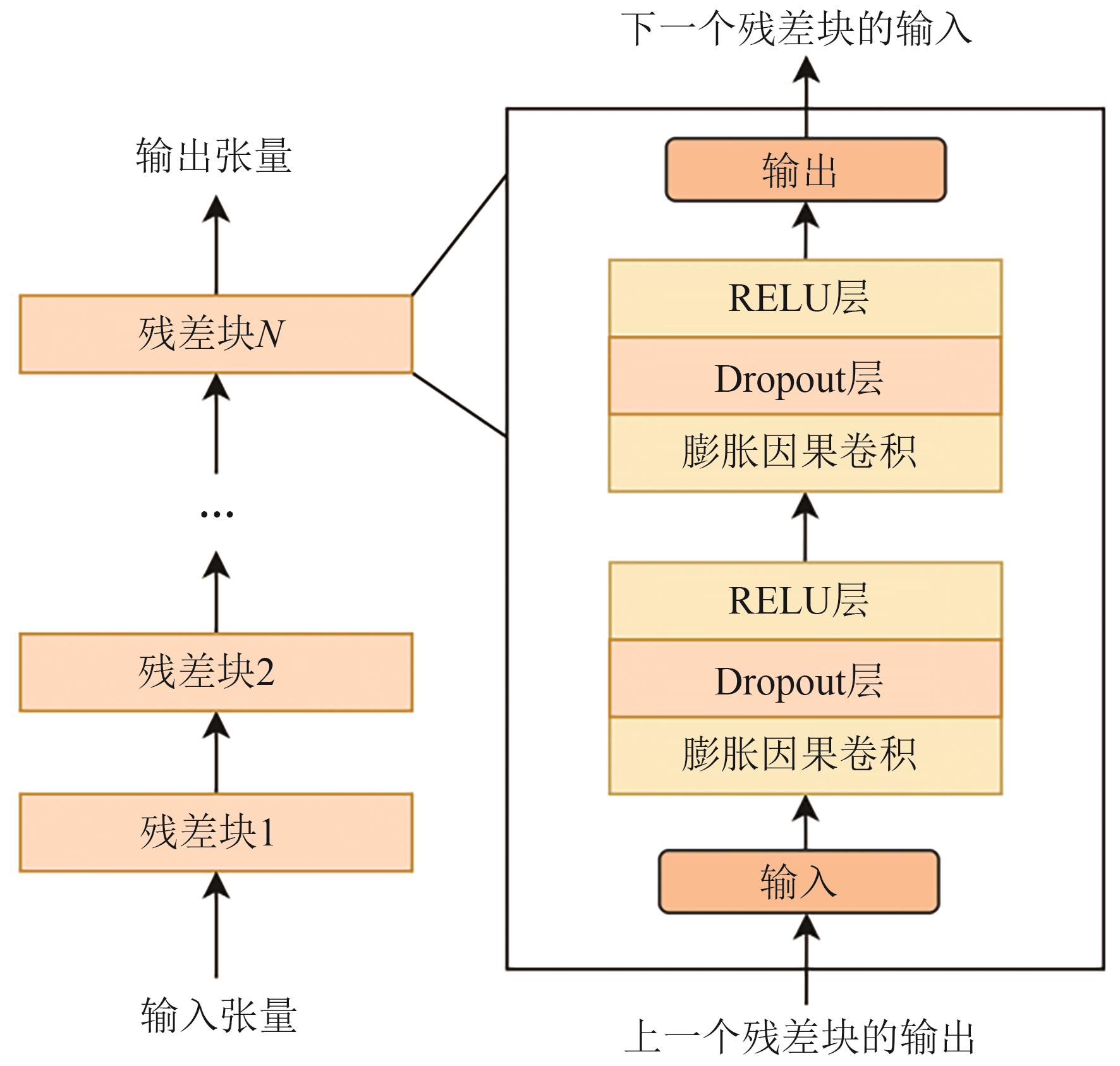
图1 改进TCN模型
Fig. 1 Improved TCN model
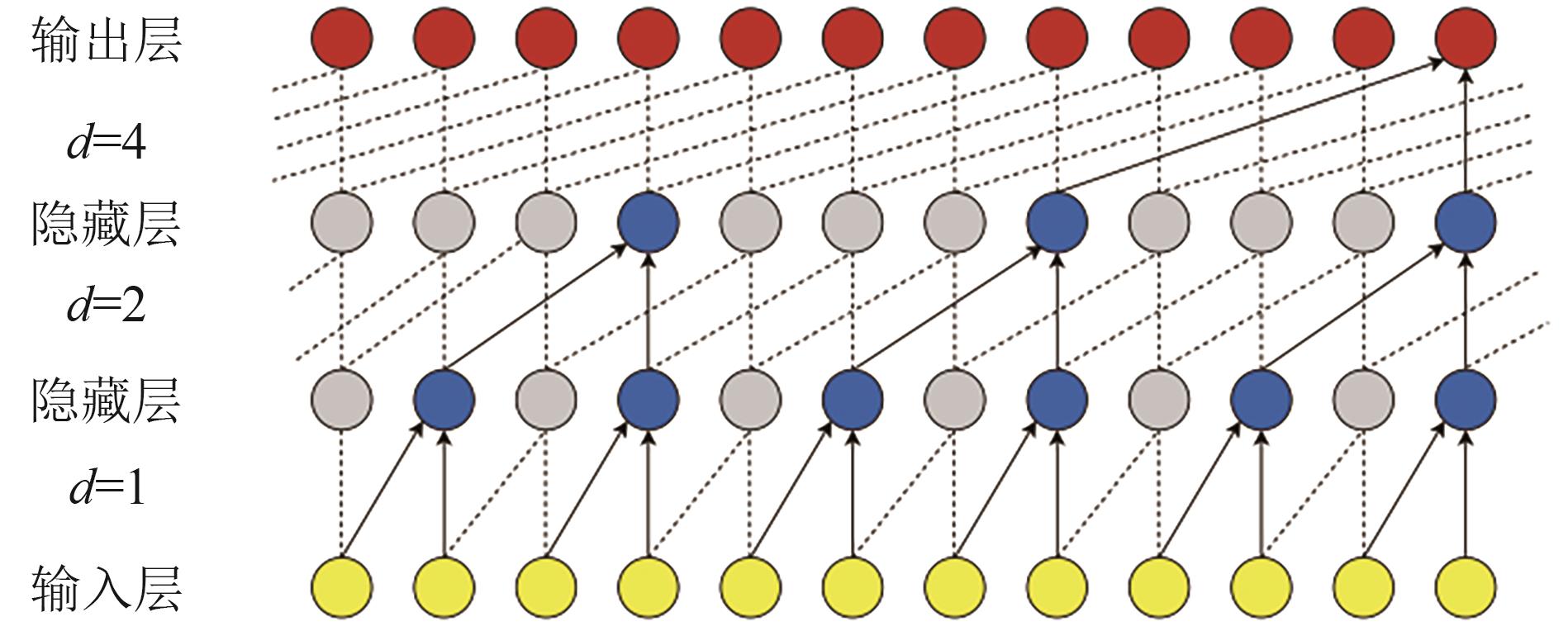
图2 TCN的因果卷积与膨胀卷积
Fig. 2 TCN’s causal and dilated convolution
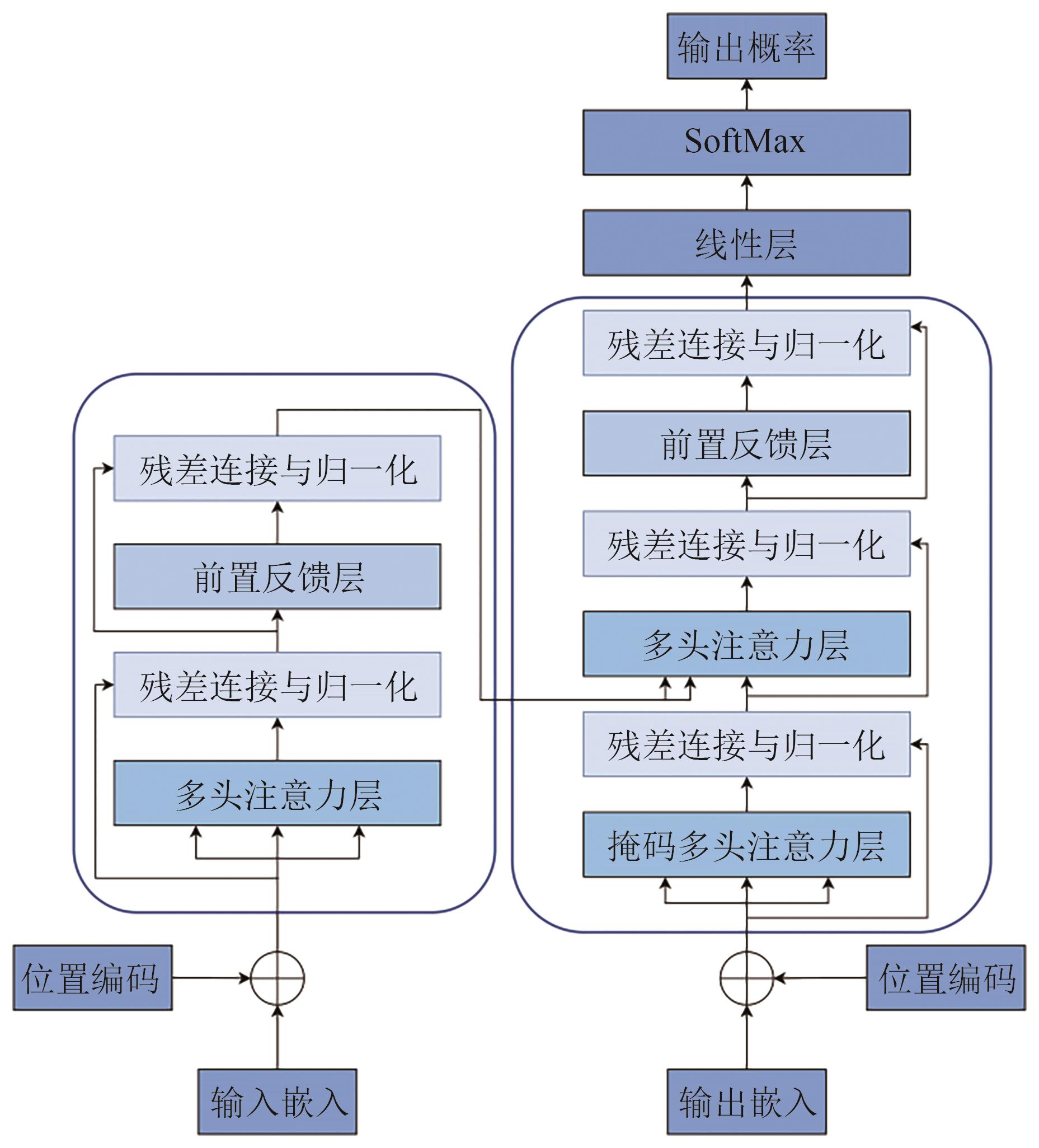
图3 Transformer 结构
Fig. 3 Transformer structure
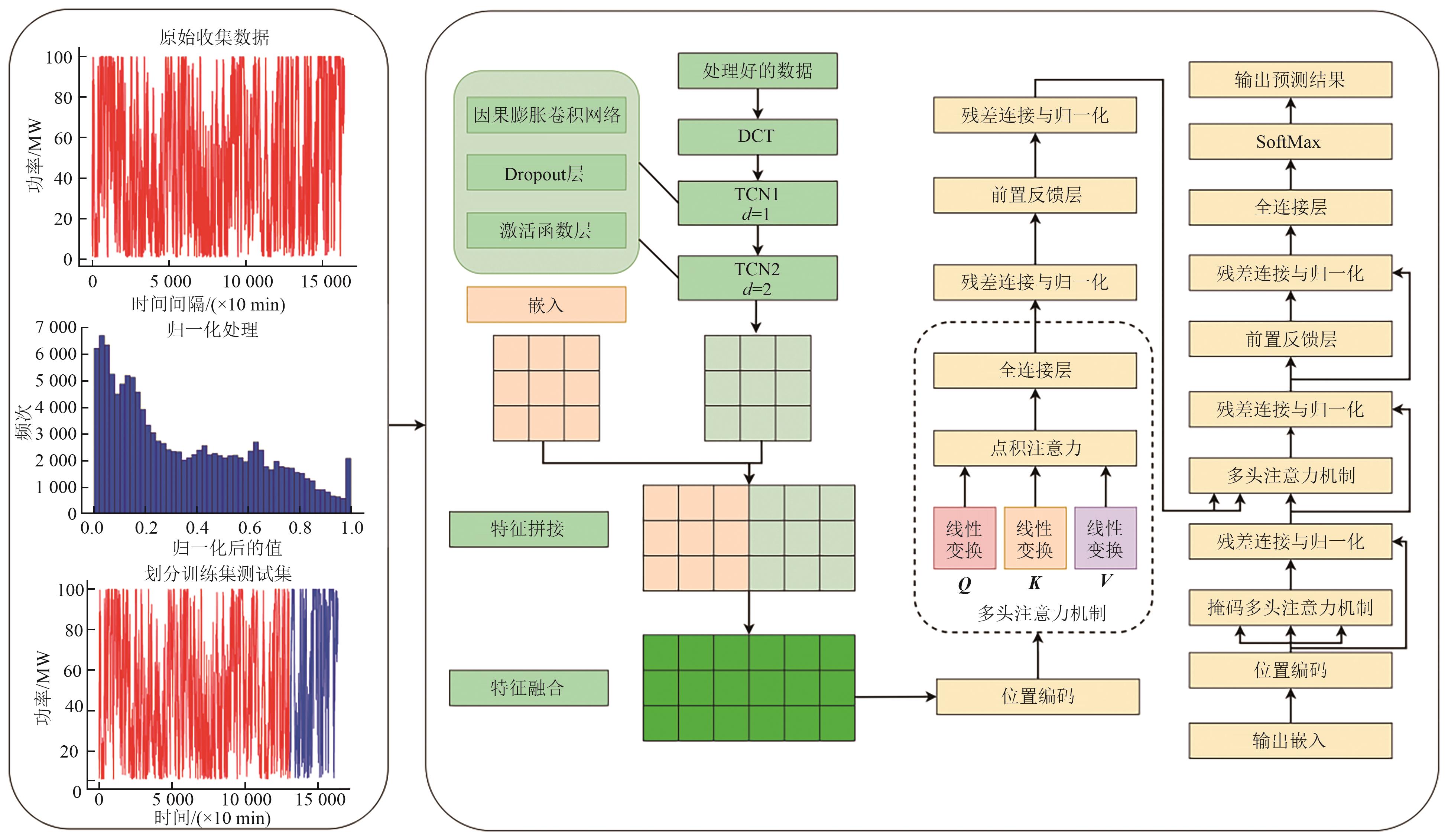
图4 海上风电功率预测流程
Fig. 4 Flowchart of offshore wind power prediction
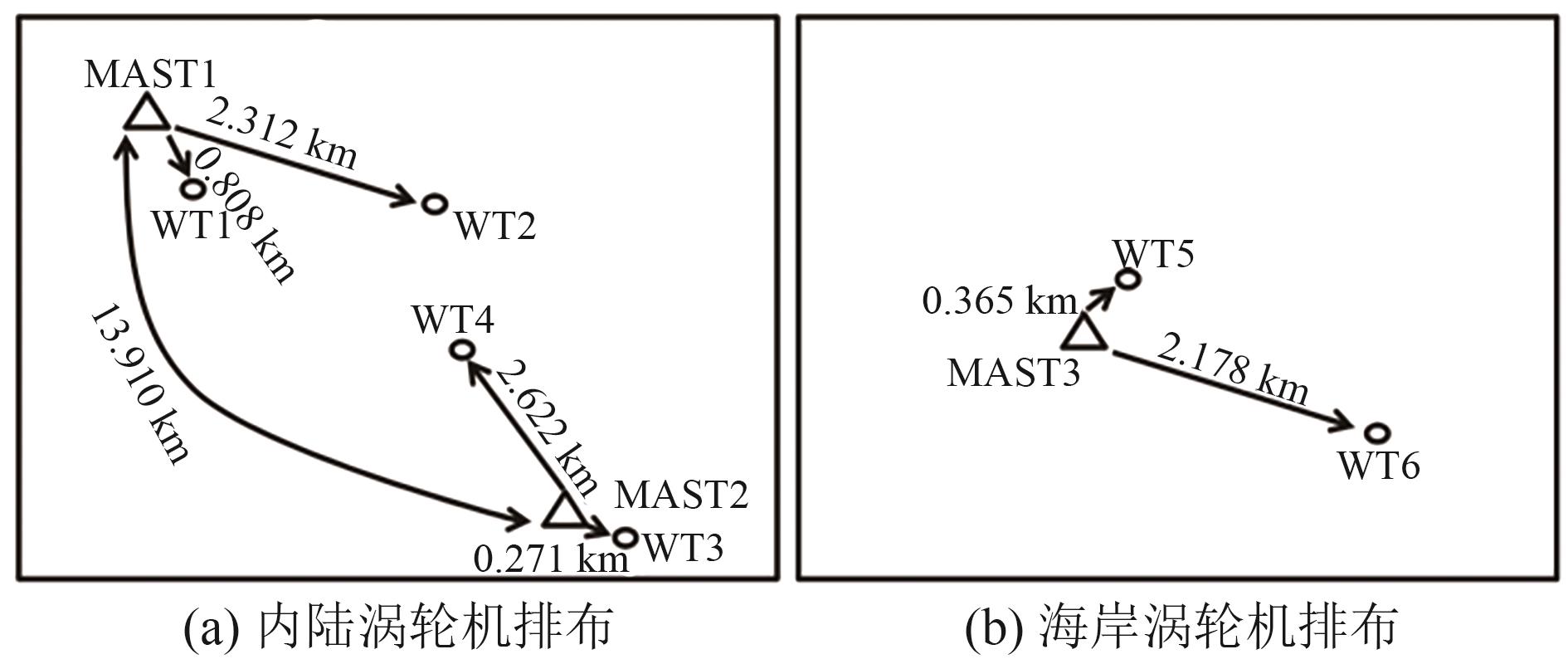
图5 涡轮机和气象塔排布
Fig. 5 Layout of turbines and meteorological towers
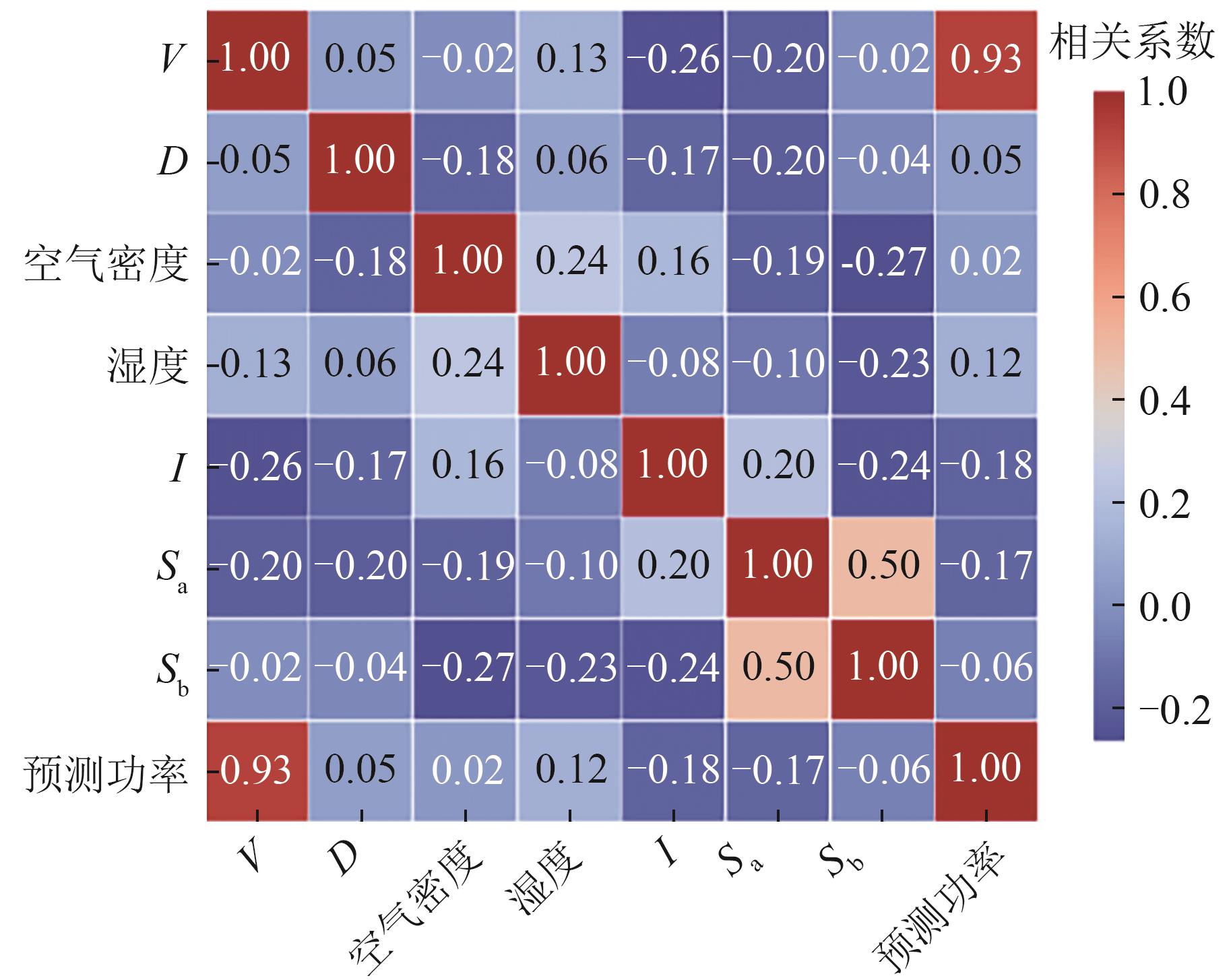
图6 WT5 皮尔逊相关系数矩阵图
Fig. 6 WT5 Pearson correlation coefficient matrix plot
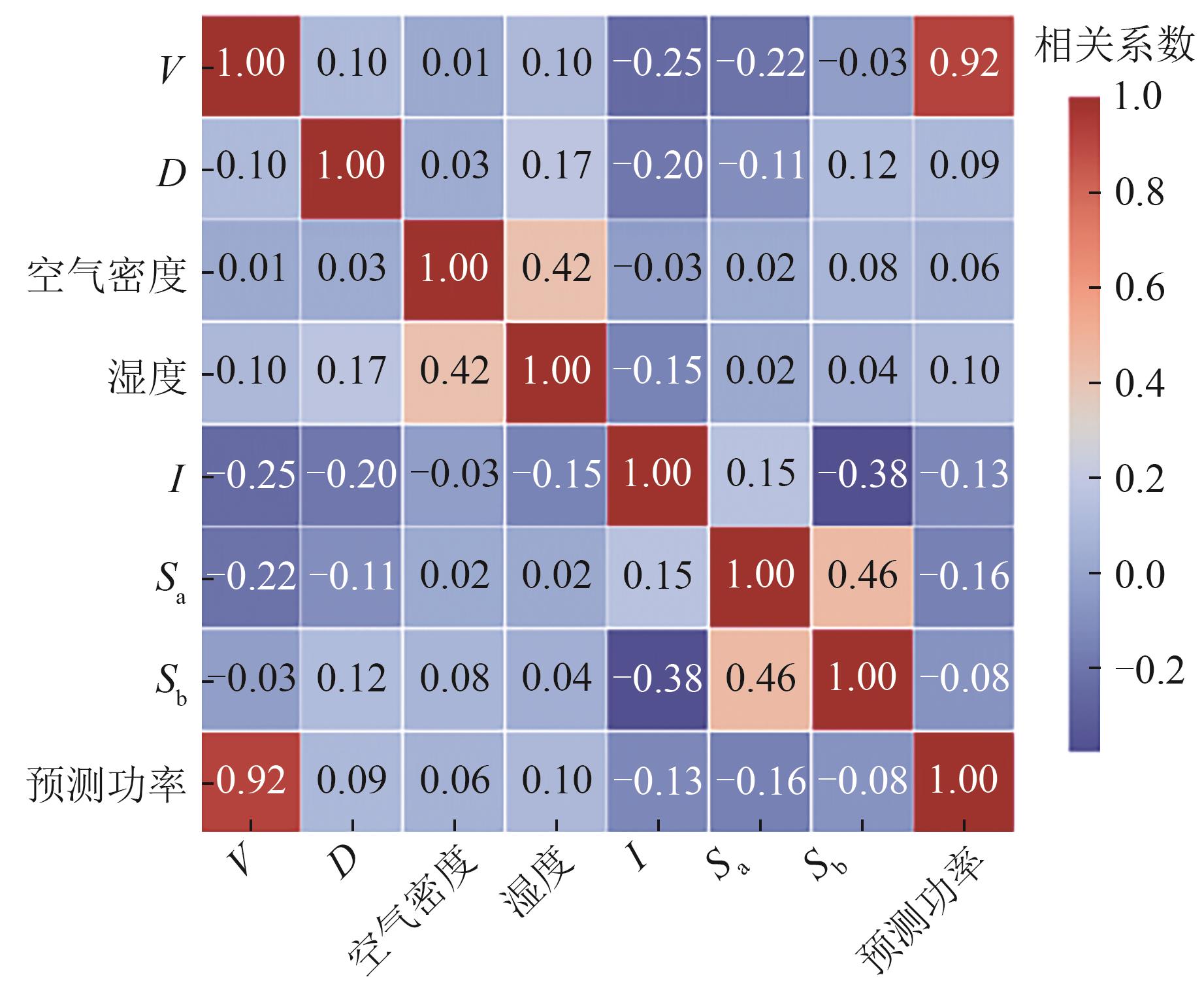
图7 WT6 皮尔逊相关系数矩阵图
Fig. 7 WT6 Pearson correlation coefficient matrix plot
| 参数 | 数值 |
|---|---|
| 批次大小 | 32 |
| 编码器输入特征数量 | 8 |
| 解码器输入特征数量 | 8 |
| 模型输出维度 | 8 |
| 模型维度 | 32 |
| 编码器块数量 | 2 |
| 解码器块数量 | 1 |
| 多头注意力头数 | 5 |
| 注意力因子 | 5 |
| 全连接网络维度 | 32 |
表1 模型参数
Tab. 1 Model parameter
| 参数 | 数值 |
|---|---|
| 批次大小 | 32 |
| 编码器输入特征数量 | 8 |
| 解码器输入特征数量 | 8 |
| 模型输出维度 | 8 |
| 模型维度 | 32 |
| 编码器块数量 | 2 |
| 解码器块数量 | 1 |
| 多头注意力头数 | 5 |
| 注意力因子 | 5 |
| 全连接网络维度 | 32 |
| 模型 | 预测步长/h | R2 | MAE/MW | RMSE/MW | MSE/MW |
|---|---|---|---|---|---|
| CNN | 8 | 0.949 9 | 4.307 4 | 7.517 4 | 56.511 3 |
| 16 | 0.949 0 | 4.403 9 | 7.571 1 | 57.321 6 | |
| 24 | 0.945 5 | 4.984 5 | 7.809 3 | 60.985 2 | |
| LSTM | 8 | 0.942 6 | 5.036 7 | 8.044 9 | 64.720 4 |
| 16 | 0.944 9 | 4.857 5 | 7.869 6 | 61.930 6 | |
| 24 | 0.945 4 | 4.789 6 | 7.821 8 | 61.174 3 | |
| TCN | 8 | 0.934 9 | 5.739 8 | 8.531 2 | 72.958 9 |
| 16 | 0.931 7 | 5.887 5 | 8.742 9 | 76.438 3 | |
| 24 | 0.935 4 | 5.712 1 | 8.537 8 | 72.894 0 | |
| Transformer | 8 | 0.993 6 | 2.033 0 | 2.683 2 | 7.199 6 |
| 16 | 0.988 0 | 2.684 8 | 3.669 6 | 13.466 0 | |
| 24 | 0.993 3 | 2.069 8 | 2.754 3 | 7.586 2 | |
| TCN-Transformer | 8 | 0.991 7 | 2.365 8 | 3.038 5 | 9.233 0 |
| 16 | 0.993 0 | 2.796 5 | 2.796 5 | 7.820 4 | |
| 24 | 0.992 9 | 2.169 1 | 2.821 2 | 7.959 2 | |
| DTC-TCN-Transformer | 8 | 0.994 8 | 1.849 1 | 2.408 9 | 5.803 0 |
| 16 | 0.992 6 | 2.175 0 | 2.882 9 | 8.311 3 | |
| 24 | 0.994 5 | 1.950 0 | 2.487 8 | 6.189 1 |
表2 WT5不同预测模型误差指标
Tab. 2 Error indices in different prediction models for WT5
| 模型 | 预测步长/h | R2 | MAE/MW | RMSE/MW | MSE/MW |
|---|---|---|---|---|---|
| CNN | 8 | 0.949 9 | 4.307 4 | 7.517 4 | 56.511 3 |
| 16 | 0.949 0 | 4.403 9 | 7.571 1 | 57.321 6 | |
| 24 | 0.945 5 | 4.984 5 | 7.809 3 | 60.985 2 | |
| LSTM | 8 | 0.942 6 | 5.036 7 | 8.044 9 | 64.720 4 |
| 16 | 0.944 9 | 4.857 5 | 7.869 6 | 61.930 6 | |
| 24 | 0.945 4 | 4.789 6 | 7.821 8 | 61.174 3 | |
| TCN | 8 | 0.934 9 | 5.739 8 | 8.531 2 | 72.958 9 |
| 16 | 0.931 7 | 5.887 5 | 8.742 9 | 76.438 3 | |
| 24 | 0.935 4 | 5.712 1 | 8.537 8 | 72.894 0 | |
| Transformer | 8 | 0.993 6 | 2.033 0 | 2.683 2 | 7.199 6 |
| 16 | 0.988 0 | 2.684 8 | 3.669 6 | 13.466 0 | |
| 24 | 0.993 3 | 2.069 8 | 2.754 3 | 7.586 2 | |
| TCN-Transformer | 8 | 0.991 7 | 2.365 8 | 3.038 5 | 9.233 0 |
| 16 | 0.993 0 | 2.796 5 | 2.796 5 | 7.820 4 | |
| 24 | 0.992 9 | 2.169 1 | 2.821 2 | 7.959 2 | |
| DTC-TCN-Transformer | 8 | 0.994 8 | 1.849 1 | 2.408 9 | 5.803 0 |
| 16 | 0.992 6 | 2.175 0 | 2.882 9 | 8.311 3 | |
| 24 | 0.994 5 | 1.950 0 | 2.487 8 | 6.189 1 |
| 模型 | 预测步长/h | R2 | MAE/MW | RMSE/MW | MSE/MW |
|---|---|---|---|---|---|
| CNN | 8 | 0.942 1 | 4.918 2 | 7.885 3 | 62.178 0 |
| 16 | 0.941 6 | 4.992 7 | 7.921 5 | 62.750 2 | |
| 24 | 0.941 7 | 5.072 3 | 7.920 8 | 62.739 1 | |
| LSTM | 8 | 0.945 3 | 4.781 6 | 7.664 9 | 58.750 7 |
| 16 | 0.945 0 | 4.776 8 | 7.685 2 | 59.062 3 | |
| 24 | 0.943 4 | 4.908 4 | 7.807 6 | 60.958 6 | |
| TCN | 8 | 0.940 1 | 5.293 7 | 8.039 7 | 64.637 0 |
| 16 | 0.940 5 | 5.344 1 | 8.043 6 | 64.699 7 | |
| 24 | 0.930 6 | 5.978 5 | 8.682 8 | 75.387 5 | |
| Transformer | 8 | 0.994 5 | 1.902 7 | 2.446 5 | 5.985 4 |
| 16 | 0.992 4 | 2.339 4 | 2.870 2 | 8.238 0 | |
| 24 | 0.983 3 | 3.224 1 | 4.258 2 | 18.132 3 | |
| TCN-Transformer | 8 | 0.996 6 | 1.523 4 | 1.930 0 | 5.985 4 |
| 16 | 0.994 3 | 2.481 1 | 3.097 9 | 9.597 0 | |
| 24 | 0.983 3 | 1.730 0 | 2.249 5 | 5.060 3 | |
| DTC-TCN-Transformer | 8 | 0.997 3 | 1.308 7 | 1.710 9 | 2.927 3 |
| 16 | 0.995 8 | 1.639 8 | 2.126 1 | 4.520 1 | |
| 24 | 0.996 0 | 1.554 1 | 2.095 2 | 4.390 0 |
表3 WT6不同预测模型误差指标
Tab. 3 Error indices in different prediction models for WT6
| 模型 | 预测步长/h | R2 | MAE/MW | RMSE/MW | MSE/MW |
|---|---|---|---|---|---|
| CNN | 8 | 0.942 1 | 4.918 2 | 7.885 3 | 62.178 0 |
| 16 | 0.941 6 | 4.992 7 | 7.921 5 | 62.750 2 | |
| 24 | 0.941 7 | 5.072 3 | 7.920 8 | 62.739 1 | |
| LSTM | 8 | 0.945 3 | 4.781 6 | 7.664 9 | 58.750 7 |
| 16 | 0.945 0 | 4.776 8 | 7.685 2 | 59.062 3 | |
| 24 | 0.943 4 | 4.908 4 | 7.807 6 | 60.958 6 | |
| TCN | 8 | 0.940 1 | 5.293 7 | 8.039 7 | 64.637 0 |
| 16 | 0.940 5 | 5.344 1 | 8.043 6 | 64.699 7 | |
| 24 | 0.930 6 | 5.978 5 | 8.682 8 | 75.387 5 | |
| Transformer | 8 | 0.994 5 | 1.902 7 | 2.446 5 | 5.985 4 |
| 16 | 0.992 4 | 2.339 4 | 2.870 2 | 8.238 0 | |
| 24 | 0.983 3 | 3.224 1 | 4.258 2 | 18.132 3 | |
| TCN-Transformer | 8 | 0.996 6 | 1.523 4 | 1.930 0 | 5.985 4 |
| 16 | 0.994 3 | 2.481 1 | 3.097 9 | 9.597 0 | |
| 24 | 0.983 3 | 1.730 0 | 2.249 5 | 5.060 3 | |
| DTC-TCN-Transformer | 8 | 0.997 3 | 1.308 7 | 1.710 9 | 2.927 3 |
| 16 | 0.995 8 | 1.639 8 | 2.126 1 | 4.520 1 | |
| 24 | 0.996 0 | 1.554 1 | 2.095 2 | 4.390 0 |
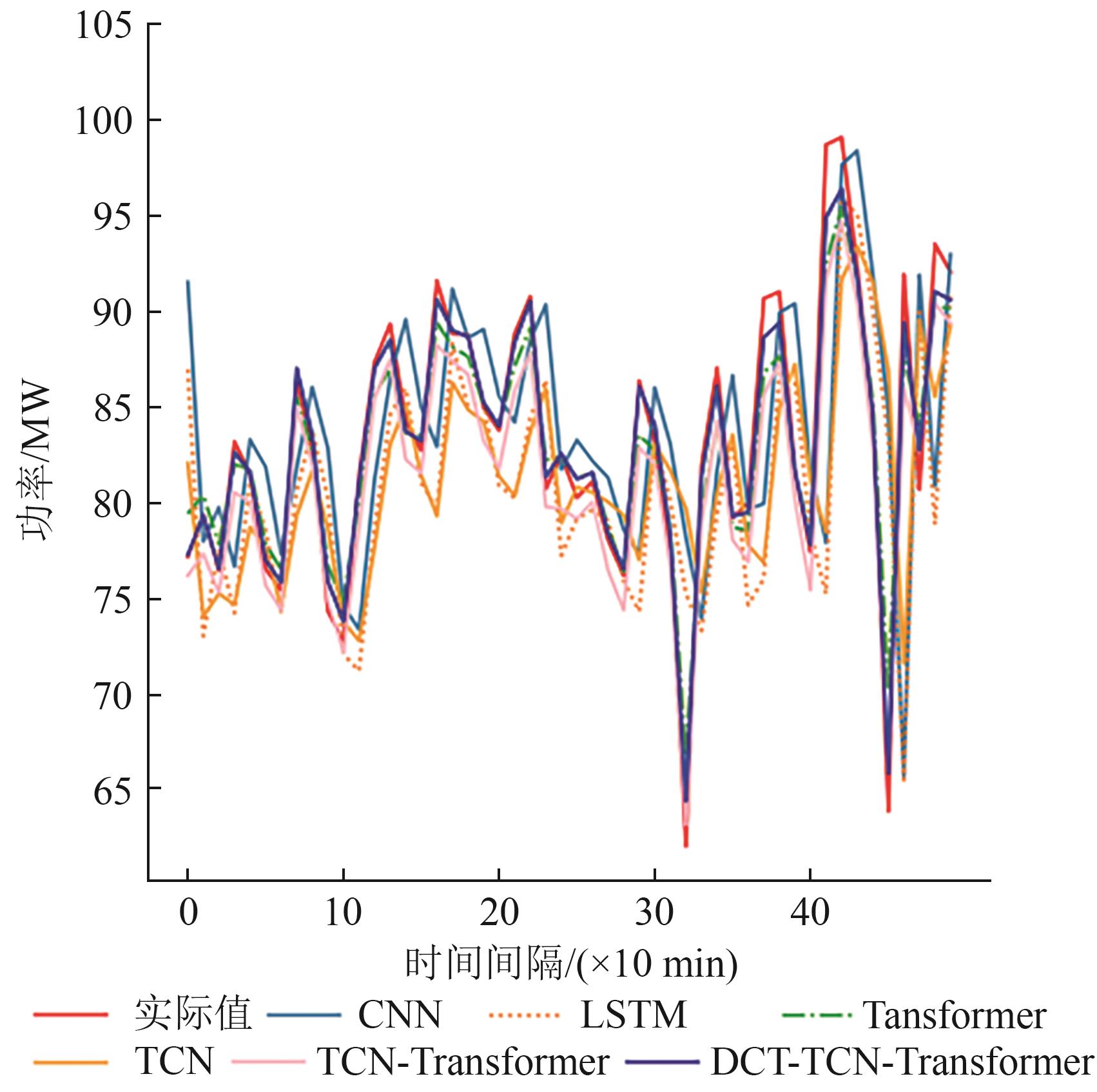
图8 WT5发电功率预测结果
Fig. 8 WT5 power generation prediction results
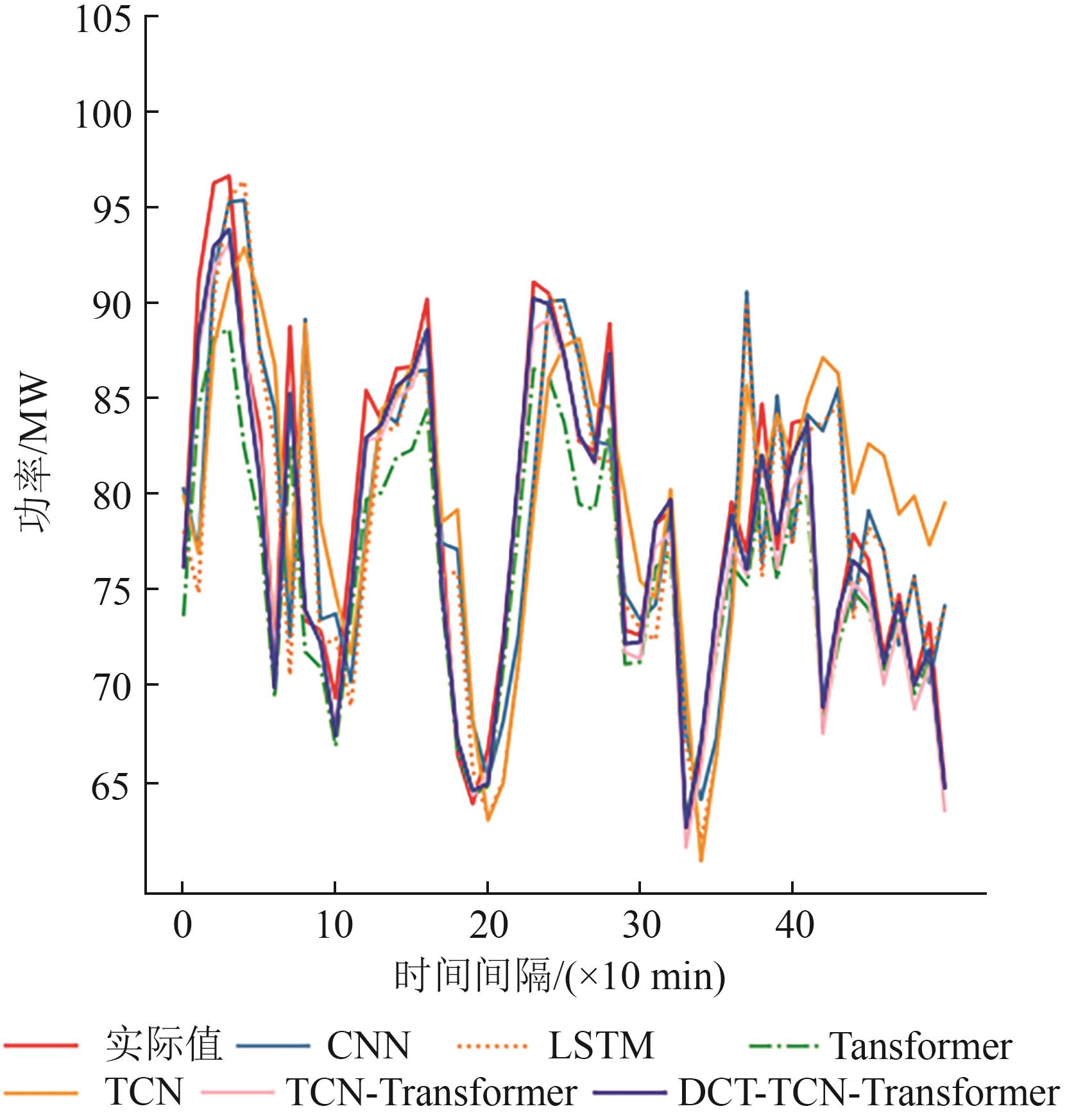
图9 WT6发电功率预测结果
Fig. 9 WT6 power generation prediction results
| 数据集 | 有无风切变 | R2 | MAE/MW | RMSE/MW |
|---|---|---|---|---|
| WT5 | 有 | 0.994 8 | 1.849 1 | 2.408 9 |
| WT5 | 无 | 0.992 7 | 2.258 9 | 2.854 9 |
| WT6 | 有 | 0.997 3 | 1.308 7 | 1.710 9 |
| WT6 | 无 | 0.994 4 | 1.986 5 | 2.453 7 |
表4 有无风切变特征实验结果
Tab. 4 Comparison of experimental results with and without wind shear features
| 数据集 | 有无风切变 | R2 | MAE/MW | RMSE/MW |
|---|---|---|---|---|
| WT5 | 有 | 0.994 8 | 1.849 1 | 2.408 9 |
| WT5 | 无 | 0.992 7 | 2.258 9 | 2.854 9 |
| WT6 | 有 | 0.997 3 | 1.308 7 | 1.710 9 |
| WT6 | 无 | 0.994 4 | 1.986 5 | 2.453 7 |
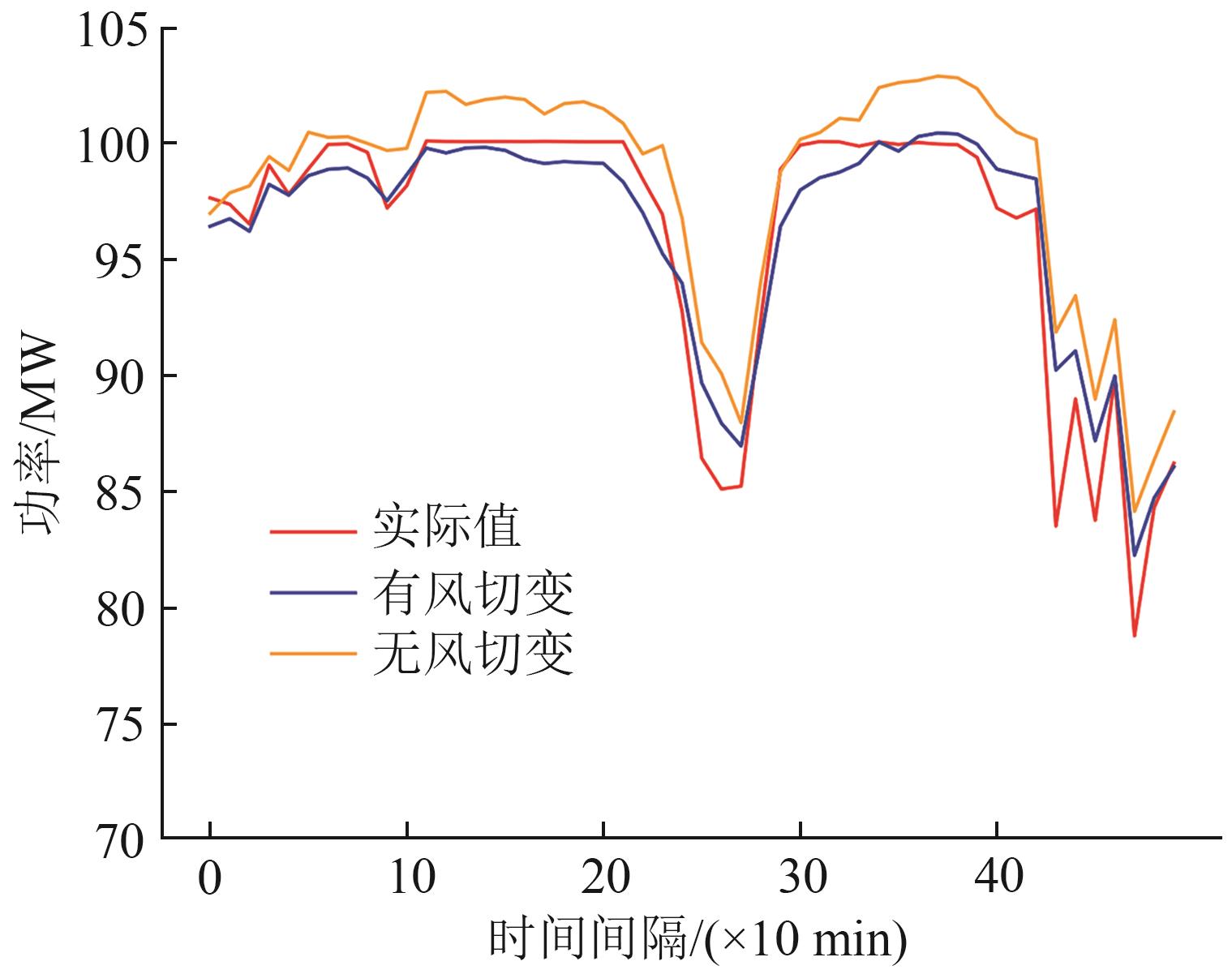
图10 WT5无风切变特征实验结果
Fig. 10 WT5 experimental results without wind shear features
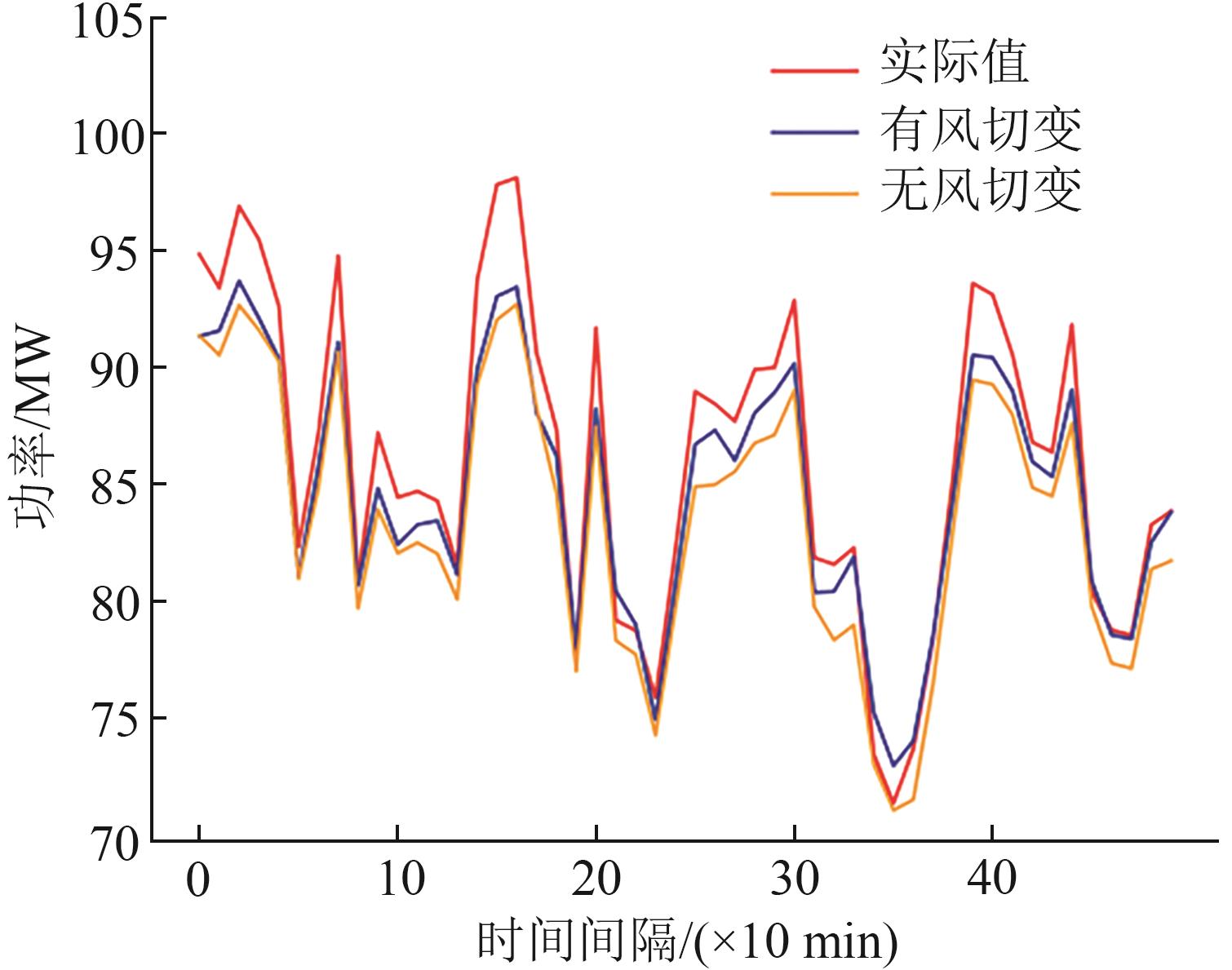
图11 WT6无风切变特征实验结果
Fig. 11 WT6 experimental results without wind shear features
| [1] | 严新荣,张宁宁,马奎超,等 .我国海上风电发展现状与趋势综述[J].发电技术,2024,45(1):1-12. doi:10.12096/j.2096-4528.pgt.23093 |
| YAN X R, ZHANG N N, MA K C,et al .Overview of current situation and trend of offshore wind power development in China[J].Power Generation Technology,2024,45(1):1-12. doi:10.12096/j.2096-4528.pgt.23093 | |
| [2] | 陈龙,刘璐洁,符杨,等 .计及高风速和低风速影响的海上风电机组两阶段滚动优化维护策略[J].智慧电力,2024,52(7):80-87. |
| CHEN L, LIU L J, FU Y,et al .Two-stage rolling optimized maintenance strategy for offshore wind turbines considering the influence of high & low wind speed[J].Smart Power,2024,52(7):80-87. | |
| [3] | 黄肖琪,周羽生,周文晴,等 .基于储能和无功优化的直驱机组海上风电场低电压穿越策略[J].电测与仪表,2024,61(7):57-64. |
| HUANG X Q, ZHOU Y S, ZHOU W Q,et al .Low voltage ride through strategy of the D-PMSG offshore wind power farm based on energy storage and reactive power optimization[J].Electrical Measurement & Instrumentation,2024,61(7):57-64. | |
| [4] | 高仕龙,陈武,杨勇,等 .海上风电柔性低频输电换流器控制策略及试验[J].电工技术学报,2024,39(S1):77-94. |
| GAO S L, CHEN W, YANG Y,et al .Control strategy and test of offshore wind flexible low frequency transmission converter[J].Transactions of China Electrotechnical Society,2024,39(S1):77-94. | |
| [5] | WANG Y, ZOU R, LIU F,et al .A review of wind speed and wind power forecasting with deep neural networks[J].Applied Energy,2021,304:117766. doi:10.1016/j.apenergy.2021.117766 |
| [6] | CHEN J, FU X, ZHANG L,et al .A novel offshore wind power prediction model based on TCN-DANet-sparse transformer and considering spatio-temporal coupling in multiple wind farms[J].Energy,2024,308:132899. doi:10.1016/j.energy.2024.132899 |
| [7] | HO C Y, CHENG K S, ANG C H .Utilizing the random forest method for short-term wind speed forecasting in the coastal area of central Taiwan [J].Energies,2023,16(3):1374-1381. doi:10.3390/en16031374 |
| [8] | MA K K, ZHANG W, GUO Z,et al .A hybrid forecasting model for very short-term wind speed prediction based on secondary decomposition and deep learning algorithms[J].Earth Science Informatics,2023,16(3):2421-2438. doi:10.1007/s12145-023-01044-1 |
| [9] | KAZI F B A, SADIA M, LIU F,et al .Short-term electricity demand forecasting of Dhaka city using CNN with stacked BiLSTM[EB/OL].(2024-09-28)[2024-10-15]. . |
| [10] | RAMADEVI B, KASI V R, BINGI K .Hybrid LSTM-based fractional-order neural network for jeju island’s wind farm power forecasting[J].Fractal and Fractional,2024,8(3):149-157. doi:10.3390/fractalfract8030149 |
| [11] | YANG Z C .Data-driven discrete cosine transform (DCT)-based modeling and simulation for hourly air humidity prediction[J].Soft Computing,2024,28(1):541-563. doi:10.1007/s00500-023-08297-4 |
| [12] | BAI S J, KOLTER J Z, VLADLEN K .An empirical evaluation of generic convolutional and recurrent networks for sequence modeling speed forecasting[EB/OL].(2018-04-19)[2024-10-18]. . |
| [13] | XIAO H, HE X, LI C .Multi-step prediction of offshore wind power based on Transformer network and Huber loss[J].International Journal of Electrical Power & Energy Systems,2024,162:110229. doi:10.1016/j.ijepes.2024.110229 |
| [14] | LI N, DONG J, LIU L,et al .A novel EMD and causal convolutional network integrated with Transformer for ultra short-term wind power forecasting[J].International Journal of Electrical Power & Energy Systems,2023,154:109470. doi:10.1016/j.ijepes.2023.109470 |
| [15] | ZIM A H, IQBAL A, MALIK A,et al .TCNFormer: temporal convolutional network former for short-term wind speed forecasting[EB/OL].(2024-08-27)[2024-1-18]. . |
| [16] | JIANG M, ZENG P, WANG K,et al .FECAM:frequency enhanced channel attention mechanism for time series forecasting[J].Advanced Engineering Informatics,2023,58:102158. doi:10.1016/j.aei.2023.102158 |
| [17] | 刘禹,陈戈华 .基于正余弦分解和DCT域的干涉条纹去噪算法[J].中国激光,2025,52(6):0609001. |
| LIU Y, CHEN G H .Interference fringe denoising algorithm based on cosine and sine decomposition and DCT domain[J].Chinese Laser,2025,52(6):0609001. | |
| [18] | YANG Z C .Discrete cosine transform-based predictive model extended in the least-squares sense for hourly load forecasting[J].IET Generation,Transmission & Distribution,2016,10(15):3930-3939. doi:10.1049/iet-gtd.2016.0689 |
| [19] | 刘伟,蔡东升,冯付勇,等 .基于DCT-CNN-GRU的短期电力负荷预测研究[J/OL].电测与仪表,1-11[2024-10-30].. |
| LIU W, CAI D S, FENG F Y,et al .Research on short-term power load forecasting based on DCT-CNN-GRU[J/OL].Electric Measurement and Instrumentation,1-11[2024-10-30].. | |
| [20] | ZHU J, SU L, LI Y .Wind power forecasting based on new hybrid model with TCN residual modification[J].Energy and AI,2022,10:100199. doi:10.1016/j.egyai.2022.100199 |
| [21] | NGUYEN H K M, PHAN Q-D, WU Y K,et al .Multi-step wind power forecasting with stacked temporal convolutional network (S-TCN)[J].Energies,2023,16(9):3792-3799. doi:10.3390/en16093792 |
| [22] | KIM J, OBREGON J, PARK H,et al .Multi-step photovoltaic power forecasting using transformer and recurrent neural networks[J].Renewable and Sustainable Energy Reviews,2024,200:114479. doi:10.1016/j.rser.2024.114479 |
| [23] | 樊雅洁,王聪,张宏立,等 .组合聚类和深度学习模型的风电场群风速预测[J].哈尔滨工业大学学报,56(12):71-78. |
| FAN Y J, WANG C, ZHANG H L,et al .Wind speed prediction for wind farm clusters based on combined clustering and deep learning models[J].Journal of Harbin Institute of Technology,56(12):71-78. | |
| [24] | 张昊立,张菁,倪建辉,等 .引入注意力机制的LSTM-FCN海上风电功率预测[J].太阳能学报,2024,45(6):444-450. |
| ZHANG H L, ZHANG J, NI J H,et al .Offshore wind power prediction using LSTM-FCN with attention mechanism[J].Journal of Solar Energy,2024,45(6):444-450. |
| [1] | 王志康, 张儒琪, 袁少可, 韩东江, 隋军. 有机朗肯-蒸汽压缩循环系统研究进展[J]. 发电技术, 2025, 46(6): 1059-1073. |
| [2] | 罗斌, 白小龙, 臧天磊, 黄燕, 张琳, 李萌, 张雪霞, 蒋永龙. 风光水互补发电系统研究综述[J]. 发电技术, 2025, 46(6): 1097-1111. |
| [3] | 李建林, 彭禹宸, 王茜, 姜晓霞, 王垒. 锂离子电池建模研究现状与展望[J]. 发电技术, 2025, 46(5): 857-871. |
| [4] | 路诗梦, 孙建林, 曾凡杰, 林小杰, 吴均湛, 马添翼, 钟崴, 谢立坤, 谢伟. 零碳地热能综合利用技术研究进展[J]. 发电技术, 2025, 46(5): 909-922. |
| [5] | 王炜, 熊蕴, 赵鹏臻, 谢宁, 靳翔, 王正阳. 基于Q-learning的集中-分布式形态配电网分层分区及网架规划方法[J]. 发电技术, 2025, 46(5): 977-985. |
| [6] | 龙潇, 张晋宾, 陈令特. 未来能源技术展望[J]. 发电技术, 2025, 46(4): 651-693. |
| [7] | 张俊, 蒲天骄, 高文忠, 刘友波, 裴玮, 许沛东, 高天露, 白昱阳. 电力系统智能计算的关键技术及应用展望[J]. 发电技术, 2025, 46(3): 421-437. |
| [8] | 徐浩然, 张瑾昀, 马歆, 雷文强, 曹杰铭. 基于大语言模型的图检索增强生成技术在核电领域的应用与展望[J]. 发电技术, 2025, 46(3): 454-466. |
| [9] | 陈艺璇, 王嘉阳, 卓映君, 卢斯煜, 周保荣. 人工智能在电力系统运行模拟加速中的应用综述[J]. 发电技术, 2025, 46(3): 467-481. |
| [10] | 杨博, 张子健. 基于人工智能的可再生能源电解水制氢关键技术及发展前景分析[J]. 发电技术, 2025, 46(3): 482-495. |
| [11] | 刘宿城, 栾李, 李龙, 洪涛, 刘晓东. 基于人工智能的直流微电网大信号稳定性评估方法研究[J]. 发电技术, 2025, 46(3): 496-507. |
| [12] | 郑如意, 杨博, 周率, 蒋林, 李鸿彪, 郜登科. 基于人工智能的质子交换膜燃料电池状态估计及故障诊断[J]. 发电技术, 2025, 46(3): 541-555. |
| [13] | 汪义财, 喻鑫, 于敦喜. 能源植物芦竹燃烧利用研究进展[J]. 发电技术, 2025, 46(3): 570-578. |
| [14] | 侯朗博, 孙昊, 陈衡, 高悦. 基于需求响应与Stackelberg博弈的小区综合能源系统优化调度[J]. 发电技术, 2025, 46(2): 219-230. |
| [15] | 张扬帆, 李奕霖, 叶林, 付雪姣, 王正宇, 王耀函. 低温天气下考虑风机运行状态聚类的短期风电功率预测方法[J]. 发电技术, 2025, 46(2): 326-335. |
| 阅读次数 | ||||||
|
全文 |
|
|||||
|
摘要 |
|
|||||
