发电技术 ›› 2025, Vol. 46 ›› Issue (6): 1192-1199.DOI: 10.12096/j.2096-4528.pgt.24055

• 储能 • 上一篇    

基于石块-沙子-导热油的多种组合混合储热性能研究

李凌旭1,2, 陈龙祥1,2,3, 叶楷2   

  1. 1.福州大学先进制造学院,福建省 泉州市 362251
    2.中国科学院海西研究院泉州装备制造研究中心,福建省 泉州市 362000
    3.中国科学院大学福建学院,福建省 泉州市 350000
  • 收稿日期:2024-09-02 修回日期:2024-11-18 出版日期:2025-12-31 发布日期:2025-12-25
  • 通讯作者: 陈龙祥
  • 作者简介:李凌旭(1998),男,硕士研究生,主要研究方向为储热技术,hjhyjd_rl@163.com
    陈龙祥(1988),男,博士,副研究员,主要研究方向为制冷工质热物性推算与测量、工业节能技术以及新能源储能系统优化,本文通信作者,chenlx@fjirsm.ac.cn
  • 基金资助:
    福建省科技计划项目(2021H0045);泉州市科技计划项目(2022C019R)

Study on Heat Storage Performance of Various Mixture Combinations of Stones, Sand, and Thermal Oil

Lingxu LI1,2, Longxiang CHEN1,2,3, Kai YE2   

  1. 1.School of Advanced Manufacturing, Fuzhou University, Quanzhou 362251, Fujian Province, China
    2.Quanzhou Equipment Manufacturing Research Center, Haixi Institutes, Chinese Academy of Sciences, Quanzhou 362000, Fujian Province, China
    3.Fujian College, University of Chinese Academy of Sciences, Quanzhou 350000, Fujian Province, China
  • Received:2024-09-02 Revised:2024-11-18 Published:2025-12-31 Online:2025-12-25
  • Contact: Longxiang CHEN
  • Supported by:
    Science and Technology Plan of Fujian Province(2021H0045);Science and Technology Plan of Quanzhou City(2022C019R)

摘要:

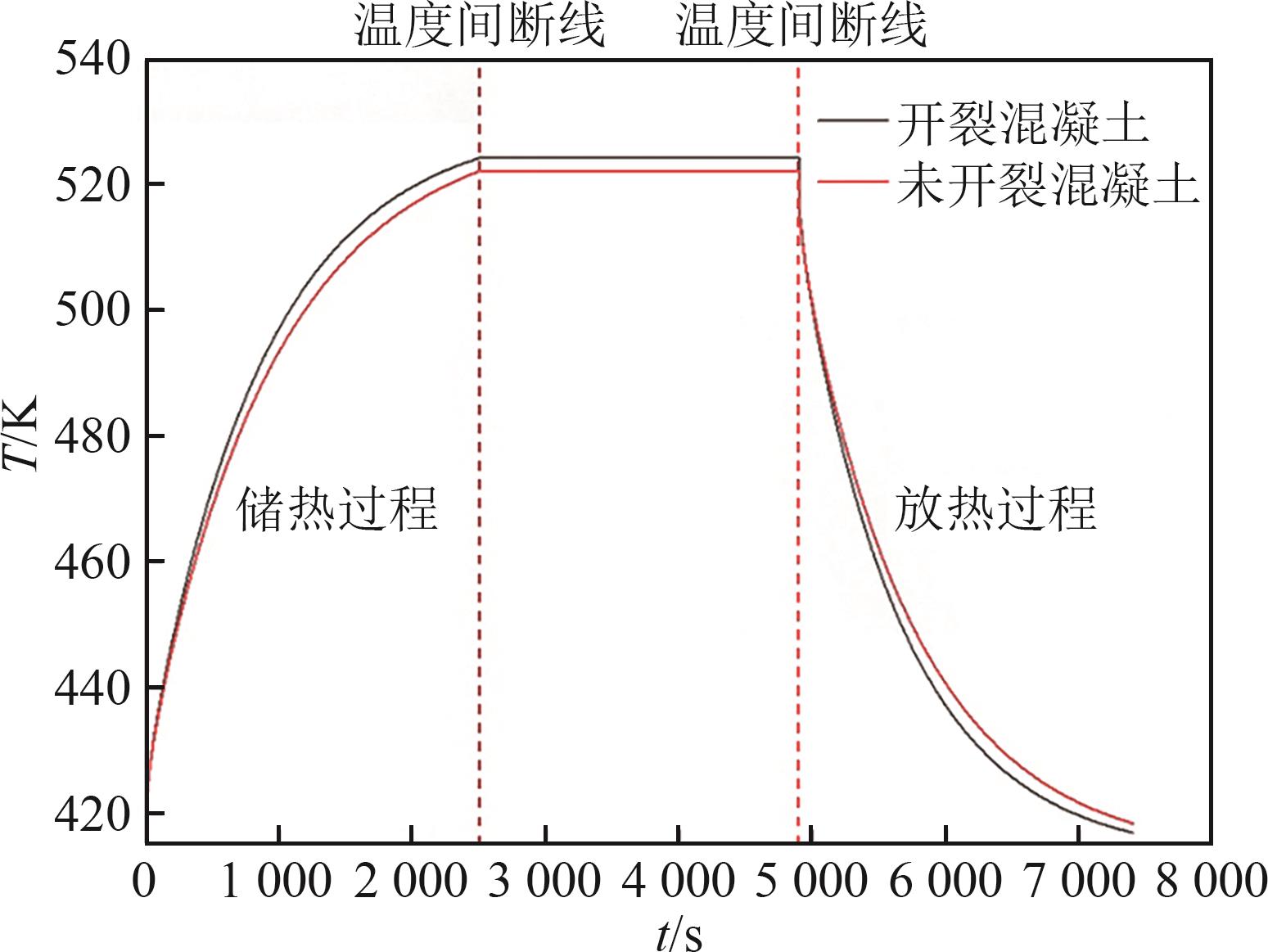
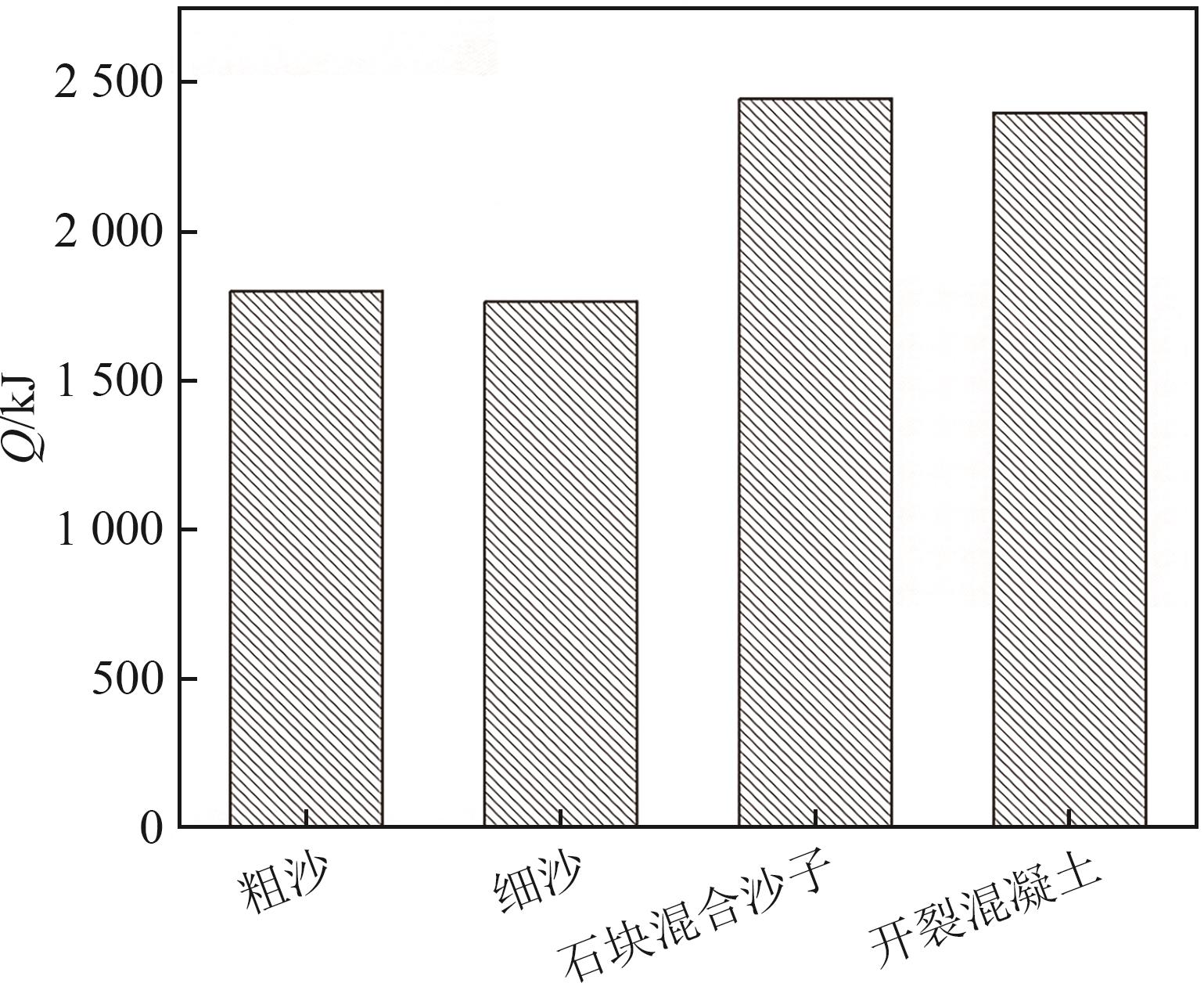
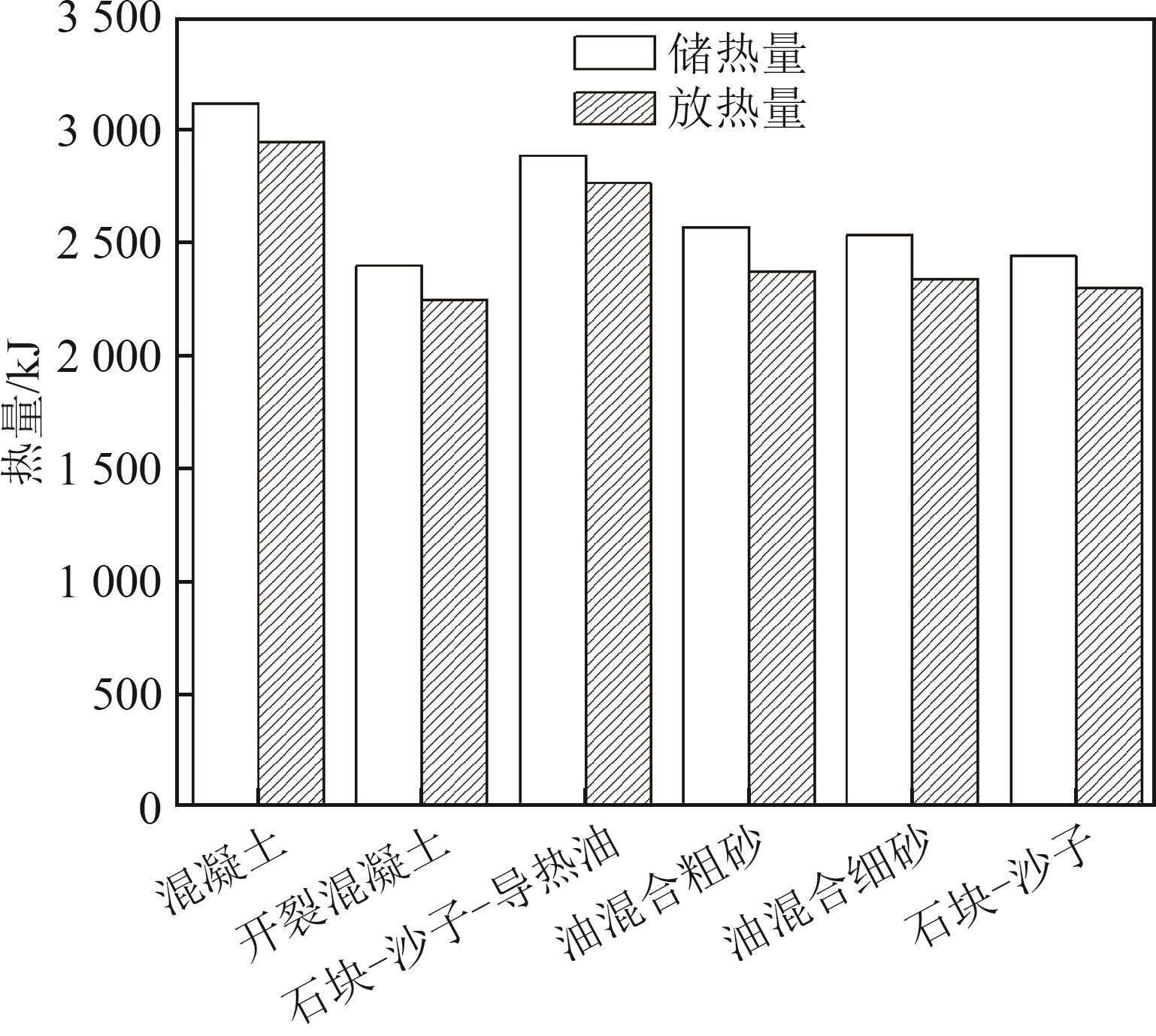
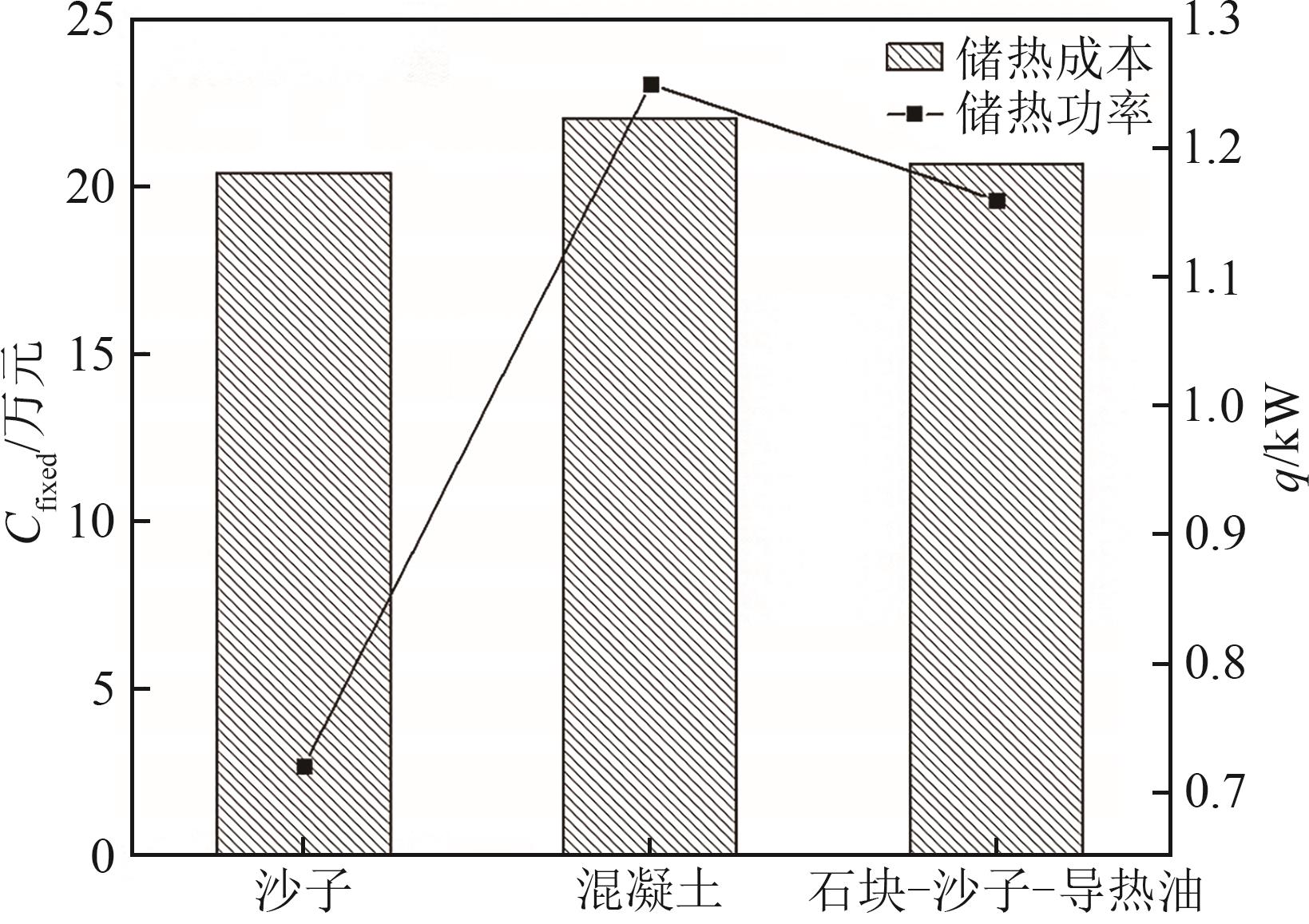
目的 传统的混凝土储热系统易在循环储热过程中开裂,导致整体储热量储热功率急剧下降,严重影响系统寿命,增加储热成本。为此,提出了一种石块、沙子和导热油多元混合的储热方式。 方法 采用计算流体动力学(computational fluid dynamics,CFD)仿真技术,针对不同储热介质的储热过程进行模拟研究。 结果 与未开裂混凝土相比,开裂混凝土储热量下降了23.1%。相同储热条件下,粗沙储热效果优于细沙。粗沙与导热油混合的储热量比开裂混凝土储热量高7.2%,而以沙子-石块-导热油混合作为储热介质的储热量比开裂混凝土的储热量高20.5%。放出热量略低于储存热量,开裂混凝土的放热量比未开裂混凝土放热量低21.7%,比沙子-石块-导热油混合作为储热介质的放热量低18.86%。通过对成本计算,石块混合沙子和导热油作为储热介质的储热系统,具有更高储热量的同时,固定成本和后期维护成本较低。 结论 这种多元混合储热方式能有效避免混凝土开裂问题,提高储热效率和降低成本,对于推动储热技术的发展和应用具有重要意义。

关键词: 储能, 填充床, 储热技术, 储热介质, 多元混合, 计算流体动力学, 储热量, 固定成本

Abstract:

Objectives Traditional concrete thermal energy storage systems are prone to cracking during cyclic heat storage processes, leading to a sharp decline in overall heat storage capacity and power, which severely affects system lifespan and increases heat storage costs. To mitigate these issues, a multi-component mixed heat storage method incorporating stones, sand, and thermal oil is proposed. Methods Utilizing computational fluid dynamics (CFD) simulation technology, the heat storage processes of different heat storage media are simulated and investigated. Results Cracked concrete experiences a 23.1% reduction in heat storage capacity compared to uncracked concrete. Under the same heat storage conditions, coarse sand demonstrates better heat storage performance than fine sand. The mixture of coarse sand and thermal oil exhibits a 7.2% higher heat storage capacity than that of cracked concrete. Furthermore, the mixture of sand, stones, and thermal oil increases heat storage capacity by 20.5% relative to cracked concrete used as heat storage medium. The released heat is slightly lower than the stored heat. The heat released by cracked concrete is 21.7% lower than that of uncracked concrete and 18.86% lower than that of the mixture of sand, stones, and thermal oil used as the heat storage medium. Cost calculations further reveal that the thermal energy storage system using the mixture of stones, sand, and thermal oil as the storage medium achieves higher heat storage capacity while resulting in lower fixed and maintenance costs. Conclusions This multi-component mixed heat storage method can effectively address concrete cracking issues, enhance heat storage efficiency, and reduce costs, which is of great significance for advancing the development and application of heat storage technologies.

Key words: energy storage, packed bed, thermal energy storage technology, heat storage medium, multi-component mixing, computational fluid dynamics, heat storage capacity, fixed cost

中图分类号: