光热-风电联合运行的电力系统经济调度策略研究
1
2020
... 太阳能作为一种可再生能源,具有储量丰富、分布广、洁净安全等优势,合理有效地开发利用太阳能不仅有助于缓解目前的能源匮乏问题,也有助于实现我国“2030年前碳达峰、2060年前碳中和”的双碳目标,缓解全球环境恶化等难题.聚光式太阳能(concentrated solar power,CSP)热发电技术是一种利用聚光设备将太阳能聚集起来转化为热能,再通过热功转化装置发电的技术,具有大规模工业应用的广阔前景[1-2].然而,由于季节、气候等因素的影响,太阳辐射具有间歇性和不稳定的缺点,若直接将太阳能发电并入电网会使现有的能源网络不稳定且不安全[3-4].因此,在CSP电厂中配备储热技术是克服太阳能辐射波动性,实现电力持续稳定供应的有效手段. ...
光热-风电联合运行的电力系统经济调度策略研究
1
2020
... 太阳能作为一种可再生能源,具有储量丰富、分布广、洁净安全等优势,合理有效地开发利用太阳能不仅有助于缓解目前的能源匮乏问题,也有助于实现我国“2030年前碳达峰、2060年前碳中和”的双碳目标,缓解全球环境恶化等难题.聚光式太阳能(concentrated solar power,CSP)热发电技术是一种利用聚光设备将太阳能聚集起来转化为热能,再通过热功转化装置发电的技术,具有大规模工业应用的广阔前景[1-2].然而,由于季节、气候等因素的影响,太阳辐射具有间歇性和不稳定的缺点,若直接将太阳能发电并入电网会使现有的能源网络不稳定且不安全[3-4].因此,在CSP电厂中配备储热技术是克服太阳能辐射波动性,实现电力持续稳定供应的有效手段. ...
光热发电商参与下的电力现货市场均衡分析
1
2022
... 太阳能作为一种可再生能源,具有储量丰富、分布广、洁净安全等优势,合理有效地开发利用太阳能不仅有助于缓解目前的能源匮乏问题,也有助于实现我国“2030年前碳达峰、2060年前碳中和”的双碳目标,缓解全球环境恶化等难题.聚光式太阳能(concentrated solar power,CSP)热发电技术是一种利用聚光设备将太阳能聚集起来转化为热能,再通过热功转化装置发电的技术,具有大规模工业应用的广阔前景[1-2].然而,由于季节、气候等因素的影响,太阳辐射具有间歇性和不稳定的缺点,若直接将太阳能发电并入电网会使现有的能源网络不稳定且不安全[3-4].因此,在CSP电厂中配备储热技术是克服太阳能辐射波动性,实现电力持续稳定供应的有效手段. ...
光热发电商参与下的电力现货市场均衡分析
1
2022
... 太阳能作为一种可再生能源,具有储量丰富、分布广、洁净安全等优势,合理有效地开发利用太阳能不仅有助于缓解目前的能源匮乏问题,也有助于实现我国“2030年前碳达峰、2060年前碳中和”的双碳目标,缓解全球环境恶化等难题.聚光式太阳能(concentrated solar power,CSP)热发电技术是一种利用聚光设备将太阳能聚集起来转化为热能,再通过热功转化装置发电的技术,具有大规模工业应用的广阔前景[1-2].然而,由于季节、气候等因素的影响,太阳辐射具有间歇性和不稳定的缺点,若直接将太阳能发电并入电网会使现有的能源网络不稳定且不安全[3-4].因此,在CSP电厂中配备储热技术是克服太阳能辐射波动性,实现电力持续稳定供应的有效手段. ...
碳达峰、碳中和背景下“十四五”时期发电技术趋势分析
1
2022
... 太阳能作为一种可再生能源,具有储量丰富、分布广、洁净安全等优势,合理有效地开发利用太阳能不仅有助于缓解目前的能源匮乏问题,也有助于实现我国“2030年前碳达峰、2060年前碳中和”的双碳目标,缓解全球环境恶化等难题.聚光式太阳能(concentrated solar power,CSP)热发电技术是一种利用聚光设备将太阳能聚集起来转化为热能,再通过热功转化装置发电的技术,具有大规模工业应用的广阔前景[1-2].然而,由于季节、气候等因素的影响,太阳辐射具有间歇性和不稳定的缺点,若直接将太阳能发电并入电网会使现有的能源网络不稳定且不安全[3-4].因此,在CSP电厂中配备储热技术是克服太阳能辐射波动性,实现电力持续稳定供应的有效手段. ...
碳达峰、碳中和背景下“十四五”时期发电技术趋势分析
1
2022
... 太阳能作为一种可再生能源,具有储量丰富、分布广、洁净安全等优势,合理有效地开发利用太阳能不仅有助于缓解目前的能源匮乏问题,也有助于实现我国“2030年前碳达峰、2060年前碳中和”的双碳目标,缓解全球环境恶化等难题.聚光式太阳能(concentrated solar power,CSP)热发电技术是一种利用聚光设备将太阳能聚集起来转化为热能,再通过热功转化装置发电的技术,具有大规模工业应用的广阔前景[1-2].然而,由于季节、气候等因素的影响,太阳辐射具有间歇性和不稳定的缺点,若直接将太阳能发电并入电网会使现有的能源网络不稳定且不安全[3-4].因此,在CSP电厂中配备储热技术是克服太阳能辐射波动性,实现电力持续稳定供应的有效手段. ...
Modelling calcium looping at industrial scale for energy storage in concentrating solar power plants
1
2021
... 太阳能作为一种可再生能源,具有储量丰富、分布广、洁净安全等优势,合理有效地开发利用太阳能不仅有助于缓解目前的能源匮乏问题,也有助于实现我国“2030年前碳达峰、2060年前碳中和”的双碳目标,缓解全球环境恶化等难题.聚光式太阳能(concentrated solar power,CSP)热发电技术是一种利用聚光设备将太阳能聚集起来转化为热能,再通过热功转化装置发电的技术,具有大规模工业应用的广阔前景[1-2].然而,由于季节、气候等因素的影响,太阳辐射具有间歇性和不稳定的缺点,若直接将太阳能发电并入电网会使现有的能源网络不稳定且不安全[3-4].因此,在CSP电厂中配备储热技术是克服太阳能辐射波动性,实现电力持续稳定供应的有效手段. ...
Calcium oxide based materials for thermochemical heat storage in concentrated solar power plants
1
2015
... 根据储热原理的不同,一般将太阳能储热技术分为3种:显热储热(sensible heat storage,SHS)、潜热储热(latent heat storage,LHS)和热化学储热(thermochemical heat storage,TCHS).3种储热方式中,热化学储热因其储热密度高、热损失较低、储能周期长及可长距离运输等优势,被认为是极具潜力的储热方式.在TCHS体系中,常见的热化学储热体系包括CaO-H2O、CaO-CO2、CoO-CO2[5-7].其中,CaO-CO2热化学储热体系因其具有反应温度高、钙基材料储量丰富、成本低廉、无毒、无污染等优点,被大量学者广泛研究. ...
Solar thermochemical heat storage via the Co3O4/CoO looping cycle:storage reactor modelling and experimental validation
0
2018
Improvement of a semipermeable shell for encapsulation of calcium hydroxide for thermochemical heat storage solutions
1
2021
... 根据储热原理的不同,一般将太阳能储热技术分为3种:显热储热(sensible heat storage,SHS)、潜热储热(latent heat storage,LHS)和热化学储热(thermochemical heat storage,TCHS).3种储热方式中,热化学储热因其储热密度高、热损失较低、储能周期长及可长距离运输等优势,被认为是极具潜力的储热方式.在TCHS体系中,常见的热化学储热体系包括CaO-H2O、CaO-CO2、CoO-CO2[5-7].其中,CaO-CO2热化学储热体系因其具有反应温度高、钙基材料储量丰富、成本低廉、无毒、无污染等优点,被大量学者广泛研究. ...
Applicability of carbonation/decarbonation reactions to high-temperature thermal energy storage and temperature upgrading
1
1996
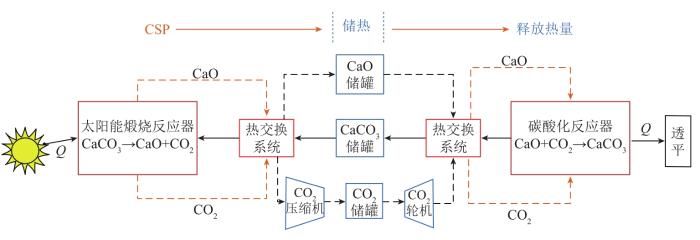
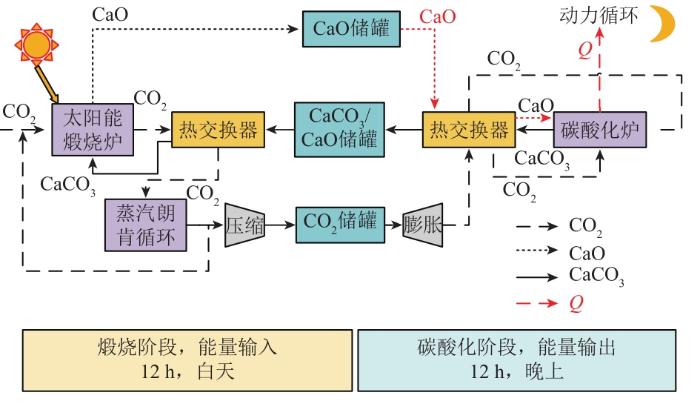
... CaO-CO2热化学储热反应是基于CaO可逆碳酸化与煅烧反应的钙循环过程,如式(1)所示.CaO-CO2系统在聚光式太阳能发电厂中的储热原理[8]如图1所示,在白天光照强时,太阳辐射为CaCO3煅烧反应提供热量.煅烧释放的CO2经过压缩后储存,CaO在常温常压下储存,将太阳能转化成钙基材料的化学能储存起来.在夜晚或光照不充足时,储存的CaO和CO2进入碳酸化反应器中进行放热的碳酸化反应,将储存的能量释放出来,然后通过载热流体将热量传递到动力循环系统中生成电能. ...
Calcium looping in solar power generation plants
1
2012
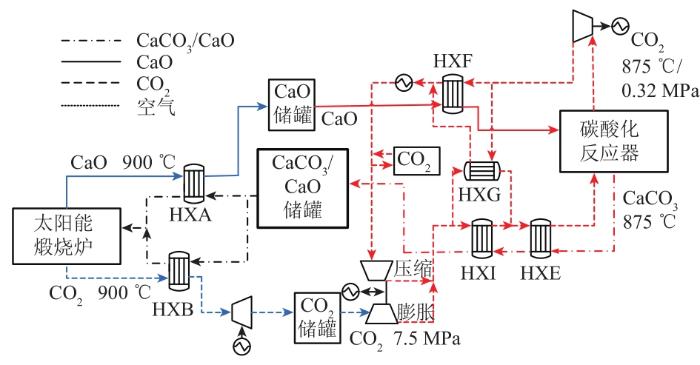
... 在过去几十年里,大量学者对CSP-CaL集成发电系统进行了详细深入研究.Edwards等[9]提出了一种CSP-CaL集成方案,其中碳酸化反应器中产生的热量用于开式CO2/空气布雷顿循环发电.在该方案中,其假设CaCO3颗粒在太阳能煅烧炉中完全分解,并且进入碳酸化炉中的CO2与CaO完全反应,纯空气流将从碳酸化装置中释放出来,并被输送到燃气轮机中用于发电,然后做功后废气被释放到大气中.这显然是一种理想的设计方案,CaO受热力平衡的限制不可能与CO2反应完全,因此会有CO2排到大气中.Chacartegui等[10]提出了闭式CO2布雷顿循环的CSP-CaL集成方案,如图2所示.与开式CO2布雷顿循环不同的是,该集成方案将离开碳酸化炉的过量CO2用作热载体流体,直接被输送到燃气轮机用于发电,做功后的CO2经过再生过热器后压缩、储存、回收,接着用于下一循环.研究表明,该CSP-CaL集成方案可达到约45%的发电效率.Ortiz等[11]对其他动力循环(亚临界朗肯循环、超临界CO2布雷顿循环和联合循环)下CSP-CaL集成方案进行了评估.结果表明,联合循环CSP-CaL集成系统显示出最佳能效,在涡轮机入口/出口压力比为3.6/1运行时,联合循环系统效率能达到40.4%. ...
Thermochemical energy storage of concentrated solar power by integration of the calcium looping process and a CO2 power cycle
1
2016
... 在过去几十年里,大量学者对CSP-CaL集成发电系统进行了详细深入研究.Edwards等[9]提出了一种CSP-CaL集成方案,其中碳酸化反应器中产生的热量用于开式CO2/空气布雷顿循环发电.在该方案中,其假设CaCO3颗粒在太阳能煅烧炉中完全分解,并且进入碳酸化炉中的CO2与CaO完全反应,纯空气流将从碳酸化装置中释放出来,并被输送到燃气轮机中用于发电,然后做功后废气被释放到大气中.这显然是一种理想的设计方案,CaO受热力平衡的限制不可能与CO2反应完全,因此会有CO2排到大气中.Chacartegui等[10]提出了闭式CO2布雷顿循环的CSP-CaL集成方案,如图2所示.与开式CO2布雷顿循环不同的是,该集成方案将离开碳酸化炉的过量CO2用作热载体流体,直接被输送到燃气轮机用于发电,做功后的CO2经过再生过热器后压缩、储存、回收,接着用于下一循环.研究表明,该CSP-CaL集成方案可达到约45%的发电效率.Ortiz等[11]对其他动力循环(亚临界朗肯循环、超临界CO2布雷顿循环和联合循环)下CSP-CaL集成方案进行了评估.结果表明,联合循环CSP-CaL集成系统显示出最佳能效,在涡轮机入口/出口压力比为3.6/1运行时,联合循环系统效率能达到40.4%. ...
Power cycles integration in concentrated solar power plants with energy storage based on calcium looping
1
2017
... 在过去几十年里,大量学者对CSP-CaL集成发电系统进行了详细深入研究.Edwards等[9]提出了一种CSP-CaL集成方案,其中碳酸化反应器中产生的热量用于开式CO2/空气布雷顿循环发电.在该方案中,其假设CaCO3颗粒在太阳能煅烧炉中完全分解,并且进入碳酸化炉中的CO2与CaO完全反应,纯空气流将从碳酸化装置中释放出来,并被输送到燃气轮机中用于发电,然后做功后废气被释放到大气中.这显然是一种理想的设计方案,CaO受热力平衡的限制不可能与CO2反应完全,因此会有CO2排到大气中.Chacartegui等[10]提出了闭式CO2布雷顿循环的CSP-CaL集成方案,如图2所示.与开式CO2布雷顿循环不同的是,该集成方案将离开碳酸化炉的过量CO2用作热载体流体,直接被输送到燃气轮机用于发电,做功后的CO2经过再生过热器后压缩、储存、回收,接着用于下一循环.研究表明,该CSP-CaL集成方案可达到约45%的发电效率.Ortiz等[11]对其他动力循环(亚临界朗肯循环、超临界CO2布雷顿循环和联合循环)下CSP-CaL集成方案进行了评估.结果表明,联合循环CSP-CaL集成系统显示出最佳能效,在涡轮机入口/出口压力比为3.6/1运行时,联合循环系统效率能达到40.4%. ...
Design of an integrated CSP-Calcium looping for uninterrupted power production through energy storage
2
2018
... Karasavvas等[12]开发了一种蒸汽朗肯循环和闭式CO2布雷顿循环相结合的CSP-CaL集成系统,如图3[12]所示,其可通过储能在白天和夜晚不间断地发电.在白天,煅烧过程中多余的常压CO2热流可以单独用于蒸汽朗肯循环,为其输入热量来发电.在夜间,先前储存的CaO和CO2在碳酸化反应器中反应释放热量,过量高温高压的CO2流通入顶部燃气轮机做功发电,CO2被再压缩来循环利用,其效率可达28.6%~31.5%. ...
... [12]所示,其可通过储能在白天和夜晚不间断地发电.在白天,煅烧过程中多余的常压CO2热流可以单独用于蒸汽朗肯循环,为其输入热量来发电.在夜间,先前储存的CaO和CO2在碳酸化反应器中反应释放热量,过量高温高压的CO2流通入顶部燃气轮机做功发电,CO2被再压缩来循环利用,其效率可达28.6%~31.5%. ...
Effect of thermal pretreatment and nanosilica addition on limestone performance at calcium-looping conditions for thermochemical energy storage of concentrated solar power
1
2017
... 在闭式CO2布雷顿循环的CSP-CaL系统中,碳酸化炉中的温度和压力是影响电厂整体效率提升的关键因素.提高碳酸化压力意味着储热反应在更高的温度和更快的速率下进行,从而提高系统的热电效率,但过高的碳酸化压力也会增加CO2储存的技术难度及设备成本[13].Sun等[14]研究了石灰石和电石渣在高碳酸化压力(>1.0 MPa)条件下的热化学储能性能,结果发现,随着碳酸化压力的增加,2种钙基材料的储能容量显著增加.在1.3 MPa碳酸化压力下,10次循环后石灰石的有效转化率和储能密度分别为0.83、2 626 kJ/kg,是常压下的1.76倍. ...
Thermochemical energy storage performances of Ca-based natural and waste materials under high pressure during CaO/CO3 cycles
1
2019
... 在闭式CO2布雷顿循环的CSP-CaL系统中,碳酸化炉中的温度和压力是影响电厂整体效率提升的关键因素.提高碳酸化压力意味着储热反应在更高的温度和更快的速率下进行,从而提高系统的热电效率,但过高的碳酸化压力也会增加CO2储存的技术难度及设备成本[13].Sun等[14]研究了石灰石和电石渣在高碳酸化压力(>1.0 MPa)条件下的热化学储能性能,结果发现,随着碳酸化压力的增加,2种钙基材料的储能容量显著增加.在1.3 MPa碳酸化压力下,10次循环后石灰石的有效转化率和储能密度分别为0.83、2 626 kJ/kg,是常压下的1.76倍. ...
On the multicycle activity of natural limestone/dolomite for thermochemical energy storage of concentrated solar power
2
2016
... 降低煅烧温度和缩短反应时间能够使得太阳能煅烧炉的设计简化、成本降低,研究证明使用高导热率气体(如He)或过热蒸汽可以降低煅烧温度、加快煅烧反应[15].Sarrion等[15]发现天然石灰石在煅烧炉中使用He气氛有助于将煅烧温度降低至约700 ℃,其认为这主要是由于He的高导热性使得煅烧过程中CO2扩散性得到了增强.Valverde等[16]研究了向煅烧炉中通入水蒸气对天然石灰石循环储热性能的影响,其认为煅烧炉中水蒸气的存在显著提高了煅烧反应速率,但是钙基颗粒磨损和质量损失严重,机械性能变差. ...
... [15]发现天然石灰石在煅烧炉中使用He气氛有助于将煅烧温度降低至约700 ℃,其认为这主要是由于He的高导热性使得煅烧过程中CO2扩散性得到了增强.Valverde等[16]研究了向煅烧炉中通入水蒸气对天然石灰石循环储热性能的影响,其认为煅烧炉中水蒸气的存在显著提高了煅烧反应速率,但是钙基颗粒磨损和质量损失严重,机械性能变差. ...
Limestone calcination under calcium-looping conditions for CO2 capture and thermochemical energy storage in the presence of H2O: an in situ XRD analysis
1
2017
... 降低煅烧温度和缩短反应时间能够使得太阳能煅烧炉的设计简化、成本降低,研究证明使用高导热率气体(如He)或过热蒸汽可以降低煅烧温度、加快煅烧反应[15].Sarrion等[15]发现天然石灰石在煅烧炉中使用He气氛有助于将煅烧温度降低至约700 ℃,其认为这主要是由于He的高导热性使得煅烧过程中CO2扩散性得到了增强.Valverde等[16]研究了向煅烧炉中通入水蒸气对天然石灰石循环储热性能的影响,其认为煅烧炉中水蒸气的存在显著提高了煅烧反应速率,但是钙基颗粒磨损和质量损失严重,机械性能变差. ...
Role of particle size on the multicycle calcium looping activity of limestone for thermochemical energy storage
1
2020
... Duran-Martin等[17]研究了不同颗粒粒径下的石灰石循环储热性能,结果表明,当煅烧过程在低温He中进行时,15 µm以下的小粒径钙基颗粒的储热性能更佳.Ma等[18]在流化床反应器中研究了颗粒粒径大小对石灰石储能性能及磨损性能的影响,发现,与0.18~0.25 mm的石灰石颗粒相比,0.125~0.18 mm的石灰石颗粒具有更好的储热性能,且5次循环后该粒径范围的石灰石颗粒磨损较轻微,其认为这主要是由于小粒径石灰石在相同的储热条件下具有更好的传热和传质性能,从而促进CaO反应活性. ...
Energy storage and attrition performance of limestone under fluidization during CaO/CaCO3 cycles
1
2020
... Duran-Martin等[17]研究了不同颗粒粒径下的石灰石循环储热性能,结果表明,当煅烧过程在低温He中进行时,15 µm以下的小粒径钙基颗粒的储热性能更佳.Ma等[18]在流化床反应器中研究了颗粒粒径大小对石灰石储能性能及磨损性能的影响,发现,与0.18~0.25 mm的石灰石颗粒相比,0.125~0.18 mm的石灰石颗粒具有更好的储热性能,且5次循环后该粒径范围的石灰石颗粒磨损较轻微,其认为这主要是由于小粒径石灰石在相同的储热条件下具有更好的传热和传质性能,从而促进CaO反应活性. ...
Review on the development of sorbents for calcium looping
1
2020
... 随着储热循环次数的增加,钙基材料反应活性快速下降,导致其储热性能下降.研究表明,这主要是由于CaCO3的塔曼温度(固体开始呈现显著烧结的临界温度)约为527 ℃,而在750~900 ℃高温循环反应温度下,钙基材料易发生烧结,从而使得孔隙结构变差.此外,天然钙基材料CaO与CO2的碳酸化反应会生成致密产物层CaCO3,当产物层形成一定厚度后会使得CaO表面大量孔隙堵塞,抑制了CO2的进一步扩散,使碳酸化反应难以进行彻底[19].因此,有必要通过不同改性方法来提高钙基材料的循环储热性能及稳定性. ...
Evaluation and performances comparison of calcium,strontium and barium carbonates during calcination/carbonation reactions for solar thermochemical energy storage
1
2017
... 研究表明,添加不同惰性载体(如Al2O3,SiO2,MgO,Li2CO3,TiO2和ZrO2等)能有效提高CaO的循环储热性能,这可能是由于惰性载体的添加能够减缓钙基材料的烧结.Andre等[20]制备了不同比例MgO机械掺混石灰石得到的钙镁复合材料并研究了其储热稳定性,结果表明,相比于添加质量分数45% 的MgO,添加30% MgO的钙镁复合材料随着循环次数的增加,其失活速率减慢,储热循环稳定性增强.Khosa等[21]研究了纳米SiO2的添加对石灰石循环储热性能的影响,结果表明,SiO2的添加使CaO-CO2储热体系的循环稳定性提高了13%.SiO2作为一种惰性材料不仅可以提高钙基材料的抗烧结性,还降低了CaCO3的煅烧温度,提高了反应速率.Aihara等[22]研究了添加TiO2改善石灰石的循环储热性能,发现将TiO2添加到石灰石中得到CaTiO3物相材料,其具有良好的稳定性和抗烧结性;10次循环后,CaO基储热材料仍保持0.65的储热转化率. ...
Heat storage and release performance analysis of CaCO3/CaO thermal energy storage system after doping nano silica
1
2019
... 研究表明,添加不同惰性载体(如Al2O3,SiO2,MgO,Li2CO3,TiO2和ZrO2等)能有效提高CaO的循环储热性能,这可能是由于惰性载体的添加能够减缓钙基材料的烧结.Andre等[20]制备了不同比例MgO机械掺混石灰石得到的钙镁复合材料并研究了其储热稳定性,结果表明,相比于添加质量分数45% 的MgO,添加30% MgO的钙镁复合材料随着循环次数的增加,其失活速率减慢,储热循环稳定性增强.Khosa等[21]研究了纳米SiO2的添加对石灰石循环储热性能的影响,结果表明,SiO2的添加使CaO-CO2储热体系的循环稳定性提高了13%.SiO2作为一种惰性材料不仅可以提高钙基材料的抗烧结性,还降低了CaCO3的煅烧温度,提高了反应速率.Aihara等[22]研究了添加TiO2改善石灰石的循环储热性能,发现将TiO2添加到石灰石中得到CaTiO3物相材料,其具有良好的稳定性和抗烧结性;10次循环后,CaO基储热材料仍保持0.65的储热转化率. ...
Development of porous solid reactant for thermal-energy storage and temperature upgrade using carbonation/decarbonation reaction
1
2001
... 研究表明,添加不同惰性载体(如Al2O3,SiO2,MgO,Li2CO3,TiO2和ZrO2等)能有效提高CaO的循环储热性能,这可能是由于惰性载体的添加能够减缓钙基材料的烧结.Andre等[20]制备了不同比例MgO机械掺混石灰石得到的钙镁复合材料并研究了其储热稳定性,结果表明,相比于添加质量分数45% 的MgO,添加30% MgO的钙镁复合材料随着循环次数的增加,其失活速率减慢,储热循环稳定性增强.Khosa等[21]研究了纳米SiO2的添加对石灰石循环储热性能的影响,结果表明,SiO2的添加使CaO-CO2储热体系的循环稳定性提高了13%.SiO2作为一种惰性材料不仅可以提高钙基材料的抗烧结性,还降低了CaCO3的煅烧温度,提高了反应速率.Aihara等[22]研究了添加TiO2改善石灰石的循环储热性能,发现将TiO2添加到石灰石中得到CaTiO3物相材料,其具有良好的稳定性和抗烧结性;10次循环后,CaO基储热材料仍保持0.65的储热转化率. ...
Development of dense Ca-based, Al-stabilized composites with high volumetric energy density for thermochemical energy storage of concentrated solar power
1
2020
... 除了通过添加惰性载体来提高CaO的抗烧结性外,也可通过有机酸处理来达到提高储热性能的目的.有机酸与CaO形成的有机酸钙(如醋酸钙、柠檬酸钙等)在高温热处理下会分解并释放大量气体,这有利于改善CaO的孔隙结构[23].Sanchez等[24]评估了乙酸处理过的石灰石和白云石的储热性能,在30次循环后,乙酸钙镁复合材料仍能保持约0.7的有效转化率;经乙酸处理过的CaO基复合材料显示出发达的孔隙结构,其中均匀分散的MgO纳米颗粒分散在CaO颗粒上,使其更能抵抗孔堵塞和减少烧结,从而提高了循环储热性能.Wang等[25]将柠檬酸与钙镁前驱体湿法混合制备了一种MgO/CaO复合储热材料,结果表明,柠檬酸处理的CaO复合材料具有较高容量和稳定的循环性能;其认为柠檬酸的存在起到了碳模板的作用,抑制了晶粒生长,缓和了高温过程中Ca和Mg的分离,改善了孔隙结构,从而减轻了孔堵塞和烧结.Obermeier等[26]用一水合柠檬酸处理硝酸钙和硝酸铝混合物制备不同Ca、Al摩尔比的复合材料用于钙循环储热,发现当Ca和Al摩尔比为95:5时,20次循环后复合材料的储热密度是未改性CaO的3.5倍.与乙酸处理相比,柠檬酸的酸性更强,因此需要更少量的柠檬酸来产生可溶性钙镁前驱体,这可以大大降低合成成本. ...
High-performance and low-cost macroporous calcium oxide based materials for thermochemical energy storage in concentrated solar power plants
1
2019
... 除了通过添加惰性载体来提高CaO的抗烧结性外,也可通过有机酸处理来达到提高储热性能的目的.有机酸与CaO形成的有机酸钙(如醋酸钙、柠檬酸钙等)在高温热处理下会分解并释放大量气体,这有利于改善CaO的孔隙结构[23].Sanchez等[24]评估了乙酸处理过的石灰石和白云石的储热性能,在30次循环后,乙酸钙镁复合材料仍能保持约0.7的有效转化率;经乙酸处理过的CaO基复合材料显示出发达的孔隙结构,其中均匀分散的MgO纳米颗粒分散在CaO颗粒上,使其更能抵抗孔堵塞和减少烧结,从而提高了循环储热性能.Wang等[25]将柠檬酸与钙镁前驱体湿法混合制备了一种MgO/CaO复合储热材料,结果表明,柠檬酸处理的CaO复合材料具有较高容量和稳定的循环性能;其认为柠檬酸的存在起到了碳模板的作用,抑制了晶粒生长,缓和了高温过程中Ca和Mg的分离,改善了孔隙结构,从而减轻了孔堵塞和烧结.Obermeier等[26]用一水合柠檬酸处理硝酸钙和硝酸铝混合物制备不同Ca、Al摩尔比的复合材料用于钙循环储热,发现当Ca和Al摩尔比为95:5时,20次循环后复合材料的储热密度是未改性CaO的3.5倍.与乙酸处理相比,柠檬酸的酸性更强,因此需要更少量的柠檬酸来产生可溶性钙镁前驱体,这可以大大降低合成成本. ...
Porous MgO-stabilized CaO-based powders/pellets via a citric acid-based carbon template for thermochemical energy storage in concentrated solar power plants
1
2020
... 除了通过添加惰性载体来提高CaO的抗烧结性外,也可通过有机酸处理来达到提高储热性能的目的.有机酸与CaO形成的有机酸钙(如醋酸钙、柠檬酸钙等)在高温热处理下会分解并释放大量气体,这有利于改善CaO的孔隙结构[23].Sanchez等[24]评估了乙酸处理过的石灰石和白云石的储热性能,在30次循环后,乙酸钙镁复合材料仍能保持约0.7的有效转化率;经乙酸处理过的CaO基复合材料显示出发达的孔隙结构,其中均匀分散的MgO纳米颗粒分散在CaO颗粒上,使其更能抵抗孔堵塞和减少烧结,从而提高了循环储热性能.Wang等[25]将柠檬酸与钙镁前驱体湿法混合制备了一种MgO/CaO复合储热材料,结果表明,柠檬酸处理的CaO复合材料具有较高容量和稳定的循环性能;其认为柠檬酸的存在起到了碳模板的作用,抑制了晶粒生长,缓和了高温过程中Ca和Mg的分离,改善了孔隙结构,从而减轻了孔堵塞和烧结.Obermeier等[26]用一水合柠檬酸处理硝酸钙和硝酸铝混合物制备不同Ca、Al摩尔比的复合材料用于钙循环储热,发现当Ca和Al摩尔比为95:5时,20次循环后复合材料的储热密度是未改性CaO的3.5倍.与乙酸处理相比,柠檬酸的酸性更强,因此需要更少量的柠檬酸来产生可溶性钙镁前驱体,这可以大大降低合成成本. ...
Material development and assessment of an energy storage concept based on the CaO-looping process
1
2017
... 除了通过添加惰性载体来提高CaO的抗烧结性外,也可通过有机酸处理来达到提高储热性能的目的.有机酸与CaO形成的有机酸钙(如醋酸钙、柠檬酸钙等)在高温热处理下会分解并释放大量气体,这有利于改善CaO的孔隙结构[23].Sanchez等[24]评估了乙酸处理过的石灰石和白云石的储热性能,在30次循环后,乙酸钙镁复合材料仍能保持约0.7的有效转化率;经乙酸处理过的CaO基复合材料显示出发达的孔隙结构,其中均匀分散的MgO纳米颗粒分散在CaO颗粒上,使其更能抵抗孔堵塞和减少烧结,从而提高了循环储热性能.Wang等[25]将柠檬酸与钙镁前驱体湿法混合制备了一种MgO/CaO复合储热材料,结果表明,柠檬酸处理的CaO复合材料具有较高容量和稳定的循环性能;其认为柠檬酸的存在起到了碳模板的作用,抑制了晶粒生长,缓和了高温过程中Ca和Mg的分离,改善了孔隙结构,从而减轻了孔堵塞和烧结.Obermeier等[26]用一水合柠檬酸处理硝酸钙和硝酸铝混合物制备不同Ca、Al摩尔比的复合材料用于钙循环储热,发现当Ca和Al摩尔比为95:5时,20次循环后复合材料的储热密度是未改性CaO的3.5倍.与乙酸处理相比,柠檬酸的酸性更强,因此需要更少量的柠檬酸来产生可溶性钙镁前驱体,这可以大大降低合成成本. ...
Low-cost Ca-based composites synthesized by biotemplate method for thermochemical energy storage of concentrated solar power
1
2018
... Benitez-Guerrero等[27]用稻壳作为生物模板合成了CaO/SiO2复合材料,并研究了其多次循环的储热特性,结果发现,稻壳热解后使钙基材料形成多孔结构,这促进了CO2在碳酸化过程中扩散到内部孔隙中,从而避免孔隙堵塞;钙基复合材料在50次储热循环后,有效转化率仍在34%左右.Sun等[28]采用吸水纸作为模板制备了CaO基微米管状复合材料,并分析了其在高碳酸化压力下的储热性能,其认为多孔微管结构显著增加了CaO和CO2之间的接触面积,CO2可以从外表面和内表面扩散到复合材料中,薄的微管壁大大缩短了CO2的传输长度,有效降低了CO2的扩散阻力,从而有效提高了钙基材料的储热性能. ...
CaO/CO3 thermochemical heat storage performance of CaO-based micrometre-sized tubular composite
1
2020
... Benitez-Guerrero等[27]用稻壳作为生物模板合成了CaO/SiO2复合材料,并研究了其多次循环的储热特性,结果发现,稻壳热解后使钙基材料形成多孔结构,这促进了CO2在碳酸化过程中扩散到内部孔隙中,从而避免孔隙堵塞;钙基复合材料在50次储热循环后,有效转化率仍在34%左右.Sun等[28]采用吸水纸作为模板制备了CaO基微米管状复合材料,并分析了其在高碳酸化压力下的储热性能,其认为多孔微管结构显著增加了CaO和CO2之间的接触面积,CO2可以从外表面和内表面扩散到复合材料中,薄的微管壁大大缩短了CO2的传输长度,有效降低了CO2的扩散阻力,从而有效提高了钙基材料的储热性能. ...
production from steam gasification of biomass by red mud-doped Ca-Al-Ce bi-functional material
1
2
... 有研究[29]表明,向钙基材料中添加具有催化作用的助剂(如CeO2、MnO2、Fe2O3等)有助于提高CaO-CO2热化学储热性能,这是因为这些添加剂可促使钙基颗粒产生丰富的氧空位,使得其具有优异的储释氧性能,从而有利于CO2以离子迁移的方式穿过表面产物层到达内部与CaO反应来提高储热碳酸化反应.Sun等[30]采用湿混法合成了一种新型的Al2O3/CeO2共掺杂CaO基复合储能材料,结果表明,当掺杂质量分数5%的Al2O3和5%的CeO2,碳酸化压力为1.3 MPa时,钙铝铈复合材料在30次循环后有效转化率和能量密度分别高达0.79、2 500 kJ/kg;其认为存在于钙铝铈复合材料表面的Ce3+离子可以产生氧空位,增加材料表面的表面吸附氧,有利于CaO的碳酸化反应.此外,Al2O3/CeO2共掺杂的CaO基材料具有较强的碱性,提高了碳酸化反应速率.马张珂等[31]采用浸渍法制备了Mn-Mg修饰的钙基复合材料,研究了其在流态化下的循环储热性能和颗粒磨损特性杂.微观表征显示其孔隙结构相对于原始CaO更加发达,在20次循环后仍保持0.42的储热有效转化率,比未改性CaO提高了54%;其认为Mn的多价态利于促进产生氧空位,而氧空位有利于O2-的迁移和CO2的扩散,有利于CaO的碳酸化反应,从而提高储热性能. ...
Thermochemical energy storage performance of Al2O3/CeO2 co-doped CaO-based material under high carbonation pressure
1
2020
... 有研究[29]表明,向钙基材料中添加具有催化作用的助剂(如CeO2、MnO2、Fe2O3等)有助于提高CaO-CO2热化学储热性能,这是因为这些添加剂可促使钙基颗粒产生丰富的氧空位,使得其具有优异的储释氧性能,从而有利于CO2以离子迁移的方式穿过表面产物层到达内部与CaO反应来提高储热碳酸化反应.Sun等[30]采用湿混法合成了一种新型的Al2O3/CeO2共掺杂CaO基复合储能材料,结果表明,当掺杂质量分数5%的Al2O3和5%的CeO2,碳酸化压力为1.3 MPa时,钙铝铈复合材料在30次循环后有效转化率和能量密度分别高达0.79、2 500 kJ/kg;其认为存在于钙铝铈复合材料表面的Ce3+离子可以产生氧空位,增加材料表面的表面吸附氧,有利于CaO的碳酸化反应.此外,Al2O3/CeO2共掺杂的CaO基材料具有较强的碱性,提高了碳酸化反应速率.马张珂等[31]采用浸渍法制备了Mn-Mg修饰的钙基复合材料,研究了其在流态化下的循环储热性能和颗粒磨损特性杂.微观表征显示其孔隙结构相对于原始CaO更加发达,在20次循环后仍保持0.42的储热有效转化率,比未改性CaO提高了54%;其认为Mn的多价态利于促进产生氧空位,而氧空位有利于O2-的迁移和CO2的扩散,有利于CaO的碳酸化反应,从而提高储热性能. ...
基于钙循环的Mn-Mg修饰石灰石流态化储热及磨损特性
1
2020
... 有研究[29]表明,向钙基材料中添加具有催化作用的助剂(如CeO2、MnO2、Fe2O3等)有助于提高CaO-CO2热化学储热性能,这是因为这些添加剂可促使钙基颗粒产生丰富的氧空位,使得其具有优异的储释氧性能,从而有利于CO2以离子迁移的方式穿过表面产物层到达内部与CaO反应来提高储热碳酸化反应.Sun等[30]采用湿混法合成了一种新型的Al2O3/CeO2共掺杂CaO基复合储能材料,结果表明,当掺杂质量分数5%的Al2O3和5%的CeO2,碳酸化压力为1.3 MPa时,钙铝铈复合材料在30次循环后有效转化率和能量密度分别高达0.79、2 500 kJ/kg;其认为存在于钙铝铈复合材料表面的Ce3+离子可以产生氧空位,增加材料表面的表面吸附氧,有利于CaO的碳酸化反应.此外,Al2O3/CeO2共掺杂的CaO基材料具有较强的碱性,提高了碳酸化反应速率.马张珂等[31]采用浸渍法制备了Mn-Mg修饰的钙基复合材料,研究了其在流态化下的循环储热性能和颗粒磨损特性杂.微观表征显示其孔隙结构相对于原始CaO更加发达,在20次循环后仍保持0.42的储热有效转化率,比未改性CaO提高了54%;其认为Mn的多价态利于促进产生氧空位,而氧空位有利于O2-的迁移和CO2的扩散,有利于CaO的碳酸化反应,从而提高储热性能. ...
基于钙循环的Mn-Mg修饰石灰石流态化储热及磨损特性
1
2020
... 有研究[29]表明,向钙基材料中添加具有催化作用的助剂(如CeO2、MnO2、Fe2O3等)有助于提高CaO-CO2热化学储热性能,这是因为这些添加剂可促使钙基颗粒产生丰富的氧空位,使得其具有优异的储释氧性能,从而有利于CO2以离子迁移的方式穿过表面产物层到达内部与CaO反应来提高储热碳酸化反应.Sun等[30]采用湿混法合成了一种新型的Al2O3/CeO2共掺杂CaO基复合储能材料,结果表明,当掺杂质量分数5%的Al2O3和5%的CeO2,碳酸化压力为1.3 MPa时,钙铝铈复合材料在30次循环后有效转化率和能量密度分别高达0.79、2 500 kJ/kg;其认为存在于钙铝铈复合材料表面的Ce3+离子可以产生氧空位,增加材料表面的表面吸附氧,有利于CaO的碳酸化反应.此外,Al2O3/CeO2共掺杂的CaO基材料具有较强的碱性,提高了碳酸化反应速率.马张珂等[31]采用浸渍法制备了Mn-Mg修饰的钙基复合材料,研究了其在流态化下的循环储热性能和颗粒磨损特性杂.微观表征显示其孔隙结构相对于原始CaO更加发达,在20次循环后仍保持0.42的储热有效转化率,比未改性CaO提高了54%;其认为Mn的多价态利于促进产生氧空位,而氧空位有利于O2-的迁移和CO2的扩散,有利于CaO的碳酸化反应,从而提高储热性能. ...
Enhanced thermochemical energy storage stability of CaO-Bbased composite pellets incorporated with a Zr-based stabilizer
1
2021
... 钙基材料的循环储热是通过CaO材料在碳酸化炉和煅烧炉之间循环吸放热实现的,因此在实际工业应用中粉末态的钙基材料是不适合在循环储热系统中使用的,因为粉末态钙基材料易被气流携带出反应循环系统,造成材料的大量浪费[32].因此,为了提高钙基材料的机械性能,有必要将其成型化. ...
Enhanced performance of extruded-spheronized carbide slag pellets for high temperature CO2 capture
2
2016
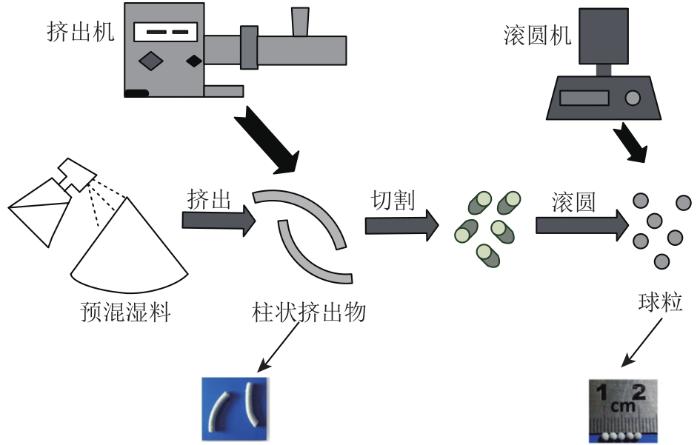
... 钙基球粒的制备有多种方式,目前研究主要包括挤出滚圆造粒、旋转造粒和石墨浇铸造粒等[33-35].挤出滚圆法制备钙基球粒原理如图4所示,即先在钙基吸收剂粉末中添加黏结剂并加水混合均匀,然后放入挤出机中挤出一定长度的圆柱形钙基材料,最后长圆柱形钙基材料在滚圆机中被破碎成均匀的长度,并逐渐转变成球形.与其他造粒方法相比,挤出滚圆法具有显著优势:可以生产具有高堆积密度、低吸湿性和粒径分布均匀的球粒,工艺设备简单,生产过程环保,成本较低[33]. ...
... [33]. ...
CO2 capture performance of core/shell CaO-based sorbent using mesostructured silica and titania in a multicycle CO2 capture process
0
2016
One-step synthesis of spherical CaO pellets via novel graphite-casting method for cyclic CO2 capture
2
2019
... 钙基球粒的制备有多种方式,目前研究主要包括挤出滚圆造粒、旋转造粒和石墨浇铸造粒等[33-35].挤出滚圆法制备钙基球粒原理如图4所示,即先在钙基吸收剂粉末中添加黏结剂并加水混合均匀,然后放入挤出机中挤出一定长度的圆柱形钙基材料,最后长圆柱形钙基材料在滚圆机中被破碎成均匀的长度,并逐渐转变成球形.与其他造粒方法相比,挤出滚圆法具有显著优势:可以生产具有高堆积密度、低吸湿性和粒径分布均匀的球粒,工艺设备简单,生产过程环保,成本较低[33]. ...
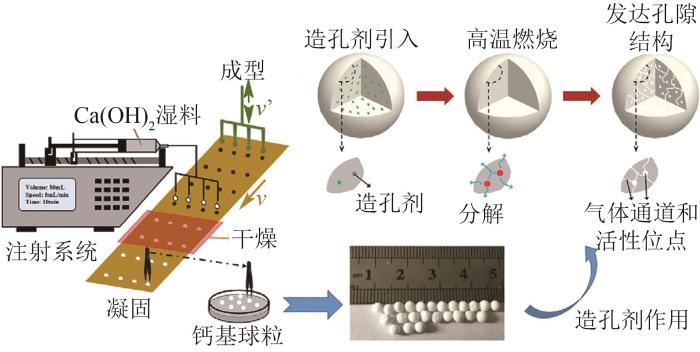
... 石墨浇铸造粒法是利用石墨粉较强的疏水性和易成型性,将钙基前驱体的浆料滴入石墨模板中.由于石墨粉的疏水性,在重力和液滴表面张力的作用下,钙基浆料颗粒被“脱水”.然后,在烘箱中进一步干燥材料以产生包裹有石墨粉的钙基球粒,其原理如图5所示.石墨浇铸造粒法是通过相对较弱的物理化学力将粉末材料造粒成球形的,可实现机械强度和多孔微结构之间的有效平衡.然而,模板造粒法造粒效率不高,难以大规模量产[35]. ...
Performance of synthetic CaO-based sorbent pellets for CO2 capture and kinetic analysis
1
2018
... 成型后的CaO球粒与CO2的碳酸化反应活性不如粉末态钙基材料,这是因为原始粉末钙基材料的多孔结构经过强大挤压力发生坍塌,比表面积减小,孔隙结构变差.目前,常通过添加造孔剂的改性方法来提高CaO基球粒与CO2的反应活性 [36].Sun等[37]以电石渣废料为钙基前驱体制备了添加微晶纤维素和稻壳的CaO球粒,并研究了其CO2捕集性能,结果发现,相比于添加稻壳,添加质量分数20%的微晶纤维素可有效改善电石渣颗粒的CO2捕集性能,这是由于稻壳中含有大量灰分,灰分中的硅铝酸盐与含钾物质是低共熔物,容易加剧钙基吸附剂烧结.Tong等[38]选择3种新型材料(尿素、聚乙二醇PEG和聚乙烯醇PVA)作为造孔剂添加到钙基粉末中,通过挤出-滚圆法制备CaO球粒,结果发现,PEG和PVA的残留可能对循环稳定性产生不利影响,然而当加入质量分数5%的尿素时,循环CO2吸收能力得到有效提高,CaO球粒25次循环时仍保持0.29 g/g吸附容量,约为石灰石颗粒的10倍.Duan等[39]研究了商品面粉作造孔剂制备的CaO球粒的CO2捕集性能,结果表明,添加生物质模板后的钙基球粒孔隙率有所提高,20次循环后,添加面粉的CaO球粒表现出0.36 g/g的最高CO2捕获水平,而原料石灰石仅有0.16 g/g.Bai等[40]采用挤出-滚圆法制备了添加TiO2和微晶纤维素CaO基球粒用于钙循环储热,结果发现,当添加质量分数为25% 的TiO2时,钙基球粒显示出最佳储热性能和机械强度.其认为均匀分布的CaTiO3颗粒为CaO基球粒提供了结构稳定性并增强了抗烧结能力. ...
capture performance of extruded-spheronized CaO-based pellets by microalgae templating
1
2
... 成型后的CaO球粒与CO2的碳酸化反应活性不如粉末态钙基材料,这是因为原始粉末钙基材料的多孔结构经过强大挤压力发生坍塌,比表面积减小,孔隙结构变差.目前,常通过添加造孔剂的改性方法来提高CaO基球粒与CO2的反应活性 [36].Sun等[37]以电石渣废料为钙基前驱体制备了添加微晶纤维素和稻壳的CaO球粒,并研究了其CO2捕集性能,结果发现,相比于添加稻壳,添加质量分数20%的微晶纤维素可有效改善电石渣颗粒的CO2捕集性能,这是由于稻壳中含有大量灰分,灰分中的硅铝酸盐与含钾物质是低共熔物,容易加剧钙基吸附剂烧结.Tong等[38]选择3种新型材料(尿素、聚乙二醇PEG和聚乙烯醇PVA)作为造孔剂添加到钙基粉末中,通过挤出-滚圆法制备CaO球粒,结果发现,PEG和PVA的残留可能对循环稳定性产生不利影响,然而当加入质量分数5%的尿素时,循环CO2吸收能力得到有效提高,CaO球粒25次循环时仍保持0.29 g/g吸附容量,约为石灰石颗粒的10倍.Duan等[39]研究了商品面粉作造孔剂制备的CaO球粒的CO2捕集性能,结果表明,添加生物质模板后的钙基球粒孔隙率有所提高,20次循环后,添加面粉的CaO球粒表现出0.36 g/g的最高CO2捕获水平,而原料石灰石仅有0.16 g/g.Bai等[40]采用挤出-滚圆法制备了添加TiO2和微晶纤维素CaO基球粒用于钙循环储热,结果发现,当添加质量分数为25% 的TiO2时,钙基球粒显示出最佳储热性能和机械强度.其认为均匀分布的CaTiO3颗粒为CaO基球粒提供了结构稳定性并增强了抗烧结能力. ...
A semi-industrial preparation procedure of CaO-based pellets with high CO2 uptake performance
1
2019
... 成型后的CaO球粒与CO2的碳酸化反应活性不如粉末态钙基材料,这是因为原始粉末钙基材料的多孔结构经过强大挤压力发生坍塌,比表面积减小,孔隙结构变差.目前,常通过添加造孔剂的改性方法来提高CaO基球粒与CO2的反应活性 [36].Sun等[37]以电石渣废料为钙基前驱体制备了添加微晶纤维素和稻壳的CaO球粒,并研究了其CO2捕集性能,结果发现,相比于添加稻壳,添加质量分数20%的微晶纤维素可有效改善电石渣颗粒的CO2捕集性能,这是由于稻壳中含有大量灰分,灰分中的硅铝酸盐与含钾物质是低共熔物,容易加剧钙基吸附剂烧结.Tong等[38]选择3种新型材料(尿素、聚乙二醇PEG和聚乙烯醇PVA)作为造孔剂添加到钙基粉末中,通过挤出-滚圆法制备CaO球粒,结果发现,PEG和PVA的残留可能对循环稳定性产生不利影响,然而当加入质量分数5%的尿素时,循环CO2吸收能力得到有效提高,CaO球粒25次循环时仍保持0.29 g/g吸附容量,约为石灰石颗粒的10倍.Duan等[39]研究了商品面粉作造孔剂制备的CaO球粒的CO2捕集性能,结果表明,添加生物质模板后的钙基球粒孔隙率有所提高,20次循环后,添加面粉的CaO球粒表现出0.36 g/g的最高CO2捕获水平,而原料石灰石仅有0.16 g/g.Bai等[40]采用挤出-滚圆法制备了添加TiO2和微晶纤维素CaO基球粒用于钙循环储热,结果发现,当添加质量分数为25% 的TiO2时,钙基球粒显示出最佳储热性能和机械强度.其认为均匀分布的CaTiO3颗粒为CaO基球粒提供了结构稳定性并增强了抗烧结能力. ...
CO2 capture performance using biomass-templated cement-supported limestone pellets
1
2016
... 成型后的CaO球粒与CO2的碳酸化反应活性不如粉末态钙基材料,这是因为原始粉末钙基材料的多孔结构经过强大挤压力发生坍塌,比表面积减小,孔隙结构变差.目前,常通过添加造孔剂的改性方法来提高CaO基球粒与CO2的反应活性 [36].Sun等[37]以电石渣废料为钙基前驱体制备了添加微晶纤维素和稻壳的CaO球粒,并研究了其CO2捕集性能,结果发现,相比于添加稻壳,添加质量分数20%的微晶纤维素可有效改善电石渣颗粒的CO2捕集性能,这是由于稻壳中含有大量灰分,灰分中的硅铝酸盐与含钾物质是低共熔物,容易加剧钙基吸附剂烧结.Tong等[38]选择3种新型材料(尿素、聚乙二醇PEG和聚乙烯醇PVA)作为造孔剂添加到钙基粉末中,通过挤出-滚圆法制备CaO球粒,结果发现,PEG和PVA的残留可能对循环稳定性产生不利影响,然而当加入质量分数5%的尿素时,循环CO2吸收能力得到有效提高,CaO球粒25次循环时仍保持0.29 g/g吸附容量,约为石灰石颗粒的10倍.Duan等[39]研究了商品面粉作造孔剂制备的CaO球粒的CO2捕集性能,结果表明,添加生物质模板后的钙基球粒孔隙率有所提高,20次循环后,添加面粉的CaO球粒表现出0.36 g/g的最高CO2捕获水平,而原料石灰石仅有0.16 g/g.Bai等[40]采用挤出-滚圆法制备了添加TiO2和微晶纤维素CaO基球粒用于钙循环储热,结果发现,当添加质量分数为25% 的TiO2时,钙基球粒显示出最佳储热性能和机械强度.其认为均匀分布的CaTiO3颗粒为CaO基球粒提供了结构稳定性并增强了抗烧结能力. ...
Structurally improved, TiO2-incorporated,CaO-based pellets for thermochemical energy storage in concentrated solar power plants
1
2021
... 成型后的CaO球粒与CO2的碳酸化反应活性不如粉末态钙基材料,这是因为原始粉末钙基材料的多孔结构经过强大挤压力发生坍塌,比表面积减小,孔隙结构变差.目前,常通过添加造孔剂的改性方法来提高CaO基球粒与CO2的反应活性 [36].Sun等[37]以电石渣废料为钙基前驱体制备了添加微晶纤维素和稻壳的CaO球粒,并研究了其CO2捕集性能,结果发现,相比于添加稻壳,添加质量分数20%的微晶纤维素可有效改善电石渣颗粒的CO2捕集性能,这是由于稻壳中含有大量灰分,灰分中的硅铝酸盐与含钾物质是低共熔物,容易加剧钙基吸附剂烧结.Tong等[38]选择3种新型材料(尿素、聚乙二醇PEG和聚乙烯醇PVA)作为造孔剂添加到钙基粉末中,通过挤出-滚圆法制备CaO球粒,结果发现,PEG和PVA的残留可能对循环稳定性产生不利影响,然而当加入质量分数5%的尿素时,循环CO2吸收能力得到有效提高,CaO球粒25次循环时仍保持0.29 g/g吸附容量,约为石灰石颗粒的10倍.Duan等[39]研究了商品面粉作造孔剂制备的CaO球粒的CO2捕集性能,结果表明,添加生物质模板后的钙基球粒孔隙率有所提高,20次循环后,添加面粉的CaO球粒表现出0.36 g/g的最高CO2捕获水平,而原料石灰石仅有0.16 g/g.Bai等[40]采用挤出-滚圆法制备了添加TiO2和微晶纤维素CaO基球粒用于钙循环储热,结果发现,当添加质量分数为25% 的TiO2时,钙基球粒显示出最佳储热性能和机械强度.其认为均匀分布的CaTiO3颗粒为CaO基球粒提供了结构稳定性并增强了抗烧结能力. ...
Effect of pelletization and addition of steam on the cyclic performance of carbon-templated,CaO-based CO2 sorbents
1
2014
... 除了添加生物质造孔剂来提高CaO基球粒反应活性外,蒸汽活化(即在碳酸化和煅烧反应过程中通入适量水蒸汽)也是有效途径.Broda等[41]评估了蒸汽对钙基球粒材料的循环CO2捕获能力的影响.发现在流化床中进行30个循环后,CaO球粒的CO2吸收量为0.29 g/g,该值比石灰石测得的值高45%,且与无蒸汽条件相比,该材料的CO2吸收量增加了55%.其认为CO2捕集能力的提升是因为通水蒸气加强了CO2向产物层CaCO3内部未反应CaO的扩散.Manovic等[42]将煅烧石灰石和水泥的混合物进行造粒,并测试了其在蒸汽存在下CO2捕获活性,认为蒸汽存在对钙基球粒捕集CO2具有促进作用,增强了碳酸化的扩散控制阶段. ...
Screening of binders for pelletization of CaO-based sorbents for CO2 capture
1
2009
... 除了添加生物质造孔剂来提高CaO基球粒反应活性外,蒸汽活化(即在碳酸化和煅烧反应过程中通入适量水蒸汽)也是有效途径.Broda等[41]评估了蒸汽对钙基球粒材料的循环CO2捕获能力的影响.发现在流化床中进行30个循环后,CaO球粒的CO2吸收量为0.29 g/g,该值比石灰石测得的值高45%,且与无蒸汽条件相比,该材料的CO2吸收量增加了55%.其认为CO2捕集能力的提升是因为通水蒸气加强了CO2向产物层CaCO3内部未反应CaO的扩散.Manovic等[42]将煅烧石灰石和水泥的混合物进行造粒,并测试了其在蒸汽存在下CO2捕获活性,认为蒸汽存在对钙基球粒捕集CO2具有促进作用,增强了碳酸化的扩散控制阶段. ...